
Assertive Communication in Emails: 15 Before & After Examples
Assertive communication in emails means replacing passive, hedging, or overly apologetic language with direct, respectful, and confident phrasing. Below, you'll find 15 real-world before-and-after email rewrites covering requests, pushback, deadline setting, escalation, and more—each showing exactly how to transform uncertain messages into credible, authoritative professional communication that gets results.
What Is Assertive Communication in Email?
Assertive email communication is a writing style that clearly states your position, needs, or boundaries while maintaining professionalism and respect for the reader. It sits between passive communication (where you minimize your needs) and aggressive communication (where you disregard the reader's perspective).
In practice, assertive emails eliminate unnecessary apologies, hedging words, and permission-seeking language. They replace these with direct statements, clear requests, and confident framing. According to research from the Harvard Business Review, professionals who communicate assertively are perceived as 35% more competent and are significantly more likely to be considered for leadership roles.
If you've noticed your emails getting ignored, delayed, or deprioritized, the issue often isn't what you're asking—it's how you're asking it. Assertive email writing fixes that gap. For a deeper dive into the language patterns that erode authority, see our guide on 12 words that undermine your credibility at work.
Why Your Email Tone Shapes Your Professional Credibility
The Hidden Cost of Passive Email Language

Every email you send is a micro-impression. When you consistently hedge, over-apologize, or bury your requests in qualifiers, you train recipients to see you as uncertain—and to treat your requests as optional.
A 2023 study published in the Journal of Business and Technical Communication found that emails containing three or more hedging phrases (like "just," "I think," "sorry to bother") received responses 48% slower than direct, assertive versions of the same request. Your language is literally costing you time.
How Assertive Emails Build Authority Over Time
The compound effect matters. When every email from you is clear, direct, and well-structured, colleagues and leaders start associating your name with competence. This is a core component of building professional credibility at work.
A Grammarly Business report from 2023 revealed that professionals who write with clarity and confidence are rated 45% higher in perceived leadership potential by their managers. Your inbox is a daily stage—and you're performing on it whether you realize it or not.
The Assertive Email Formula
Every assertive email follows a simple three-part structure:
- Context — One sentence establishing the situation
- Position — Your clear statement, request, or boundary
- Next step — A specific action item with a timeline
This formula eliminates rambling and signals that you respect both your time and the reader's. It's one of the key patterns explored in our guide on how executives structure emails for maximum impact.
5 Before & After Examples: Making Requests
Example 1: Requesting Information From a Peer
Before (Passive):Hi Sarah, sorry to bother you! I was just wondering if you might possibly have the Q3 sales data? I think I might need it for my report, but no rush at all—whenever you get a chance would be great!After (Assertive):
Hi Sarah, I need the Q3 sales data for the regional performance report. Could you send it by Thursday at noon? That gives me time to incorporate it before the Friday deadline. Thanks.What changed: Removed the apology, eliminated "just" and "might possibly," added a specific deadline, and stated the reason clearly.
Example 2: Requesting a Decision From Your Manager
Before (Passive):Hi Tom, I hope this isn't a bad time. I was wondering if you've had a chance to think about the vendor selection? I know you're super busy, so totally understand if you haven't. Just thought I'd check in!After (Assertive):
Hi Tom, I need your decision on the vendor selection by Wednesday to keep the project on schedule. The two finalists are Acme Corp and Vertex Solutions—I've attached the comparison summary. Which direction would you like to go?What changed: Led with the need and timeline, provided context to make the decision easy, and asked a direct question instead of "checking in."
Example 3: Requesting Help From Another Department
Before (Passive):Hey! So I know this probably isn't your area, and feel free to say no, but I was hoping maybe someone on your team could possibly help with the data migration? Sorry for the ask!After (Assertive):
Hi Marcus, the data migration project requires technical support from your team—specifically, 4 hours of a database engineer's time during the week of March 10. I'd like to set up a 15-minute call to discuss logistics. Does Tuesday or Wednesday work for you?What changed: Stated the specific need, quantified the ask, and proposed a concrete next step. No apologies for making a legitimate business request.
Example 4: Requesting Feedback on Your Work
Before (Passive):Hi Lisa, I attached my draft—it's probably not great yet, but I'd love your thoughts if you have time. No pressure at all though!After (Assertive):
Hi Lisa, I've attached the draft proposal for the client expansion strategy. I'd appreciate your feedback on two areas: the pricing model (slide 6) and the implementation timeline (slide 9). Could you share your input by Friday?What changed: Stopped undermining the work before anyone read it, directed the feedback to specific areas, and set a clear deadline.
Example 5: Requesting a Meeting With a Senior Leader
Before (Passive):Hi Director Chen, I'm so sorry to take up your time, but I was wondering if there was any possible way I could maybe get 10 minutes on your calendar sometime? Totally understand if you're too busy.After (Assertive):
Hi Director Chen, I'd like 15 minutes of your time to discuss the customer retention results from Q3—we've identified a pattern that could impact the 2025 strategy. I'm available Tuesday 2-4pm or Thursday morning. What works best?What changed: Led with the value of the meeting (not an apology for requesting it), gave a specific topic and time frame, and offered options. For more on communicating effectively upward, see our guide on how to communicate with senior leadership.
Say it once, and be taken seriously. The Authority Toolkit gives you 8 frameworks, the 7 shifts that make speech sound sure, and 100+ phrases for meetings and email, so the point lands the first time you make it. Get The Authority Toolkit — $27
5 Before & After Examples: Setting Boundaries and Pushing Back
Example 6: Declining an Unreasonable Timeline
Hi Jake, thanks for thinking of me! I'll try my best to get this done by Friday, though I'm not sure if I can. I'll do what I can!After (Assertive):
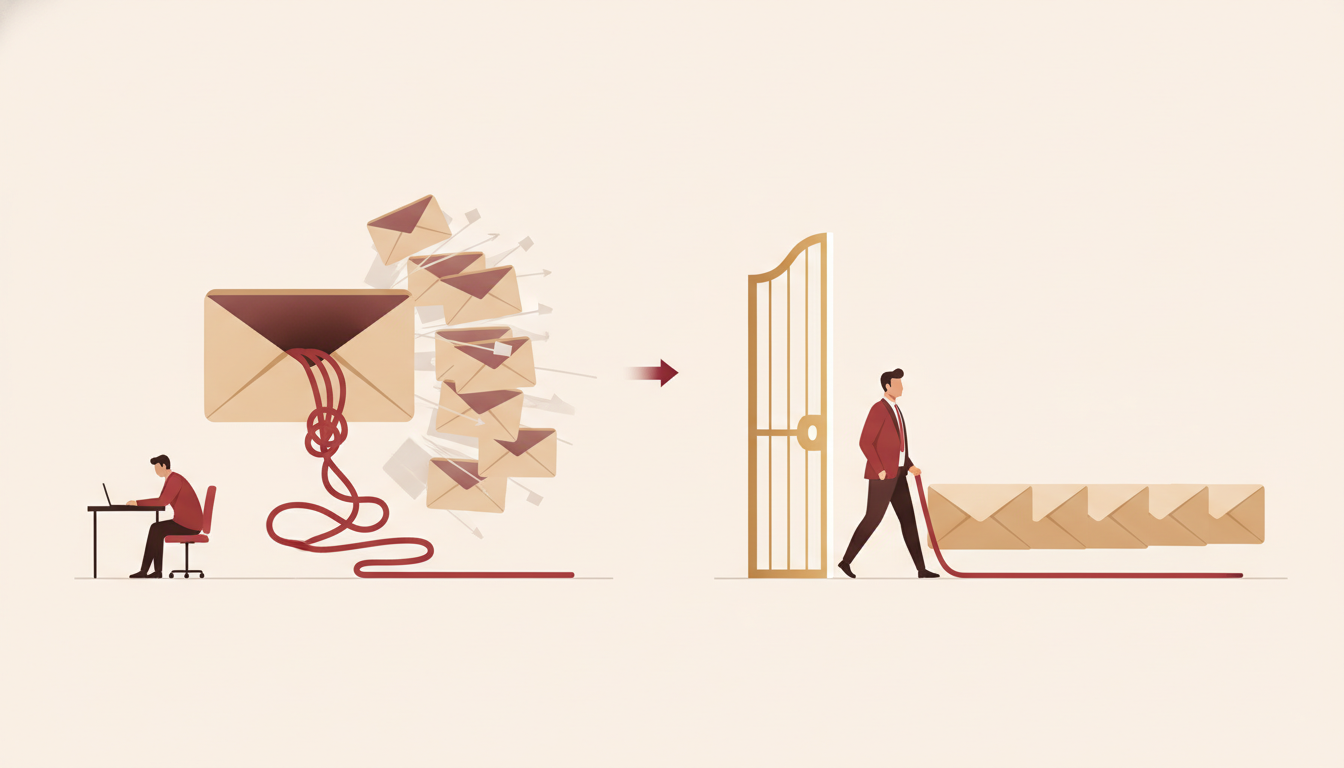
Hi Jake, I can deliver a thorough analysis, but not by Friday given my current commitments. I can have it ready by next Wednesday, or I can deliver a preliminary version by Friday with the full report following on Monday. Which option works better for the team?What changed: Didn't agree to an unrealistic deadline out of people-pleasing. Offered alternatives that protect quality while showing flexibility. This approach aligns with the strategies in our guide on how to stop being a people-pleaser at work.
Example 7: Pushing Back on Scope Creep
Before (Passive):Sure, I can add that to the project too! It's a lot, but I'll figure it out somehow.After (Assertive):
I can incorporate the additional social media analysis into the project. To maintain quality and our current deadline, I'd need to either extend the timeline by one week or deprioritize the competitor benchmarking section. Which trade-off do you prefer?What changed: Acknowledged the request without absorbing all the cost. Made the trade-off visible so the stakeholder can make an informed decision.
Example 8: Addressing Someone Who Missed a Commitment
Before (Passive):Hey, no worries at all! I know you're busy. Just wondering if you happened to get a chance to send those files? Totally fine if not!After (Assertive):
Hi Priya, I haven't received the design files that were due Monday. The client presentation is Thursday, and I need them by tomorrow at 5pm to finalize the deck. Can you confirm you'll have them ready by then?What changed: Stated the fact (files are late), the consequence (client presentation at risk), and the specific need (deadline + confirmation). No "no worries"—because there are legitimate concerns.
Example 9: Responding to an Unreasonable Request
Before (Passive):Hmm, I guess I could try to make that work? I'm not sure it's the best approach but I'll see what I can do.After (Assertive):
I appreciate the suggestion. Based on what I've seen in previous campaigns, that approach is likely to reduce our response rate by 15-20%. I'd recommend we A/B test it against the current method before a full rollout. I can set up the test framework this week.What changed: Disagreed with data, not emotion. Offered a constructive alternative. Positioned expertise without being combative.
Example 10: Saying No to a Meeting You Don't Need to Attend
Before (Passive):Sure, I'll be there! (Then silently resents sitting in a 60-minute meeting that could have been an email.)After (Assertive):
Thanks for the invite. Based on the agenda, it looks like my input would be most relevant for item 3 (budget allocation). Would it work for me to join for that portion, or could you share the notes and I'll follow up with any input afterward?What changed: Respected your own time while offering a productive alternative. A 2022 study from Otter.ai found that professionals spend an average of 18 hours per week in meetings—assertive email communication helps you reclaim time without burning bridges.
3 Before & After Examples: Escalation and Difficult Conversations
Example 11: Escalating a Stalled Project
Before (Passive):Hi everyone, just wanted to gently flag that we might be falling a little behind on the timeline. Not trying to point fingers or anything! Just thought I'd mention it.After (Assertive):
Team, the project is currently 10 days behind the approved timeline. The three blockers are: (1) pending legal review, (2) incomplete API documentation, and (3) unresolved vendor contract terms. I've outlined owners and proposed resolution dates in the attached tracker. Let's align on these by EOD Thursday.What changed: Replaced vague "gentle flagging" with specific data. Named the blockers without blame. Proposed a solution and set a deadline for alignment.
Example 12: Addressing Credit-Taking
Before (Passive):(Says nothing and quietly fumes.)After (Assertive):
Hi Daniel, I noticed the Q3 retention strategy was presented in Monday's leadership meeting without reference to our team's contribution. As the project lead, I'd appreciate being included in future presentations of this work, or at minimum credited in the materials. Can we discuss how to handle this going forward?What changed: Stated the observation factually, made a clear request, and focused on future behavior rather than accusation. For more on handling this scenario, see our article on what to do when someone takes credit for your idea.
Example 13: Delivering Unwelcome News to a Client
Before (Passive):Hi, so unfortunately I'm really sorry but we might not be able to hit the original timeline. I feel terrible about this. We're trying our best though!After (Assertive):
Hi Rebecca, I want to give you an early update on the project timeline. The integration phase has taken longer than projected due to unexpected data format issues. Our revised delivery date is April 15. I've attached an updated project plan showing the adjusted milestones and the steps we're taking to prevent further delays. I'm available to discuss this on a call today or tomorrow.What changed: Led with transparency, explained the cause without excessive apologizing, provided a revised plan, and offered to discuss. This approach is covered in depth in our guide on how to deliver bad news professionally and with poise.
2 Before & After Examples: Self-Advocacy and Negotiation
Example 14: Following Up on a Raise Discussion
Before (Passive):Hi, sorry to bring this up again. I know budgets are tight and everything. I was just wondering if there was any update on the compensation conversation we had? No rush!After (Assertive):
Hi Karen, I'd like to follow up on our compensation discussion from March 3. You mentioned a decision would be made by end of Q1. As we're approaching that date, I'd like to schedule a 20-minute meeting this week to discuss next steps. Does Thursday or Friday afternoon work?What changed: Referenced the specific conversation and timeline, made a concrete scheduling request, and didn't apologize for advocating for yourself. For a complete framework on this topic, check out our guide on how to negotiate a raise after a promotion confidently.
Example 15: Positioning Yourself for a New Opportunity
Before (Passive):Hi, I don't know if this is appropriate to ask, but I heard there might be an opening on the strategy team? I'm probably not qualified enough, but I thought I'd mention I might be interested, if that's okay.After (Assertive):
Hi Michael, I'd like to express my interest in the Senior Strategy Analyst role posted last week. My work leading the market expansion analysis this quarter is directly relevant—we identified $2.3M in untapped revenue, which is now in the implementation phase. I'd welcome the chance to discuss how my experience aligns with the role. Could we schedule a conversation this week?What changed: Led with clear intent, cited specific and quantifiable results, and requested a concrete next step. No self-deprecation, no permission-seeking.
The 7 Language Swaps That Make Any Email More Assertive
You don't need to rewrite every email from scratch. These seven targeted swaps will immediately strengthen your email communication:
| Passive Phrasing | Assertive Replacement |
|---|---|
| "Just wanted to check in..." | "I'm following up on..." |
| "Sorry to bother you, but..." | "I'd like to discuss..." |
| "I think maybe we should..." | "I recommend we..." |
| "Does that make sense?" | "Let me know if you have questions." |
| "I'm no expert, but..." | "Based on my experience..." |
| "Whenever you get a chance..." | "By [specific date]..." |
| "I feel like..." | "The data shows..." |
According to a 2024 Grammarly workplace communication report, professionals who eliminated hedging language from their emails saw a 27% increase in response rates and were 31% more likely to have their recommendations adopted.
These swaps align closely with the principles in our guide on how to stop sounding uncertain at work. Each one replaces a credibility-eroding phrase with a confidence-building alternative.
Frequently Asked Questions
How do I write an assertive email without sounding rude?
Assertive communication isn't about being harsh—it's about being clear. The key is to pair directness with professionalism. State facts, not judgments. Use "I" statements ("I need," "I recommend") rather than "you" accusations. Include a specific next step and maintain a respectful tone. Research from the University of Michigan's Ross School of Business shows that recipients rate direct emails as more respectful than vague ones because they save everyone's time.
What is the difference between assertive and aggressive email communication?
Assertive emails state your needs and boundaries while respecting the reader's perspective. Aggressive emails dismiss or disregard the other person. For example, assertive: "I need the report by Thursday to meet our deadline." Aggressive: "You always deliver late and it's unacceptable." The difference is focus—assertive centers on the need and the solution, while aggressive centers on blame and control.
How do I stop over-apologizing in professional emails?
First, audit your last 10 sent emails for unnecessary "sorry" and "apologize." Replace apologies with appreciation ("Thanks for your patience" instead of "Sorry for the delay") or direct statements ("I'd like to discuss" instead of "Sorry to bother you"). Reserve apologies for genuine mistakes. A 2019 study in Psychological Science found that excessive apologizing reduces perceived competence by up to 22%.
Can assertive email communication help me get promoted?
Yes. Email is one of the most visible forms of professional communication—leaders read your emails far more often than they hear you present. Consistently assertive emails signal leadership readiness, decision-making ability, and confidence. According to a 2023 LinkedIn Workplace Learning report, communication skills are the #1 most in-demand soft skill for leadership roles, and email is where those skills are demonstrated daily.
How do I handle a passive-aggressive email assertively?
Respond to the surface content, not the subtext. Acknowledge the factual elements, restate your position clearly, and move the conversation forward. For example, if someone writes, "As I mentioned several times already..." respond with: "Thanks for the reminder. Here's the updated status on that item: [facts]. I'll have the final version by [date]." This neutralizes the passive aggression without escalating.
Should I use assertive communication in every email?
Not every email needs the same level of assertiveness. Casual check-ins with close colleagues can be lighter in tone. But any email involving requests, deadlines, decisions, pushback, or self-advocacy should use assertive language. The goal isn't to sound robotic—it's to ensure your professional communication consistently reflects your competence and credibility.
Stop Sounding Uncertain in Everyday Conversations
8 communication frameworks, the 7 speech shifts with 30 before-and-after rewrites, 6 email templates, and 100+ phrases for speaking and writing with calm authority at work. PDF.
Get The Authority Toolkit — $27Related Articles
How to Be More Assertive in Emails: 12 Before & Afters
To be more assertive in emails, eliminate hedging language ("just," "I think," "sorry to bother you"), replace vague requests with specific actions and deadlines, and lead with your main point instead of burying it. Assertive emails aren't aggressive—they're clear, direct, and respectful. The 12 before-and-after rewrites below show you exactly how to transform passive, uncertain email language into messages that command attention and get results.

How to Be More Assertive in Professional Emails (With Examples)
To be more assertive in professional emails, replace hedging language with direct statements, lead with your main point, use confident sentence structures, and state clear expectations with deadlines. Assertive emails aren't aggressive — they're clear, respectful, and impossible to misinterpret. The key shift is moving from "I was just wondering if maybe we could…" to "I'd like to move forward with X by Friday." Below, you'll find 15+ before-and-after rewrites covering the most common profession

How to Communicate With Authority at Work: 10 Habits
To communicate with authority at work, build ten daily habits across verbal, written, and nonverbal channels: lead with your conclusion, eliminate hedging language, use strategic pauses, anchor your body language, control your vocal tone, write concisely, prepare a point of view before every meeting, ask high-value questions, set verbal boundaries, and follow through visibly. These small, repeatable actions compound over time to build a lasting reputation for credibility and leadership presence.