Blog

Expert insights on professional communication, building authority, and commanding respect.

How to Negotiate Project Resources With Confidence
Negotiation

How to Negotiate Project Resources With Confidence

To negotiate project resources effectively, start by building a data-driven business case that ties your resource request directly to organizational outcomes. Quantify the cost of *not* having the resources (missed deadlines, revenue loss, team burnout), anticipate objections with pre-built responses, and frame every ask in terms of value delivered — not personal need. The most credible negotiators don't beg for resources; they present a strategic case that makes approval the obvious decision.

Confidence Playbook·
Managing Speaking Anxiety at Work: 8 Proven Methods
Public Speaking

Managing Speaking Anxiety at Work: 8 Proven Methods

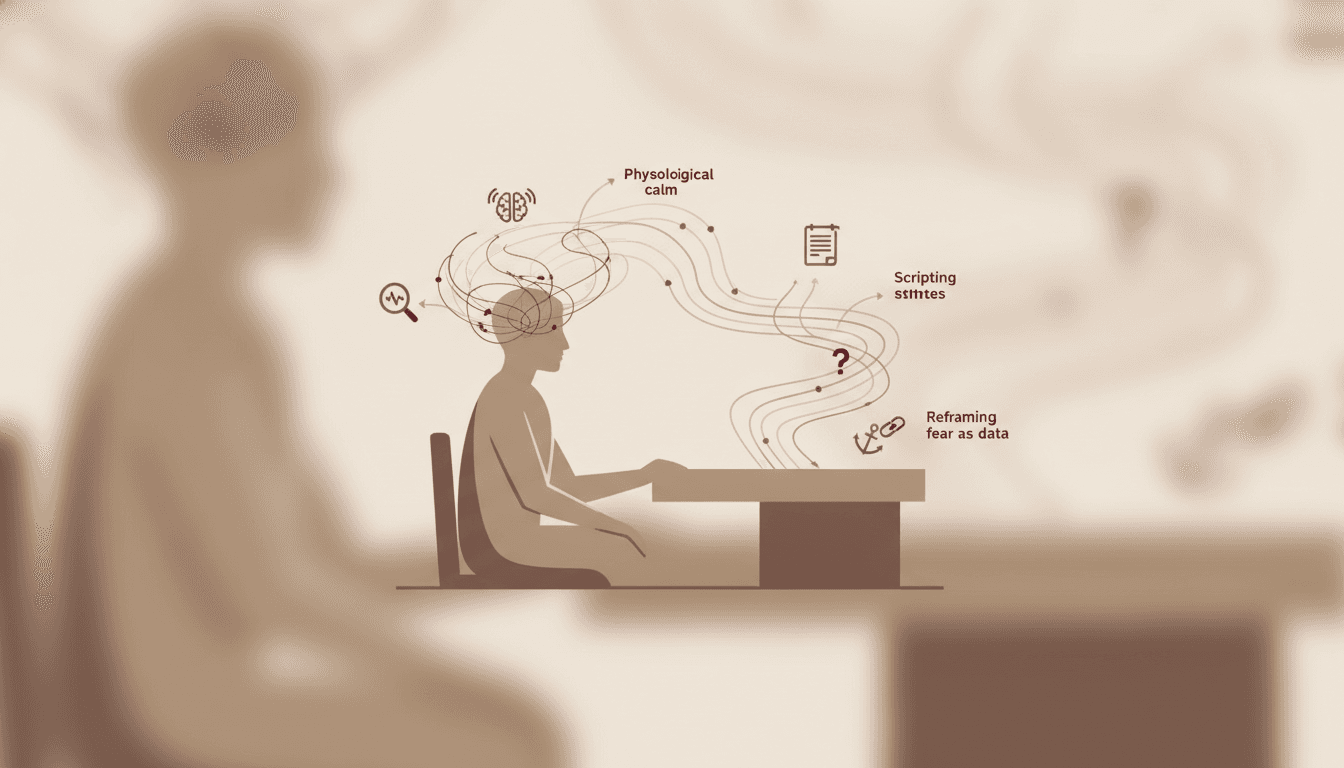
To manage speaking anxiety at work, use evidence-based techniques that target your body's stress response before and during everyday speaking moments. The most effective methods include controlled breathing to lower cortisol, cognitive reframing to shift your threat response, structured preparation frameworks for impromptu moments, and progressive exposure to build tolerance over time. These techniques work for team updates, all-hands questions, and hallway conversations — not just formal presen

Confidence Playbook·
How to Lead a Meeting Confidently: A Step-by-Step Guide
Leadership Presence

How to Lead a Meeting Confidently: A Step-by-Step Guide

To lead a meeting confidently, prepare a clear agenda with defined outcomes, open with a strong framing statement that establishes purpose, manage the room by directing conversation and handling dominant voices, and close with specific action items and owners. Confident meeting leadership isn't about having all the answers — it's about controlling the process, projecting calm authority through your voice and body language, and making every participant feel the meeting was worth their time.

Confidence Playbook·
How to Handle Being Talked Over in Meetings (Scripts)
Workplace Confidence

How to Handle Being Talked Over in Meetings (Scripts)

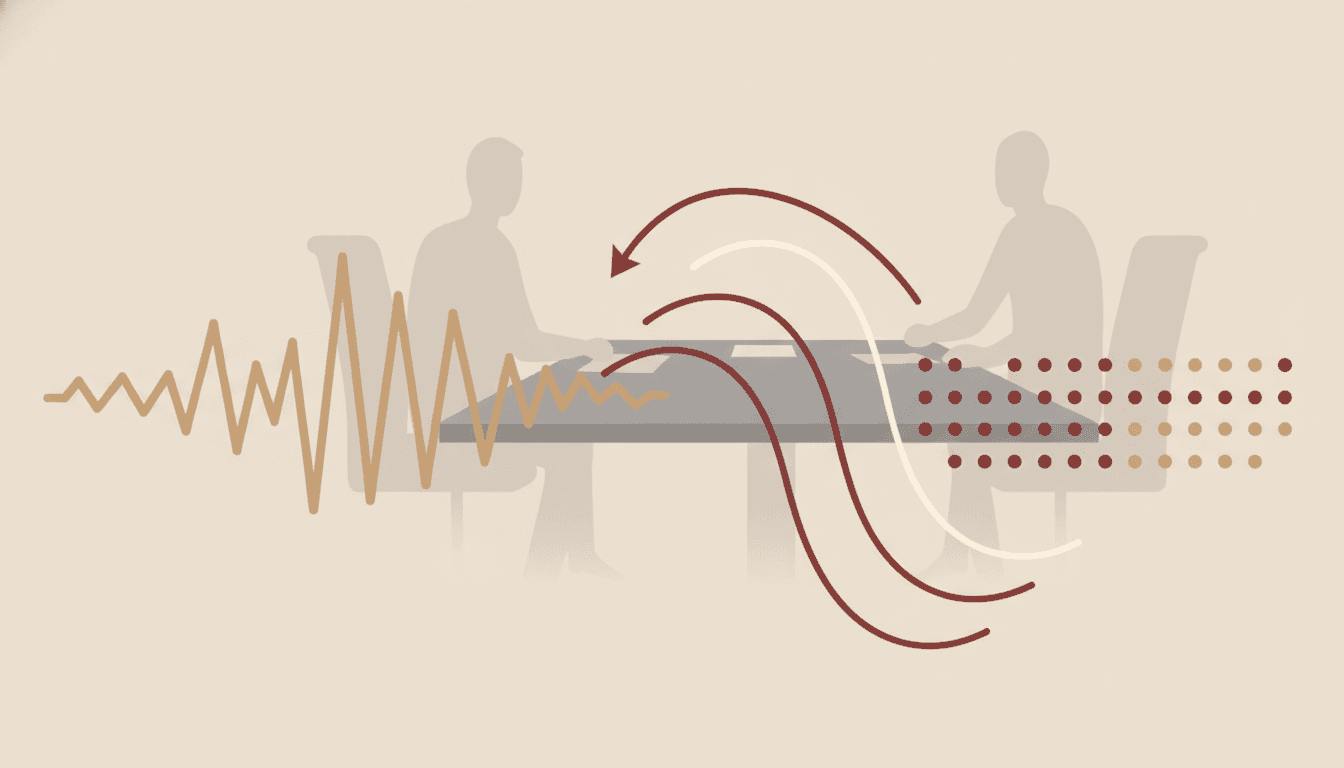
Being talked over in meetings is more than rude—it's a credibility threat. To handle it, use a combination of prevention strategies and in-the-moment scripts. Before the meeting, secure speaking time on the agenda. When interrupted, use a calm, direct reclaim phrase like: *"I'd like to finish my point."* After the meeting, follow up in writing to reinforce your contribution. Over time, build a communication presence that naturally discourages interruption through vocal authority, body language,

Confidence Playbook·
How to Stop Sounding Unsure When You Speak at Work
Professional Communication

How to Stop Sounding Unsure When You Speak at Work

To stop sounding unsure when you speak, eliminate five specific habits: uptalk (rising pitch at the end of statements), filler words ("um," "like," "you know"), qualifier phrases ("I just think," "I'm not sure, but"), permission-seeking language ("Does that make sense?"), and hedging ("sort of," "kind of"). Replace each with confident alternatives—declarative tone, strategic pauses, direct statements, and assertive framing. Daily practice with recording and feedback accelerates the shift within

Confidence Playbook·
How to Communicate Up to Leadership: Rules That Work
Executive Communication

How to Communicate Up to Leadership: Rules That Work

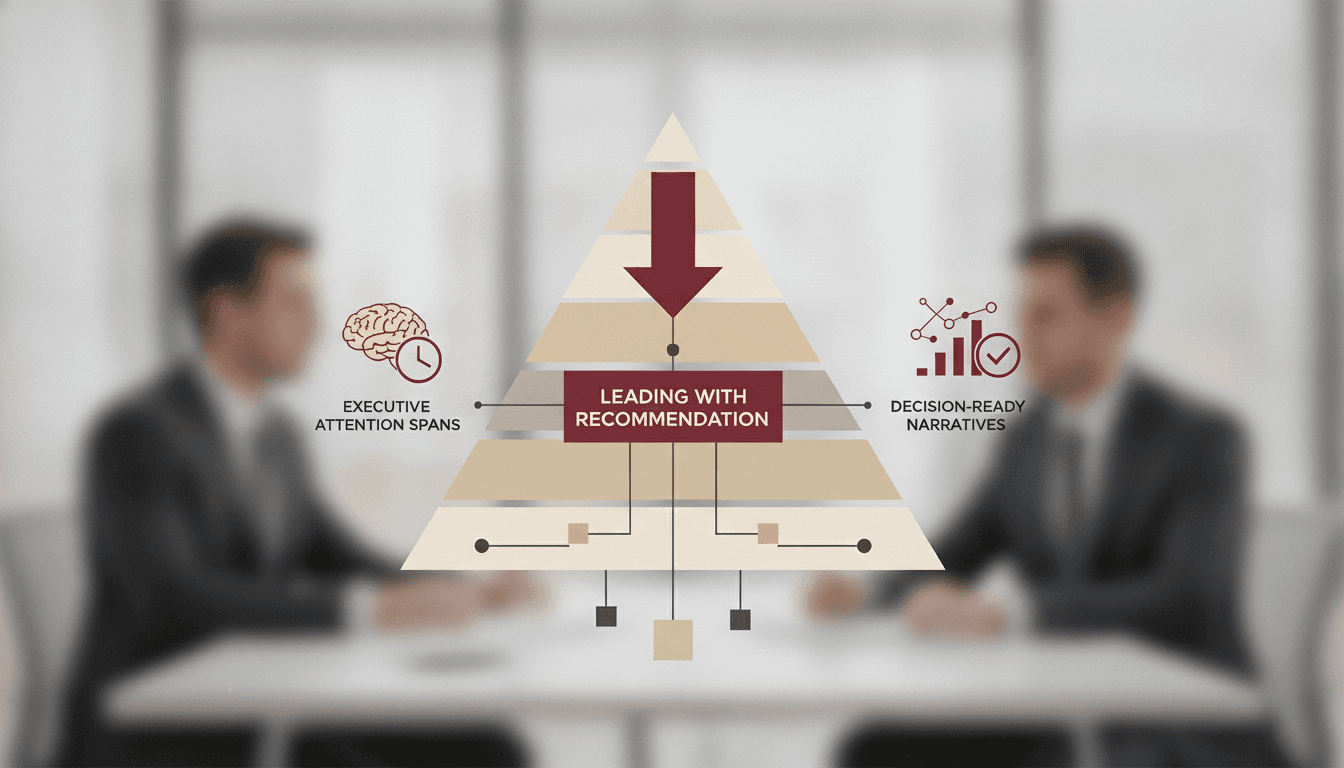
To communicate up to leadership effectively, lead with your recommendation first, structure your message using the pyramid principle (conclusion → supporting points → details), and calibrate the level of detail to your audience. Senior leaders make dozens of decisions daily and need you to be concise, strategic, and solution-oriented. The professionals who master upward communication don't just get heard — they get trusted, promoted, and invited back to the table.

Confidence Playbook·
From Speaker to Storyteller: Captivate Any Audience at Work
Public Speaking

From Speaker to Storyteller: Captivate Any Audience at Work

To transition from speaker to storyteller, shift your focus from delivering information to creating an experience. Start by anchoring every presentation around a central narrative arc — a character, a challenge, and a resolution. Replace data dumps with emotional hooks, use sensory details to make abstract concepts tangible, and structure your message so the audience feels the tension before you deliver the insight. Storytelling isn't a soft skill; it's the most powerful credibility tool in prof

Confidence Playbook·
How to Rebuild Confidence After a Negative Performance Review
Workplace Confidence

How to Rebuild Confidence After a Negative Performance Review

A negative performance review can shake your professional identity to its core—but it doesn't have to define your trajectory. Rebuilding confidence after negative performance review feedback requires a deliberate process: separating your identity from the evaluation, extracting actionable insights from the criticism, and re-establishing your credibility through visible, strategic action. This guide walks you through a proven framework to move from self-doubt back to commanding presence—often str

Confidence Playbook·
How to Build Gravitas as a Young Leader: A Practical Guide
Leadership Presence

How to Build Gravitas as a Young Leader: A Practical Guide

Building gravitas as a young leader requires deliberate mastery of four pillars: vocal authority, physical composure, strategic communication, and emotional steadiness. You don't need decades of experience to command a room. By controlling your vocal delivery, choosing words with precision, maintaining composed body language, and demonstrating strategic thinking, you can project the weight and credibility that earn respect from even the most seasoned colleagues. This guide gives you a concrete,

Confidence Playbook·
Why People Don't Listen to You at Work (And How to Fix It)
Professional Communication

Why People Don't Listen to You at Work (And How to Fix It)

People don't listen to you at work because of fixable communication habits—not because your ideas lack value. The most common reasons include hedging language ("I just think maybe…"), weak vocal delivery, poor timing, lack of perceived authority, and failure to lead with relevance. Each root cause has a specific remedy. When you diagnose *why* you're being overlooked and apply targeted fixes—from restructuring how you open statements to adjusting your vocal tone and body language—you can transfo

Confidence Playbook·
Communicate With Poise Under Pressure: 7 Proven Methods
Workplace Confidence

Communicate With Poise Under Pressure: 7 Proven Methods

To communicate with poise under pressure, use these seven methods: cognitive reappraisal (reframing the threat as a challenge), tactical breathing, structured response frameworks like the PREP method, strategic pausing, vocal anchoring, pre-commitment scripts, and post-event processing. These techniques work because they interrupt the brain's stress response and redirect your cognitive resources toward clarity, composure, and credibility — even in the most high-stakes professional moments.

Confidence Playbook·
Leadership Presence Without Formal Authority: A Playbook
Leadership Presence

Leadership Presence Without Formal Authority: A Playbook

Leadership presence without formal authority is the ability to influence decisions, shape outcomes, and earn respect in the workplace—without relying on a management title or positional power. You build it through deliberate communication patterns, strategic relationship-building, and consistent behaviors that signal credibility. This playbook gives mid-career professionals and individual contributors a step-by-step framework for projecting leadership presence in meetings, conversations, and cro

Confidence Playbook·
How to Negotiate in a Meeting: Scripts and Strategies
Negotiation

How to Negotiate in a Meeting: Scripts and Strategies

To negotiate in a meeting effectively, prepare your position with data before you walk in, open with a collaborative framing statement, use structured scripts to anchor your proposals, and deploy real-time tactics like strategic silence and conditional concessions. The key difference between professionals who win negotiations in meetings and those who don't isn't aggressiveness—it's preparation, precise language, and the confidence to hold their ground when the conversation shifts.

Confidence Playbook·
Why People Don't Take You Seriously at Work (And How to Fix It)
Professional Communication

Why People Don't Take You Seriously at Work (And How to Fix It)

If people don't take you seriously at work, it's rarely about your skills or intelligence. The most common reasons include verbal habits like uptalk and qualifier words ("I just think…"), reactive rather than proactive communication, inconsistent body language, poor positioning in meetings, and a lack of visible authority signals. The good news: every one of these is fixable with specific, deliberate shifts in how you communicate, show up, and position yourself professionally.

Confidence Playbook·
How to Be More Assertive in the Workplace: Daily Habits
Workplace Confidence

How to Be More Assertive in the Workplace: Daily Habits

To be more assertive in the workplace, build small daily habits that compound over time. Start by stating one clear opinion in each meeting, replacing hedging language ("I just think maybe...") with direct phrasing ("I recommend..."), and setting one micro-boundary per day—like declining a non-essential request. Assertiveness isn't a personality trait you're born with. It's a communication skill you train through repeated, low-stakes practice until it becomes your default operating mode.

Confidence Playbook·
Executive Presence vs Leadership Presence: Key Differences
Executive Communication

Executive Presence vs Leadership Presence: Key Differences

Executive presence and leadership presence are related but distinct professional skills. Executive presence is the ability to project confidence, credibility, and composure in high-stakes settings — it's how senior stakeholders perceive your readiness for top roles. Leadership presence is the ability to inspire trust, motivate others, and guide teams through influence — it's how people experience your ability to lead. You may need one, the other, or both depending on your career stage, and under

Confidence Playbook·
How to Negotiate Your Worth at Work: A Step-by-Step Guide
Negotiation

How to Negotiate Your Worth at Work: A Step-by-Step Guide

To negotiate your worth at work, start by documenting your measurable contributions—revenue generated, problems solved, and skills acquired. Then expand your definition of "worth" beyond salary to include role scope, visibility, resources, and growth opportunities. Use credibility-based persuasion: anchor every request in business impact, present a clear case with evidence, and communicate with the confident authority that makes decision-makers take you seriously.

Confidence Playbook·
How to Speak With Authority and Confidence: A Framework
Public Speaking

How to Speak With Authority and Confidence: A Framework

Speaking with authority and confidence comes down to mastering four pillars: vocal mechanics (pace, pitch, and projection), message structure (clarity and concision), physical presence (posture, gestures, and eye contact), and mental preparation (managing nerves and anchoring self-belief). When you train these four areas together—even for ten minutes a day—you transform from someone who shares ideas into someone who commands a room. This framework gives you the drills to make that shift.

Confidence Playbook·
Confident Communication at Work: 12 Before & After Examples
Professional Communication

Confident Communication at Work: 12 Before & After Examples

Confident communication at work means replacing vague, apologetic, or passive language with clear, direct, and authoritative phrasing. Below, you'll find 12 real-world before-and-after examples spanning emails, meetings, presentations, and negotiations. Each example shows the exact words to stop using and what to say instead—so you can sound credible, earn respect, and get heard without coming across as aggressive.

Confidence Playbook·
How to Establish Authority at Work Without a Title
Career Authority

How to Establish Authority at Work Without a Title

You don't need a corner office or a senior title to establish authority at work. Authority comes from how you communicate, how you show up, and how consistently you deliver value that others rely on. The professionals who hold the most influence in any organization are often those who built credibility through strategic visibility, confident communication, and a reputation for solving problems — long before the title caught up. This guide gives you the exact behaviors, frameworks, and communicat

Confidence Playbook·
How to Sound More Confident in Meetings: 9 Proven Shifts
Workplace Confidence

How to Sound More Confident in Meetings: 9 Proven Shifts

To sound more confident in meetings, focus on nine specific shifts: eliminate hedging language ("I think maybe…"), use decisive sentence structures, lower your vocal pitch at the end of statements, pause instead of using filler words, lead with your conclusion, anchor your points in data, claim physical space, prepare a "first five minutes" contribution, and replace apologies with assertions. These shifts are linguistic and behavioral — not personality changes — meaning anyone can learn them imm

Confidence Playbook·
How to Respond to Criticism at Work Professionally
Workplace Confidence

How to Respond to Criticism at Work Professionally

To respond to criticism at work professionally, pause before reacting, listen fully without interrupting, and separate the feedback from your emotional response. Use a three-part framework: acknowledge what you've heard, ask clarifying questions, and commit to a specific next step. This approach keeps you composed, protects your credibility, and turns even unfair criticism into an opportunity to demonstrate leadership presence. The professionals who advance fastest aren't those who avoid critici

Confidence Playbook·
How to Position Yourself for Promotion: Authority Plan
Career Authority

How to Position Yourself for Promotion: Authority Plan

Positioning yourself for promotion requires a deliberate 90-day strategy built on three pillars: increasing your visibility with decision-makers, demonstrating leadership before you hold the title, and building a credibility narrative that makes your advancement feel inevitable. This isn't about working harder — it's about communicating your value strategically, aligning your contributions with organizational priorities, and ensuring the people who control promotions already see you as the obvio

Confidence Playbook·
How to Control Your Voice When Nervous Presenting
Public Speaking

How to Control Your Voice When Nervous Presenting

To control your voice when nervous presenting, focus on three fundamentals: diaphragmatic breathing to stabilize airflow, deliberate pacing to prevent rushing, and vocal warm-ups before you speak. Nervousness triggers shallow breathing, which causes a shaky voice, rising pitch, and speed. By anchoring your breath low in your abdomen, pausing intentionally between key points, and warming up your vocal cords, you can sound steady, authoritative, and in control — even when your nerves are firing.

Confidence Playbook·
How to Rebuild Confidence After Being Micromanaged
Workplace Confidence

How to Rebuild Confidence After Being Micromanaged

Rebuilding confidence after being micromanaged starts with recognizing that the damage is real — and reversible. Prolonged micromanagement erodes your trust in your own judgment, makes you second-guess routine decisions, and shrinks your professional voice. Recovery requires a deliberate process: separating your manager's controlling behavior from your actual competence, reclaiming small decisions daily, rebuilding your internal authority, and learning to communicate boundaries so it never happe

Confidence Playbook·
How to Build Leadership Presence as an Introvert
Leadership Presence

How to Build Leadership Presence as an Introvert

Building leadership presence as an introvert starts with leveraging your natural strengths—deep listening, thoughtful preparation, and strategic silence—rather than mimicking extroverted behaviors. The most effective introverted leaders build credibility through consistent, high-quality contributions, deliberate one-on-one influence, and mastering the art of saying less but meaning more. You don't need to be the loudest voice; you need to be the most trusted one.

Confidence Playbook·
How to Communicate Change to Your Team With Authority
Leadership Presence

How to Communicate Change to Your Team With Authority

To communicate change to your team effectively, lead with clarity, not comfort. State the change directly, explain the business reason behind it, acknowledge the emotional impact, and outline concrete next steps. The leaders who maintain trust through transitions are those who project calm authority while remaining genuinely transparent — even when they don't have all the answers. A clear framework, practiced delivery, and consistent follow-through separate credible change leaders from those who

Confidence Playbook·
How to Disagree With Your Boss in a Meeting (Respectfully)
Workplace Confidence

How to Disagree With Your Boss in a Meeting (Respectfully)

You can disagree with your boss in a meeting without damaging the relationship by using a three-step approach: acknowledge their perspective first, frame your dissent around shared goals, and propose an alternative rather than simply objecting. The key is treating disagreement as strategic alignment, not confrontation. Timing, tone, and framing determine whether you're seen as a thoughtful contributor or a difficult employee. This guide gives you the exact scripts, decision frameworks, and recov

Confidence Playbook·
How to Be Seen as a Leader at Work (Before the Title)
Career Authority

How to Be Seen as a Leader at Work (Before the Title)

You don't need a formal title to be seen as a leader at work. The professionals who get tapped for leadership roles consistently demonstrate seven behavioral signals: they communicate with clarity under pressure, frame problems strategically, advocate for others, take ownership of outcomes, stay composed in crises, make decisions with conviction, and build trust across levels. Start practicing these behaviors now, and decision-makers will view you as a leader long before the promotion arrives.

Confidence Playbook·
How to Brief Executives Quickly: The 60-Second Framework
Executive Communication

How to Brief Executives Quickly: The 60-Second Framework

To brief executives quickly, use the Context-Headline-Ask (CHA) framework: open with one sentence of context, deliver your headline (the key insight or update), and close with a clear ask or recommendation. This structure respects executive time, demonstrates strategic thinking, and positions you as someone who communicates with authority. The best executive briefings take 60 seconds or less and always lead with the conclusion, not the backstory.

Confidence Playbook·
How to Pause Effectively in Public Speaking (With Examples)
Public Speaking

How to Pause Effectively in Public Speaking (With Examples)

To pause effectively in public speaking, use intentional silence lasting 2–5 seconds at strategic moments: before key points (dramatic pause), between sections (transitional pause), after important statements (emphasis pause), when posing questions (reflective pause), and when commanding attention (authority pause). The most credible speakers don't rush to fill silence—they use it as a tool to signal confidence, let ideas land, and hold the room's attention.

Confidence Playbook·
Rebuilding Confidence After Being Passed Over for Promotion
Workplace Confidence

Rebuilding Confidence After Being Passed Over for Promotion

You found out someone else got the role you wanted. The sting is real, and so is the self-doubt creeping in. But being passed over for a promotion doesn't define your career trajectory — how you respond does. Rebuilding confidence after being passed over for a promotion starts with processing the disappointment, seeking honest feedback, recalibrating your visibility strategy, and positioning yourself as the undeniable choice for the next opportunity. This article gives you the exact playbook to

Confidence Playbook·
How to Sound More Senior at Work: 9 Language Shifts
Professional Communication

How to Sound More Senior at Work: 9 Language Shifts

To sound more senior at work, replace tentative, permission-seeking language with decisive, outcome-oriented communication. Senior-level professionals speak in solutions rather than problems, own their recommendations instead of hedging, and frame contributions around business impact rather than task completion. The nine language shifts below—covering emails, meetings, status updates, and negotiations—will immediately elevate how colleagues and leaders perceive your seniority and credibility.

Confidence Playbook·
How to Negotiate as a New Manager: Scripts & Strategy
Negotiation

How to Negotiate as a New Manager: Scripts & Strategy

Negotiating as a new manager requires a different playbook than negotiating as an individual contributor. The fastest way to succeed is to anchor every request in team outcomes rather than personal preference, use data to replace perceived inexperience, and lead with collaborative framing ("Here's what I need to deliver results for us") instead of adversarial demands. Below, you'll find role-specific scripts, proven frameworks, and confidence-building strategies designed for managers in their fi

Confidence Playbook·
How to Speak With Poise Under Pressure: 7 Techniques
Public Speaking

How to Speak With Poise Under Pressure: 7 Techniques

Speaking with poise under pressure requires deliberate preparation, not natural talent. The most effective techniques include anchoring your breath before responding, using structured frameworks to organize thoughts in real time, slowing your pace by 20%, leading with your conclusion, and replacing reactive language with composed, authoritative phrasing. These rehearsable methods help professionals maintain clarity, composure, and credibility during boardroom challenges, crisis updates, live Q&A

Confidence Playbook·
How to Speak Up to Your Boss Without Damaging Trust
Workplace Confidence

How to Speak Up to Your Boss Without Damaging Trust

Speaking up to your boss requires a combination of strategic timing, respectful framing, and solution-oriented language. Start by requesting a private conversation, then lead with shared goals ("I want to make sure this project succeeds"), state your concern using facts rather than emotions, and propose at least one alternative. This approach shows you're invested in outcomes, not conflict—which actually strengthens trust rather than eroding it.

Confidence Playbook·
How to Build Executive Presence Remotely: A Full Guide
Leadership Presence

How to Build Executive Presence Remotely: A Full Guide

Building executive presence remotely requires intentional mastery of three dimensions: how you appear on camera, how you write in digital channels, and how you lead when no one can see you working. Unlike in-person settings, remote environments strip away many natural authority cues—your posture in a hallway, your handshake, your physical command of a conference room. To compensate, you must engineer credibility through deliberate video presence, concise and authoritative written communication,

Confidence Playbook·
How to Sound More Strategic at Work: 9 Language Shifts
Professional Communication

How to Sound More Strategic at Work: 9 Language Shifts

To sound more strategic at work, replace tactical, task-focused language with big-picture framing. Instead of saying "I finished the report," say "I completed the competitive analysis to inform our Q3 positioning." Strategic communicators consistently connect their work to business outcomes, use forward-looking language, reference data, and frame decisions in terms of trade-offs and priorities rather than to-do lists. These nine language shifts will reposition you as a strategic thinker in meeti

Confidence Playbook·
How to Stop Undermining Yourself at Work: 10 Fixes
Workplace Confidence

How to Stop Undermining Yourself at Work: 10 Fixes

To stop undermining yourself at work, identify and replace the specific communication habits that erode your credibility—like qualifying language ("I just think…"), excessive apologizing, vocal uptick, delayed responses, and chronic deference. Each habit has a concrete fix: swap hedging phrases for direct statements, replace apologies with acknowledgments, and practice assertive body language. The ten fixes below give you exact replacement scripts so you can project confidence and authority star

Confidence Playbook·
Communicate With Difficult Senior Leaders: 6 Rules
Executive Communication

Communicate With Difficult Senior Leaders: 6 Rules

Quick Answer: To communicate with difficult senior leaders, follow six rules: lead with their priorities (not yours), use the bottom-line-up-front structure, manage your emotional state before engaging, ask strategic questions instead of defending, match their communication tempo, and build micro-credibility between interactions. These rules help you stay composed, deliver concise messages, and earn respect—even when a senior leader is dismissive, impatient, or intimidating.

Confidence Playbook·
Confident Body Language for Public Speaking: 8 Shifts
Public Speaking

Confident Body Language for Public Speaking: 8 Shifts

Confident body language for public speaking comes down to eight specific nonverbal adjustments: grounding your stance, purposeful hand gestures, sustained eye contact patterns, controlled movement, open posture, deliberate pausing with stillness, facial expressiveness, and commanding use of space. These shifts work together to signal authority and credibility to your audience — even before you say a single word. Master them, and you transform how every room perceives you.

Confidence Playbook·
How to Negotiate Remote Work: Scripts That Work
Negotiation

How to Negotiate Remote Work: Scripts That Work

To negotiate a remote work arrangement successfully, lead with business value—not personal preference. Frame your request around productivity data, measurable outcomes, and team efficiency. Use a structured proposal that includes a trial period, clear deliverables, and communication protocols. The professionals who win remote work negotiations are those who make it easy for their manager to say yes by removing risk and demonstrating credibility. Below, you'll find word-for-word scripts and a pro

Confidence Playbook·
Leadership Presence in Email: Write With Authority
Leadership Presence

Leadership Presence in Email: Write With Authority

Leadership presence in email communication is the ability to convey confidence, clarity, and authority through your written messages—without relying on vocal tone, body language, or physical gravitas. It means structuring your emails so readers immediately recognize you as a credible, decisive professional. You achieve this through deliberate word choice, concise structure, a commanding tone, and strategic brevity. When done right, every email you send reinforces your reputation as a leader wort

Confidence Playbook·
How to Speak Up in Meetings When Nervous: A Framework
Professional Communication

How to Speak Up in Meetings When Nervous: A Framework

You already know what you want to say. The insight is there, the answer is ready — but the moment the conversation opens up, something locks. Your throat tightens, your heart rate spikes, and the window closes before you speak. To speak up in meetings when nervous, use a three-phase framework: prepare anchor statements before the meeting, enter the conversation through low-risk contributions first (like asking a clarifying question), and progressively escalate to higher-stakes contributions as y

Confidence Playbook·
Daily Workplace Confidence Exercises That Actually Work
Workplace Confidence

Daily Workplace Confidence Exercises That Actually Work

The most effective workplace confidence exercises daily are short, repeatable practices you can do before, during, and after your workday—like power priming (2 minutes before meetings), the "first voice" challenge (speaking within the first 90 seconds of a meeting), vocal warm-ups, confidence journaling, and structured self-advocacy reps. Done consistently for 30 days, these micro-exercises rewire how you carry yourself, speak up, and lead—building a durable sense of professional self-assurance

Confidence Playbook·
How to Communicate With Authority at Work: 10 Habits
Professional Communication

How to Communicate With Authority at Work: 10 Habits

To communicate with authority at work, build ten daily habits across verbal, written, and nonverbal channels: lead with your conclusion, eliminate hedging language, use strategic pauses, anchor your body language, write concisely, prepare a point of view before every meeting, control your vocal tone, ask high-value questions, set verbal boundaries, and follow through visibly. These small, repeatable actions compound over time to build a lasting reputation for credibility and leadership presence.

Confidence Playbook·
Personal Brand for Introverts at Work: A Quiet Strategy
Personal Branding

Personal Brand for Introverts at Work: A Quiet Strategy

Building a personal brand for introverts at work doesn't require loud self-promotion, networking marathons, or commanding every room you enter. Instead, it means leveraging your natural strengths—deep thinking, written communication, strategic one-on-one relationships, and expertise-driven visibility—to build credibility that speaks for itself. The most powerful introvert brands are built quietly, consistently, and through channels that favor substance over volume. This guide gives you the exact

Confidence Playbook·
Build Authority in Your Career: The Credibility Roadmap
Career Authority

Build Authority in Your Career: The Credibility Roadmap

To build authority in your career, you need to master four interconnected pillars: expertise signaling, strategic visibility, communication gravitas, and relationship capital. Authority isn't granted by a title—it's earned through consistent, deliberate actions that position you as the go-to person in your domain. This roadmap breaks each pillar into concrete milestones so you can move from competent contributor to recognized authority within 12 to 18 months.

Confidence Playbook·
How to Start a Presentation With Confidence: 8 Openers
Public Speaking

How to Start a Presentation With Confidence: 8 Openers

To start a presentation with confidence, open with a deliberate, audience-specific hook in the first 30 seconds—not a timid "So, um, thanks for having me." The eight most effective openers include a bold claim, a targeted question, a striking statistic, a short story, a contrarian statement, a relevant quote, a "what if" scenario, and a direct challenge. Each one signals authority, captures attention, and sets the tone for everything that follows.

Confidence Playbook·
Confidence at Work After Failure: How to Rebuild Fast
Workplace Confidence

Confidence at Work After Failure: How to Rebuild Fast

Rebuilding confidence at work after failure starts with three deliberate steps: own the outcome without over-apologizing, reframe the failure as a data point rather than an identity, and take visible action that demonstrates growth. Professional setbacks—a botched project, a public mistake, a missed promotion—can shatter your self-assurance. But research shows that how you respond in the weeks after a failure matters far more than the failure itself. This guide gives you a step-by-step recovery

Confidence Playbook·
Leadership Presence in Difficult Conversations: A Guide
Leadership Presence

Leadership Presence in Difficult Conversations: A Guide

Leadership presence in difficult conversations means maintaining composure, authority, and empathy when the stakes are high—whether you're delivering tough feedback, pushing back on a peer, or sharing bad news. It requires emotional regulation, intentional language, and a framework that keeps you grounded. The leaders who master this skill don't avoid hard conversations; they walk into them with a calm confidence that preserves both credibility and relationships. This guide gives you the exact f

Confidence Playbook·
How to Sound Credible in Meetings: 9 Proven Shifts
Professional Communication

How to Sound Credible in Meetings: 9 Proven Shifts

To sound credible in meetings, replace hedging language with direct statements, structure your points using a clear framework (like lead-with-the-conclusion), ground opinions in data, and use deliberate pacing instead of rushing. Credibility isn't about being the loudest voice — it's about verbal precision, confident framing, and consistent delivery patterns that signal authority every time you speak.

Confidence Playbook·
How to Develop a Commanding Voice at Work: Vocal Techniques
Professional Communication

How to Develop a Commanding Voice at Work: Vocal Techniques

To develop a commanding voice at work, focus on five core vocal mechanics: diaphragmatic breath support, lower pitch placement, deliberate pacing, strategic pausing, and chest resonance. These aren't personality traits — they're trainable skills. With 10-15 minutes of daily practice, most professionals notice a measurable difference in how colleagues respond to their voice within two to three weeks.

Confidence Playbook·
How to Negotiate Project Scope Professionally (With Scripts)
Negotiation

How to Negotiate Project Scope Professionally (With Scripts)

To negotiate project scope professionally, start by documenting the original agreement, then use a structured conversation framework: acknowledge the request, quantify the impact on timeline and resources, and present options rather than a flat "no." This approach protects your credibility while keeping the relationship collaborative. The key is framing scope changes as business decisions — not personal pushback — so stakeholders see you as a strategic partner, not a roadblock.

Confidence Playbook·
How to Command Respect at Work: 10 Non-Negotiable Practices
Career Authority

How to Command Respect at Work: 10 Non-Negotiable Practices

Commanding respect at work requires consistent action across three areas: delivering on your commitments without exception, communicating with clarity and conviction, and setting boundaries that protect your time and expertise. Respect isn't granted by title — it's earned through behavioral patterns others observe daily. The 10 practices below cover how you speak, how you listen, how you respond under pressure, and how you hold yourself accountable, giving you a concrete system for building last

Confidence Playbook·
How to Speak Up in High-Stakes Conversations With Confidence
Workplace Confidence

How to Speak Up in High-Stakes Conversations With Confidence

To speak up in high-stakes conversations with confidence, you need three things: a structured preparation ritual, a clear message framework, and a physiological strategy for managing adrenaline in the moment. The professionals who consistently perform under pressure aren't fearless — they're prepared. By using a repeatable system that covers what you'll say, how you'll say it, and how you'll stay composed, you can transform high-stakes moments from sources of dread into career-defining opportuni

Confidence Playbook·
How to Present Ideas Clearly at Work: The Clarity Method
Professional Communication

How to Present Ideas Clearly at Work: The Clarity Method

To present ideas clearly at work, lead with your conclusion first, then support it with no more than three key points, and close with a specific ask or next step. This "bottom-line-up-front" structure — used across executive boardrooms and military briefings alike — ensures your audience grasps your message in seconds, not minutes. The Clarity Method below gives you a repeatable framework for meetings, emails, and impromptu hallway conversations so your ideas land every time.

Confidence Playbook·
How to Negotiate Without Fear: A Confidence-First Approach
Negotiation

How to Negotiate Without Fear: A Confidence-First Approach

To negotiate without fear, you must shift your mindset from confrontation to collaboration and reframe negotiation as a professional skill — not a personality trait. The key is addressing three psychological barriers: fear of rejection, conflict avoidance, and imposter syndrome. By using structured preparation frameworks, practicing with low-stakes scenarios, and adopting specific language patterns that project authority without aggression, any professional can learn to negotiate confidently. Fe

Confidence Playbook·
12 Weak Communication Habits That Undermine Your Credibility
Professional Communication

12 Weak Communication Habits That Undermine Your Credibility

Weak communication habits at work — like hedging language, upspeak, over-apologizing, and passive phrasing — silently erode your professional credibility even when your ideas are strong. Research from the Harvard Business Review shows that how you communicate accounts for a significant portion of how competent others perceive you to be. The good news: these habits are fixable. Below, you'll find the 12 most damaging weak communication habits at work, why each one undermines your authority, and t

Confidence Playbook·
How to Build Professional Credibility Fast: A Proven Framework
Career Authority

How to Build Professional Credibility Fast: A Proven Framework

Building professional credibility fast requires a deliberate combination of three elements: competence signals (demonstrating you know your stuff), consistency patterns (proving you're reliable over time), and communication authority (speaking and writing in ways that command respect). Whether you're stepping into a new role, switching industries, or joining a new team, you can accelerate credibility by stacking quick wins in these three areas within your first 30–90 days. Below is the complete

Confidence Playbook·
How to Sound Confident in a Meeting (Even When You're Not)
Workplace Confidence

How to Sound Confident in a Meeting (Even When You're Not)

You sound confident in a meeting by lowering your vocal pitch, eliminating filler words, speaking in shorter sentences, and pausing deliberately instead of rushing. Preparation matters, but real-time vocal and language adjustments make the biggest difference. Confidence in meetings isn't about feeling fearless — it's about controlling the signals you send so others perceive you as credible, composed, and authoritative, even when self-doubt is running in the background.

Confidence Playbook·
How to Speak With Authority in a Group: 7 Key Shifts
Professional Communication

How to Speak With Authority in a Group: 7 Key Shifts

To speak with authority in a group, make seven deliberate shifts: replace hedging language with decisive statements, lower your vocal pitch at the end of sentences, pause before key points instead of rushing, claim physical space with open body language, time your contributions strategically, structure your ideas before speaking, and use specifics instead of generalities. These shifts change how others perceive your competence, confidence, and credibility — often within a single meeting.

Confidence Playbook·
How to Communicate With Difficult Coworkers Confidently
Workplace Confidence

How to Communicate With Difficult Coworkers Confidently

To communicate with difficult coworkers confidently, name the behavior (not the person), use structured response frameworks, and maintain emotional neutrality. Identify which archetype you're dealing with — the interrupter, underminer, passive-aggressive, credit-taker, or dismisser — then apply targeted scripts that set boundaries while preserving the professional relationship. The goal isn't to "win" the interaction; it's to redirect the dynamic so you're heard, respected, and taken seriously.

Confidence Playbook·
Be More Assertive at Work Without Being Aggressive
Workplace Confidence

Be More Assertive at Work Without Being Aggressive

Being assertive at work without being aggressive comes down to one core skill: expressing your needs, opinions, and boundaries with clarity and respect—while staying open to others' perspectives. The key difference is intent. Assertiveness aims for mutual understanding; aggression aims to dominate. By using direct language, steady body language, and structured frameworks like the DESC method (Describe, Express, Specify, Consequence), you can speak up confidently without damaging professional rel

Confidence Playbook·
Leadership Presence in Meetings: 8 Habits That Command Respect
Leadership Presence

Leadership Presence in Meetings: 8 Habits That Command Respect

Leadership presence in meetings comes down to eight observable habits: how you enter the room, how you claim physical space, how you use silence strategically, how you speak with vocal authority, how you listen actively, how you respond to challenges, how you redirect conversations, and how you close with clarity. These aren't personality traits — they're learnable behaviors. Master them, and you shift from participant to the person everyone watches and follows.

Confidence Playbook·
Confident Communication Style: A Framework for Leaders
Professional Communication

Confident Communication Style: A Framework for Leaders

A confident communication style is the combination of language choices, vocal delivery, body language, and conversational structure that signals authority and credibility in professional settings. It's not about being the loudest person in the room — it's about speaking with clarity, conviction, and composure. This framework breaks down the specific elements of confident communication and gives you a diagnostic tool plus actionable shifts you can implement in your next meeting, email, or present

Confidence Playbook·
How to Sound Confident in a Presentation: 9 Proven Tactics
Public Speaking

How to Sound Confident in a Presentation: 9 Proven Tactics

To sound confident in a presentation, focus on three pillars: vocal delivery, verbal precision, and structural clarity. Slow your speaking pace to 130–150 words per minute, use strategic pauses instead of filler words, replace hedging language ("I think maybe…") with power phrases ("The data shows…"), and open with your strongest point. Confidence isn't about feeling fearless — it's about controlling the signals your audience receives.

Confidence Playbook·
How to Communicate With Senior Executives: 8 Rules
Executive Communication

How to Communicate With Senior Executives: 8 Rules

To communicate with senior executives effectively, lead with the conclusion first, keep your message under two minutes, frame everything around business outcomes, and come prepared with a recommendation — not just a problem. Senior leaders value brevity, strategic thinking, and confidence. The professionals who master upward communication don't just share information; they demonstrate judgment. These eight rules will show you exactly how to earn executive attention and respect every time you spe

Confidence Playbook·
How to Handle Q&A After a Presentation Like a Pro
Public Speaking

How to Handle Q&A After a Presentation Like a Pro

To handle Q&A after a presentation like a pro, prepare for likely questions in advance, use a structured response framework (like the PREP method: Point, Reason, Example, Point), and maintain confident body language throughout. When you don't know an answer, say so honestly and offer to follow up. Set clear ground rules at the start of Q&A, repeat each question for the audience, and always end on your terms by closing with a prepared final statement that reinforces your core message.

Confidence Playbook·
Be More Assertive in Meetings Without Being Aggressive
Workplace Confidence

Be More Assertive in Meetings Without Being Aggressive

To be more assertive in meetings without being aggressive, focus on three pillars: speak with clear intent using "I" statements, anchor your contributions in data and evidence rather than emotion, and use confident body language—steady eye contact, open posture, and a measured vocal pace. Assertiveness is about advocating for your perspective while respecting others. Aggression shuts people down; assertiveness opens doors. The difference lies in your delivery, timing, and the language frameworks

Confidence Playbook·
How to Develop Gravitas at Work: A Practical Guide
Leadership Presence

How to Develop Gravitas at Work: A Practical Guide

Developing gravitas at work requires building three core dimensions: composure (staying calm under pressure), conviction (speaking with clarity and certainty), and connection (earning trust through authentic engagement). Gravitas isn't a personality trait you're born with—it's a set of learnable skills. By practicing deliberate pauses, grounding your opinions in evidence, and showing genuine interest in others' perspectives, you can cultivate the kind of commanding presence that makes people lis

Confidence Playbook·
How to Sound Confident in Emails: 9 Proven Techniques
Professional Communication

How to Sound Confident in Emails: 9 Proven Techniques

To sound confident in emails, eliminate hedging language ("I just wanted to…," "I think maybe…"), use direct sentence structures, lead with your main point, and choose decisive verbs. Confident emails are shorter, clearer, and structured around action — not apology. The techniques below will show you exactly how to rewrite tentative emails into messages that project authority, credibility, and leadership presence every time you hit send.

Confidence Playbook·
How to Build Credibility With Senior Leadership Fast
Career Authority

How to Build Credibility With Senior Leadership Fast

Building credibility with senior leadership requires a deliberate combination of strategic visibility, executive-level communication, and consistent delivery on high-impact work. The fastest path involves three core moves: speak in outcomes rather than activities, proactively solve problems senior leaders care about, and make your contributions visible without self-promotion. Professionals who master these patterns earn trust faster, get tapped for high-profile projects, and accelerate their car

Confidence Playbook·
How to Communicate Your Vision as a Leader (5-Step Framework)
Executive Communication

How to Communicate Your Vision as a Leader (5-Step Framework)

Communicating your vision as a leader requires five deliberate steps: anchor your vision in a core narrative, connect it to your audience's reality, use vivid and concrete language, build emotional resonance, and reinforce through strategic repetition. The best leaders don't just announce a direction — they make people *feel* the future and see themselves in it. This framework gives you the structure to articulate a compelling vision that moves teams from passive listeners to active champions.

Confidence Playbook·
How to Negotiate as an Introvert: A Quiet Strength Playbook
Negotiation

How to Negotiate as an Introvert: A Quiet Strength Playbook

Negotiating as an introvert doesn't require you to become louder, more aggressive, or someone you're not. Instead, it means leveraging the strengths you already have—deep preparation, active listening, strategic silence, and thoughtful communication—to secure outcomes that match your worth. This playbook gives you specific scripts, frameworks, and techniques designed for professionals who prefer substance over spectacle, proving that quiet confidence is one of the most powerful negotiation tools

Confidence Playbook·
How to Close a Presentation With Impact: 8 Techniques
Public Speaking

How to Close a Presentation With Impact: 8 Techniques

The final 60 seconds of your presentation determine whether your audience remembers you or forgets you. To close a presentation with impact, use one of these eight proven techniques: a callback to your opening, a powerful call to action, a thought-provoking question, a memorable story, a bold statistic, a quotable one-liner, a visual anchor, or the "rule of three" close. Each technique reinforces your credibility and moves your audience from passive listening to decisive action.

Confidence Playbook·
Leadership Presence in Emails: How Your Writing Signals Authority
Leadership Presence

Leadership Presence in Emails: How Your Writing Signals Authority

Every email you send is a micro-audition for leadership. Leadership presence in emails comes down to three signals: decisive tone, clean structure, and strategic word choice. Professionals who master these signals get faster responses, more buy-in, and greater respect — even from people who have never met them in person. The good news? Unlike charisma in a room, email authority is a learnable, repeatable skill you can improve starting with your very next message.

Confidence Playbook·
How to Respond When Put on the Spot at Work (Framework)
Workplace Confidence

How to Respond When Put on the Spot at Work (Framework)

When you're put on the spot at work, use the ACE framework: Acknowledge the question, Collect your thoughts with a brief stalling phrase, and Execute a structured response. The key is buying yourself 5–10 seconds of thinking time without appearing flustered. Techniques like paraphrasing the question, using a bridging phrase ("That's an important consideration—here's how I see it"), and structuring your answer in two or three clear points will help you sound composed, credible, and authoritative—

Confidence Playbook·
How to Get Promoted Without Feeling Like a Self-Promoter
Career Authority

How to Get Promoted Without Feeling Like a Self-Promoter

Getting promoted without self-promotion comes down to one shift: stop broadcasting your achievements and start building strategic visibility. This means letting your work create conversations on its own — through credibility-building habits, well-placed contributions, and a reputation that speaks before you enter the room. You don't need to brag. You need a system that makes your value impossible to overlook.

Confidence Playbook·
How to Write Like an Executive: Concise, Clear, Commanding
Executive Communication

How to Write Like an Executive: Concise, Clear, Commanding

To write like an executive, cut your word count in half, lead with the conclusion, and make every sentence drive toward a decision or action. Executive writing isn't about sounding smart—it's about respecting the reader's time and projecting authority through clarity. Replace hedging language with direct statements, structure your messages around outcomes rather than process, and always answer the question "so what?" before you hit send.

Confidence Playbook·
How to Negotiate Your Workload Without Seeming Lazy
Negotiation

How to Negotiate Your Workload Without Seeming Lazy

To negotiate your workload professionally, frame every conversation around business priorities—not personal comfort. Lead with data: outline your current commitments, quantify the time each requires, and ask your manager to help you re-prioritize rather than simply saying "no." Use language like "I want to make sure I deliver my best work on the projects that matter most—can we align on which of these should take priority?" This positions you as a strategic thinker, not someone avoiding work.

Confidence Playbook·
How to Present Without Reading Slides: A Speaker's Guide
Public Speaking

How to Present Without Reading Slides: A Speaker's Guide

To present without reading slides, internalize your content using a structured narrative framework rather than memorizing word-for-word. Treat each slide as a visual cue — not a script. Practice in "chunks" by linking key ideas to images or single phrases on screen. Use the 10-20-30 method (10 slides, 20 minutes, 30-point font minimum) to force simplicity. The goal is conversation, not recitation. When you stop reading and start speaking, your audience stops skimming and starts listening.

Confidence Playbook·
How to Stop Over-Apologizing at Work (And What to Say Instead)
Workplace Confidence

How to Stop Over-Apologizing at Work (And What to Say Instead)

To stop apologizing at work, start by recognizing your triggers — unnecessary "sorry" responses in emails, meetings, and conversations — then replace them with confident alternatives. Instead of "Sorry for the delay," say "Thanks for your patience." Instead of "Sorry, but I disagree," say "I see it differently." This shift isn't about being rude. It's about communicating accountability and confidence without undermining your own authority. The professionals who command the most respect use preci

Confidence Playbook·
How to Establish Authority in a New Team (Without Ego)
Leadership Presence

How to Establish Authority in a New Team (Without Ego)

To establish authority in a new team, lead with curiosity before directives. Spend your first 30 days listening, asking strategic questions, and delivering one early, visible win. Authority isn't claimed — it's earned through consistent competence, clear communication, and genuine respect for the people already doing the work. The leaders who build lasting credibility in new teams balance confidence with humility, set clear expectations early, and demonstrate they're invested in collective succe

Confidence Playbook·
How to Sound Confident on Phone Calls: 9 Pro Tips
Professional Communication

How to Sound Confident on Phone Calls: 9 Pro Tips

To sound confident on phone calls, focus on three core areas: vocal delivery, strategic preparation, and active conversation control. Lower your pitch slightly, slow your speaking pace by 10–15%, and eliminate filler words like "um" and "so." Prepare key talking points before every call, stand while speaking to project more energy, and use deliberate pauses instead of rushing to fill silence. These techniques work for client calls, virtual meetings, and internal conversations alike.

Confidence Playbook·
Power Language at Work: Phrases That Build Credibility
Professional Communication

Power Language at Work: Phrases That Build Credibility

Power language at work refers to the deliberate choice of words and phrases that project confidence, authority, and competence in professional settings. Instead of saying "I just wanted to check in," you say "I'm following up on our timeline." Instead of "I think maybe we could," you say "I recommend we." These small language swaps eliminate hedging, reduce filler, and signal leadership presence—in emails, meetings, presentations, and negotiations. This guide gives you the exact phrases to use a

Confidence Playbook·
Career Authority After Promotion: How to Earn It Fast
Career Authority

Career Authority After Promotion: How to Earn It Fast

You've got the new title — but career authority after promotion isn't automatic. To earn it fast, focus on three things in your first 90 days: reset how former peers perceive you, communicate upward with clarity and confidence to new stakeholders, and deliver visible early wins that prove you belong. Authority isn't granted by the org chart. It's built through deliberate communication, strategic visibility, and consistent follow-through in every interaction.

Confidence Playbook·
How to Communicate With Difficult Stakeholders Confidently
Executive Communication

How to Communicate With Difficult Stakeholders Confidently

Communicating with difficult stakeholders requires a combination of emotional composure, strategic framing, and assertive clarity. Start by identifying the stakeholder's resistance type — whether they're skeptical, domineering, or disengaged — then match your communication approach accordingly. Use data-driven framing to neutralize emotional pushback, lead with shared objectives to build alignment, and set clear boundaries without becoming adversarial. The goal isn't to "win" the conversation; i

Confidence Playbook·
How to Speak Up in Meetings as an Introvert (Without Forcing It)
Workplace Confidence

How to Speak Up in Meetings as an Introvert (Without Forcing It)

Speaking up in meetings as an introvert doesn't require you to become someone you're not. The most effective approach combines strategic pre-meeting preparation, low-risk entry points like asking clarifying questions or building on others' ideas, and concise contribution frameworks that play to introvert strengths — deep thinking, careful observation, and substance over volume. The goal isn't to talk more; it's to contribute in ways that carry weight.

Confidence Playbook·
How to Negotiate as a Woman: Scripts That Command Respect
Negotiation

How to Negotiate as a Woman: Scripts That Command Respect

Women who negotiate effectively use a combination of strategic framing, confident delivery, and research-backed scripts to neutralize the double-bind bias that penalizes assertive women. The key is to anchor every request in objective data, frame proposals as collaborative wins, and use specific language patterns that project authority without triggering backlash. Below, you'll find word-for-word scripts, frameworks, and confidence strategies designed for the unique challenges women face at the

Confidence Playbook·
Storytelling for Leaders: Frameworks That Drive Action
Public Speaking

Storytelling for Leaders: Frameworks That Drive Action

Storytelling for leaders is the strategic use of narrative structures to persuade, inspire, and move teams toward action. Rather than relying on data dumps or abstract directives, effective leader-storytellers use specific frameworks—like the Challenge-Action-Result arc or the "What Is, What Could Be" contrast—to make their message stick. The best part: these frameworks work in boardrooms, one-on-ones, and all-hands meetings alike. This guide gives you the exact structures, with before-and-after

Confidence Playbook·
How to Gain Respect at Work: A Credibility-First Framework
Workplace Confidence

How to Gain Respect at Work: A Credibility-First Framework

To gain respect at work, focus on five core behavioral pillars: deliver consistent results, communicate with clarity and conviction, set and enforce professional boundaries, demonstrate genuine competence through action (not self-promotion), and treat every person—regardless of title—with equal regard. Respect isn't demanded or requested. It's earned through repeated, observable signals that tell colleagues, "This person is credible, reliable, and worth listening to." The framework below breaks

Confidence Playbook·
How to Challenge Your Boss Respectfully (And Be Heard)
Workplace Confidence

How to Challenge Your Boss Respectfully (And Be Heard)

To challenge your boss respectfully, lead with curiosity instead of criticism. Frame your disagreement as a question or alternative perspective — not a personal attack. Use phrases like "I want to make sure we've considered…" or "Can I share a different angle?" Choose private settings over public forums, anchor your pushback in shared goals, and always bring data or a proposed solution alongside your concern. The professionals who advance fastest aren't silent — they're strategically candid.

Confidence Playbook·
How to Recover From a Bad Presentation at Work
Public Speaking

How to Recover From a Bad Presentation at Work

To recover from a bad presentation at work, take three immediate steps: own the outcome without over-apologizing, follow up with stakeholders within 24 hours with a clear summary of your key points, and request specific feedback so you can improve. A single bad presentation doesn't define your credibility — but how you respond to it absolutely does. The professionals who recover fastest are those who treat the setback as data, not a verdict.

Confidence Playbook·
How to Negotiate Deadlines Professionally (Scripts Included)
Negotiation

How to Negotiate Deadlines Professionally (Scripts Included)

To negotiate deadlines professionally, lead with transparency and solutions—not excuses. Acknowledge the original timeline, explain the specific constraint (scope, resources, or dependencies), and immediately propose an alternative that still serves the project's goals. Use phrases like "To deliver the quality this project requires, I'd recommend we adjust the timeline to [date]—here's why." This approach preserves your credibility, demonstrates ownership, and reframes the conversation from "I c

Confidence Playbook·
How to Structure a Presentation for Executives (Framework)
Public Speaking

How to Structure a Presentation for Executives (Framework)

To structure a presentation for executives, lead with your conclusion first, then support it with 2-3 data points, address anticipated objections, and close with a clear ask or decision point. Executives don't want a narrative journey—they want the bottom line up front (BLUF), evidence that it's sound, and a clear path forward. The framework below gives you a reusable, step-by-step structure that respects their time and positions you as a credible, strategic thinker.

Confidence Playbook·
How to Be More Confident at Work as an Introvert
Workplace Confidence

How to Be More Confident at Work as an Introvert

Being more confident at work as an introvert doesn't require becoming someone you're not. It means leveraging your natural strengths — deep preparation, thoughtful communication, and focused listening — while building strategic visibility habits. The most effective approach combines thorough pre-meeting preparation, written communication mastery, selective but high-impact verbal contributions, and intentional relationship-building that works *with* your introversion rather than against it.

Confidence Playbook·
Leadership Presence in a Crisis: How to Lead Calmly Under Pressure
Leadership Presence

Leadership Presence in a Crisis: How to Lead Calmly Under Pressure

Leadership presence in a crisis means maintaining visible composure, communicating with clarity, and projecting calm authority when stakes are highest. To lead effectively under pressure, you need three things: emotional regulation techniques that keep your nervous system steady, a structured messaging framework that eliminates confusion, and deliberate body language that signals control. This article gives you a complete, actionable system for all three — so the next time crisis hits, your team

Confidence Playbook·
How to Sound More Authoritative: 9 Proven Vocal Shifts
Professional Communication

How to Sound More Authoritative: 9 Proven Vocal Shifts

To sound more authoritative, focus on nine specific vocal shifts: lower your pitch at the end of sentences, slow your speaking pace by 10–15%, use strategic pauses before key points, eliminate filler words, increase your volume slightly, speak in shorter declarative sentences, ground your breath in your diaphragm, avoid upspeak, and practice vocal resonance. These changes are learnable and create an immediate difference in how others perceive your credibility and competence.

Confidence Playbook·
How to Speak With Confidence in Meetings: 8 Techniques
Workplace Confidence

How to Speak With Confidence in Meetings: 8 Techniques

To speak with confidence in meetings, prepare two to three key points before every session, use a structured speaking framework like Point–Evidence–Recommendation, sit in a high-visibility seat, lower your vocal pitch at the end of sentences, and eliminate filler words with strategic pauses. These eight techniques—covering preparation, body language, vocal delivery, and real-time recovery—will help you contribute with authority and be taken seriously in any meeting, starting today.

Confidence Playbook·
How to Communicate With the C-Suite: The Concise Guide
Executive Communication

How to Communicate With the C-Suite: The Concise Guide

To communicate with the C-suite effectively, lead with your conclusion first, not your process. Executives process information through a strategic lens — they want to know the impact, the recommendation, and the decision required, in that order. Structure every update using the pyramid principle: start with your key insight, support it with two to three data points, and close with a clear ask. Eliminate backstory, reduce jargon, and speak in outcomes, not activities.

Confidence Playbook·
How to Calm Nerves Before a Presentation: 11 Proven Methods
Public Speaking

How to Calm Nerves Before a Presentation: 11 Proven Methods

To calm nerves before a presentation, use a combination of physiological techniques and cognitive strategies. Start with two to three cycles of physiological sighs (double inhale through the nose, long exhale through the mouth) to lower your heart rate in real time. Then reframe your anxiety as excitement — a technique called cognitive reappraisal — which research shows improves performance more than trying to "calm down." Finally, run a 10-minute power priming routine that combines visualizatio

Confidence Playbook·
Be More Assertive at Work Without Being Rude: A Framework
Workplace Confidence

Be More Assertive at Work Without Being Rude: A Framework

Being more assertive at work without being rude comes down to one principle: advocate for your position while respecting the other person's. The framework that makes this practical is the ACR Method—Acknowledge, Communicate, Reinforce. First, acknowledge the other person's perspective. Then, communicate your position with clear, direct language. Finally, reinforce the relationship by proposing a path forward. This approach lets you hold your ground, set boundaries, and speak up—without damaging

Confidence Playbook·
Leadership Presence for Women: A No-Nonsense Guide
Leadership Presence

Leadership Presence for Women: A No-Nonsense Guide

Leadership presence for women requires navigating a distinct set of challenges that most generic advice ignores—namely, the double-bind expectation that women be simultaneously warm and authoritative. True leadership presence for women isn't about mimicking masculine communication norms. It's about building genuine gravitas through strategic communication, intentional body language, and frameworks that amplify your authority while staying authentic. This guide delivers specific, research-backed

Confidence Playbook·
Why People Don't Take You Seriously at Work (Fix It)
Workplace Confidence

Why People Don't Take You Seriously at Work (Fix It)

If people don't take you seriously at work, the cause is almost always invisible communication habits—not your competence. The most common culprits include hedging language ("I just think maybe…"), chronic over-apologizing, uptalk (ending statements like questions), weak physical presence, and poor strategic positioning. The good news: each of these has a concrete, learnable fix. This article diagnoses the specific habits undermining your credibility and gives you an actionable correction for ev

Confidence Playbook·
Negotiation Confidence: 8 Tips to Hold Your Ground
Negotiation

Negotiation Confidence: 8 Tips to Hold Your Ground

Negotiation confidence comes down to preparation, emotional control, and strategic communication. The most effective negotiation confidence tips include anchoring with the first offer, using strategic silence, managing emotional triggers before they surface, and projecting certainty through body language and vocal tone. Whether you're negotiating a salary, a vendor contract, or a project deadline, these eight tactics will help you hold your ground and walk away with better outcomes—without damag

Confidence Playbook·
How to Establish Credibility Quickly in Any Room
Career Authority

How to Establish Credibility Quickly in Any Room

To establish credibility quickly, lead with a concise, relevant insight that demonstrates you understand the room's core challenge. Combine competence signals—such as specific data, direct language, and composed body language—with warmth cues like eye contact and genuine curiosity. Research from Princeton shows people assess your trustworthiness and competence within 100 milliseconds, so the first moments of any interaction are disproportionately powerful. The strategies below will help you own

Confidence Playbook·
How to Give Feedback to Senior Colleagues With Tact
Executive Communication

How to Give Feedback to Senior Colleagues With Tact

Giving feedback to senior colleagues requires a combination of strategic framing, precise timing, and diplomatic language. Start by anchoring your feedback in shared goals rather than personal critique. Use permission-based openers like "Would it be helpful if I shared an observation?" to signal respect for the hierarchy. Frame your input as data, not judgment — for example, "I noticed the client hesitated when we presented the timeline" rather than "Your timeline was unrealistic." This approach

Confidence Playbook·
How to Project Confidence in Interviews (Even When You're Nervous)
Workplace Confidence

How to Project Confidence in Interviews (Even When You're Nervous)

To project confidence in interviews, focus on three controllable areas: your body language (steady eye contact, open posture, firm handshake), your vocal delivery (slower pace, downward inflections, elimination of filler words), and your message structure (concise, evidence-based answers using frameworks like STAR or CAR). Confidence in interviews isn't about eliminating nerves — it's about channeling nervous energy into focused, credible presence so the interviewer sees a leader, not a candidat

Confidence Playbook·
How to Sound Authoritative: 9 Habits That Earn Respect
Professional Communication

How to Sound Authoritative: 9 Habits That Earn Respect

To sound authoritative in professional settings, focus on nine core habits: lower your vocal pitch at the end of sentences, eliminate filler words, use declarative statements, pause before responding, speak at a measured pace, choose precise language, lead with conclusions, maintain steady eye contact, and frame opinions as informed positions. These vocal, linguistic, and behavioral habits signal competence and command respect — even before people evaluate the substance of what you're saying.

Confidence Playbook·
Confidence in High-Stakes Conversations: A Proven Method
Workplace Confidence

Confidence in High-Stakes Conversations: A Proven Method

Building confidence in high-stakes conversations comes down to a repeatable three-phase method: strategic preparation, mental rehearsal, and controlled delivery. Whether you're navigating a board presentation, a performance review, or a tense client escalation, the professionals who consistently perform under pressure aren't naturally fearless—they follow a system. This article breaks down that system step by step so you can walk into any career-defining conversation with composure and credibili

Confidence Playbook·
How to Position Yourself as an Expert at Work (7 Steps)
Career Authority

How to Position Yourself as an Expert at Work (7 Steps)

To position yourself as an expert at work, consistently share specialized knowledge, contribute to high-visibility projects, and build a track record of results others can reference. The key is creating a "credibility flywheel" — where each act of expertise (publishing insights, solving hard problems, mentoring others) generates more opportunities to demonstrate authority. It's not about self-promotion. It's about becoming so visibly useful that colleagues, leaders, and stakeholders naturally se

Confidence Playbook·
Vocal Authority: How to Sound Like a Leader When You Speak
Executive Communication

Vocal Authority: How to Sound Like a Leader When You Speak

Vocal authority in professional speaking is your ability to command attention, convey confidence, and project credibility through the sound of your voice alone. It comes down to five controllable elements: pacing, pitch, projection, pausing, and inflection. By training these vocal mechanics—through daily exercises like diaphragmatic breathing, deliberate pausing, and downward inflection practice—any professional can eliminate uptalk, strengthen projection, and develop the commanding vocal tone t

Confidence Playbook·
How to Introduce Yourself Professionally in Any Setting
Personal Branding

How to Introduce Yourself Professionally in Any Setting

To introduce yourself professionally, lead with your name, state your role and the specific value you deliver, and tailor your message to the audience in front of you. The best professional introductions are under 30 seconds, focus on credibility rather than job titles alone, and end with a connection point — a question, shared interest, or clear reason the listener should care. This "credibility-first" approach replaces forgettable introductions with ones that signal authority and invite conver

Confidence Playbook·
How to Negotiate Without Being Pushy: 6 Credible Moves
Negotiation

How to Negotiate Without Being Pushy: 6 Credible Moves

To negotiate without being pushy, shift from demanding to collaborating. The most effective negotiators don't pressure — they build credibility, ask calibrated questions, and anchor their requests in evidence. The six core moves are: lead with preparation, use collaborative framing, ask instead of demand, anchor with data, deploy strategic silence, and protect the relationship. These approaches let you advance your position firmly while making the other party feel respected, not steamrolled.

Confidence Playbook·
How to Disagree Professionally Without Burning Bridges
Workplace Confidence

How to Disagree Professionally Without Burning Bridges

To disagree professionally, use the Acknowledge-Bridge-Propose (ABP) framework: first, validate the other person's point ("I see the logic in that approach"), then bridge to your concern ("One thing I want to make sure we consider…"), and finally propose your alternative ("What if we tried X instead?"). This structure separates the idea from the person, preserves the relationship, and positions your dissent as collaboration — not confrontation.

Confidence Playbook·
Gravitas in Leadership: How to Develop It Starting Today
Leadership Presence

Gravitas in Leadership: How to Develop It Starting Today

Gravitas in leadership is the ability to command attention, convey authority, and inspire confidence through your presence, composure, and depth of knowledge. It's not about being loud or dominant—it's about being the person in the room others instinctively trust and follow. You can develop gravitas starting today by strengthening three core pillars: composure under pressure, conviction in your delivery, and visible depth of expertise. This article gives you a practical plan to build each one.

Confidence Playbook·
How to Speak Concisely at Work: The Clarity Framework
Professional Communication

How to Speak Concisely at Work: The Clarity Framework

To speak concisely at work, lead with your main point first (bottom-line-up-front), structure supporting details using the rule of three, and cut filler words ruthlessly. The most respected communicators in any workplace share one trait: they say more by saying less. This article gives you a proven Clarity Framework — including specific techniques, before/after examples, and daily practice methods — so every word you speak earns attention and respect.

Confidence Playbook·
How to Build a Professional Reputation That Opens Doors
Career Authority

How to Build a Professional Reputation That Opens Doors

Building a professional reputation requires intentional, consistent action across five key areas: delivering reliable results, increasing your visibility, communicating with authority, cultivating strategic relationships, and managing your personal brand. Your reputation isn't what you say about yourself — it's the story others tell when you're not in the room. This guide gives you a strategic framework to shape that story deliberately, so the right opportunities find you instead of the other wa

Confidence Playbook·
Executive Email Writing: How to Write with Authority
Executive Communication

Executive Email Writing: How to Write with Authority

Executive email writing is the practice of crafting concise, strategically structured messages that convey authority, clarity, and decisiveness. The best executive emails lead with the key point, use direct language, eliminate filler, and frame every message around outcomes rather than activities. To write with authority, structure emails with a clear bottom line up front, limit messages to five sentences or fewer when possible, use confident tone markers (no hedging or over-apologizing), and al

Confidence Playbook·
How to Present Ideas to Senior Management (Framework)
Public Speaking

How to Present Ideas to Senior Management (Framework)

To present ideas to senior management effectively, lead with the bottom line first, frame your idea around business impact, and keep your supporting detail layered so executives can drill down only as needed. The most successful presenters structure their pitch using a top-down framework: state your recommendation, quantify the impact, present 2-3 supporting points, anticipate objections, and close with a clear ask. This approach respects executive time, demonstrates strategic thinking, and dram

Confidence Playbook·
How to Be Assertive at Work Without Being Aggressive
Workplace Confidence

How to Be Assertive at Work Without Being Aggressive

Being assertive at work without being aggressive comes down to one skill: expressing your needs, opinions, and boundaries with clarity and respect—while staying open to others' perspectives. The key is shifting from reactive emotion to intentional communication. Use "I" statements instead of "you" accusations, state facts before feelings, and propose solutions rather than issuing demands. Assertiveness protects your credibility; aggression destroys it. The difference lies in your delivery, not y

Confidence Playbook·
Thought Leadership on LinkedIn: Build Authority That Lasts
Personal Branding

Thought Leadership on LinkedIn: Build Authority That Lasts

Thought leadership on LinkedIn starts with consistently sharing original insights rooted in your real professional experience. Rather than posting motivational quotes or resharing news, focus on building content pillars around your expertise, writing with a clear and authoritative voice, and engaging strategically with your network. When done well, LinkedIn thought leadership translates into career opportunities, speaking invitations, and a credible personal brand that works for you around the c

Confidence Playbook·
How to Communicate with Executives Effectively: 6 Rules
Executive Communication

How to Communicate with Executives Effectively: 6 Rules

To communicate with executives effectively, follow six unwritten rules: lead with the bottom line (brevity), frame everything strategically (so what?), use data to tell a story, anticipate tough questions before they're asked, manage status dynamics with confidence, and follow up with impact. Executives think in decisions, not details. When you match their communication style, you earn credibility, visibility, and influence fast.

Confidence Playbook·
Thought Leadership Personal Brand: A Step-by-Step Framework
Personal Branding

Thought Leadership Personal Brand: A Step-by-Step Framework

A thought leadership personal brand is built by consistently sharing original insights, strategic content, and visible expertise that positions you as a go-to authority in your field. To build one, follow a five-phase framework: define your niche expertise, audit your current visibility, create a content strategy, pursue speaking and collaboration opportunities, and reinforce your authority through every professional interaction. This guide walks mid-career professionals through each step with a

Confidence Playbook·
How to Build Professional Credibility at a New Job Fast
Career Authority

How to Build Professional Credibility at a New Job Fast

To build professional credibility at a new job quickly, focus on four pillars across your first 90 days: make intentional first impressions, build strategic relationships, secure visible early wins, and develop communication habits that signal competence. Credibility isn't earned by waiting quietly — it's built through deliberate actions that demonstrate expertise, reliability, and leadership presence from day one. This 90-day playbook gives you the exact framework.

Confidence Playbook·
How to Stop Using Filler Words in Professional Speaking
Professional Communication

How to Stop Using Filler Words in Professional Speaking

To stop using filler words in professional speaking, you need to first identify your specific filler patterns (um, uh, like, so, basically), then systematically replace them with intentional pauses. The most effective approach combines self-awareness through recording, deliberate pause practice, and structured speaking exercises over a 30-day period. Confident pauses signal authority, while filler words signal uncertainty — and research shows listeners perceive speakers who pause intentionally a

Confidence Playbook·
Presenting to Senior Leadership: How to Command the Room
Public Speaking

Presenting to Senior Leadership: How to Command the Room

Presenting to senior leadership requires a fundamentally different approach than any other workplace presentation. To command the room, lead with a concise executive summary of your recommendation, structure your content around business outcomes (not process details), anticipate the toughest questions before you walk in, and project calm authority through deliberate pacing and confident body language. Senior leaders want clarity, conviction, and a clear path to decision-making — give them exactl

Confidence Playbook·
How to Be More Assertive in Meetings (Without Being Aggressive)
Professional Communication

How to Be More Assertive in Meetings (Without Being Aggressive)

To be more assertive in meetings, prepare two to three key points before every meeting, use direct language ("I recommend" instead of "I think maybe"), hold the floor calmly when interrupted, and anchor your ideas in evidence. Assertiveness is not about volume or dominance — it's about expressing your perspective clearly, confidently, and respectfully. The techniques below will help you speak up, get heard, and influence outcomes without crossing into aggression.

Confidence Playbook·
Body Language for Leadership Presence: A Complete Guide
Leadership Presence

Body Language for Leadership Presence: A Complete Guide

Body language for leadership presence is the intentional use of nonverbal cues—posture, eye contact, gestures, facial expressions, and spatial positioning—to project authority, confidence, and credibility in professional settings. Research from UCLA professor Albert Mehrabian found that up to 55% of communication impact comes from nonverbal signals. This guide gives you a complete framework for mastering the physical cues that make people listen, trust, and follow your lead in meetings, presenta

Confidence Playbook·
How to Sound Confident at Work: 9 Proven Strategies
Workplace Confidence

How to Sound Confident at Work: 9 Proven Strategies

To sound confident at work, focus on eliminating vocal fillers ("um," "just," "I think"), speaking with a slower and more deliberate pace, using declarative sentences instead of hedging language, and lowering your pitch slightly at the end of statements. Confident-sounding professionals also pause strategically before responding, choose precise words over vague ones, and match their body language to their verbal message. These habits can be learned and practiced by anyone, regardless of personal

Confidence Playbook·
How to Be Taken Seriously at Work: 11 Proven Strategies
Workplace Confidence

How to Be Taken Seriously at Work: 11 Proven Strategies

To be taken seriously at work, you need to align what you say, how you say it, and what you do. The most credible professionals master eleven core strategies: speaking with precision, setting firm boundaries, controlling body language, preparing obsessively, building strategic visibility, eliminating credibility-killers like upspeak and over-apologizing, delivering results consistently, dressing with intention, managing emotional reactions, owning your expertise, and advocating for yourself in h

Confidence Playbook·
Public Speaking for Leaders: Build Trust From the Stage
Public Speaking

Public Speaking for Leaders: Build Trust From the Stage

Public speaking for leaders is fundamentally different from general presentation skills. While anyone can learn to deliver a polished talk, leaders must use the stage to build organizational trust, reinforce credibility, and inspire action. This means going beyond technique to master storytelling frameworks, calibrate vulnerability, and structure messages that move people. The best leadership communicators don't just inform — they create belief.

Confidence Playbook·
How to Negotiate Salary Confidently: Scripts & Strategies
Negotiation

How to Negotiate Salary Confidently: Scripts & Strategies

To negotiate salary confidently, prepare thoroughly by researching market rates, anchoring high with a specific number, and using assertive communication scripts that project authority. The key is combining data-driven preparation with credible delivery—steady eye contact, measured pacing, and collaborative framing. Even if you feel uncertain inside, the right words and body language can project the confidence that earns you what you're worth.

Confidence Playbook·
How to Build Confidence in Meetings (Even as an Introvert)
Workplace Confidence

How to Build Confidence in Meetings (Even as an Introvert)

Building confidence in meetings starts with shifting from reactive participation to strategic contribution. Instead of pressuring yourself to speak constantly, prepare two or three high-value points before every meeting, arrive early to claim your physical and psychological space, and use the "first five minutes" rule—contributing one comment early to break the silence barrier. Confidence in meetings isn't about being the loudest voice; it's about being the most prepared and intentional one.

Confidence Playbook·
Leadership Presence: 9 Tips to Command Any Room
Leadership Presence

Leadership Presence: 9 Tips to Command Any Room

Leadership presence is the ability to project confidence, credibility, and calm authority so that people naturally pay attention when you speak. To build it, focus on nine core areas: grounding your body language, controlling your vocal delivery, mastering strategic silence, regulating your emotions under pressure, listening with intention, preparing your narrative, owning your space physically, building consistency across interactions, and developing a personal leadership brand. Presence isn't

Confidence Playbook·
Executive Communication Skills: 7 Techniques That Build Authority
Executive Communication

Executive Communication Skills: 7 Techniques That Build Authority

Executive communication skills are the strategic speaking and writing techniques that leaders use to command attention, drive decisions, and build authority. The seven core techniques include strategic brevity, decisive language patterns, message framing, controlled pacing, high-stakes storytelling, stakeholder-adaptive messaging, and authoritative body language. Mastering these skills separates executives who lead rooms from managers who merely fill them.

Confidence Playbook·
Assertive Communication at Work: Scripts & Frameworks
Professional Communication

Assertive Communication at Work: Scripts & Frameworks

Assertive communication in the workplace is the ability to express your ideas, needs, and boundaries clearly and respectfully — without being passive or aggressive. It sits at the midpoint of the communication spectrum: you advocate for yourself while honoring others. This article gives you a precise framework (the DEAR method), ready-to-use scripts for common scenarios like pushback, boundary-setting, and disagreeing with superiors, and the research-backed reasons assertiveness is the single mo

Confidence Playbook·
Building Professional Credibility Fast at a New Job
Career Authority

Building Professional Credibility Fast at a New Job

Building professional credibility at a new job requires a deliberate 90-day strategy: make strong first impressions in your opening week, map key stakeholders by week two, deliver a visible quick win within 30 days, and consistently communicate with authority through active listening, prepared insights, and follow-through. The professionals who build credibility fastest don't wait for permission—they show up prepared, contribute early, and let consistent action speak louder than any title on the

Confidence Playbook·
Executive Communication

How to Communicate Like an Executive: 6 Key Shifts

To communicate like an executive, you need to make six critical shifts: lead with the bottom line, frame everything strategically, use decisive language, regulate your emotions under pressure, tailor messages to stakeholders, and master the power of brevity. These aren't personality traits—they're learnable skills that separate leaders who command rooms from professionals who get overlooked. Below, you'll find each shift broken down with before-and-after examples you can apply immediately.

Confidence Playbook·
Workplace Confidence

Overcoming Imposter Syndrome at Work: A Leader's Guide

Overcoming imposter syndrome at work starts with recognizing that self-doubt is not evidence of incompetence—it's a signal that you're growing. The most effective approach combines cognitive reframing techniques, strategic communication adjustments, and daily credibility-building habits. Rather than trying to eliminate self-doubt entirely, leaders can learn to act with authority *despite* it, turning internal uncertainty into outward confidence that earns trust and respect.

Confidence Playbook·
Career Authority: How to Become the Go-To Expert at Work
Career Authority

Career Authority: How to Become the Go-To Expert at Work

Career authority building is the deliberate process of positioning yourself as the recognized expert in your field—the person colleagues, leaders, and clients turn to first. It requires a combination of deep expertise, strategic visibility, consistent knowledge sharing, and credible communication. This guide gives mid-career professionals a concrete, step-by-step plan to move from competent contributor to go-to authority, covering expertise positioning, visibility strategies, mentoring as a cred

Confidence Playbook·
Credibility in Communication: The 5 Pillars of Authority
Professional Communication

Credibility in Communication: The 5 Pillars of Authority

Credibility in communication is built on five core pillars: competence signaling, consistency, confidence cues, connection, and character. When professionals master these pillars, they stop being overlooked and start being heard. Each pillar works together to create a commanding presence that earns trust in emails, meetings, presentations, and negotiations. Below, you'll find a complete framework with specific techniques you can implement today to build lasting authority in every professional in

Confidence Playbook·