
How to Respond to Criticism at Work Professionally

What Is a Professional Response to Criticism?
A professional response to criticism is a deliberate, composed reaction to negative feedback that prioritizes understanding over defensiveness. It involves actively listening, managing your emotional response, and engaging with the substance of the feedback rather than the delivery.
Unlike passive acceptance or aggressive pushback, a professional response demonstrates emotional intelligence and self-assurance. It signals to colleagues, managers, and stakeholders that you are secure enough in your competence to receive input without crumbling or retaliating. According to a 2024 study by Zenger Folkman, leaders who actively seek and respond well to criticism are rated 8.9% more effective by their teams than those who avoid it.
This skill sits at the intersection of assertive communication and emotional regulation — and it's one of the most career-defining communication abilities you can develop.
Why Responding to Criticism Well Matters for Your Career
It Directly Impacts How Others Perceive Your Leadership
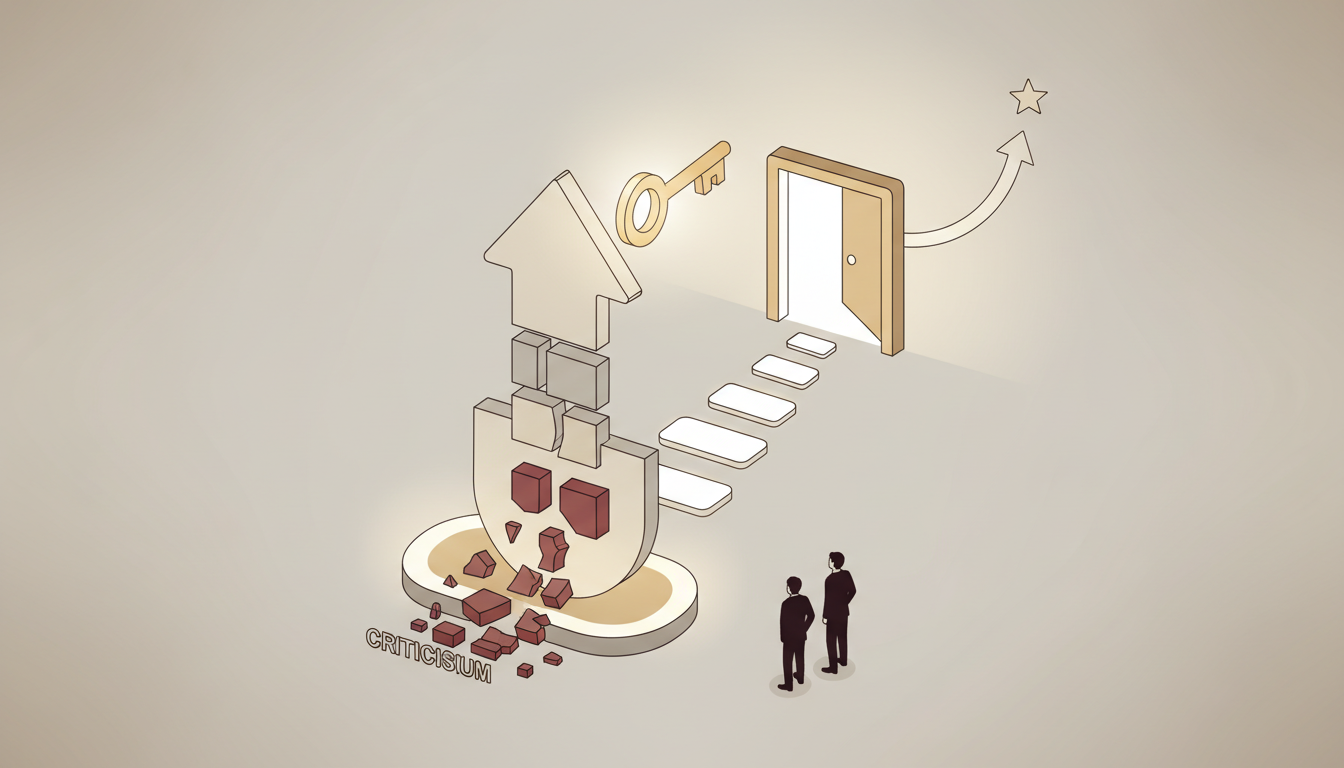
Your reaction to criticism is one of the most visible tests of your professional maturity. When a manager delivers tough feedback in a meeting and you respond with composure and curiosity, every person in that room recalibrates their perception of you. You become someone who can handle pressure.
Research from Harvard Business Review found that 57% of employees prefer corrective feedback over pure praise, and they respect leaders who can both give and receive it. Your ability to handle criticism signals that you're ready for greater responsibility.
It Protects Relationships That Matter
Criticism often comes from people you need on your side — your direct manager, a senior stakeholder, a cross-functional partner. A defensive reaction can damage trust in seconds that took months to build. A professional response preserves the relationship while still allowing you to address concerns or push back when warranted.
Consider this scenario: Your VP tells you in a project debrief that your stakeholder updates were "too infrequent and lacked detail." If you respond with "Well, nobody told me what level of detail was expected," you've just made the VP feel unheard and positioned yourself as someone who deflects. If instead you say, "That's useful feedback — can you walk me through what an ideal update would look like for your team?" you've turned a critique into a coaching moment.
It Builds Your Reputation as Someone Who Grows
Professionals who handle criticism well develop a reputation for being coachable, resilient, and self-aware — three traits that consistently appear in high-potential talent assessments. According to Egon Zehnder's research on executive potential, the single strongest predictor of leadership success is not IQ or experience, but learning agility — the ability to absorb feedback and adapt.
If you want to position yourself for promotion, mastering your response to criticism is non-negotiable.
The CALM Framework: A 4-Step Method for Responding to Criticism in the Moment
When criticism lands — especially unexpectedly — your body's stress response activates before your rational brain catches up. You need a framework that works in real time. Use CALM: Contain, Absorb, Leverage, Move.
Step 1: Contain Your Initial Reaction
The first three seconds after receiving criticism are the most dangerous. Your face, posture, and voice will betray you if you don't consciously manage them. Before you say a single word:
- Take one full breath. Inhale through your nose for three counts. This activates your parasympathetic nervous system and buys you processing time.
- Relax your jaw and hands. Clenched muscles signal defensiveness even if your words don't.
- Maintain neutral eye contact. Don't look away (signals shame) or stare intensely (signals aggression).
This isn't about suppressing your emotions. It's about creating a gap between the stimulus and your response. As one executive coach puts it: "The pause is the power." For more on this, explore our guide on how to speak with poise under pressure.
Step 2: Absorb the Full Message
Most people start formulating their defense while the other person is still talking. This guarantees you'll miss critical context and respond to what you think was said rather than what was actually said.
Instead, listen through to the end. Then reflect back what you heard:
- "So what I'm hearing is that the client presentation didn't land the way you expected, specifically around the ROI section."
- "It sounds like you're concerned that my communication with the design team has been creating bottlenecks."
Reflecting back does two things: it confirms you understood correctly, and it signals respect for the person delivering the feedback. A 2022 study published in the Journal of Applied Psychology found that employees who used reflective listening during feedback conversations were rated 34% higher on "professionalism" by their managers.
Step 3: Leverage With Questions
This is where most people either fold ("You're right, I'm sorry") or fight ("That's not fair"). Neither builds credibility. Instead, ask targeted questions that demonstrate engagement:
- For vague criticism: "Can you give me a specific example so I can understand exactly what to adjust?"
- For criticism you disagree with: "I'd like to understand your perspective better — what outcome were you expecting?"
- For criticism about style, not substance: "Is the concern about the content of my work or how I communicated it?"
Questions shift the dynamic from judgment to collaboration. They also buy you time and information if you need to decide whether the criticism is valid.
Step 4: Move Forward With a Clear Commitment
Close the conversation with a concrete next step. This signals professionalism and prevents the feedback from lingering as an unresolved issue.
- "I'll revise the stakeholder update format and send you a draft by Thursday for your input."
- "I'm going to schedule a check-in with the design team this week to tighten our communication loop."
- "Let me reflect on this and come back to you tomorrow with my thoughts."
That last option is critical. You don't have to resolve everything on the spot. Saying "Let me reflect on this" is one of the most powerful professional responses available to you — it's honest, composed, and buys you space.
Know exactly what to say next time. The Pushback Playbook has 50 word-for-word scripts for moments like this one: what they say, what you say, why it works, and what to do if they push back. Get The Pushback Playbook — $27
How to Assess Whether Criticism Is Valid or Unfair
Not all criticism deserves the same response. Some feedback is insightful and well-intentioned. Some is poorly delivered but still accurate. And some is genuinely unfair — driven by bias, politics, or the other person's bad day. You need a method for telling the difference.

The Three-Filter Test
Run every piece of criticism through these three filters before deciding how to respond:
Filter 1: Source Credibility. Does this person have the context and expertise to evaluate your work? A direct manager commenting on your project management is high-credibility feedback. A peer from another department who wasn't involved in the project offering unsolicited opinions about your approach carries less weight. Filter 2: Pattern Recognition. Have you heard this feedback before, from different people, in different contexts? If three separate colleagues have mentioned that your emails are too long, that's a pattern worth addressing. If one person once made a passing comment, it may be noise. According to organizational psychologist Tasha Eurich, only about 10-15% of people are truly self-aware, which means most of us have blind spots that recurring feedback can illuminate. Filter 3: Specificity. Valid criticism tends to be specific and behavioral. "Your presentation to the board lacked a clear recommendation" is actionable. "You're just not strategic enough" is vague and potentially unfair. If the criticism fails the specificity test, your job is to ask questions until it becomes specific — or recognize that it may not be substantive.When the Criticism Is Valid but Poorly Delivered
This is the most common scenario professionals face. Your manager snaps at you in a meeting. A colleague sends a blunt Slack message. The feedback itself might be accurate, but the delivery stings.
Separate the signal from the noise. Acknowledge the valid content while, if appropriate, addressing the delivery later in a private conversation: "I appreciated the feedback on the report structure — that was helpful. I'd find it easier to act on feedback like that when it's shared one-on-one rather than in the team meeting. Would that work for you?"
This approach demonstrates the kind of confident communication that earns respect without creating conflict.
When the Criticism Is Genuinely Unfair
Sometimes criticism is baseless, politically motivated, or rooted in bias. In these cases, you still need to respond professionally — but you don't need to accept the premise.
Scripts for unfair criticism:
- "I see this differently. Here's my perspective: [state facts calmly]. I'm open to discussing this further if you'd like."
- "I want to make sure we're working from the same set of facts. Can we walk through the timeline together?"
- "I don't agree with that characterization, but I'm interested in finding a path forward."
The key is to disagree without burning bridges. Stay factual, stay calm, and resist the urge to match the other person's emotional intensity.
Response Scripts for Common Workplace Criticism Scenarios
Having pre-rehearsed language reduces cognitive load in high-stress moments. Here are scripts for the scenarios professionals face most often.
Scenario 1: Your Manager Criticizes Your Work in a Meeting
The criticism: "This analysis doesn't reflect the level of rigor I expected from you." Your response: "Thank you for flagging that. I want to make sure I'm meeting your standard. Can you point me to a specific section where the rigor fell short? I'd like to understand exactly what to strengthen." Why it works: You've acknowledged the feedback without agreeing that your entire analysis was poor. You've asked for specifics, which puts the burden on the critic to be constructive.Scenario 2: A Peer Gives Unsolicited Negative Feedback
The criticism: "Honestly, I don't think your approach to the client is working." Your response: "I appreciate you sharing that. What specifically have you observed that's concerning? I want to make sure I'm not missing something." Why it works: You've remained open without being deferential. If their feedback is vague or baseless, your question will expose that. If it's valid, you'll learn something.Scenario 3: You Receive Harsh Written Feedback (Email or Review)
The criticism: An email from a senior leader stating, "The deliverable was below expectations and caused delays for the entire team." Your response (in person or via video, not email): "I read your feedback and I take it seriously. I'd like to understand more about where the gaps were so I can course-correct. Could we find 15 minutes to discuss this?" Why it works: Moving the conversation off email prevents misinterpretation and shows you're not hiding. It also gives you a chance to communicate with senior leaders effectively in a higher-bandwidth format.Scenario 4: Criticism That Feels Personal
The criticism: "You're just not a detail person." Your response: "I'd like to focus on specifics. Was there a particular deliverable where you noticed errors or missing details? That would help me address the right thing." Why it works: You've redirected a character judgment into a behavioral conversation. This is a core assertiveness technique — you refuse the label while engaging with the substance.How to Rebuild After Criticism Shakes Your Confidence
Even when you handle criticism perfectly in the moment, it can still affect you afterward. A Gallup study found that only 26% of employees strongly agree that the feedback they receive helps them do better work — meaning the majority experience feedback as discouraging rather than motivating. Here's how to process criticism without letting it erode your confidence.
Separate Identity From Performance
Criticism of your work is not criticism of your worth. This sounds obvious, but in the moment, your brain doesn't distinguish between "your report was weak" and "you are weak." Deliberately reframe: "This feedback is about a specific deliverable on a specific day. It is not a verdict on my competence."
If criticism has significantly impacted your confidence, our guide on rebuilding confidence after setbacks offers a structured recovery plan.
Extract the Actionable Lesson and Discard the Rest
Write down the criticism. Circle only the parts that are specific, behavioral, and within your control. Cross out everything else — the tone, the exaggeration, the parts that felt unfair. Build your action plan from what you circled.
Follow Up to Close the Loop
One of the most underused credibility-building moves is the follow-up. Two weeks after receiving criticism, circle back to the person who gave it: "I wanted to follow up on your feedback about the stakeholder updates. I've restructured the format — here's the latest one. Does this hit the mark?"
This single move transforms you from "someone who received criticism" to "someone who acted on it." It demonstrates the kind of leadership presence that gets noticed by decision-makers.
Frequently Asked Questions
How do you respond to unfair criticism at work without getting emotional?
Use the CALM framework: contain your initial reaction with a deliberate pause, absorb the full message before responding, leverage targeted questions to test the criticism's validity, and move forward with a clear statement. If the criticism is genuinely unfair, calmly state your perspective using facts rather than emotions: "I see this differently — here's what happened." You don't need to accept unfair premises, but you do need to stay composed.
What's the difference between constructive criticism and destructive criticism?
Constructive criticism is specific, behavioral, and focused on improvement — it tells you what to change and often how. Destructive criticism is vague, personal, and focused on blame — it attacks character rather than actions. For example, "Your report needs stronger data sourcing" is constructive. "You never do thorough work" is destructive. Respond to constructive criticism with action; respond to destructive criticism by requesting specifics.
How do you respond to criticism from your boss in a meeting?
Stay calm and avoid defending yourself immediately. Say something like: "Thank you for raising that — I want to make sure I address it properly. Can you share a specific example so I understand exactly what to adjust?" This shows professionalism without agreeing that the criticism is entirely warranted. If you need more time, say: "I'd like to reflect on this and follow up with you after the meeting." Learn more in our guide on how to speak up to your boss without damaging trust.
Should you respond to criticism immediately or wait?
It depends on the context. In a live meeting, you need to acknowledge the feedback in the moment — silence can be interpreted as agreement or avoidance. Use a brief response: "I appreciate that feedback. Let me take some time to process it and follow up with you." For written criticism, especially harsh emails, always wait at least a few hours before responding, and consider moving the conversation to a face-to-face or video format.
How do you stop taking criticism at work personally?
Practice separating your identity from your performance. Remind yourself: "This is feedback about a specific output, not a judgment of my capability." Keep a professional wins file — a running document of positive feedback, achievements, and successful projects — so that one piece of criticism doesn't disproportionately define your self-perception. Over time, daily confidence exercises can build the resilience to absorb criticism without internalizing it.
How do you respond to criticism in a performance review?
Treat it as a strategic conversation, not a verdict. Listen fully, take notes, and ask clarifying questions: "What would success look like in this area over the next quarter?" Avoid arguing in the moment. If you disagree with specific points, say: "I'd like to share my perspective on that — could we discuss it in more detail?" Then follow up in writing with a clear development plan that shows you've engaged with the feedback thoughtfully.
Never Be Caught Without the Right Words Again
50 word-for-word scripts for being talked down to, interrupted, dismissed, and put on the spot at work, plus five worksheets. PDF, 50 pages.
Get The Pushback Playbook — $27Related Articles

How to Handle Being Interrupted in Meetings Professionally
When you're interrupted in a meeting, pause briefly, maintain open body language, and use a calm redirect phrase such as "I'd like to finish my point" or "Let me complete this thought." The key is responding without escalating—combining assertive language with composed delivery signals confidence and commands respect. Chronic interrupters can be managed through proactive strategies like pre-framing your contributions, building alliances, and addressing the pattern directly in private.

How to Stop Undermining Yourself at Work: 12 Hidden Habits
You stop undermining yourself at work by identifying and replacing the subtle communication habits that silently erode your credibility. The most damaging self-sabotage isn't dramatic—it's the hedging language, upspeak, chronic over-apologizing, praise deflection, and over-explaining that signal uncertainty to colleagues and leaders. By swapping these 12 hidden habits for specific authority-building alternatives, you project confidence and earn the professional respect your expertise deserves.

How to Handle Being Talked Down to at Work Professionally
To handle being talked down to at work, stay calm and address the behavior directly using neutral, assertive language. Name the specific behavior without attacking the person by saying something like, "I'd appreciate it if we could discuss this as equals—I have relevant expertise here." Set clear boundaries, document patterns of condescension, and escalate to HR if the behavior continues. The goal is to protect your credibility and professional standing without matching their tone or becoming re