
How to Disagree Professionally Without Burning Bridges

What Is Professional Disagreement?
Professional disagreement is the skill of expressing a different viewpoint, challenging an idea, or pushing back on a decision in a way that strengthens — rather than damages — your working relationships. It is not about avoiding conflict. It is about engaging in conflict constructively.
At its core, disagreeing professionally means you can say "I see this differently" without the other person hearing "I think you're wrong." It's a cornerstone of assertive communication at work and one of the most important skills for anyone who wants to be taken seriously in their career.
Why Most People Avoid Disagreeing at Work (And Why That's Dangerous)
The Real Cost of Silence

Staying silent when you disagree feels safe. It's not. A study published in the Journal of Organizational Behavior found that employees who suppress dissent experience higher levels of burnout, lower job satisfaction, and reduced commitment to their organizations (Kish-Gephart et al., 2009). Silence doesn't protect you — it erodes you.
When you consistently hold back your perspective, you train your colleagues and managers to overlook you. Over time, you become invisible in the conversations that shape strategy, promotions, and project direction. If you've ever felt like your contributions go unnoticed, this pattern may be why. Our guide on how to be taken seriously at work addresses this dynamic in depth.
The Fear Behind the Silence
Most professionals avoid disagreement because of three core fears:
- Fear of retaliation: "If I push back on my manager, it'll hurt my career."
- Fear of being disliked: "People will think I'm difficult or negative."
- Fear of being wrong: "What if I challenge them and my idea is worse?"
These fears are understandable. But research from Google's Project Aristotle — their landmark study on team effectiveness — found that psychological safety (the ability to take interpersonal risks without fear of punishment) was the single most important factor in high-performing teams (Duhigg, The New York Times, 2016). Teams where people disagree openly outperform teams where everyone nods along.
What Happens When You Disagree Well
When you voice dissent professionally, three things happen. First, you earn respect. Decision-makers value people who bring honest, thoughtful perspectives — not people who echo whatever the room already thinks. Second, you protect your organization from blind spots and bad decisions. Third, you build your reputation as someone with gravitas and leadership presence.
Disagreement, done right, is a credibility accelerator.
The Acknowledge-Bridge-Propose (ABP) Framework
This is the most reliable structure for voicing dissent without triggering defensiveness. It works in meetings, one-on-ones, emails, and even negotiations.
Step 1: Acknowledge Their Position
Before you introduce your viewpoint, demonstrate that you've heard and understood theirs. This is not faking agreement. It's showing intellectual respect.
Examples:- "I can see why that approach makes sense given the timeline."
- "That's a valid concern, and I appreciate you raising it."
- "I understand the reasoning behind that direction."
Why this works: According to Harvard's Program on Negotiation, people become significantly more receptive to opposing viewpoints after they feel their own position has been genuinely heard (Fisher & Ury, Getting to Yes, 1981). Acknowledgment lowers the emotional stakes.
Step 2: Bridge to Your Concern
The bridge is a transitional phrase that shifts the conversation from their idea to your concern — without using the word "but." The word "but" negates everything before it. Replace it with phrases like:
- "At the same time…"
- "One thing I want to make sure we account for…"
- "I'd like to add another dimension to this…"
- "Where I see a potential risk is…"
Step 3: Propose an Alternative
Never disagree without offering a constructive path forward. Criticism without a solution is just noise. Your proposal doesn't have to be fully formed — it just needs to show you're thinking constructively.
Examples:- "What if we phased the rollout to hit the deadline with core features first?"
- "Could we pilot this with one team before going company-wide?"
- "I'd suggest we pressure-test this with the data from Q3 before committing."
The ABP framework transforms you from "the person who shot down the idea" into "the person who made the idea better." This is how you build a professional reputation that opens doors.
Know exactly what to say next time. The Pushback Playbook has 50 word-for-word scripts for moments like this one: what they say, what you say, why it works, and what to do if they push back. Get The Pushback Playbook — $27
Scripts for Common Professional Disagreement Scenarios
Frameworks are powerful, but real situations demand specific language. Here are tested scripts for the moments that trip most professionals up.
Disagreeing With Your Manager
This is the scenario most people dread. A 2023 survey by Crucial Learning found that 72% of employees have avoided speaking up to a manager about a concern or disagreement at least once in the past year.
Situation: Your manager wants to restructure the team's workflow in a way you believe will create bottlenecks. Script: "I appreciate the thinking behind the new workflow — especially the focus on accountability. One area I'd like us to think through is the handoff between design and development. In the current proposal, I see a potential bottleneck that could slow us down by a few days per sprint. Would you be open to me sketching out a modified version that keeps the accountability structure but adjusts the handoff process?" Why it works: You validated the intent, identified a specific concern (not a vague objection), and offered to do the work of solving it. You didn't say "I disagree." You said "I want to help make this even better."For more on communicating effectively with leadership, see our guide on how to communicate with executives effectively.
Challenging an Idea in a Group Meeting
Public disagreement carries higher stakes because of the audience. The key is to depersonalize your pushback — challenge the idea, never the person.
Situation: A colleague proposes an aggressive marketing spend during a quarterly planning meeting. You think the ROI data doesn't support it. Script: "That's an ambitious approach, and I like the growth mindset behind it. I want to make sure we're stress-testing it against the data, though. When I looked at last quarter's conversion rates, the cost-per-acquisition was trending up by 18%. Before we commit this budget, could we model out what the ROI looks like at current conversion rates versus the projected ones?" Why it works: You praised the intent, introduced data (not opinion), and framed your challenge as due diligence — something everyone in the room benefits from. If you want to sharpen how you present data-driven arguments to leadership, our post on how to present ideas to senior management walks through a proven framework.Saying "No" to a Request Without Damaging the Relationship
Sometimes professional disagreement isn't about ideas — it's about boundaries. You need to decline a request, push back on scope, or redirect a task.
Script: "I want to make sure I give this the attention it deserves. Right now, I'm committed to [Project X] with a deadline on Friday. If I take this on too, one of them won't get my best work. Can we talk about which one should take priority, or whether there's someone else who could lead on this?" Why it works: You didn't say no. You said "I care about quality, and here's the trade-off." This is assertiveness without aggression in its purest form.The Mindset Shifts That Make Disagreement Easier
Shift 1: From "Conflict" to "Contribution"
Reframe disagreement in your own mind. You are not creating conflict — you are contributing a perspective the team needs. Research from the Academy of Management Journal found that teams with constructive task conflict (disagreement about ideas, not people) make better decisions and produce more creative solutions (De Dreu & Weingart, 2003).
Every time you hold back a valid concern, you're withholding a contribution.
Shift 2: From "Being Right" to "Getting It Right"
The goal of professional disagreement is not to win. It's to arrive at the best possible outcome. When you detach your ego from your position, you communicate with more calm, more clarity, and more credibility. This is the essence of speaking concisely at work — saying what matters without overexplaining or defending.
Shift 3: From "They'll Think Less of Me" to "They'll Respect Me More"
A 2022 study from the Center for Creative Leadership found that the ability to voice dissent constructively was one of the top five competencies associated with promotion to senior leadership roles. The people who get promoted are not the ones who avoid friction. They're the ones who handle friction with skill.
Body Language and Tone: The Unspoken Rules of Disagreement
How Your Voice Shapes Perception
The words you choose matter. But research by Albert Mehrabian suggests that tone of voice accounts for roughly 38% of how emotional meaning is communicated in face-to-face interactions. When disagreeing, your tone should be:
- Steady, not rising: A rising pitch at the end of statements makes them sound like questions, which undermines your authority.
- Measured, not rushed: Speaking too quickly signals anxiety. Slow down slightly to project confidence.
- Warm but firm: You're not apologizing. You're not attacking. You're contributing.
For a deep dive into vocal authority, check out how to sound confident at work.
Physical Presence During Disagreement
Your body sends signals before your mouth opens. When voicing dissent:
- Maintain open posture: Uncrossed arms, shoulders back, feet planted. Closed body language signals defensiveness, which contradicts your message.
- Use steady eye contact: Look at the person you're addressing. Darting eyes suggest uncertainty.
- Gesture with open palms: This universally signals openness and honesty.
- Avoid the head tilt: A slight head tilt can soften your message too much, making it seem like you're asking for permission rather than sharing a perspective.
Our complete guide on body language for leadership presence covers these principles in detail.
Common Mistakes That Turn Disagreement Into Conflict
Even well-intentioned pushback can go wrong. Here are the pitfalls to avoid:
Starting With "I Disagree"
Leading with a direct negation puts the other person on the defensive immediately. Instead of announcing your disagreement, demonstrate it through your alternative perspective. Show, don't tell.
Making It Personal
"Your idea won't work" is personal. "I see a risk with this approach" is professional. Always direct your critique at the idea, the process, or the outcome — never at the person.
Over-Apologizing
"I'm sorry, but I just feel like maybe we should possibly consider…" This language buries your point under so many qualifiers that no one takes it seriously. You can be polite without being apologetic. State your perspective with clarity and respect. If you struggle with this, our article on overcoming imposter syndrome at work can help you address the root cause.
Waiting Too Long
If you disagree in the meeting but only say something three days later over email, you've lost the moment. Timely dissent is effective dissent. Practice speaking up in lower-stakes situations to build the muscle for higher-stakes ones — a strategy we explore in how to build confidence in meetings.
Frequently Asked Questions
How do you disagree with your boss without getting fired?
Focus on the outcome, not the opposition. Use the ABP framework: acknowledge your boss's reasoning, bridge to a specific concern backed by data or evidence, and propose a constructive alternative. Frame your dissent as supporting the team's goals, not challenging your boss's authority. Most managers respect employees who bring thoughtful, solution-oriented pushback — it's a sign of engagement, not insubordination.
What is the difference between being assertive and being aggressive at work?
Assertiveness means expressing your perspective clearly and respectfully while honoring the other person's right to their viewpoint. Aggression means pushing your perspective at the expense of others — through intimidation, dismissiveness, or hostility. The key difference is respect. Assertive disagreement invites dialogue. Aggressive disagreement shuts it down. Our guide on being assertive without being aggressive breaks this distinction down with specific examples.
How do you disagree professionally in an email?
Use the same ABP structure in writing. Start by acknowledging the recipient's point ("Thank you for sharing this proposal — the rationale is clear"). Bridge to your concern in the next paragraph ("One area I'd like us to explore further…"). Close with your alternative and an invitation to discuss ("Would you be open to a quick call to talk through this?"). Keep your tone neutral and avoid ALL CAPS, exclamation points, or sarcasm. For more on written authority, see our post on executive email writing.
Can you disagree professionally in a job interview?
Yes — and doing it well can actually set you apart. If an interviewer presents a scenario or opinion you disagree with, use a respectful reframe: "That's an interesting perspective. In my experience, I've seen it work a bit differently…" This shows critical thinking, confidence, and the ability to engage constructively — all qualities hiring managers value in leadership candidates.
How do you handle someone who reacts badly to professional disagreement?
Stay calm and don't match their emotional energy. Acknowledge their reaction ("I can see this is a topic you feel strongly about") and reaffirm your intent ("My goal is the same as yours — I want us to get the best result"). If the conversation becomes unproductive, suggest revisiting it later: "Let's both take some time with this and reconnect tomorrow." You can't control their reaction, but you can control your composure.
What phrases should you avoid when disagreeing at work?
Avoid "You're wrong," "That won't work," "With all due respect" (which almost always precedes disrespect), and "I just think maybe…" (which undermines your own point). Instead, use phrases like "I see this differently," "Here's what I'd like us to consider," and "What if we approached it this way?" These phrases invite collaboration instead of triggering defensiveness.
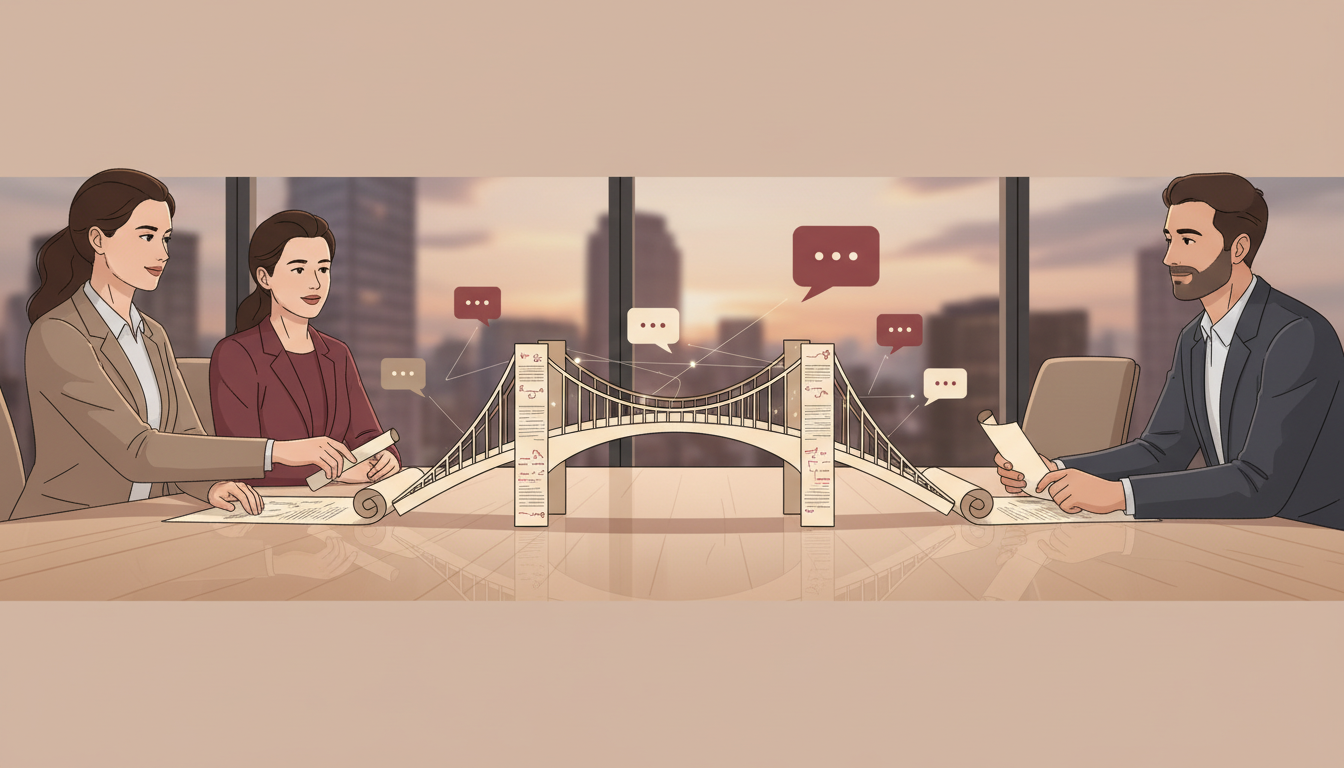
Featured image alt text: Professional confidently sharing a different viewpoint during a team meeting, demonstrating how to disagree professionally while maintaining positive body language and eye contact.
Never Be Caught Without the Right Words Again
50 word-for-word scripts for being talked down to, interrupted, dismissed, and put on the spot at work, plus five worksheets. PDF, 50 pages.
Get The Pushback Playbook — $27Related Articles

How to Handle Being Undermined at Work Professionally
To handle being undermined at work, first identify the specific behavior — whether it's being contradicted publicly, excluded from decisions, or having your authority bypassed. Then respond strategically, not reactively. Use direct, calm language to address the behavior in real time (e.g., "I want to make sure we're aligned — let me walk through my reasoning"). Document patterns, have a private conversation with the person involved, and rebuild your credibility through visible, high-value contri

Communicate Confidence in Conflict at Work: Scripts
To communicate confidence in conflict at work, use structured language that separates the issue from the person, states your position clearly without hedging, and invites resolution. The key is preparation: have go-to phrases ready so you don't default to defensiveness, aggression, or silence. Confident communicators in conflict use neutral tone, specific language, and composure-preserving frameworks—scripts you can practice and deploy in real time when tensions rise.

How to Be More Assertive in Workplace Conversations
Being more assertive in workplace conversations starts with understanding the difference between assertiveness and aggression—then practicing specific language patterns that communicate confidence without hostility. Assertiveness means stating your needs, boundaries, and opinions clearly while respecting others. It requires replacing passive habits like hedging and over-apologizing with direct, composed language. The good news: assertiveness is a skill you can build through daily practice, not a