
How to Be Assertive at Work Without Being Aggressive
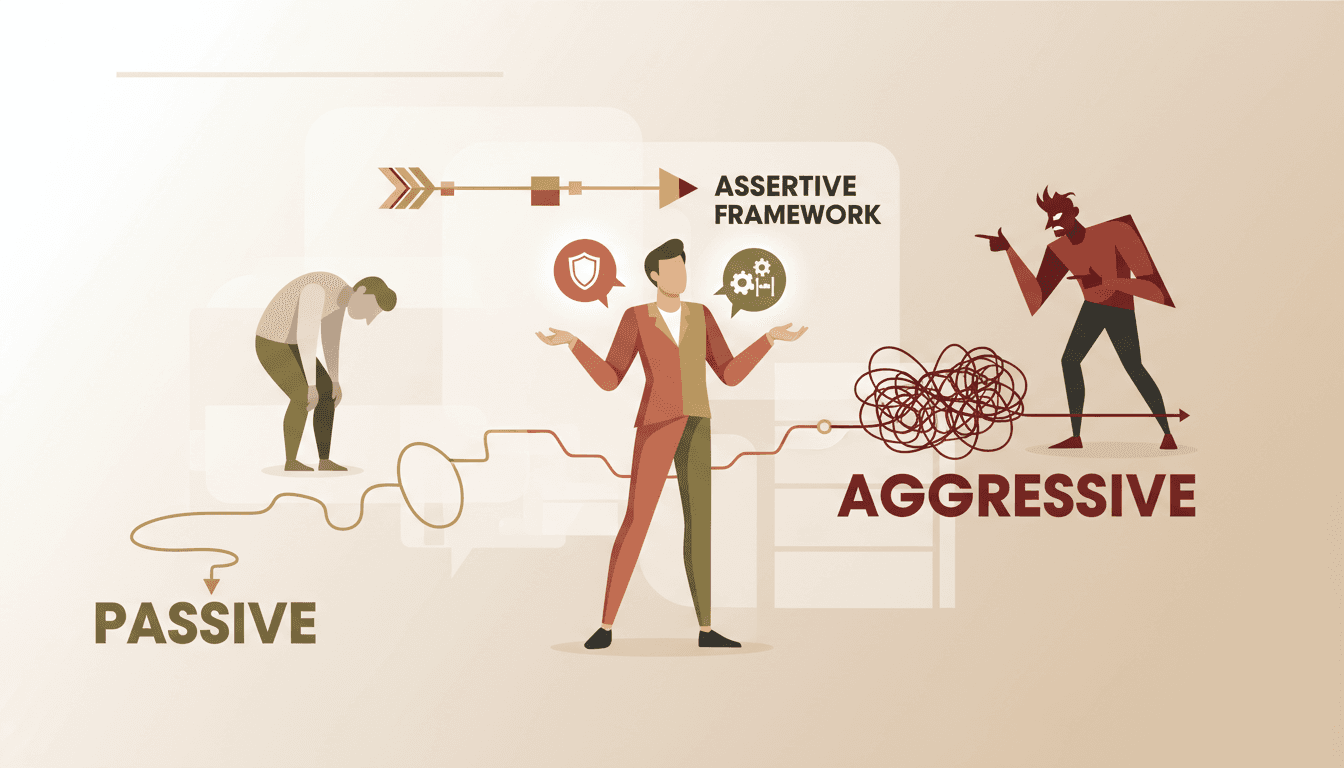
Being assertive at work without being aggressive comes down to one skill: expressing your needs, opinions, and boundaries with clarity and respect—while staying open to others' perspectives. The key is shifting from reactive emotion to intentional communication. Use "I" statements instead of "you" accusations, state facts before feelings, and propose solutions rather than issuing demands. Assertiveness protects your credibility; aggression destroys it. The difference lies in your delivery, not your directness.
What Is Assertive Communication at Work?
Assertive communication is the ability to express your thoughts, needs, and boundaries directly, honestly, and respectfully—without minimizing yourself or dominating others. It sits at the center of the communication spectrum, between passive communication (where you suppress your voice) and aggressive communication (where you override everyone else's).
In the workplace, assertiveness means you can disagree with your manager's proposal without apologizing for having an opinion. It means you can say "no" to an unreasonable deadline without burning the relationship. It's the communication style most strongly linked to leadership effectiveness, career advancement, and healthy team dynamics.
According to a study published in the Journal of Occupational and Organizational Psychology, employees who demonstrate assertive communication styles report 28% higher job satisfaction and are rated as more competent by their supervisors compared to those who default to passive or aggressive patterns.
The Communication Spectrum: Passive, Assertive, and Aggressive
Understanding where you fall on the communication spectrum is the first step to becoming more assertive. Most professionals don't realize they're operating at one extreme or the other—they just know something feels off in their interactions.
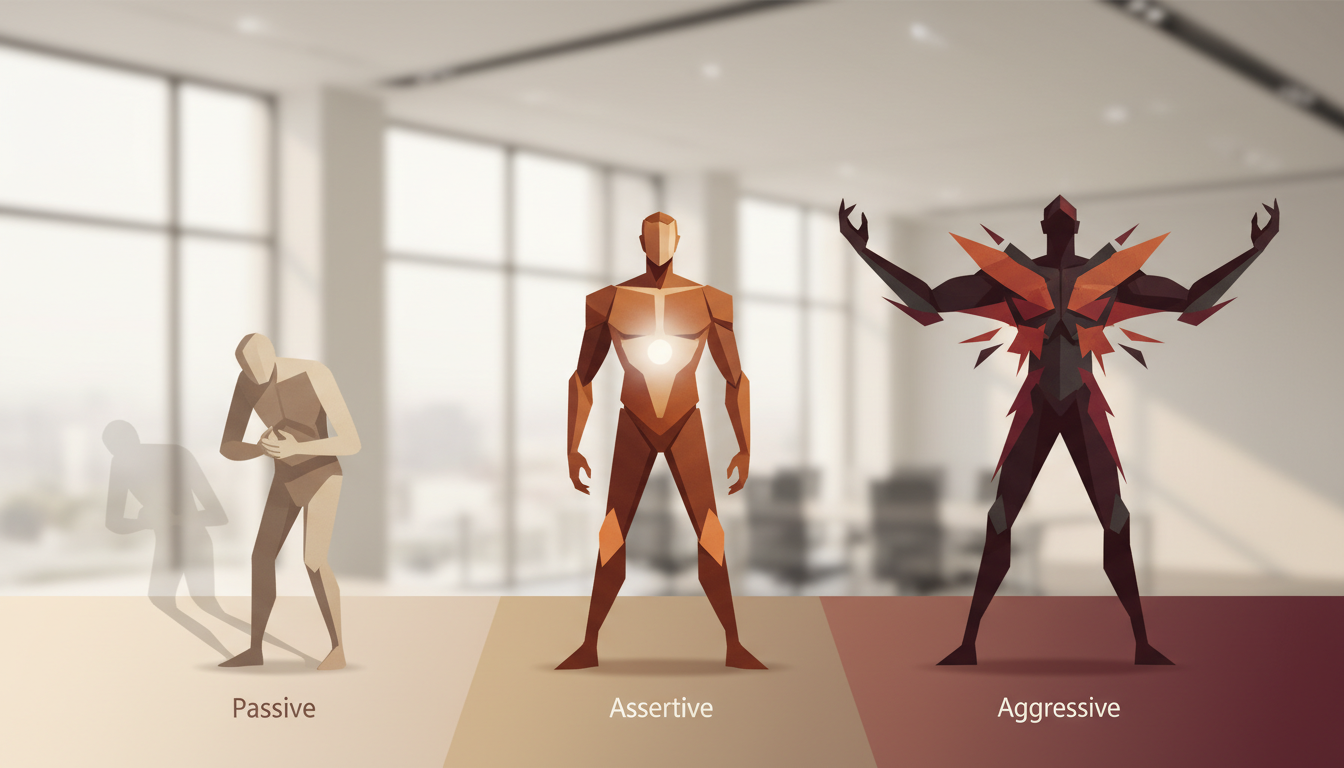
Passive Communication: The Silent Credibility Killer
Passive communicators avoid conflict at all costs. They agree to projects they can't handle, stay silent when they disagree, and use hedging language like "I'm not sure, but maybe..." or "This might be a dumb idea, but..."
The cost is enormous. Research from the Harvard Business Review found that professionals who consistently defer to others are 34% less likely to be considered for leadership roles, regardless of their technical competence. Passivity doesn't read as politeness—it reads as a lack of conviction.
Signs you're communicating passively:- You say "yes" when you mean "no"
- You apologize before sharing your opinion
- You let others take credit for your ideas
- You avoid eye contact during disagreements
- You use excessive qualifiers ("sort of," "kind of," "just")
If filler words and qualifiers are undermining your message, our guide on how to stop using filler words in professional speaking breaks down exactly how to eliminate them.
Aggressive Communication: The Authority Trap
Aggressive communicators get results in the short term—but at a steep cost. They interrupt, dominate conversations, use blaming language, and prioritize winning over collaborating. They might get the project approved, but they lose the team's trust in the process.
Signs you're communicating aggressively:- You interrupt others frequently
- You use "you always" or "you never" statements
- You raise your voice to make a point
- You dismiss others' ideas without consideration
- You frame disagreements as personal attacks
Assertive Communication: The Sweet Spot of Credibility
Assertive communicators are direct without being harsh. They state their position clearly, listen actively, and seek outcomes where both parties feel respected. This is the communication style that builds credibility in communication over time.
The assertive communicator:- States facts and observations before opinions
- Uses "I" statements ("I need," "I think," "I've observed")
- Maintains steady eye contact and open body language
- Acknowledges others' perspectives before presenting their own
- Proposes solutions, not just problems
The CLEAR Framework for Assertive Communication
Knowing the theory is one thing. Having a repeatable system you can use in the moment—when your heart rate spikes and your instinct is to either fold or fight—is another. The CLEAR framework gives you a five-step structure for any assertive conversation at work.
C — Clarify the Situation with Facts
Start with objective, observable facts. Not interpretations. Not emotions. Facts.
Aggressive version: "You clearly don't respect my time." Assertive version: "The last three meetings started 20 minutes late, which pushed my afternoon schedule back each time."Leading with facts removes the emotional charge. It gives the other person something concrete to respond to rather than a character accusation to defend against.
L — Label Your Position with "I" Statements
After stating the facts, share your perspective using first-person language. This is where you own your experience without projecting blame.
Script: "I'm finding it difficult to manage my workload when meeting times shift without notice. I want to find a way to make this work for both of us."A 2019 study in Conflict Resolution Quarterly found that conversations initiated with "I" statements were 47% more likely to reach a collaborative resolution than those initiated with "you" statements.
E — Express the Impact
Connect the situation to a tangible business or professional impact. This moves the conversation from personal complaint to professional concern.
Script: "When meetings run over without warning, it affects my ability to deliver the Henderson report on time—which impacts the whole team's timeline."A — Ask for What You Need
This is where most passive communicators stop short. They describe the problem but never make the request. Be specific about what you want.
Script: "I'd like us to commit to starting on time and ending within the scheduled window. If we need more time, can we extend the calendar invite in advance?"R — Reinforce the Relationship
Close by affirming the relationship and your collaborative intent. This is what separates assertiveness from aggression—the explicit signal that you value the other person even when you're pushing back.
Script: "I appreciate your flexibility on this. I want to make sure we're both set up to do our best work."Know exactly what to say next time. The Pushback Playbook has 50 word-for-word scripts for moments like this one: what they say, what you say, why it works, and what to do if they push back. Get The Pushback Playbook — $27
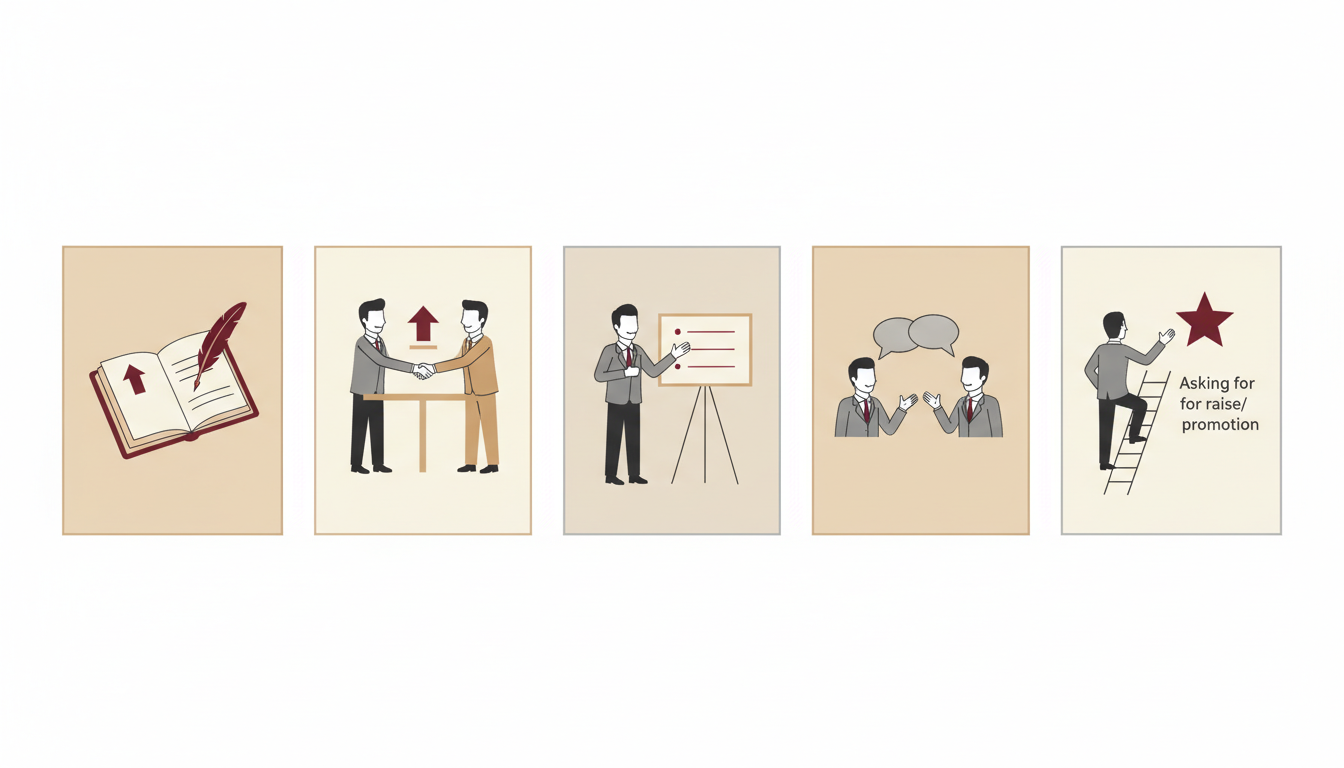
Scripts for 5 Common Workplace Scenarios
Frameworks are useful, but when you're in the moment, you need words. Here are five of the most common workplace situations where assertiveness is required—with exact scripts you can adapt.
Scenario 1: Pushing Back on an Unreasonable Deadline
The situation: Your manager assigns a project due Friday. It's Wednesday. The scope would normally take two weeks. Passive response: "Okay, I'll try my best." (Then you work until midnight, deliver subpar work, and resent your manager.) Aggressive response: "That's completely unrealistic. There's no way I'm doing that." (You've drawn a line, but you've also signaled that you're difficult to work with.) Assertive response: "I want to make sure this project meets the standard we both expect. Based on the scope, I'd estimate this needs about two weeks to do well. I can deliver [specific component] by Friday and have the full deliverable ready by [realistic date]. Which approach works best for the team?"This script works because it demonstrates commitment to quality, provides a concrete alternative, and puts the decision back in the manager's hands. For more strategies on communicating upward, see our guide on how to communicate with executives effectively.
Scenario 2: Giving Direct Feedback to a Peer
The situation: A colleague's work on a shared project has been incomplete, and it's creating extra work for you. Assertive script: "Hey Marcus, I want to talk about the Greenfield project. I've noticed the last two deliverables from your section came in without the client data sections completed, which meant I needed to fill those in before submitting. I'd like to figure out how we can make sure both sections are complete before handoff. What's getting in the way?"Notice the structure: fact, impact, request, open question. You're not attacking Marcus. You're solving a problem together.
Scenario 3: Holding a Boundary When Someone Interrupts You
The situation: During a team meeting, a colleague consistently talks over you. Assertive script: "I'd like to finish my point—I'll be quick. [Complete your thought.] Okay, go ahead."If it's a pattern, address it privately: "I've noticed in our last few meetings that I get cut off mid-sentence. I know it's not intentional, but it makes it hard for me to contribute fully. Can we be more mindful of letting each person finish?"
For a deeper dive into holding your ground in group settings, check out our article on how to be more assertive in meetings without being aggressive.
Scenario 4: Declining Additional Work When You're at Capacity
The situation: A senior leader asks you to take on a "quick" project—but your plate is already full. Assertive script: "I appreciate you thinking of me for this. Right now, I'm committed to [Project A] and [Project B], both due this week. If I take this on, one of those will need to shift. Would you like me to reprioritize, or would this be better suited for someone with more bandwidth right now?"This script protects your boundaries while showing you're a team player. You're not saying "no"—you're saying "here's the trade-off."
Scenario 5: Negotiating Your Value in a Performance Conversation
The situation: Your annual review is coming up, and you know you deserve a raise but dread the conversation. Assertive script: "Over the past year, I've led the product launch that generated $1.2M in new revenue, mentored two junior team members, and took ownership of the client retention initiative. Based on these contributions and market benchmarks for this role, I'd like to discuss adjusting my compensation to [specific number or range]. I'm committed to continuing to grow here, and I want to make sure my compensation reflects the value I'm delivering."For a complete breakdown of salary negotiation scripts, see our guide on how to negotiate salary confidently.
The Body Language of Assertiveness
Your words can be perfectly assertive—but if your body language contradicts them, people will believe your body. Research by Albert Mehrabian (often cited but frequently misapplied) found that when verbal and nonverbal messages conflict, people overwhelmingly trust nonverbal cues. In assertive communication, your body needs to match your message.
What Assertive Body Language Looks Like
Eye contact: Steady but not staring. Aim for 60-70% eye contact during conversation. Look away briefly when thinking, then re-engage. Posture: Stand or sit with your shoulders back and your chest open. Avoid crossing your arms (which signals defensiveness) or leaning back excessively (which signals disengagement). Gestures: Use open palm gestures when making points. Keep your hands visible—hidden hands trigger subconscious distrust. Voice: Speak at a measured pace. Drop your pitch slightly at the end of statements (upward inflection turns statements into questions and undermines authority). A study from Quantified Communications found that executives who used a lower vocal pitch and varied their tone were rated 38% more persuasive than those with flat or high-pitched delivery.For a comprehensive breakdown, our guide on body language for leadership presence covers everything from hand placement to spatial positioning.
The Three Body Language Mistakes That Undermine Assertiveness
- The apologetic smile: Smiling while delivering serious feedback signals that you're not confident in what you're saying. Match your facial expression to your message.
- The retreat step: Physically stepping backward when you make a request signals submission. Plant your feet and hold your ground.
- The self-touch: Touching your neck, face, or hair during a difficult conversation signals anxiety. Keep your hands still or use purposeful gestures.
Building an Assertiveness Practice: From Awkward to Automatic
Assertiveness isn't a personality trait you either have or don't. It's a skill—and like any skill, it develops through deliberate practice. According to the American Psychological Association, behavioral changes in communication style typically take 6-8 weeks of consistent practice to become habitual.
Start with Low-Stakes Situations
Don't begin your assertiveness practice by confronting your CEO. Start with lower-risk scenarios:
- Send back a wrong order at a restaurant
- Ask a question in a large meeting (even if it feels obvious)
- Decline a social invitation you don't want to attend
- Express a preference when someone asks "I don't care, what do you think?"
Each small act of assertiveness builds neural pathways that make the next one easier. This is the same principle behind building confidence in meetings as an introvert—start small, build momentum.
Track Your Assertiveness Wins
Keep a simple log. After any interaction where you practiced assertiveness, note:
- Situation: What happened?
- What I said: The exact words I used.
- Outcome: How did the other person respond?
- What I'd adjust: Anything I'd do differently next time?
This reflection loop accelerates your growth dramatically. Within weeks, you'll notice patterns—situations where you're naturally assertive and others where you still default to passivity or aggression.
Manage the Guilt Response
Many professionals—especially women and people from cultures that emphasize deference—experience guilt after being assertive. This is normal. It doesn't mean you did something wrong. It means your nervous system is adjusting to a new pattern.
The antidote is evidence. Review your assertiveness log. Did the relationship survive? Did the other person respect your boundary? In almost every case, the answer is yes. Over time, the guilt fades and confidence takes its place.
If imposter syndrome is fueling your hesitation, our guide on overcoming imposter syndrome at work provides strategies for silencing the inner critic that tells you to stay small.
Frequently Asked Questions
What is the difference between being assertive and being aggressive at work?
Assertiveness means expressing your needs and boundaries clearly while respecting others' perspectives. Aggression means pushing your position at others' expense—through intimidation, blame, or dismissiveness. The core difference is intent and delivery: assertive communicators seek mutual respect; aggressive communicators seek dominance. Assertiveness builds trust over time, while aggression erodes it.
How can I be assertive at work if I'm naturally introverted?
Introversion and assertiveness are not opposites. Many introverts are highly assertive—they simply prefer to think before speaking. Use this to your advantage: prepare your key points before meetings, use written communication for complex pushbacks, and practice assertive scripts until they feel natural. Assertiveness is a skill, not a personality type.
How do I deal with a coworker who sees my assertiveness as aggression?
First, check your delivery—review the CLEAR framework to ensure you're leading with facts and "I" statements. If your communication is genuinely assertive and someone still perceives it as aggressive, have a direct conversation: "I want to make sure we're communicating well. Can you help me understand what felt aggressive so I can adjust?" Sometimes perception gaps stem from cultural or personal differences that a brief, honest conversation can resolve.
Can being too assertive hurt my career?
Assertiveness itself doesn't hurt careers—but misreading context can. Asserting yourself in a way that publicly undermines your boss, for example, is a strategic error regardless of how politely you do it. The key is pairing assertiveness with emotional intelligence: read the room, choose the right time and setting, and always frame your position in terms of shared goals.
How do I become more assertive in emails and written communication?
Remove hedging language ("just," "sorry to bother you," "I think maybe"). State your request in the first two sentences. Use short paragraphs and bullet points for clarity. Replace "Would it be possible to perhaps consider..." with "I recommend we..." Written assertiveness is about structure and word choice—every unnecessary qualifier dilutes your authority.
Assertive vs. confident: Are they the same thing?
They're related but distinct. Confidence is an internal state—believing in your own competence and value. Assertiveness is an external behavior—communicating that confidence to others through your words and actions. You can feel confident without being assertive (staying quiet despite knowing the answer), and you can act assertively even when you don't feel confident (using scripts and frameworks to project authority). Over time, practicing assertiveness builds genuine confidence. Learn more about the connection in our guide on how to sound confident at work.
Never Be Caught Without the Right Words Again
50 word-for-word scripts for being talked down to, interrupted, dismissed, and put on the spot at work, plus five worksheets. PDF, 50 pages.
Get The Pushback Playbook — $27Related Articles
Be More Assertive at Work Without Being Rude: A Framework
Being more assertive at work without being rude comes down to one principle: advocate for your position while respecting the other person's. The framework that makes this practical is the ACR Method—Acknowledge, Communicate, Reinforce. First, acknowledge the other person's perspective. Then, communicate your position with clear, direct language. Finally, reinforce the relationship by proposing a path forward. This approach lets you hold your ground, set boundaries, and speak up—without damaging

How to Handle Being Talked Down to at Work Professionally
To handle being talked down to at work, stay calm and address the behavior directly using neutral, assertive language. Name the specific behavior without attacking the person by saying something like, "I'd appreciate it if we could discuss this as equals—I have relevant expertise here." Set clear boundaries, document patterns of condescension, and escalate to HR if the behavior continues. The goal is to protect your credibility and professional standing without matching their tone or becoming re

How to Handle Being Undermined in Meetings: 8 Responses
Being undermined in meetings — whether through credit-stealing, dismissive interruptions, or subtle put-downs — requires a calm, strategic response, not silence. The most effective approach combines three elements: an immediate verbal redirect to reclaim the conversation, deliberate body language that projects authority, and a post-meeting escalation plan if the behavior repeats. Below, you'll find eight specific responses with exact scripts, body language cues, and frameworks for shutting down