
Professional Communication Mistakes Hurting Your Career
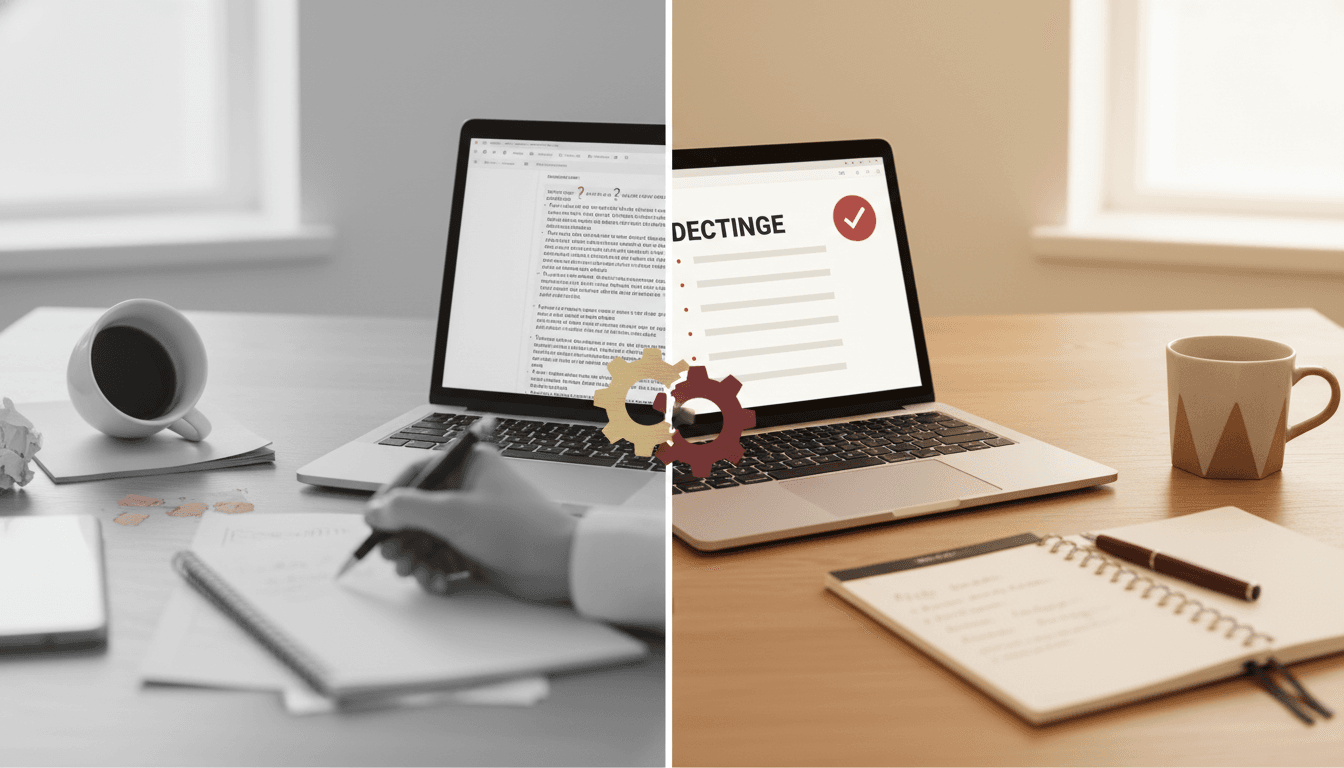
The professional communication mistakes that hurt your career most are the ones you don't notice: hedging language ("I just think maybe…"), over-explaining simple requests, reactive email tone, verbal fillers during high-stakes moments, and apologizing when no apology is needed. These habits silently erode your credibility, making colleagues and leaders perceive you as less competent than you are. The good news: each mistake has a concrete fix you can implement today.
What Are Professional Communication Mistakes?
Professional communication mistakes are recurring verbal, written, and nonverbal habits that undermine how others perceive your competence, authority, and credibility at work. They're not grammar errors or typos—they're patterns in how you frame ideas, respond under pressure, and present yourself in everyday interactions.
What makes these mistakes so damaging is their invisibility. Unlike a missed deadline or a failed project, communication habits operate below the radar. You rarely get direct feedback that your hedging language cost you a promotion or that your over-explaining made a VP tune out. According to a 2023 Harris Poll commissioned by Grammarly, poor communication costs U.S. businesses an estimated $1.2 trillion annually—and individual careers absorb a disproportionate share of that loss.
Mistake #1: Hedging Language That Signals Uncertainty
What Hedging Language Sounds Like

Hedging language is the use of qualifiers, softeners, and tentative phrases that dilute your message before it lands. Words like "just," "sort of," "I think," "maybe," "kind of," and "I'm not sure, but…" act as verbal disclaimers. They tell your listener: I'm not confident in what I'm about to say, so you shouldn't be either.
Here's a real-world scenario. You're in a quarterly strategy meeting and your director asks for your recommendation on a vendor switch. You say: "I just think maybe we should sort of consider switching to Vendor B? I'm not sure, but it kind of seems like it might save us money."
Your recommendation might be brilliant. But no one in that room will champion it because you didn't.
The Before-and-After Fix
Before: "I just think we should maybe consider looking at a different approach to this." After: "I recommend we take a different approach. Here's why."The fix is structural, not just cosmetic. Remove the qualifier. Lead with your position. Follow with your reasoning. This is what researchers call "assertion-first" communication, and a study published in the Journal of Language and Social Psychology (2020) found that speakers who used fewer hedges were rated as 35% more competent by listeners—even when the content was identical.
If you find yourself hedging frequently, you'll benefit from building a confident communication style with a structured framework.
How to Catch Yourself in Real Time
Record yourself during one virtual meeting this week. Count every hedge word. Most professionals are shocked to discover they hedge 10–20 times in a single 30-minute call. Once you see the pattern, set a simple rule: State, then support. Say what you believe first. Explain why second. Never lead with a disclaimer.
Mistake #2: Over-Explaining That Buries Your Point
Why Over-Explaining Backfires
Over-explaining is the habit of providing excessive context, backstory, or justification when a clear, direct statement would be more effective. It stems from a good instinct—you want to be thorough—but it backfires because it signals insecurity. When you over-explain, you're essentially asking your audience to validate your reasoning rather than trusting your conclusion.
Senior leaders are especially allergic to over-explaining. Research from the Center for Creative Leadership found that the number-one communication complaint executives have about mid-level managers is that they "take too long to get to the point." In executive settings, brevity is credibility.
The Before-and-After Fix
Before (in an email to a VP): "Hi Sarah, I wanted to reach out because I've been thinking a lot about the Q3 timeline, and after reviewing the data from the last two quarters and talking to the engineering team and also checking in with procurement about lead times, I think there might be a potential issue with the launch date because of some dependencies we haven't fully mapped out yet, so I was wondering if we could maybe schedule some time to discuss." After: "Hi Sarah, the Q3 launch date is at risk. Two dependencies—engineering bandwidth and procurement lead times—aren't resolved. I'd like 20 minutes this week to walk you through options. Does Thursday work?"The second version is 80% shorter and 100% more credible. It demonstrates command of the situation rather than anxiety about it. For more on this principle, explore how to write emails that get executive attention.
The "Bottom Line Up Front" Rule
Adopt the military communication framework known as BLUF: Bottom Line Up Front. State your conclusion, recommendation, or request in the first sentence. Then provide only the supporting detail your audience needs to act. If they want more context, they'll ask. Trust that.
Say it once, and be taken seriously. The Authority Toolkit gives you 8 frameworks, the 7 shifts that make speech sound sure, and 100+ phrases for meetings and email, so the point lands the first time you make it. Get The Authority Toolkit — $27
Mistake #3: Verbal Fillers in High-Stakes Moments
The Cost of "Um," "Uh," and "Like"

Everyone uses filler words occasionally. That's normal. The problem is when fillers cluster during the moments that matter most—presentations to leadership, client pitches, job interviews, and negotiation conversations. In these high-stakes moments, verbal fillers don't just distract; they actively damage your perceived authority.
A University of Michigan study found that speakers who used frequent fillers were perceived as less credible, less prepared, and less intelligent—even when their actual content quality was high. Your ideas deserve better than to be buried under a pile of "ums."
The Before-and-After Fix
Before (opening a presentation): "So, um, thanks for having me. I'm going to, like, talk about our, uh, customer retention strategy and, you know, some of the things we've been, um, looking at." After: "Thank you. Today I'll share three changes to our customer retention strategy that will reduce churn by 15% in the next quarter."Notice the "after" version doesn't just remove fillers—it replaces them with substance. That's the key. Fillers exist because your brain is searching for the next word. When you prepare your opening line and key transitions in advance, the fillers disappear naturally.
A Practical Drill That Works
Practice the "Pause, Don't Fill" technique. In your next meeting, every time you feel an "um" coming, simply pause and stay silent for one full second. Silence feels uncomfortable to you but sounds authoritative to your audience. Research from Columbia University confirms that strategic pauses increase listener retention by up to 40%. For a deeper dive into this skill, read our guide on how to stop using filler words in professional speaking.
Mistake #4: Reactive Email Tone That Damages Relationships
What Reactive Tone Looks Like
Reactive email tone is when your frustration, defensiveness, or irritation bleeds into your written communication. It often shows up as clipped sentences, passive-aggressive phrasing, ALL CAPS emphasis, or sarcasm that doesn't translate well in text.
Here's the scenario: A colleague emails you at 4:45 PM on Friday, questioning a decision you already explained in last Tuesday's meeting. You're annoyed. You fire back: "As I already mentioned in the meeting, this was decided. Not sure why we're revisiting this."
Technically accurate. Professionally damaging. That email will be forwarded, screenshot, or remembered long after your frustration fades.
The Before-and-After Fix
Before: "Per my last email, the budget was already approved. I'm not sure what the confusion is." After: "The budget was approved on March 12. I've attached the summary for reference. Happy to clarify any specific line items—let me know."The second version communicates the same information without the emotional charge. It positions you as the composed professional, not the reactive one. Mastering this skill is essential for anyone who wants to sound authoritative in emails without burning bridges.
The 10-Minute Rule
Never send an email written in frustration. Save it as a draft. Walk away for 10 minutes. When you return, rewrite it with one question in mind: "If this email were forwarded to my CEO, would I be proud of it?" This single habit has saved more careers than any communication course.
Mistake #5: Apologizing When No Apology Is Needed
The Over-Apology Epidemic
"Sorry to bother you." "Sorry, quick question." "Sorry, I just wanted to follow up." If these phrases are in your regular rotation, you're eroding your professional standing with every interaction. A 2022 study in the European Journal of Social Psychology found that unnecessary apologies decreased the speaker's perceived status and competence, while providing no relational benefit—meaning the other person didn't actually appreciate the apology because none was needed.
Over-apologizing is especially prevalent among high-performers who confuse politeness with deference. There's a critical difference. Politeness respects others. Deference diminishes yourself.
The Before-and-After Fix
Before: "Sorry to bother you, but I was wondering if you had a chance to look at my proposal?" After: "Following up on the proposal I sent Thursday. I'd value your input before I finalize it Friday." Before: "Sorry, this might be a dumb question, but…" After: "I have a question about the timeline."Each rewrite removes the self-diminishing language and replaces it with neutral, professional directness. You can go deeper with our full guide on how to stop over-apologizing at work and what to say instead.
Building Awareness of Your Apology Patterns
For one week, keep a tally of every time you say or write "sorry" at work. Next to each instance, note whether an actual mistake was made. Most professionals discover that 70–80% of their workplace apologies are unnecessary. Replace "sorry" with "thank you" where possible: instead of "Sorry I'm late," try "Thank you for waiting." This small shift preserves the courtesy while protecting your credibility.
Mistake #6: Failing to Manage Your Nonverbal Signals
When Your Body Contradicts Your Words
You can deliver a perfectly worded recommendation, but if your body language signals uncertainty—avoiding eye contact, crossing your arms, fidgeting, or shrinking your posture—your audience will believe your body over your words. Research by Albert Mehrabian, often cited in communication science, established that when verbal and nonverbal messages conflict, people trust the nonverbal signal up to 93% of the time.
Consider this scenario: You're presenting a project update to senior leadership. Your slides are sharp. Your data is solid. But you're standing with your weight on one foot, your hands are in your pockets, and you keep looking at the floor. The leadership team walks away thinking you're unsure about your own results.
The Before-and-After Fix
Before (nonverbal): Leaning back in chair, arms crossed, eyes darting to notes during a key recommendation. After (nonverbal): Sitting forward slightly, hands resting visibly on the table, steady eye contact with the decision-maker while delivering the recommendation.The content didn't change. The credibility did. For a comprehensive breakdown of authority-building body language, explore our guide on how to look confident with body language.
The "Power Posture" Pre-Meeting Routine
Before any high-stakes interaction, spend 60 seconds in a private space standing tall with your shoulders back and your chin level. This isn't about "power posing" pseudoscience—it's about resetting your physical state so your body aligns with your message. When you walk into the room already occupying space confidently, your words carry more weight. Pair this with the techniques in our guide on how to sound more confident in meetings for maximum impact.
How to Audit Your Own Communication Habits
Breaking these patterns starts with awareness. Here's a simple three-step audit you can run this week:
- Record one meeting. Review it with a tally sheet for hedges, fillers, apologies, and over-explanations.
- Review your last 10 sent emails. Highlight any reactive tone, unnecessary apologies, or buried requests.
- Ask one trusted colleague. Say: "What's one thing I do in communication that might be undermining my credibility?" Then listen without defending.
This audit takes less than an hour but reveals patterns that may have been holding you back for years. If the results surprise you, you're not alone—and you're already ahead of most professionals simply by looking.
Frequently Asked Questions
What are the most common professional communication mistakes?
The most common professional communication mistakes include hedging language (using "just," "maybe," "I think"), over-explaining simple points, excessive verbal fillers like "um" and "uh" during important moments, reactive or passive-aggressive email tone, unnecessary apologizing, and mismatched body language. These habits are widespread because they feel natural, but they systematically erode how colleagues and leaders perceive your competence and authority.
How do communication mistakes affect career advancement?
Communication mistakes directly impact career advancement by shaping how decision-makers perceive your readiness for leadership. According to a LinkedIn Workplace Learning Report, communication skills are consistently ranked as the most in-demand soft skill by hiring managers. When you hedge, over-explain, or apologize unnecessarily, leaders unconsciously categorize you as less promotable—regardless of your actual performance or expertise.
Hedging language vs. being diplomatic: what's the difference?
Diplomacy is choosing your words carefully to navigate sensitive situations while still being clear and direct. Hedging is diluting your message out of fear or habit. A diplomatic statement sounds like: "I see the merit in both approaches, and I recommend Option B for these reasons." A hedging statement sounds like: "I'm not sure, but maybe Option B could sort of work?" Diplomacy maintains your authority. Hedging surrenders it.
How do I stop saying "um" and "uh" in presentations?
Start by preparing and rehearsing your opening line and key transition phrases word-for-word. Fillers spike during unprepared transitions. Next, practice the "pause, don't fill" technique—when you feel a filler coming, stay silent for one second instead. Record yourself practicing and review the recording. Most people reduce fillers by 50% within two weeks of conscious practice. Our guide on how to pause effectively in public speaking offers detailed exercises.
Can poor email communication really hurt my career?
Absolutely. Emails are permanent records of your professional judgment. A reactive, passive-aggressive, or poorly structured email can be forwarded to anyone in your organization. According to a McKinsey Global Institute report, professionals spend approximately 28% of their workweek on email. That means your email communication is your most frequent credibility signal—and every message either builds or erodes your professional reputation.
How long does it take to fix professional communication habits?
Most professionals see noticeable improvement within 2–4 weeks of focused practice. Communication habits are deeply ingrained, so the key is targeting one mistake at a time rather than trying to overhaul everything at once. Start with the habit that's most visible—typically hedging or over-apologizing—and practice the replacement behavior daily. Within 30 days, the new pattern begins to feel natural.
Stop Sounding Uncertain in Everyday Conversations
8 communication frameworks, the 7 speech shifts with 30 before-and-after rewrites, 6 email templates, and 100+ phrases for speaking and writing with calm authority at work. PDF.
Get The Authority Toolkit — $27Related Articles

How to Communicate With Authority at Work: 10 Habits
To communicate with authority at work, build ten daily habits across verbal, written, and nonverbal channels: lead with your conclusion, eliminate hedging language, use strategic pauses, anchor your body language, control your vocal tone, write concisely, prepare a point of view before every meeting, ask high-value questions, set verbal boundaries, and follow through visibly. These small, repeatable actions compound over time to build a lasting reputation for credibility and leadership presence.

How to Sound Confident on Phone Calls: 9 Pro Tips
To sound confident on phone calls, focus on three core areas: vocal delivery, strategic preparation, and active conversation control. Lower your pitch slightly, slow your speaking pace by 10–15%, and eliminate filler words like "um" and "so." Prepare key talking points before every call, stand while speaking to project more energy, and use deliberate pauses instead of rushing to fill silence. These techniques work for client calls, virtual meetings, and internal conversations alike.

Communication Mistakes That Quietly Hurt Your Credibility
The most damaging professional communication mistakes that hurt credibility aren't dramatic blunders—they're subtle habits you repeat daily without realizing it. Hedging language ("I just wanted to…"), chronic over-apologizing, weak email structure, uptalk, filler words, and closed-off body language silently signal uncertainty to colleagues and leaders. Over time, these micro-habits train people to see you as less authoritative, even when your ideas are strong. The good news: each one has a spec