
How to Look Confident With Body Language: A Pro Guide

What Is Confident Body Language?
Confident body language is the set of nonverbal cues—posture, gestures, facial expressions, eye contact, spatial positioning, and movement tempo—that signal self-assurance, competence, and authority to others. It's the physical language of credibility.
Unlike verbal confidence, which you can script and rehearse, body language operates largely below conscious awareness. Research from Princeton University found that people form judgments about competence and trustworthiness within 100 milliseconds of seeing someone—well before any words are exchanged. That means your body is always communicating, whether you're managing the message or not.
Confident body language isn't about faking dominance or performing power. It's about aligning your physical presence with the authority you've already earned so that others can see what you already know about yourself.
Why Body Language Matters More Than You Think in Professional Settings
The Science Behind Nonverbal First Impressions
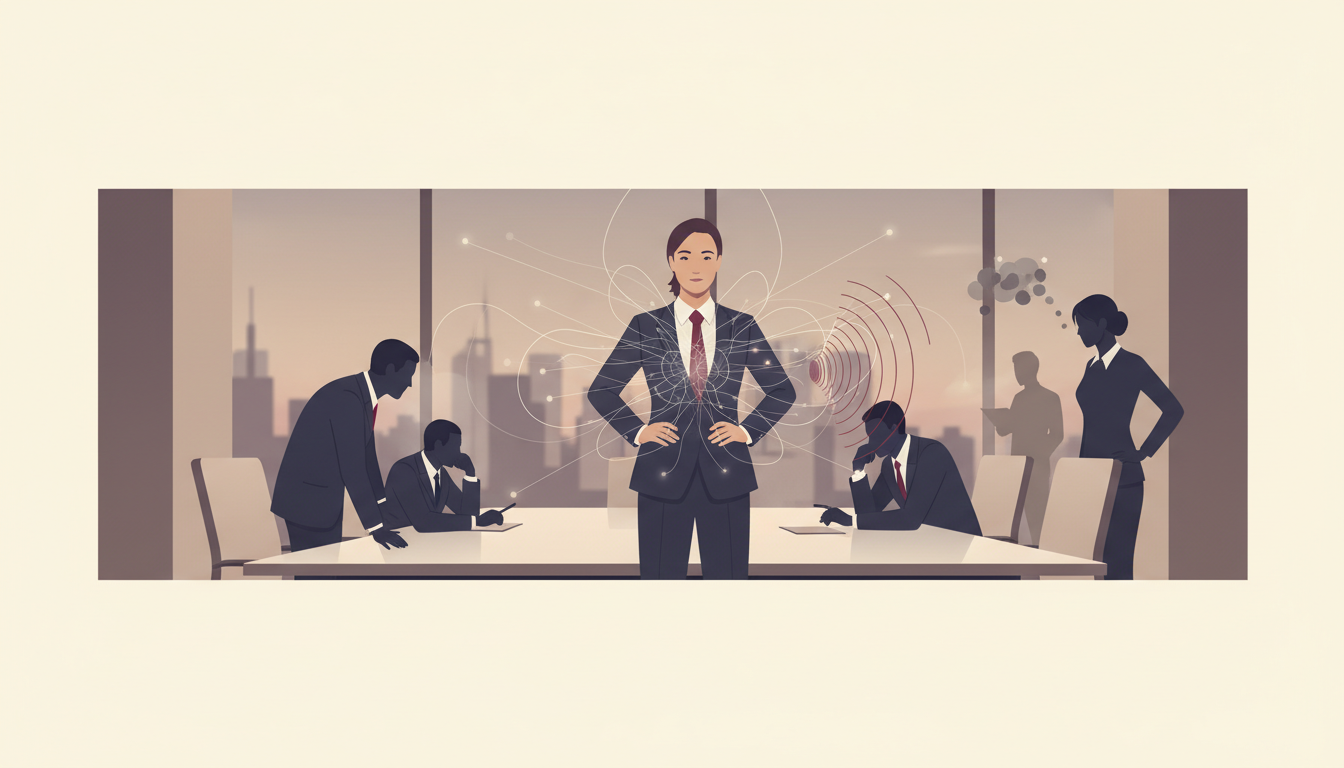
Albert Mehrabian's often-cited (and often misapplied) research at UCLA found that when verbal and nonverbal messages conflict, people trust the nonverbal signal 93% of the time. While that statistic applies specifically to emotional communication, the principle holds in professional contexts: when your words say "I'm confident" but your body says "I'm uncertain," people believe your body.
A 2020 study published in the Journal of Nonverbal Behavior found that candidates who displayed confident body language during interviews were rated as 20–30% more competent than those with identical qualifications who displayed low-confidence cues. The content was the same. Only the delivery changed.
How Nonverbal Cues Shape Career Outcomes
This isn't abstract theory. Confident body language directly influences promotions, negotiations, and leadership perception. Professionals who build credibility at work fast understand that nonverbal signals are a foundational pillar.
Consider two project managers presenting the same quarterly update. One stands behind the podium, grips the edges, glances at slides, and speaks with a rising inflection. The other stands in the open, gestures with purpose, makes direct eye contact with stakeholders, and pauses deliberately. Same data. Radically different perception of competence.
A 2022 survey by the Center for Talent Innovation found that executive presence—of which body language is a primary component—accounts for 26% of what it takes to get promoted to senior leadership. Your physical presence is, quite literally, a career asset.
The 5 Pillars of Confident Body Language
Pillar 1: Commanding Posture
Posture is the foundation of confident body language. It's the first thing people register and the last thing they forget.
The confident posture framework:- Feet: Shoulder-width apart, weight evenly distributed. Avoid crossing ankles or shifting weight side to side.
- Spine: Elongated, as if a string pulls the crown of your head toward the ceiling. This naturally opens the chest and rolls shoulders back.
- Shoulders: Down and back—not pinched, just settled. Hunched shoulders signal stress or submission.
- Head: Level, chin parallel to the floor. Tilting your head down signals deference; tilting it up signals arrogance.
For a deeper dive into posture and presence during presentations, see our guide on confident body language for public speaking.
Pillar 2: Strategic Eye Contact
Eye contact is the single most powerful nonverbal signal of confidence. Too little reads as evasive or insecure. Too much reads as aggressive or unsettling. The sweet spot builds trust and authority simultaneously.
The 3-5-3 method:- Hold eye contact for 3–5 seconds during conversation—roughly the length of a complete thought.
- Break contact by looking to the side, not down. Looking down signals submission; looking sideways signals thought.
- In group settings, hold eye contact with 3 different people per key point, creating a triangle of engagement.
Research from the University of Wolverhampton found that speakers who maintained appropriate eye contact were rated as 50% more credible than those who avoided it. In negotiations and high-stakes meetings, this single shift can change the dynamic entirely.
Pillar 3: Purposeful Gestures
Your hands are either building your credibility or undermining it. Fidgeting, self-touching (rubbing your neck, playing with a pen), and hidden hands all signal nervousness. Purposeful gestures, by contrast, amplify your message and project control.
Confident gesture rules:- Keep hands visible. Hidden hands (in pockets, under the table) trigger subconscious distrust.
- Gesture in the "power zone"—between your waist and your shoulders. Gestures below the waist look weak; gestures above the shoulders look erratic.
- Use open palms. Palms-up gestures signal honesty and openness. Palms-down gestures signal authority and certainty. Use both deliberately.
- Steeple your fingers when making a decisive point. This classic gesture—fingertips touching, palms apart—is universally associated with confidence and expertise.
Pillar 4: Spatial Awareness and Territorial Confidence
How you occupy space communicates your status. Confident people take up appropriate space. Uncertain people shrink.
Spatial confidence tactics:- Claim your territory. Spread your materials on the table. Rest your arm on the back of the adjacent chair. Place both feet flat on the floor rather than tucking them under your seat.
- Don't retreat. When someone leans into your space during a disagreement, hold your position. Leaning back signals submission.
- Stand when others sit (when contextually appropriate). Standing during a key point in a meeting creates an instant authority differential.
- Choose strategic positioning. In meetings, sit where you can see the door and make eye contact with the decision-maker. Avoid corners where you'll be physically marginalized.
A study from the Journal of Experimental Social Psychology found that expansive body postures—those that take up more space—led to increased feelings of power in the person adopting them and increased perceptions of power by observers. The relationship between space and authority is bidirectional: taking up space makes you feel more confident and look more confident.
This principle is especially important for professionals working to establish authority without a formal title.
Pillar 5: Movement Tempo and Stillness
Nervous people move fast. They shift weight, tap feet, nod excessively, and rush through transitions. Confident people move with deliberate, unhurried intention.
The stillness principle:- Pause before responding. When asked a question, hold still for one beat before answering. This signals that you're choosing your words, not scrambling for them.
- Walk at 70% speed. Literally slow down when walking to the front of the room, to the whiteboard, or between meeting rooms. Rushed movement signals anxiety.
- Eliminate pacifying behaviors. These include touching your face, adjusting your clothes, bouncing your leg, and clicking your pen. Each one leaks nervous energy.
- Nod deliberately. Replace rapid, continuous nodding (which signals eagerness to please) with slow, single nods that signal understanding and agreement.
Body Language Mistakes That Silently Destroy Your Credibility
The "Apologetic" Posture Cluster
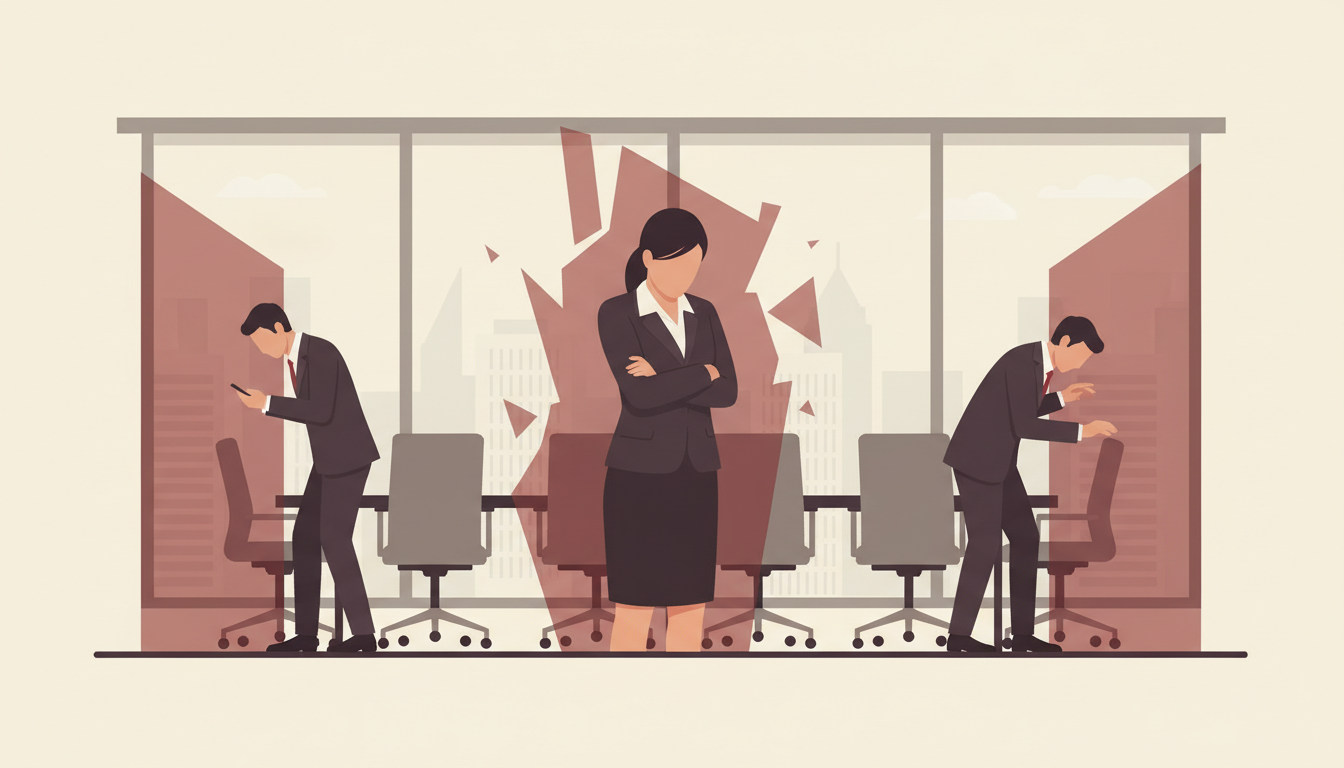
Some body language mistakes are obvious—crossed arms, avoiding eye contact. But the most damaging ones are subtle clusters of behavior that collectively signal insecurity:
- The head tilt + smile combo: Tilting your head while smiling signals submission and a desire to please. It's appropriate in casual social settings but undermines authority in professional ones.
- The self-hug: Crossing one arm across your body to hold the opposite elbow. This self-soothing gesture screams discomfort.
- The perpetual nod: Nodding constantly while someone else speaks signals that you're seeking approval, not evaluating information.
- The question inflection: While technically vocal, the rising inflection at the end of statements pairs with uncertain body language to create a full "I'm not sure I should be here" package.
If you recognize these patterns in yourself, our article on why people don't take you seriously at work offers a comprehensive diagnostic and fix.
Digital Body Language: The Remote Work Factor
In virtual meetings, your body language canvas shrinks to a rectangle. But the principles still apply—they just require adaptation.
- Camera at eye level. Looking down at your laptop camera creates an unflattering angle and signals disengagement. Stack books under your laptop or invest in a stand.
- Lean slightly forward. A 10-degree forward lean toward the camera signals engagement and authority. Leaning back signals detachment.
- Gesture within the frame. Keep your hands visible in the camera frame and gesture in a slightly tighter zone than you would in person.
- Maintain "eye contact" with the camera lens, not the faces on screen, when you're making a key point. This creates the illusion of direct eye contact for everyone watching.
For a full breakdown, see our guide on how to build executive presence remotely.
How to Practice Confident Body Language Daily
The Morning Calibration Routine
Confident body language isn't something you switch on for big moments. It's built through daily repetition until it becomes your default.
5-minute morning calibration:- Power posture check (60 seconds): Stand in front of a mirror. Feet shoulder-width, spine tall, shoulders settled, chin level. Hold for 60 seconds and memorize how this feels in your body.
- Gesture rehearsal (60 seconds): Practice making a point with open-palm gestures in the power zone. Say a sentence from today's agenda and match it with a purposeful gesture.
- Eye contact drill (60 seconds): Look at yourself in the mirror and hold eye contact for 5-second intervals. This builds comfort with sustained gaze.
- Slow walk (60 seconds): Walk across the room at 70% of your normal speed. Notice the difference in how you feel.
- Stillness practice (60 seconds): Sit in a chair with both feet on the floor, hands resting on your thighs, and hold completely still. No fidgeting. Build your tolerance for stillness.
These exercises pair well with the broader habits outlined in our daily workplace confidence exercises guide.
The Pre-Meeting Power Reset
Before any important meeting, presentation, or conversation, use this 30-second reset:
- Stand up and take one full breath.
- Roll your shoulders back and down twice.
- Plant your feet shoulder-width apart.
- Lift your chin to level.
- Relax your hands at your sides.
- Walk in at a measured pace.
According to research published in Health Psychology (2015), adopting an upright posture before a stressful task led to higher self-esteem, better mood, and reduced fear compared to a slumped posture. The physical shift creates a psychological one.
Your Body Is Speaking—Is It Saying the Right Things? The Credibility Code gives you the complete system for aligning your verbal and nonverbal communication so you command authority in every room. Discover The Credibility Code and start transforming how people perceive you. Discover The Credibility Code
Advanced Techniques: Body Language for High-Stakes Situations
Negotiations and Difficult Conversations
In negotiations, body language becomes a strategic tool. The wrong signal—a flinch, a lean-back, a broken gaze—can cost you leverage.
Key negotiation body language moves:- Mirror your counterpart's posture in the first 5 minutes to build rapport, then shift to a more expansive posture when you make your ask.
- Use the "steeple and pause" when stating your position. Steeple your fingers, state your number or terms, then go completely still. Silence plus stillness creates enormous pressure.
- Keep your torso facing the other person directly. Angling away signals discomfort with the conversation.
For full negotiation scripts and strategies, explore our guide on how to negotiate in a meeting.
Presentations and Public Speaking
When you're presenting, your body language is amplified. Every gesture is bigger, every shift in posture more visible, every break in eye contact more noticeable.
Presentation-specific body language rules:- Plant your feet when making a key point. Movement is fine for transitions, but stillness signals importance.
- Use the "triangle" method for eye contact: pick three points in the audience (left, center, right) and rotate your gaze between them.
- Open your stance before you speak your first word. Stand center stage, feet planted, hands at your sides, and pause for 2–3 seconds. This opening moment of stillness commands attention.
Our article on how to sound confident in a presentation covers the vocal dimension that pairs with these physical techniques.
Frequently Asked Questions
How long does it take to change your body language habits?
Research on habit formation from University College London suggests it takes an average of 66 days to form a new automatic behavior. However, you'll notice others responding differently to your body language within the first week of conscious practice. Start with one pillar—posture is the easiest entry point—and layer additional changes every two weeks.
Can confident body language actually make you feel more confident?
Yes. This is known as "embodied cognition." A 2015 study in Health Psychology confirmed that upright posture increases positive affect, reduces fatigue, and decreases self-focus compared to slumped posture. Your body doesn't just reflect your emotions—it actively shapes them. Adopting confident postures creates a feedback loop that genuinely increases internal confidence over time.
What's the difference between confident body language and aggressive body language?
Confident body language is open, steady, and relaxed. Aggressive body language is tense, invasive, and dominating. The key differences: confident eye contact holds for 3–5 seconds and breaks naturally; aggressive eye contact stares without breaking. Confident posture takes up appropriate space; aggressive posture invades others' space. Confident gestures are open-palmed; aggressive gestures involve pointing, fist-clenching, or table-slapping.
Does confident body language differ across cultures?
Yes, significantly. Eye contact norms, personal space expectations, and gesture meanings vary widely. In many Western cultures, direct eye contact signals confidence. In some East Asian and Middle Eastern cultures, prolonged direct eye contact with a superior can signal disrespect. The pillars in this guide are calibrated for Western professional settings. If you work across cultures, research specific norms for your context.
How do I look confident with body language when I'm genuinely nervous?
Focus on the mechanics, not the feeling. Plant your feet to stop swaying. Slow your gestures to half speed. Hold eye contact for 3 seconds at a time. Take one deep breath before speaking. These physical anchors interrupt the nervous energy loop and project calm control even when your heart is racing. Our guide on managing speaking anxiety at work offers additional techniques for the internal experience.
Can body language help me get taken more seriously in meetings?
Absolutely. Sitting upright, maintaining eye contact with the speaker, keeping your hands visible, and using deliberate nods instead of rapid head-bobbing all signal that you're a peer, not a passive participant. Pair these cues with the verbal strategies in our guide on how to speak up in meetings with impact for maximum effect.
Build Presence People Notice Before You Say a Word
The Credibility Code gives you the specific verbal and nonverbal habits that make people treat you as the senior person in the room.
Discover The Credibility CodeRelated Articles

Body Language for Leadership Presence: A Complete Guide
Body language for leadership presence is the intentional use of nonverbal cues—posture, eye contact, gestures, facial expressions, and spatial positioning—to project authority, confidence, and credibility in professional settings. Research from UCLA professor Albert Mehrabian found that up to 55% of communication impact comes from nonverbal signals. This guide gives you a complete framework for mastering the physical cues that make people listen, trust, and follow your lead in meetings, presenta

Body Language That Conveys Authority: 12 Proven Signals
Body language that conveys authority includes expansive posture, deliberate hand gestures, sustained eye contact, controlled movement, and strategic use of space. Research from Harvard Business School shows that nonverbal cues account for over 55% of how your message is received. The 12 signals below—grouped into posture, gestures, eye contact, spatial positioning, and movement—are used by the most credible leaders to project confidence and command respect without saying a word.

Leadership Presence Body Language: 11 Cues That Signal Power
Leadership presence body language cues are the specific nonverbal signals—such as expansive posture, deliberate gestures, steady eye contact, controlled facial expressions, and strategic spatial positioning—that communicate authority and confidence before you say a single word. Research from Harvard Business School shows that nonverbal cues account for over 55% of how your message is perceived. The 11 cues below, backed by behavioral science, will help you project power in meetings, presentation