
How to Negotiate as an Introvert: A Quiet Strength Playbook
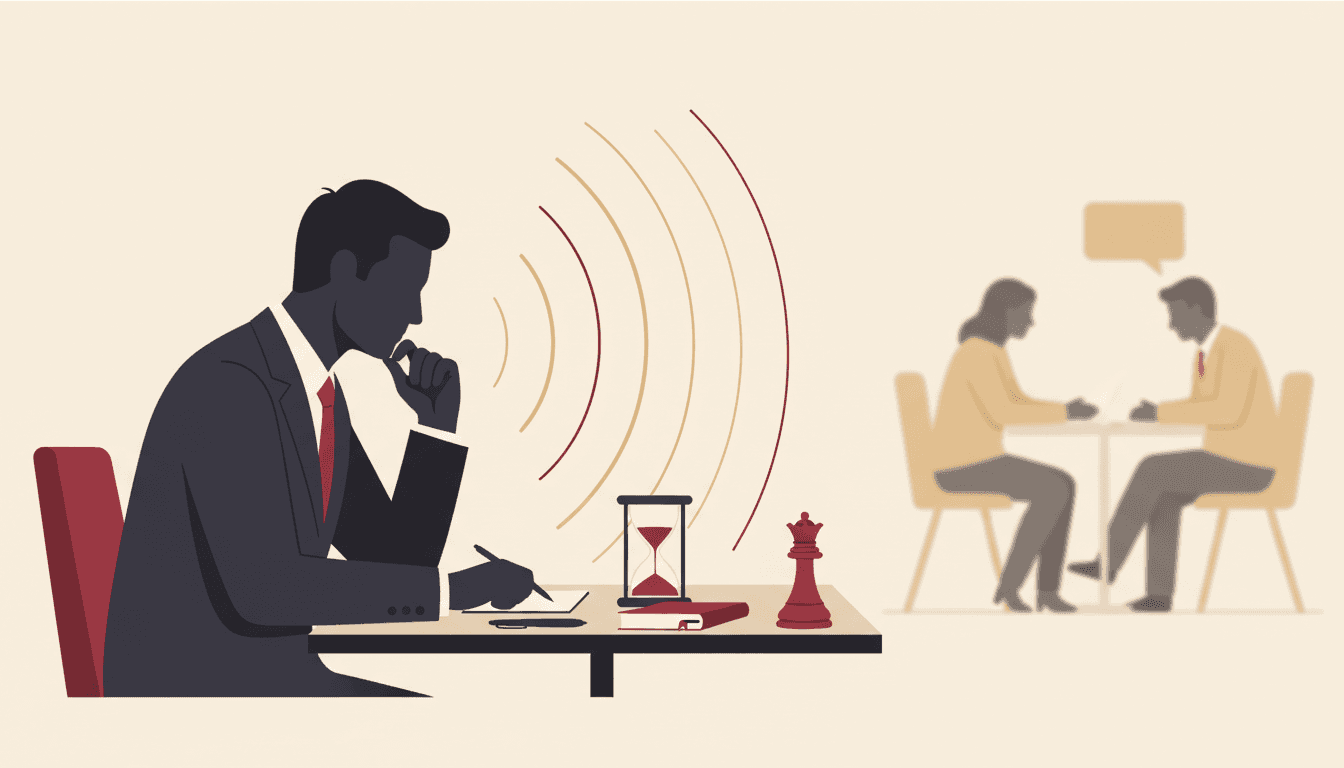
Negotiating as an introvert doesn't require you to become louder, more aggressive, or someone you're not. Instead, it means leveraging the strengths you already have—deep preparation, active listening, strategic silence, and thoughtful communication—to secure outcomes that match your worth. This playbook gives you specific scripts, frameworks, and techniques designed for professionals who prefer substance over spectacle, proving that quiet confidence is one of the most powerful negotiation tools available.
What Is Introvert-Friendly Negotiation?
Introvert-friendly negotiation is an approach to bargaining and professional advocacy that replaces confrontation-heavy tactics with preparation-driven, listening-centered strategies. Rather than relying on dominance or rapid-fire counterarguments, it uses deliberate pacing, well-researched positions, and strategic silence to create leverage.
This style of negotiation doesn't mean being passive. It means being intentional. Where extroverted negotiators might thrive on improvisation and verbal energy, introverted negotiators gain their edge through depth of knowledge, emotional composure, and the ability to read the room without needing to fill it with noise.
Why Introverts Are Actually Built for Negotiation
There's a persistent myth that negotiation belongs to the bold—the fast-talkers, the table-pounders, the people who can outlast you in a verbal sparring match. Research tells a different story.

The Science Behind Introverted Strengths
A study published in the Harvard Business Review found that introverted leaders often outperform extroverted ones when managing proactive teams, largely because they listen more carefully and create space for others to contribute (Grant, Gino, & Hofmann, 2010). In negotiation, this translates directly: the person who listens best often wins.
Additionally, research from the Wharton School of Business shows that people who prepare extensively before negotiations achieve outcomes that are, on average, 12-15% better than those who rely on improvisation (Malhotra & Bazerman, 2007). Preparation is the introvert's home court.
Three Introvert Advantages at the Negotiation Table
1. Deep preparation. Introverts naturally gravitate toward research and rehearsal. This means you walk into negotiations knowing the market rate, the counterparty's constraints, and your own walk-away point—before a single word is spoken. 2. Active listening. While the other party talks, you're processing not just their words but their tone, hesitations, and underlying interests. This gives you information that aggressive negotiators miss entirely. 3. Comfort with silence. Most people find silence unbearable and rush to fill it—often by making concessions. As an introvert, your tolerance for quiet moments is a tactical advantage. According to negotiation expert Chris Voss, former FBI lead hostage negotiator, silence after a key statement is one of the most effective tools for extracting concessions.If you've ever felt overlooked in high-stakes conversations, our guide on how to speak up in meetings as an introvert offers complementary strategies for making your voice count.
The QUIET Framework: A Step-by-Step Negotiation Method for Introverts
To give you a repeatable system, here's the QUIET Framework—five phases designed specifically for introverted professionals who want to negotiate with authority without performing extroversion.
Q — Quantify Your Position Before You Speak
Before any negotiation, build what I call a "Position Brief." This is a one-page document (for your eyes only) that includes:
- Your ideal outcome (what you'd love to walk away with)
- Your acceptable range (the zone you'd be satisfied within)
- Your walk-away point (the line you won't cross)
- Three data points supporting your position (market benchmarks, performance metrics, industry standards)
- Two concessions you're willing to make (and their perceived value to the other party)
U — Understand the Other Side's Interests
Most negotiations fail because both parties argue positions instead of exploring interests. As an introvert, your natural curiosity and listening ability make you exceptional at uncovering what the other person actually needs.
Before the conversation, write down three possible answers to: "What does the other party need that isn't obvious?"
For salary negotiations, your manager might need to justify the raise to their boss. For client negotiations, the buyer might need a faster timeline more than a lower price. Understanding these hidden interests lets you propose solutions that feel like wins for everyone.
I — Initiate with a Prepared Opening Statement
This is where many introverts stall. The opening feels confrontational. Remove that pressure by scripting your first 30 seconds.
Script template: "I appreciate you making time for this conversation. I've put together some thoughts on [topic], and I'd like to walk through them with you. My goal is to find something that works well for both of us."This opening is calm, professional, and non-combative. It signals preparation without aggression. For more on crafting language that builds credibility in high-stakes moments, see our guide on power language at work.
E — Employ Strategic Silence and Pacing
Here's where your introversion becomes your weapon. After you state your position or make a request, stop talking. Don't justify, don't backpedal, don't soften.
A study from the MIT Sloan School of Management found that negotiators who paused for at least three seconds after making a proposal received better counteroffers than those who continued talking (Curhan & Pentland, 2007). Silence communicates confidence. It also puts gentle pressure on the other party to respond—often more favorably than if you'd kept selling.
Practice this: After stating your number or your request, count silently to five. Let the other person break the silence.T — Track Agreements and Close Deliberately
Introverts often excel at the close because they're precise. As the conversation progresses, summarize agreements in real time:
"So we're aligned on [X], and you've mentioned flexibility on [Y]. Let me make sure I have this right..."This prevents misunderstandings and demonstrates professionalism. After the negotiation, send a follow-up email confirming what was agreed. This is where your executive email writing skills become a strategic asset—your written communication reinforces the credibility you built in person.
Scripts for Common Introvert Negotiation Scenarios
Frameworks are essential, but scripts give you the words when your mind goes blank. Here are four scenarios introverts frequently face, with language you can adapt immediately.

Salary Negotiation Script
The setup: You've received an offer or it's annual review time. "Thank you for this offer—I'm genuinely excited about the role. Based on my research into market rates for this position and the specific value I bring in [specific skill/achievement], I'd like to discuss a base salary of [your target number]. I've prepared some data points I'd be happy to share."Then pause. Let them respond. If they push back:
"I understand there may be constraints. I'm open to exploring the total compensation package—are there other areas where we might find flexibility?"This approach avoids confrontation while firmly anchoring your number. For a deeper dive into salary-specific tactics, check out our guide on how to negotiate salary confidently.
Workload Negotiation Script
The setup: You're being asked to take on more than is reasonable. "I want to make sure I deliver excellent work on everything I take on. Right now, my current priorities include [A, B, and C]. If we add [new request], I'd like to discuss which of these we should reprioritize, or whether we can adjust the timeline."This positions you as quality-focused rather than resistant. Our article on negotiating your workload without seeming lazy provides additional scripts for this exact situation.
Deadline Negotiation Script
"I want to deliver this at the quality level you're expecting. To do that, I'd need until [proposed date]. Here's what I can deliver by [their original date] as an interim milestone, and the final version by [your date]. Would that work?"Client or Vendor Negotiation Script
"I've reviewed the proposal, and I think we're close. There are two areas I'd like to revisit—[specific item 1] and [specific item 2]. My understanding of the market for this type of engagement is [data point]. Can we explore options in that range?"Managing Negotiation Anxiety: Techniques That Work
Even with scripts and preparation, the emotional weight of negotiation can feel heavy for introverts. Here are evidence-based techniques to manage that anxiety.
Pre-Negotiation Energy Management
According to the American Psychological Association, brief mindfulness exercises (even 5 minutes) before stressful conversations can reduce cortisol levels by up to 25% (APA, 2019). Before your negotiation:
- Box breathing: Inhale for 4 counts, hold for 4, exhale for 4, hold for 4. Repeat three times.
- Power posing: Research debates aside, spending two minutes in an expansive posture before a negotiation helps many people feel more grounded. The key is the subjective confidence shift, not the hormonal claims.
- Visualization: Walk through the conversation mentally. Picture yourself delivering your opening statement calmly, handling a pushback with composure, and closing with a handshake.
For a comprehensive toolkit on managing nerves in high-pressure situations, see our guide on confidence in high-stakes conversations.
The "Advocate Mindset" Shift
Research from Columbia Business School found that people negotiate more effectively when advocating for someone else than when advocating for themselves (Amanatullah & Morris, 2010). Introverts can use this insight directly.
Before your negotiation, reframe the conversation: you're not asking for something for yourself—you're advocating for the value your team, your family, or your future self deserves. This subtle mental shift reduces the self-promotion discomfort that many introverts feel.
Building a Post-Negotiation Recovery Routine
Negotiations are energy-intensive for introverts. Plan for recovery:
- Block 30 minutes after the meeting with no obligations
- Write down what went well and what you'd adjust next time
- Avoid immediately analyzing whether you "could have gotten more"—this spiral undermines your confidence for future negotiations
Build Unshakable Professional Credibility Negotiation is just one piece of the authority puzzle. Discover The Credibility Code — the complete system for professionals who want to be taken seriously, heard clearly, and respected consistently. Discover The Credibility Code
Common Mistakes Introverts Make in Negotiations (and How to Fix Them)
Mistake 1: Over-Explaining Your Position
When you feel uncertain, the instinct is to justify endlessly. This actually weakens your position. State your case, provide your top two supporting points, and stop. Let the evidence breathe.
Instead of: "I think I deserve a raise because I've been here three years and I've taken on more responsibility and I also noticed that market rates have gone up and my performance review was positive and..." Try: "Based on my contributions to [specific project] and current market data, I'm requesting a salary of [number]." Then silence.Mistake 2: Accepting the First Offer to Avoid Discomfort
According to a study by the Journal of Personality and Social Psychology, people who make a counteroffer—even a modest one—end up with outcomes 15-20% better than those who accept immediately (Galinsky & Mussweiler, 2001). You don't need to be aggressive. A simple "I appreciate that offer. I was hoping we could get closer to [X]—is there room to discuss?" is enough.
Mistake 3: Neglecting Your Non-Verbal Communication
Your body language communicates before you say a word. Introverts sometimes minimize their physical presence—crossing arms, avoiding eye contact, speaking softly. Focus on three things: steady eye contact, an open posture, and a pace of speech that's deliberate rather than rushed.
Frequently Asked Questions
Can introverts be good negotiators?
Absolutely. Introverts bring preparation depth, active listening, and comfort with silence—all proven negotiation advantages. Research consistently shows that the best negotiators aren't the loudest; they're the most prepared and the best listeners. Introversion is a negotiation strength when used intentionally, not a limitation to overcome.
How to negotiate as an introvert vs. an extrovert?
Introverts tend to prepare more thoroughly, listen more carefully, and use strategic pauses effectively. Extroverts often rely on verbal energy and improvisation. Neither style is inherently better—but introverts should lean into their natural strengths (research, patience, observation) rather than trying to mimic extroverted tactics like rapid-fire counterarguments or high-energy persuasion.
What is the best negotiation technique for someone who hates confrontation?
The QUIET Framework (Quantify, Understand, Initiate, Employ silence, Track agreements) removes confrontation from the equation. By leading with data, asking questions to understand the other side's needs, and using silence instead of pressure, you can negotiate effectively without a single adversarial moment. Framing negotiations as collaborative problem-solving also reduces the confrontational dynamic.
How do I negotiate salary if I'm shy?
Start by separating shyness from your professional capability. Prepare a Position Brief with your target number, market data, and key achievements. Script your opening statement word-for-word and practice it aloud three times. Remember: you're not bragging—you're presenting evidence. If speaking feels overwhelming, consider initiating the negotiation via email and then discussing details in person.
How can introverts build more confidence before negotiations?
Confidence comes from preparation, not personality. Build your Position Brief, rehearse your scripts, practice box breathing, and use the Advocate Mindset (negotiate as if you're advocating for someone you care about). Over time, each successful negotiation—even a small one—builds a track record that reinforces your confidence naturally. Our guide on being more confident at work as an introvert offers a deeper system.
Should introverts negotiate over email instead of in person?
Email can be a powerful starting tool—it gives you time to compose your thoughts precisely. However, the most effective approach is often a hybrid: initiate key points via email, then discuss details in person or over video. This gives you the preparation advantage of writing with the relationship-building benefit of face-to-face interaction.
Negotiate From a Position of Credibility
The Credibility Code shows you how to state your case without hedging, so your ask is heard as a professional position rather than a favor.
Discover The Credibility CodeRelated Articles

Negotiation Confidence for Introverts: A Quiet Guide
Negotiation confidence for introverts doesn't require becoming louder or more aggressive. Introverts can negotiate with remarkable effectiveness by leveraging their natural strengths: deep preparation, active listening, and strategic silence. This guide provides specific frameworks, scripted phrases, and tactical methods designed for professionals who prefer thoughtful communication over confrontational debate — so you can advocate for yourself firmly without performing extroversion.

How to Negotiate When You Feel Powerless: 6 Power Shifts
Negotiating when you feel powerless starts with one critical insight: perceived power matters more than actual power. You don't need a bigger title, more leverage, or a backup offer to negotiate effectively. By shifting how you prepare, frame, and communicate your position, you can create credibility and influence even from an apparent position of weakness. The six power shifts below will help you transform feelings of powerlessness into strategic advantages that produce real results.

Negotiation Skills for Women in Leadership: Key Tactics
Women in leadership negotiate differently—not because they lack skill, but because they face a documented set of social penalties that men rarely encounter. The most effective negotiation skills for women in leadership combine research-backed language patterns, strategic framing techniques, and credibility-anchoring methods that neutralize bias while securing stronger outcomes. This article provides specific frameworks, scripts, and tactics designed for the realities women leaders actually face