
Build Authority in Your Career: The Credibility Roadmap
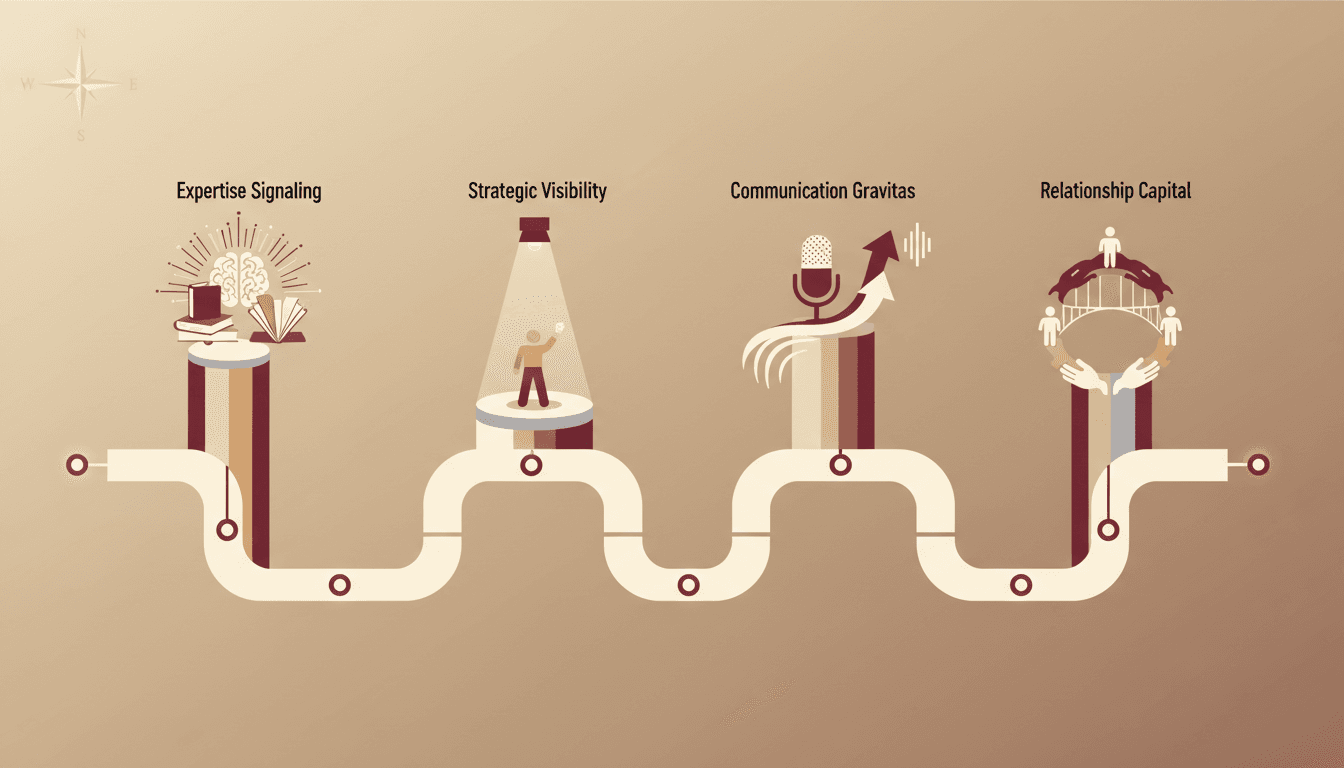
What Does It Mean to Build Authority in Your Career?
Career authority is the professional state in which colleagues, leaders, and industry peers consistently seek your perspective, trust your judgment, and defer to your expertise on specific topics. It is the intersection of demonstrated competence, visible credibility, and earned influence.
Unlike seniority or rank, authority is perception-driven. You can hold a senior title and still lack authority if people don't trust your insight. Conversely, an individual contributor with deep expertise and strong communication skills can wield enormous influence. When you build authority in your career, you create a self-reinforcing cycle: people listen to you, which gives you more opportunities to demonstrate value, which makes more people listen.
Why Career Authority Matters More Than Ever
The Shift from Credentials to Credibility

The modern workplace has flattened. Cross-functional teams, remote collaboration, and matrix organizations mean you're constantly working with people who don't report to you. In this environment, positional power alone won't get results—credibility does.
A 2023 Edelman Trust Barometer report found that 63% of people trust "technical experts" more than CEOs when it comes to company information. This signals a fundamental shift: authority now flows to those who can demonstrate expertise, not just those who hold titles.
The Compounding Returns of Authority
Career authority compounds like interest. When you're recognized as an authority, you get invited to high-visibility projects. Those projects expand your network and sharpen your skills. That expanded network opens doors to speaking engagements, promotions, and strategic partnerships.
According to LinkedIn's 2023 Workplace Learning Report, employees who are recognized as subject-matter experts are 2.5 times more likely to be tapped for leadership roles. The earlier you start building authority, the more you benefit from this compounding effect.
The Cost of Staying Invisible
Many mid-career professionals assume that doing great work is enough. It isn't. Research from Hewlett Packard Enterprise found that high performers who lacked visibility were 33% less likely to receive promotions compared to peers with similar performance but greater strategic presence. If you're not actively building authority, you're leaving career capital on the table.
If you've ever felt overlooked despite strong results, our guide on why people don't take you seriously at work diagnoses the most common credibility gaps.
Pillar 1: Expertise Signaling — Prove What You Know
Expertise is the foundation of authority, but having expertise and being known for expertise are two different things. Expertise signaling is the deliberate practice of making your knowledge visible, accessible, and memorable.
Identify Your Authority Niche
You can't be an authority on everything. The professionals who build the fastest credibility are those who own a specific intersection of skills and knowledge. Use this framework to find your niche:
The Authority Intersection Model:- Competence — What do you do at a demonstrably high level?
- Demand — What does your organization or industry urgently need?
- Passion — What could you talk about for an hour without notes?
The sweet spot where all three overlap is your authority niche. For example, a marketing manager who excels at analytics, works in a company pivoting to data-driven decisions, and loves translating numbers into narratives should position themselves as the authority on "marketing performance storytelling."
Write a one-sentence authority statement: "I help [audience] achieve [outcome] through [unique approach]." This becomes the anchor for every expertise signal you send.
Create a Knowledge Visibility System
Once you've defined your niche, build a system that consistently puts your expertise in front of the right people. Here's a practical weekly cadence:
- Monday: Share one industry insight in a team channel or Slack workspace with your brief analysis (not just a link—add your perspective).
- Wednesday: Contribute a substantive comment or answer in an internal forum, cross-functional meeting, or LinkedIn discussion.
- Friday: Document one lesson learned, process improvement, or framework from your week in a shared knowledge base or internal blog.
This system takes roughly 90 minutes per week but ensures you're consistently visible as a thinker, not just a doer. For a deeper dive into this approach, read our framework on how to position yourself as an expert at work.
Develop Signature Frameworks
Authorities don't just share information—they organize it. Creating a named framework or model instantly elevates your perceived expertise. Consider these examples:
- A project manager who creates the "3-Layer Risk Assessment" for evaluating project viability.
- A sales leader who develops the "Trust-First Discovery Method" for initial client conversations.
- An HR director who introduces the "90-Day Authority Ramp" for new-hire onboarding.
Your framework doesn't need to be revolutionary. It needs to be useful, memorable, and consistently applied. When colleagues start referencing your framework by name, you've crossed a major authority threshold.
Pillar 2: Strategic Visibility — Be Seen Where It Counts
Expertise without visibility is like a billboard in the desert. Strategic visibility means placing yourself in the conversations, rooms, and platforms where decision-makers form opinions about talent.

Map Your Visibility Landscape
Not all visibility is equal. Before you start raising your profile, map the landscape:
| Visibility Tier | Examples | Impact Level |
|---|---|---|
| Tier 1: Inner Circle | Direct team meetings, 1:1s with manager | Low reach, high trust |
| Tier 2: Organizational | Cross-functional projects, town halls, internal presentations | Medium reach, medium trust |
| Tier 3: Industry | Conference talks, published articles, LinkedIn thought leadership | High reach, variable trust |
Most professionals over-invest in Tier 1 and ignore Tiers 2 and 3. To build authority in your career, you need a presence across all three tiers.
A practical starting point: volunteer to present your team's quarterly results to a cross-functional audience (Tier 2), and then distill the key insight into a LinkedIn post (Tier 3). This single action moves you up two visibility tiers with minimal extra effort.
The Strategic Volunteering Framework
Not every opportunity is worth your time. Use this filter before saying yes:
- Audience quality: Will decision-makers or influential peers see this work?
- Skill showcase: Does this highlight your authority niche?
- Narrative fit: Does this reinforce the professional story you're building?
If an opportunity scores two out of three, take it. If it scores zero or one, decline gracefully. For guidance on how to negotiate your workload while making strategic choices, that linked guide offers practical scripts.
Build Your Thought Leadership Platform
According to a 2023 LinkedIn and Edelman study, 64% of B2B decision-makers say thought leadership content directly influenced their decision to work with someone. Your thought leadership platform doesn't require a blog, podcast, and YouTube channel. Pick one primary channel and commit to consistency:
- LinkedIn: Ideal for most mid-career professionals. Post two to three times per week with original insights tied to your authority niche. Our guide on thought leadership on LinkedIn gives you a detailed playbook.
- Internal platforms: Company wikis, Slack channels, or internal newsletters are underused goldmines for organizational visibility.
- Speaking: Even a single conference talk per quarter can dramatically elevate your industry authority. Start with local meetups or webinars.
Pillar 3: Communication Gravitas — Sound Like an Authority
You can have deep expertise and high visibility, but if you communicate with uncertainty, hedging, and filler words, people won't perceive you as authoritative. Communication gravitas is the ability to speak and write with clarity, conviction, and composure.
Eliminate Credibility-Draining Language
Research from the University of Texas at Austin found that speakers who use hedging language ("I think maybe," "I'm not sure but," "this might be wrong") are rated 25% to 35% lower in perceived competence by listeners—even when their actual content is identical to a confident speaker's.
Start by auditing your language for these common credibility drains:
- Hedges: "I think," "sort of," "kind of," "maybe"
- Qualifiers: "I'm no expert, but…" "This might be a dumb question…"
- Uptalk: Ending statements with a rising intonation that sounds like a question
- Over-apologizing: "Sorry, but I just wanted to say…"
Replace these with direct, declarative language. Instead of "I think we should maybe consider option B," say "I recommend option B. Here's why." For a complete breakdown of language patterns that erode trust, see our post on 12 weak communication habits that undermine your credibility.
Master the Authority Communication Framework
Use the C.L.E.A.R. Authority Framework for any high-stakes communication:
- C — Claim: State your position clearly in the first sentence.
- L — Logic: Provide two to three supporting data points or reasons.
- E — Evidence: Share a specific example, case study, or result.
- A — Acknowledgment: Address the strongest counterargument briefly.
- R — Recommendation: End with a clear next step or call to action.
This structure works in meetings, presentations, emails, and even Slack messages. It signals that you think clearly and communicate with authority.
Develop Vocal Authority
Your voice is a credibility instrument. A study published in the Journal of Experimental Social Psychology found that speakers with lower pitch variation and moderate pace were perceived as more authoritative and competent.
Three vocal shifts that immediately increase gravitas:
- Pause before key points. A two-second pause creates anticipation and signals confidence. Rushing signals nervousness.
- Finish sentences with downward inflection. This turns statements into declarations rather than questions.
- Reduce your speaking pace by 10 to 15%. Most professionals speak too fast in high-stakes moments.
For a complete vocal training system, our guide on how to develop a commanding voice at work provides exercises you can practice in five minutes daily.
Pillar 4: Relationship Capital — Build Your Authority Network
Authority doesn't exist in isolation. It's validated, amplified, and sustained by the people around you. Relationship capital is the trust, goodwill, and mutual value you've built with colleagues, mentors, sponsors, and industry peers.
The Authority Network Map
Not all professional relationships serve authority equally. Map your network across four categories:
- Sponsors — Senior leaders who advocate for you in rooms you're not in. You need at least one active sponsor.
- Peers of influence — Colleagues at your level who are well-connected and respected. They amplify your reputation laterally.
- Mentors — People with more experience who provide guidance and perspective. They sharpen your judgment.
- Rising talent — People earlier in their careers whom you mentor. Teaching deepens your expertise and builds loyalty.
According to a Catalyst study, professionals with active sponsors are 23% more likely to advance in their careers than those without. Yet most mid-career professionals have mentors but lack sponsors. The difference matters: mentors advise you, but sponsors advocate for you.
Convert Mentors into Sponsors
The transition from mentor to sponsor happens when someone trusts your competence enough to stake their own reputation on you. Here's how to earn that trust:
- Deliver visibly. Complete a high-profile project that your potential sponsor can point to.
- Make their job easier. Share insights, solve problems, or take on work that directly supports their priorities.
- Ask specifically. Don't ask "Will you be my sponsor?" Instead, say "I'm interested in the VP-level strategy committee. Would you be willing to recommend me for a seat?"
For more on communicating effectively with senior leaders, our guide on how to build credibility with senior leadership provides specific scripts and strategies.
Give Value Before You Ask for It
The most authoritative professionals are generous with their knowledge and connections. Follow the 5:1 rule—for every ask you make, provide at least five instances of value first. Value can include:
- Sharing a relevant article or resource
- Making a strategic introduction
- Offering genuine, specific praise for someone's work
- Providing feedback when asked
- Amplifying someone's idea in a meeting
This approach builds the kind of trust that makes people want to support your career.
Your credibility roadmap starts here. The Credibility Code walks you through each pillar with scripts, exercises, and milestone trackers designed for mid-career professionals ready to own their authority. Discover The Credibility Code
The Authority Roadmap: Milestones by Quarter
Building career authority isn't a weekend project. Here's a realistic 12-month timeline with measurable milestones:
Months 1–3: Foundation
- Define your authority niche and write your authority statement.
- Audit your communication for credibility-draining habits.
- Start your weekly knowledge visibility system.
- Identify two potential sponsors and begin building those relationships.
Months 4–6: Expansion
- Deliver one cross-functional presentation or internal talk.
- Publish your first piece of thought leadership (LinkedIn article, internal blog post, or industry contribution).
- Develop and name one signature framework.
- Have a direct conversation with a potential sponsor about your career goals.
Months 7–9: Amplification
- Speak at an external event, webinar, or industry panel.
- Get invited to a strategic project or committee based on your authority niche.
- Mentor one rising professional in your area of expertise.
- Receive inbound requests for your perspective from people you haven't directly approached.
Months 10–12: Consolidation
- Have a documented body of thought leadership (five-plus pieces of content).
- Hold an active sponsor relationship with at least one senior leader.
- Be consistently included in strategic conversations related to your niche.
- Receive a promotion, expanded role, or significant new opportunity tied to your authority.
For professionals who've recently stepped into a new role, our guide on how to establish authority in a new team without ego provides a tailored approach for the critical first 90 days.
Frequently Asked Questions
How long does it take to build authority in your career?
Most professionals can establish meaningful authority within 12 to 18 months of focused effort. The timeline depends on your starting point, industry, and consistency. You'll typically see early signals—being sought out for advice, getting invited to strategic conversations—within three to six months. Full authority, where opportunities come to you unprompted, usually takes a year or more of deliberate work across all four pillars.
What is the difference between authority and influence at work?
Authority is domain-specific credibility—people trust your expertise on particular topics. Influence is broader—it's your ability to shape decisions, behaviors, and outcomes regardless of the topic. Authority fuels influence, but influence also requires relationship skills, emotional intelligence, and communication ability. You can have authority without influence (the brilliant expert no one listens to) or influence without authority (the charismatic leader with shallow expertise). The strongest professionals build both.
Can introverts build career authority effectively?
Absolutely. Authority doesn't require being the loudest voice in the room. Introverts often excel at deep expertise, thoughtful written communication, and one-on-one relationship building—all critical authority drivers. The key is choosing visibility strategies that match your strengths: written thought leadership, small-group presentations, and strategic one-on-one conversations with sponsors. Our guide on how to be more confident at work as an introvert offers specific tactics.
How do I build authority in your career after a setback or failure?
Setbacks don't disqualify you from authority—how you respond defines your credibility. Acknowledge the failure transparently, share what you learned, and demonstrate improved results. Some of the strongest authority stories come from professionals who rebuilt after a visible stumble. Consistency in your expertise signaling and communication after a setback actually accelerates trust because people see resilience. Read our full guide on rebuilding confidence at work after failure for a step-by-step recovery plan.
What's the fastest way to build professional credibility at a new company?
Focus on quick wins that demonstrate your expertise niche within the first 30 days. Ask smart questions in meetings, volunteer for one visible project, and build relationships with two to three influential peers. Avoid the trap of staying quiet until you "learn the culture." Early, thoughtful contributions signal competence. Within 90 days, aim to have delivered one tangible result and established one sponsor relationship. Our framework on building professional credibility fast at a new job provides a detailed action plan.
Does building authority require self-promotion?
Not in the way most people fear. Authority-building is about making your value visible, not bragging. Share results in the context of team wins. Teach what you know generously. Let your frameworks and thought leadership speak for themselves. The most effective authority builders focus on being useful rather than impressive. If self-promotion feels uncomfortable, our guide on how to get promoted without feeling like a self-promoter reframes the entire approach.
Be the Person Leadership Thinks Of First
The Credibility Code is a practical guide to the communication habits that get professionals noticed, trusted, and promoted.
Discover The Credibility CodeRelated Articles

How to Build Authority in Your Career: A 5-Step Plan
Building authority in your career requires a deliberate, sequential approach: (1) identify your credibility niche, (2) create visible proof points, (3) master authoritative communication, (4) leverage internal and external platforms, and (5) sustain your authority through consistent thought leadership. Authority isn't granted by a title alone—it's earned through demonstrated expertise, strategic visibility, and the confidence to communicate your value clearly. This five-step plan gives you the e

How to Build Authority in Your Career: A 5-Phase System
Building authority in your career requires a deliberate, phased approach that compounds over time. The system works across five stages: (1) establish baseline competence and reliability, (2) develop a distinctive professional point of view, (3) increase strategic visibility within your organization, (4) expand influence beyond your immediate team, and (5) become the recognized go-to voice in your domain. Each phase builds on the last, and skipping stages is why most authority-building efforts st

How to Present Yourself as a Leader Before Promotion
To present yourself as a leader before promotion, you need to shift from performing tasks to shaping outcomes. This means communicating with strategic clarity, making your contributions visible to decision-makers, taking ownership beyond your current role, and building credibility signals — like executive-level communication, composed body language, and a reputation for solving high-stakes problems — that make you the obvious choice when the opportunity arrives.