
How to Recover From a Bad Presentation at Work

To recover from a bad presentation at work, take three immediate steps: own the outcome without over-apologizing, follow up with stakeholders within 24 hours with a clear summary of your key points, and request specific feedback so you can improve. A single bad presentation doesn't define your credibility — but how you respond to it absolutely does. The professionals who recover fastest are those who treat the setback as data, not a verdict.
What Is Presentation Recovery?
Presentation recovery is the deliberate process of rebuilding your professional credibility and confidence after a presentation that fell flat — whether due to poor delivery, lost train of thought, tough audience reactions, or technical failures. It includes both the external actions you take (stakeholder follow-up, narrative reframing) and the internal work required (managing self-doubt, rebuilding confidence).
Unlike simply "moving on," presentation recovery is a strategic skill. It's the difference between letting one bad performance quietly erode your reputation and using it as a springboard to demonstrate resilience, self-awareness, and leadership maturity.
Why a Bad Presentation Feels So Devastating (And Why It's Not)
The Spotlight Effect Is Working Against You

Here's the first thing you need to understand: you almost certainly think it went worse than it actually did. Psychologists call this the "spotlight effect" — the tendency to overestimate how much others noticed your mistakes. A study published in the Journal of Personality and Social Psychology by Gilovich, Medvec, and Savitsky (2000) found that people consistently believed their blunders were noticed by about twice as many observers as actually noticed them.
That stumble over your words in slide four? Half the room was checking email. The moment you lost your place? Most people assumed it was a deliberate pause.
One Presentation Is Not Your Entire Career
According to a 2023 survey by Prezi, 70% of professionals say presentation skills are critical for career success. That's real — but it also means your colleagues understand how hard presenting is. They've bombed too. A single rough presentation doesn't cancel out months or years of solid work.
The danger isn't the bad presentation itself. The danger is letting it trigger a confidence spiral that affects your next meeting, your next pitch, your next conversation with leadership. That's what we're going to prevent.
Separating Identity From Performance
High performers often conflate "I gave a bad presentation" with "I am bad at presenting." These are fundamentally different statements. The first is a data point. The second is an identity claim that will sabotage you.
If you're prone to this kind of thinking, you may find our guide on overcoming imposter syndrome at work particularly useful. The same cognitive patterns that fuel imposter syndrome also amplify post-presentation shame.
The 24-Hour Recovery Protocol: What to Do Immediately
Step 1: Conduct a Private Debrief (Hours 0-2)
Before you talk to anyone, take 15 minutes alone. Write down three things:
- What actually went wrong (specific moments, not vague feelings)
- What went fine or well (there's always something — find it)
- What was outside your control (tech failures, unexpected questions, time cuts)
This isn't journaling therapy. It's triage. You need an accurate picture of what happened before your brain rewrites the story into a catastrophe. Research from Harvard Business School by Francesca Gino and Gary Pisano (2011) found that employees who spent 15 minutes reflecting on lessons learned at the end of the day performed 23% better after 10 days than those who didn't reflect.
Step 2: Send a Strategic Follow-Up (Hours 2-24)
This is the most important recovery action you can take. Within 24 hours, send a follow-up email or message to key stakeholders. Here's the framework:
- Lead with value, not apology. Don't open with "Sorry about yesterday." Instead, open with: "I wanted to follow up with a clearer summary of the key points from yesterday's discussion."
- Provide what the presentation should have delivered. Attach a clean one-pager, a revised deck, or a concise email summary of your core argument.
- Invite dialogue. Close with: "I'd welcome any questions or feedback — I want to make sure the key takeaways are clear."
This approach works because it shifts the narrative from "that was rough" to "this person is thorough and professional." If you need help structuring that follow-up for a senior audience, check out our framework for how to communicate with the C-suite.
Step 3: Have One Honest Conversation (Hours 12-48)
Identify one trusted colleague or mentor who was in the room. Ask them directly: "I felt like that presentation didn't land the way I wanted. What's your honest read?" Then listen. Don't defend, don't explain — just absorb.
This does two things. First, it gives you real data instead of imagined worst-case scenarios. Second, it signals professional maturity. According to leadership research from Zenger and Folkman published in Harvard Business Review (2014), leaders who actively sought critical feedback were rated in the 86th percentile for overall leadership effectiveness.
Reframing the Narrative With Stakeholders
The "Correction, Not Confession" Approach
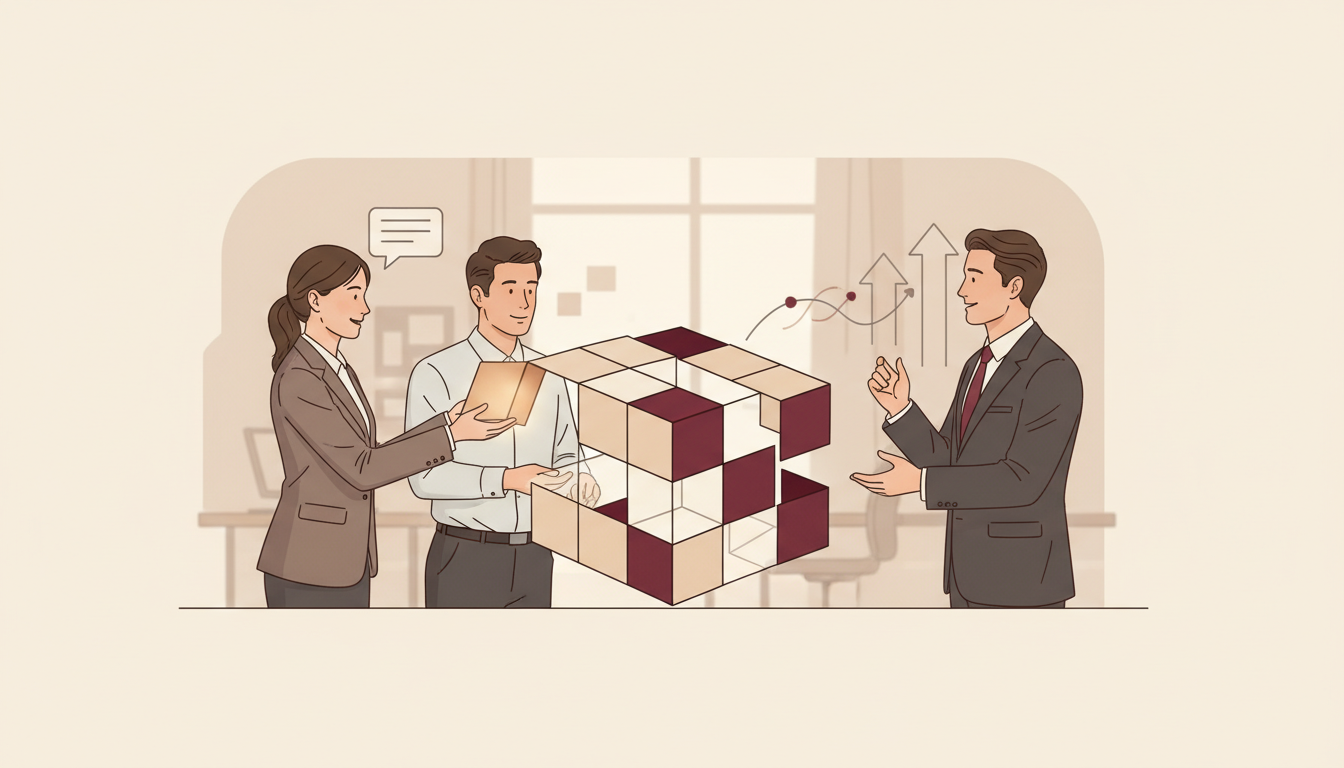
A common mistake is over-apologizing in the days after a bad presentation. Every time you bring it up with "I'm so sorry about that presentation," you're re-anchoring the negative memory in people's minds.
Instead, use what we call the Correction, Not Confession approach:
- Don't say: "I really messed up that presentation. I'm sorry."
- Do say: "I've put together a sharper version of the analysis I shared Tuesday. I think this captures the recommendation more clearly."
You're correcting the record without confessing to a crime. This is the same principle behind establishing credibility quickly in any room — you lead with competence, not contrition.
Requesting a Brief Follow-Up Meeting
If the presentation was high-stakes — a budget pitch, a project proposal, a leadership review — consider requesting a brief 15-minute follow-up with the decision-makers. Frame it as:
"I'd appreciate 15 minutes to walk through the recommendation more concisely. I think the core insight got a bit lost in the original format, and I want to make sure you have what you need to make a decision."This takes courage. But it also demonstrates exactly the kind of leadership presence that earns long-term respect. For a proven structure to use in that follow-up, see our guide on how to structure a presentation for executives.
Letting Your Subsequent Work Speak
The most powerful reframing happens not through words but through your next performance. Your very next meeting, your next email, your next interaction — these are all opportunities to reset the impression. Don't wait for another big presentation. Show up sharper in the small moments.
Rebuilding Your Confidence After the Setback
The Micro-Win Strategy
After a bad presentation, your confidence is bruised. Trying to immediately tackle another high-stakes speaking situation is like running a marathon on a sprained ankle. Instead, use the Micro-Win Strategy: deliberately stack small communication wins to rebuild your baseline.
- Volunteer to give a brief update in your next team meeting (2-3 minutes max)
- Lead a small-group discussion or brainstorm
- Present a quick finding to your immediate team before scaling up
Each micro-win rewires your brain's association between "presenting" and "failure." A study published in Progress in Brain Research (Murayama et al., 2019) demonstrated that incremental success experiences activate the brain's reward circuitry and rebuild self-efficacy more effectively than positive self-talk alone.
Addressing the Physical Anxiety Response
If the bad presentation triggered real anxiety — racing heart, shaking hands, dread at the thought of presenting again — that's a physiological response, not a character flaw. You need physiological tools, not just mindset shifts.
Our detailed guide on how to calm nerves before a presentation covers 11 evidence-based techniques. The most immediately effective: physiological sighing (a double inhale through the nose followed by an extended exhale through the mouth), which Stanford neuroscientist Andrew Huberman's lab has shown to reduce real-time stress in as little as one breath cycle.
Rewriting Your Internal Narrative
Pay attention to the story you're telling yourself. "I always choke under pressure" is a story. "I had a rough presentation because I under-prepared for the Q&A section" is a fact you can act on.
Cognitive behavioral research consistently shows that specificity is the antidote to catastrophizing. The more specific you can be about what went wrong, the less power the experience has over your overall self-concept. If you struggle with how others perceive you at work, our article on why people don't take you seriously at work offers a practical diagnostic framework.
Ready to Build Unshakable Presentation Confidence? The Credibility Code gives you the communication frameworks, vocal techniques, and presence strategies to own every room — even after a setback. Discover The Credibility Code
Preventing the Next Bad Presentation
Diagnose the Root Cause
Bad presentations typically fail for one of four reasons. Identify yours so you can target your preparation:
| Root Cause | Symptoms | Fix |
|---|---|---|
| Under-preparation | Lost train of thought, rambling, ran out of time | Rehearse out loud 3x minimum; use a timed run-through |
| Wrong structure | Audience confused, key point buried, no clear ask | Use an executive-friendly framework (bottom-line-up-front) |
| Delivery issues | Monotone voice, filler words, no eye contact | Practice vocal variety and authoritative vocal habits |
| Audience mismatch | Too detailed for executives, too high-level for technical teams | Research your audience's priorities and adjust depth |
Build a Pre-Presentation Checklist
The best way to prevent future bad presentations is to systematize your preparation. Here's a minimum viable checklist:
- [ ] Audience: Who's in the room? What do they care about?
- [ ] One sentence: Can I state my core message in one sentence?
- [ ] Structure: Am I leading with the conclusion or burying it?
- [ ] Rehearsal: Have I practiced out loud at least twice?
- [ ] Q&A prep: Have I anticipated the three hardest questions?
- [ ] Tech check: Have I tested slides, audio, and screen sharing?
Invest in Ongoing Skill Development
A 2024 report from the National Association of Colleges and Employers (NACE) ranked oral communication as the #1 skill employers seek, yet most professionals receive zero formal training after college. If you're serious about your career, treating presentation skills as a trainable competency — not an innate talent — is the highest-leverage investment you can make.
Start with small, targeted improvements. Work on eliminating filler words. Practice speaking concisely. Study how executives communicate. Each incremental improvement compounds over time.
Frequently Asked Questions
How long does it take to recover credibility after a bad presentation?
In most cases, your credibility recovers faster than you think — often within one to two strong follow-up interactions. Research on the "spotlight effect" shows we overestimate how much others dwell on our mistakes. A strategic follow-up email within 24 hours, combined with strong performance in your next few meetings, is usually enough to reset the narrative. Chronic damage only occurs when you avoid presenting entirely or visibly lose confidence.
Should I apologize for a bad presentation?
Avoid a blanket apology. Instead, use the "Correction, Not Confession" approach: follow up with a stronger version of your material and frame it as a clarification, not a mea culpa. A brief acknowledgment like "I want to make sure my recommendation came through clearly" is far more effective than "I'm sorry I did a terrible job." Over-apologizing re-anchors the negative memory and can actually make things worse.
Bad presentation vs. tough audience: how do I tell the difference?
Ask yourself: was the content clear and well-structured, but the audience was hostile, distracted, or had a hidden agenda? If yes, you may have had a tough audience, not a bad presentation. Signs of a tough audience include arms-crossed body language from the start, interruptions before you've made your point, and questions designed to derail rather than clarify. Signs of a genuinely bad presentation include losing your place, running over time, or failing to articulate your key message.
How do I stop replaying a bad presentation in my head?
Rumination is normal but counterproductive. The most effective technique is structured reflection followed by deliberate closure: write down exactly what went wrong, what you'll do differently, and then physically close the notebook or file. This gives your brain a sense of completion. If the loop continues, redirect your attention to a specific upcoming task. Research from the University of Michigan (Kross et al., 2014) shows that using third-person self-talk ("Sarah handled that situation, and she'll do better next time") also reduces rumination.
Can one bad presentation ruin my career?
No. One bad presentation will not ruin your career unless you let it trigger a pattern of avoidance. Most leaders and executives have stories of presentations that went sideways. What matters is your response — the follow-up, the self-awareness, and the improvement. Careers are built on trajectories, not single data points.
How do I prepare for a high-stakes presentation after a failure?
Start with micro-wins: present in low-stakes settings to rebuild confidence. Then, for the high-stakes moment, over-prepare on structure and rehearse out loud multiple times. Prepare for the three hardest questions in advance. Use a pre-presentation calming technique like physiological sighing. And remind yourself that your follow-up after the last presentation already demonstrated resilience — this is your chance to demonstrate growth.
Speak So the Room Takes You Seriously
The Credibility Code covers the verbal patterns that make presenters sound authoritative, and the ones that make audiences tune out.
Discover The Credibility CodeRelated Articles

How to Build Confidence Before a Presentation Fast
To build confidence before a presentation fast, follow a structured 30-minute pre-presentation protocol: spend the first 10 minutes on mental rehearsal and mindset reframing, the next 10 minutes on physiological calming techniques like box breathing and power posing, and the final 10 minutes on vocal warm-ups and opening line practice. This timed routine shifts your nervous system from threat mode to performance mode, so you walk in feeling prepared, grounded, and authoritative.

How to Command a Room When Presenting: 8 Proven Methods
To command a room when presenting, master these eight techniques: own the space physically before you speak, open with a power move that disrupts expectations, use strategic silence instead of filler words, control vocal dynamics through pace and pitch variation, deploy purposeful eye contact patterns, structure your content with executive-level clarity, use spatial anchoring to reinforce key points, and close with a statement that lingers. Each method is trainable—and the difference between a f

How to Handle Q&A After a Presentation Like a Pro
To handle Q&A after a presentation like a pro, prepare for likely questions in advance, use a structured response framework (like the PREP method: Point, Reason, Example, Point), and maintain confident body language throughout. When you don't know an answer, say so honestly and offer to follow up. Set clear ground rules at the start of Q&A, repeat each question for the audience, and always end on your terms by closing with a prepared final statement that reinforces your core message.