
How to Disagree With Your Boss in a Meeting (Respectfully)

What Is Professional Disagreement in the Workplace?
Professional disagreement is the act of respectfully challenging a superior's idea, decision, or direction using evidence-based reasoning and collaborative language. It is not arguing, being combative, or undermining authority.
When done well, professional disagreement signals leadership potential. It shows you think critically, care about outcomes, and have the confidence to contribute beyond your job description. According to a 2023 Harvard Business Review study, teams where members feel safe to disagree with leadership are 35% more likely to outperform their peers on innovation metrics.
The difference between career-building dissent and career-limiting conflict comes down to how you disagree—not whether you do.
Why Most Professionals Stay Silent (And Why That's a Problem)
The Real Cost of Not Speaking Up
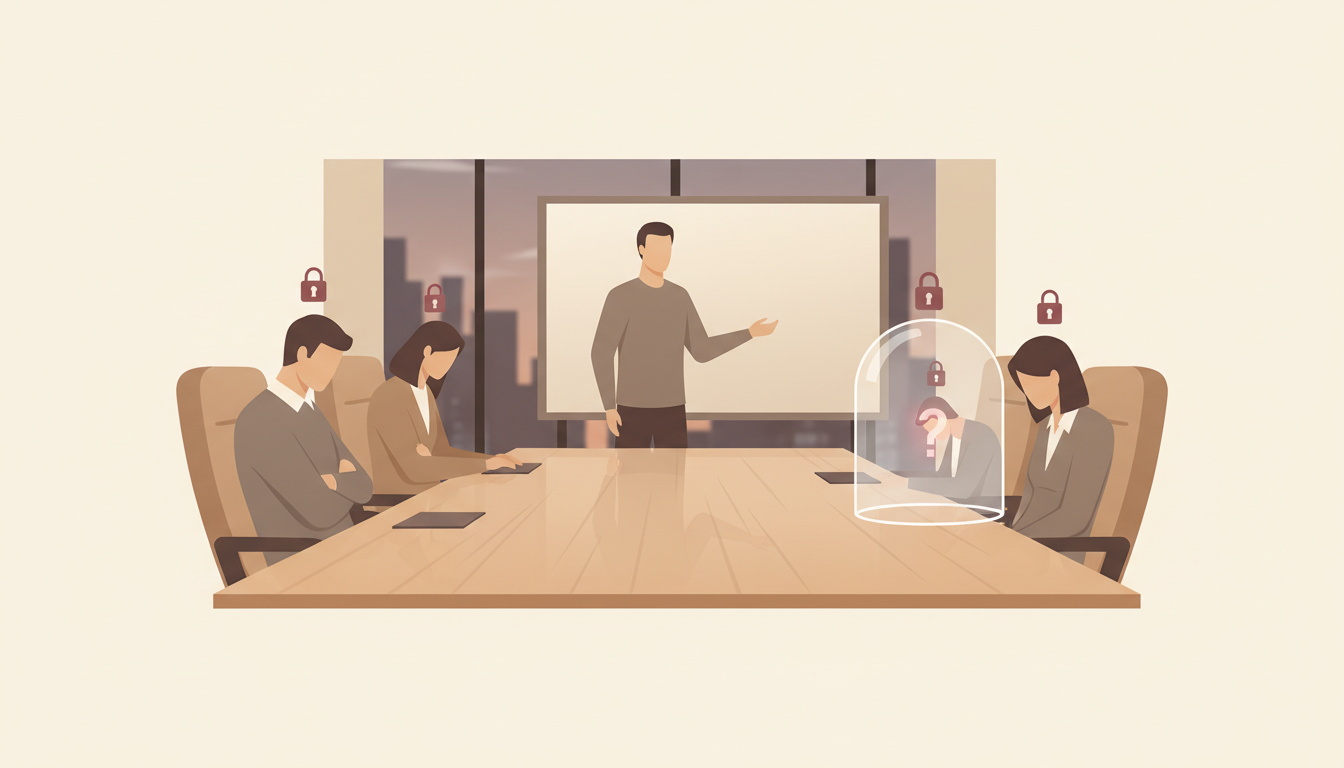
Silence feels safe, but it carries a hidden price tag. When you consistently agree with everything your boss says in meetings, you become invisible. You're not seen as a strategic thinker. You're seen as someone who follows instructions.
A 2019 Gallup workplace study found that only 3 in 10 employees strongly agree that their opinions count at work. The same study linked this metric directly to turnover, productivity, and profitability. Companies that moved the ratio to 6 in 10 saw a 27% reduction in turnover and a 12% increase in productivity.
Your silence isn't just hurting your career—it's hurting your team's results.
Fear vs. Reality: What Actually Happens When You Push Back
Most professionals catastrophize disagreement. They imagine being fired, humiliated, or blacklisted. But research from organizational psychologist Amy Edmondson at Harvard shows that leaders overwhelmingly prefer employees who offer constructive pushback over those who remain passive.
The fear is almost always bigger than the consequence. What actually damages relationships is blindsiding your boss, making them look incompetent in front of their peers, or disagreeing without offering a viable alternative. Those are avoidable mistakes—and we'll cover exactly how to avoid them.
If you tend to hold back in high-pressure moments, start by identifying the habits that undermine your credibility so you know exactly what to fix.
The Decision Framework: Should You Disagree Publicly or Privately?
Not every disagreement belongs in a meeting. Before you speak up, run through this quick decision framework.
The 4-Question Filter
Ask yourself these four questions before raising a dissenting point in a group setting:
- Is this time-sensitive? If the decision is being made right now in this meeting, you need to speak up now. If it's still in discussion, you may have the option to raise it privately afterward.
- Does the group need to hear this? If your concern affects the entire team's direction, resources, or risk exposure, it belongs in the room. If it's a personal preference or a minor detail, take it offline.
- Do I have evidence? If you can back your position with data, precedent, or a concrete example, speak up. If it's a gut feeling, frame it differently (more on that below).
- What's my boss's style? Some leaders welcome open debate. Others view public disagreement as a challenge to authority. Know your audience.
When to Take It Offline Instead
Choose a private conversation when:
- The disagreement is about your boss's personal behavior or leadership style
- You lack concrete evidence and need time to build your case
- Your boss is under visible pressure or stress in the meeting
- The topic involves sensitive personnel or political issues
Private disagreement isn't weakness. It's strategic. For more on navigating these conversations, see our guide on how to speak up to your boss without damaging trust.
When You Must Speak Up in the Room
There are moments when staying silent makes you complicit:
- The decision involves ethical, legal, or safety concerns
- The group is about to commit significant resources based on flawed reasoning
- Your boss has asked for honest input and no one is providing it
- You hold critical information that changes the calculus
In these cases, your credibility depends on speaking up.
The 3-Step Framework for Disagreeing With Your Boss in a Meeting
This is the core method. Memorize it, practice it, and adapt it to your context.
Step 1: Acknowledge Before You Challenge
Always start by validating your boss's perspective. This isn't flattery—it's strategic framing. When people feel heard, their defenses drop.
Script:"I see the logic in that approach, and I think the goal of [restate their objective] is exactly right. I want to build on that with a concern I think is worth considering."
Notice what this does: it positions you as an ally, not an adversary. You're not saying "you're wrong." You're saying "let me help us get this even more right."
According to negotiation research from the Wharton School, opening with agreement on shared goals before introducing a competing perspective increases the likelihood of acceptance by up to 40%.
Step 2: Frame Dissent as Strategic Alignment
The most effective disagreements don't sound like disagreements at all. They sound like strategic contributions. The trick is to anchor your pushback to a goal your boss already cares about.
Script:"My concern is that if we go with Option A, we might run into [specific risk], which could slow down [shared goal]. What if we considered [alternative] instead? It gets us to the same outcome but reduces that exposure."
This framing does three things:
- It shows you understand the bigger picture
- It identifies a specific, credible risk
- It offers a solution, not just a complaint
If you want to sharpen how you present ideas under pressure, the techniques in how to speak with poise under pressure will give you a reliable foundation.
Know exactly what to say next time. The Pushback Playbook has 50 word-for-word scripts for moments like this one: what they say, what you say, why it works, and what to do if they push back. Get The Pushback Playbook — $27
Step 3: Propose, Don't Just Oppose
Never disagree without offering an alternative. Objection without a proposal is criticism. Objection with a proposal is leadership.
Script:"I'd like to suggest we test [alternative approach] on a smaller scale first. That way we can validate the assumption before committing the full budget. Would that work as a middle ground?"
This final step transforms you from someone who creates problems into someone who solves them. It's the difference between being seen as difficult and being seen as indispensable.
For more language patterns that signal seniority and strategic thinking, read how to sound more senior at work.
Reading the Room: Body Language and Timing Cues
How to Read Your Boss's Receptiveness in Real Time

Your boss's body language will tell you whether to press forward or pull back. Watch for:
- Green light signals: Leaning forward, nodding slowly, making eye contact, asking follow-up questions. These mean they're engaged and open.
- Yellow light signals: Crossed arms, looking at their phone, tight jaw, brief responses. Proceed with caution—shorten your point and check in.
- Red light signals: Cutting you off, turning away, visible frustration, dismissive tone. Wrap up your point quickly and offer to continue offline.
A 2020 study published in the Journal of Nonverbal Behavior found that 55% of a message's impact in professional settings comes from nonverbal cues—far outweighing the words themselves.
Timing Your Disagreement for Maximum Impact
When you speak up matters as much as what you say. The best moments to disagree:
- After your boss finishes their full thought. Interrupting signals disrespect, not confidence.
- During a natural pause or when input is invited. Phrases like "What does everyone think?" are your opening.
- Early in the discussion, not after a decision feels final. Challenging a conclusion feels adversarial. Contributing to a discussion feels collaborative.
Avoid disagreeing in the final five minutes of a meeting when people are mentally checked out. Your point will land flat, and you'll look like you're stalling.
Controlling Your Own Body Language
Your nonverbal cues need to match your words. If your script says "collaborative" but your body says "combative," your boss will respond to your body.
Keep these in check:
- Posture: Sit upright but not rigid. Lean slightly forward to signal engagement.
- Hands: Keep them visible and relaxed. Avoid pointing, crossing arms, or fidgeting.
- Voice: Lower your pitch slightly. Speak at a measured pace. Rushing signals anxiety; slowing down signals confidence.
- Eye contact: Maintain steady (not staring) eye contact with your boss when making your point, then include the room.
For a deeper dive into nonverbal authority, explore our guide on confident body language for professional settings.
What to Do When It Doesn't Land Well
Recognizing the Signs of a Negative Reaction
Even with perfect framing, disagreements sometimes go sideways. Your boss may feel challenged, embarrassed, or simply not be in the right headspace to hear dissent. Signs it's not landing:
- They dismiss your point without engaging with it
- The room goes uncomfortably quiet
- Your boss's tone shifts to clipped or defensive
- Other team members visibly distance themselves from your position
The Recovery Script
Don't panic. Don't over-apologize. Don't double down. Use this recovery approach:
Script:"I appreciate you hearing me out. I'm fully supportive of whatever direction you decide—I just wanted to make sure we'd considered that angle. Happy to take this offline if it's worth exploring further."
This script does three critical things: it shows respect for their authority, reaffirms your loyalty to the team's direction, and opens a door for private follow-up where the conversation may go better.
If you've ever felt your confidence take a hit after a tough meeting moment, the strategies in how to rebuild confidence after a setback are worth your time.
Following Up After the Meeting
The 24 hours after a disagreement matter more than the disagreement itself. Here's your follow-up playbook:
- Send a brief, positive message within a few hours. Something like: "Thanks for the discussion today. I'm aligned with the direction and looking forward to executing." This reassures your boss that the relationship is intact.
- If your point had merit, document it. Send a concise email summarizing your alternative with supporting data. Frame it as "for your consideration" rather than "I told you so."
- Don't lobby colleagues. Going around your boss to build a coalition after being overruled is a trust-destroying move. If the decision stands, support it fully.
Common Mistakes That Turn Disagreement Into Conflict
Even well-intentioned pushback can backfire if you make these errors:
Using "But" Instead of "And"
The word "but" negates everything that came before it. "I agree with your approach, but I think we should..." tells your boss you don't actually agree. Replace "but" with "and" to build on their idea instead of tearing it down.
Making It Personal Instead of Strategic
Never frame disagreement as "I don't think you're right." Always frame it as "I'm concerned about [outcome]." Keep the focus on the decision, not the decision-maker. This is the core principle behind how to disagree professionally without burning bridges.
Over-Explaining or Rambling
State your concern. Offer your alternative. Stop talking. According to a study by the American Management Association, professionals who make their point in under 60 seconds are perceived as 30% more credible than those who take longer. Brevity signals confidence. If you struggle with conciseness, our clarity framework for speaking concisely can help.
Disagreeing About Everything
If you push back in every meeting, you become noise. Save your dissent for moments that truly matter. Strategic silence is just as powerful as strategic disagreement.
Frequently Asked Questions
How do you politely disagree with your boss in a meeting?
Use the acknowledge-frame-propose method. First, validate their perspective. Then, frame your concern around a shared goal or business risk. Finally, offer a specific alternative rather than just objecting. Keep your tone collaborative, your body language open, and your point concise—ideally under 60 seconds. The goal is to sound like a strategic partner, not a critic.
What is the difference between disagreeing publicly vs. privately with your boss?
Public disagreement happens in a group meeting and is appropriate when the issue is time-sensitive, affects the whole team, or involves significant risk. Private disagreement is better for personal feedback, politically sensitive topics, or situations where you lack evidence. Neither is inherently better—the right choice depends on the context, your boss's communication style, and the stakes involved.
Can disagreeing with your boss get you fired?
In most professional environments, respectful disagreement will not get you fired. Research from Harvard Business School shows that leaders generally value constructive pushback. What can damage your career is disagreeing disrespectfully, blindsiding your boss in front of their superiors, or consistently opposing decisions without offering alternatives. Frame dissent as contribution, not confrontation.
How do you disagree with your boss when they are wrong?
Focus on the decision, not the person. Present data or evidence that supports your concern, and propose an alternative solution. Use language like "I want to flag a potential risk" rather than "I think that's wrong." If you can show how your alternative better serves a goal they already care about, you dramatically increase the chance they'll listen.
What should you say after disagreeing with your boss in a meeting?
Follow up within a few hours with a brief, positive message reaffirming your support for the team's direction. Something like: "Thanks for the discussion today—I'm aligned and ready to move forward." If your alternative has merit, you can also send a short email with supporting data framed as "additional context for your consideration."
How do you build confidence to speak up to your boss?
Start with low-stakes practice. Ask questions in meetings before offering opinions. Prepare your key points in writing before the meeting starts. Rehearse your scripts out loud. Over time, these small wins build the confidence muscle. For a structured approach, explore our guide on how to be more assertive in meetings without being aggressive.
Never Be Caught Without the Right Words Again
50 word-for-word scripts for being talked down to, interrupted, dismissed, and put on the spot at work, plus five worksheets. PDF, 50 pages.
Get The Pushback Playbook — $27Related Articles

How to Handle Being Interrupted in Meetings Professionally
When you're interrupted in a meeting, pause briefly, maintain open body language, and use a calm redirect phrase such as "I'd like to finish my point" or "Let me complete this thought." The key is responding without escalating—combining assertive language with composed delivery signals confidence and commands respect. Chronic interrupters can be managed through proactive strategies like pre-framing your contributions, building alliances, and addressing the pattern directly in private.

How to Stop Undermining Yourself at Work: 12 Hidden Habits
You stop undermining yourself at work by identifying and replacing the subtle communication habits that silently erode your credibility. The most damaging self-sabotage isn't dramatic—it's the hedging language, upspeak, chronic over-apologizing, praise deflection, and over-explaining that signal uncertainty to colleagues and leaders. By swapping these 12 hidden habits for specific authority-building alternatives, you project confidence and earn the professional respect your expertise deserves.

How to Handle Being Talked Down to at Work Professionally
To handle being talked down to at work, stay calm and address the behavior directly using neutral, assertive language. Name the specific behavior without attacking the person by saying something like, "I'd appreciate it if we could discuss this as equals—I have relevant expertise here." Set clear boundaries, document patterns of condescension, and escalate to HR if the behavior continues. The goal is to protect your credibility and professional standing without matching their tone or becoming re