
Leadership Presence: Definition, Components & How to Build It

What Is Leadership Presence? A Clear Definition
Leadership presence is the consistent ability to command a room, connect authentically with others, and convey confidence through your words, body language, and emotional composure — so that people trust your judgment and follow your lead.It is not about being the loudest person in the room or having a corner office. Leadership presence is the intangible quality that makes people stop and listen when you speak, seek your input on critical decisions, and instinctively view you as someone who leads — even before you hold a formal leadership title.
Think of it this way: leadership presence is what people experience in your first 30 seconds and remember long after you leave. According to a study published in the Journal of Personality and Social Psychology, people form first impressions in as little as 100 milliseconds — and those impressions are remarkably sticky. Leadership presence is your ability to make those milliseconds count, and then reinforce that impression consistently over time.
For a deeper dive into how leadership presence differs from the closely related concept of executive presence, see our guide on executive presence vs. leadership presence.
The 4 Core Components of Leadership Presence
Leadership presence is not a single trait. It is a system of four interconnected components that work together. When one is weak, the entire impression suffers. When all four are strong, you become the person others naturally defer to and trust.
1. Gravitas: The Weight Behind Your Words
Gravitas is the most frequently cited component of leadership presence. A landmark study by the Center for Talent Innovation (now Coqual) found that 67% of executives say gravitas is the core characteristic of executive and leadership presence — more important than communication or appearance combined.
Gravitas is the quality that makes people take you seriously. It shows up as:
- Decisiveness — You form clear opinions and state them without excessive hedging.
- Emotional steadiness — You don't spiral under pressure or become visibly rattled.
- Intellectual depth — You demonstrate that you've thought beyond the surface.
If you want to develop this critical quality, our complete guide on how to develop gravitas as a leader walks you through the process step by step.
2. Communication: How You Deliver Your Message
Communication is the vehicle through which presence is expressed. You can have deep expertise and strong convictions, but if you can't articulate them clearly, concisely, and compellingly, your presence will fall flat.
Leadership-level communication includes:
- Clarity — Saying what you mean in the fewest words necessary.
- Vocal authority — Using tone, pace, and pauses to convey confidence.
- Strategic framing — Presenting ideas in terms of outcomes, impact, and business value rather than tasks and activities.
Research from the Harvard Business Review indicates that leaders who communicate with clarity are 1.5 times more likely to be perceived as high-performing by their peers and direct reports. The gap between good leaders and great leaders often comes down to how they speak, not what they know.
For practical techniques you can use immediately, explore our post on how to speak with authority in presentations.
3. Appearance: The Visual Signal of Authority
Appearance is not about attractiveness. It is about alignment — does your visual presentation match the level of authority you want to project? This includes grooming, attire, posture, and physical energy.
While appearance is the most debated component of leadership presence, dismissing it entirely is a mistake. A study by researchers at Princeton University found that people infer competence from appearance cues in under one second, and these snap judgments influence hiring, promotion, and trust decisions.
Key appearance signals include:
- Posture — Standing and sitting with an open, upright frame signals confidence.
- Intentional attire — Dressing at or slightly above the standard for your environment.
- Physical stillness — Avoiding fidgeting, excessive gesturing, or nervous movement.
For a comprehensive breakdown of the physical signals that build credibility, read our guide on body language for leadership presence.
4. Composure: Steadiness Under Pressure
Composure is what separates leaders who inspire confidence from those who create anxiety. It is the ability to remain calm, clear-headed, and emotionally regulated — especially when the stakes are high.
Composure includes:
- Emotional regulation — Managing your reactions so they don't manage you.
- Poise under scrutiny — Handling tough questions, criticism, and conflict without becoming defensive.
- Recovery speed — Bouncing back quickly when things go wrong.
Our article on leadership presence in conflict provides specific frameworks for maintaining composure in high-pressure situations.
The Leadership Presence Self-Assessment Framework
Before you can build leadership presence, you need an honest baseline. Use this self-assessment framework — what we call the Presence Audit — to identify your strengths and gaps across all four components.

How to Conduct Your Presence Audit
Rate yourself on a scale of 1 (rarely) to 5 (consistently) on each of the following 12 statements. Be brutally honest — the value of this exercise depends on it.
Gravitas (3 items):- I state my opinions clearly without excessive hedging or qualifying language.
- I remain calm and focused when facing unexpected challenges or criticism.
- People seek my perspective on important decisions, even when I'm not directly involved.
- I can explain complex ideas in simple, concise language.
- I speak at a measured pace with deliberate pauses, rather than rushing.
- I frame my contributions in terms of business impact, not just tasks completed.
- My posture and body language project openness and confidence.
- My attire and grooming are consistently appropriate for my desired level of authority.
- I maintain steady eye contact and avoid fidgeting during conversations.
- I can handle being put on the spot without becoming visibly flustered.
- I respond to disagreement with curiosity rather than defensiveness.
- I recover quickly from setbacks and maintain a forward-looking focus.
How to Interpret Your Scores
- 45-60 total: Strong leadership presence. Focus on refinement and consistency.
- 30-44 total: Solid foundation with clear growth areas. Target the lowest-scoring component first.
- 12-29 total: Significant development opportunity. Start with communication and composure — they yield the fastest visible results.
Look for your weakest component category (the group of three statements with the lowest combined score). That is where focused effort will produce the most noticeable improvement.
Turning Your Audit Into an Action Plan
The most common mistake professionals make is trying to improve everything at once. Instead, follow this prioritization approach:
- Identify your lowest-scoring component from the four categories above.
- Choose one specific behavior within that component to improve this week.
- Practice it in low-stakes situations first — team meetings, one-on-ones, casual conversations.
- Seek feedback from one trusted colleague after two weeks.
- Reassess monthly and rotate your focus to the next priority.
For a complete development roadmap, our guide on how to develop leadership presence lays out a detailed plan you can follow.
Why Leadership Presence Matters for Your Career
Leadership presence is not a "nice to have." It is a career accelerator — and its absence is a career limiter. Here's why it matters at every stage.
The Promotion Connection
According to a widely cited study by Coqual (formerly the Center for Talent Innovation), being perceived as leadership material is the single strongest predictor of advancement in most organizations — more predictive than performance reviews or technical skills alone. And the primary driver of that perception? Presence.
When decision-makers sit in talent review meetings and discuss who is "ready" for the next level, they are not reviewing spreadsheets. They are recalling impressions: Does this person command a room? Do they communicate with clarity? Do they stay composed under fire? These are presence judgments.
The Influence Multiplier
Leadership presence amplifies every other professional skill you have. A brilliant strategy presented without presence gets ignored. The same strategy delivered with gravitas, clarity, and composure gets funded. Presence is the multiplier that determines whether your competence is seen, heard, and acted upon.
Research from Quantified Communications found that executives who scored in the top quartile for communication presence were rated 25% more effective as leaders by their direct reports, compared to those in the bottom quartile — regardless of their actual strategic decisions.
The Trust Equation
People don't follow leaders they don't trust. And trust, in professional settings, is built largely through presence cues. When you speak with clarity, maintain composure under pressure, and demonstrate gravitas in your decision-making, you are sending a continuous signal: I am reliable. I am competent. You can count on me.
If you're working on building trust and authority without relying on a formal title, our article on building authority at work without a title provides a proven system for doing exactly that.
Common Leadership Presence Mistakes (And How to Fix Them)
Even talented professionals undermine their presence through habits they're often unaware of. Here are the five most damaging patterns — and their fixes.
Mistake 1: Over-Qualifying Every Statement
The pattern: "I could be wrong, but maybe we should possibly consider looking into this, if everyone agrees." The fix: State your recommendation first, then provide your reasoning. Replace "I think maybe" with "I recommend" or "Based on what I've seen." You can still be collaborative without undermining your own credibility.Mistake 2: Rushing Through High-Stakes Moments
The pattern: Speaking faster when nervous, cramming too many points into a short window, and failing to pause. The fix: Practice the 3-Second Rule: after making a key point, pause for a full three seconds before continuing. This feels uncomfortable at first but signals confidence and gives your audience time to absorb what you've said. According to research published in the Journal of Nonverbal Behavior, strategic pauses increase perceived speaker competence by up to 30%.Mistake 3: Reactive Body Language
The pattern: Crossing arms during disagreements, breaking eye contact when challenged, or physically shrinking in high-pressure meetings. The fix: Adopt what we call the Neutral Power Posture: feet flat on the floor, hands resting on the table or in your lap (not crossed), shoulders back, and eye contact steady. This posture is your default — the position you return to whenever you feel yourself reacting physically.Mistake 4: Failing to Prepare Your Presence
The pattern: Preparing the content of a meeting or presentation meticulously, but giving zero thought to how you want to show up — your energy, your opening, your body language. The fix: Before any important interaction, spend 60 seconds on what we call a Presence Prep: (1) What impression do I want to leave? (2) What is my opening line? (3) What is my physical posture? This micro-ritual shifts you from reactive to intentional.Mistake 5: Inconsistency Across Contexts
The pattern: Projecting strong presence in formal presentations but losing it entirely in casual meetings, email communication, or one-on-one conversations. The fix: Presence must be consistent to be credible. If you command a room during a keynote but send apologetic, rambling emails, people will question which version is the "real" you. For guidance on extending your presence to written communication, see our post on leadership presence in email.Stop Undermining Your Own Credibility. The Credibility Code identifies the hidden habits that erode your authority — and gives you a clear system to replace them with presence-building practices that stick. Discover The Credibility Code
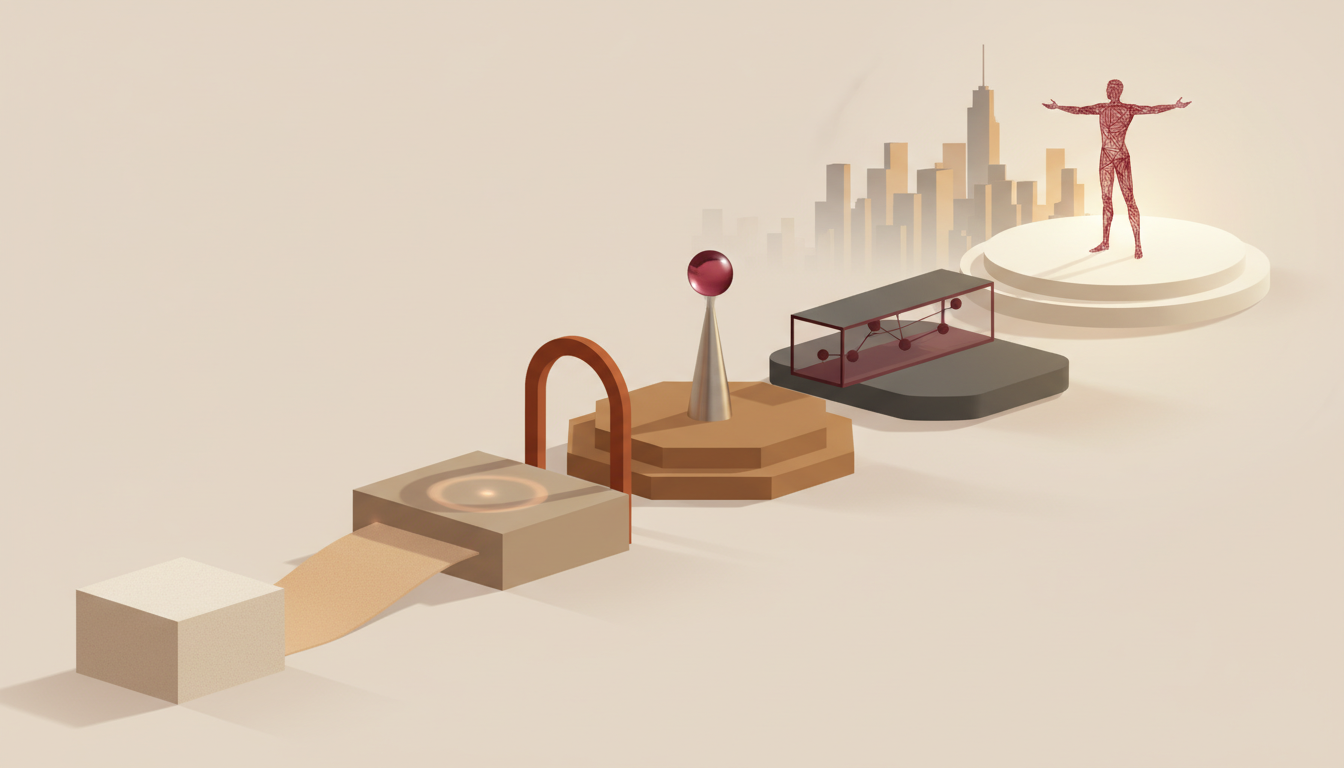
How to Build Leadership Presence: A 5-Step Development Path
Building leadership presence is not about becoming someone you're not. It's about removing the barriers that prevent your competence from being fully seen. Here is a practical, sequential approach.
Step 1: Establish Your Presence Baseline
Use the Presence Audit framework described above to identify your starting point. Supplement your self-assessment by asking two or three trusted colleagues for candid feedback. Ask specifically: "When I'm in a meeting, what impression do I give? What's one thing I could do differently to come across as more credible?"
Step 2: Master Your Communication Foundation
Communication is the most visible component of presence and the one that yields the fastest results. Focus on three foundational skills:
- Lead with your conclusion. In every meeting, email, and presentation, state your main point in the first 15 seconds.
- Eliminate filler. Replace "um," "like," and "you know" with silence. Record yourself in a meeting (with permission) and count your fillers — awareness alone reduces them by 50%.
- Use the Rule of Three. When making a case, limit yourself to three supporting points. This forces clarity and makes your message memorable.
Step 3: Develop Your Physical Presence
Your body communicates before your mouth opens. Practice these three daily habits:
- The Doorway Reset: Every time you walk through a doorway at work, reset your posture — shoulders back, chin level, pace deliberate.
- The Eye Contact Circuit: In meetings, make 3-5 seconds of eye contact with each person before moving to the next. This creates connection and signals confidence.
- The Stillness Practice: During conversations, keep your hands still and your body centered. Movement should be intentional, not nervous.
Step 4: Build Your Composure Muscle
Composure is built through deliberate practice in progressively higher-stakes situations. Start here:
- Reframe pressure as practice. Every difficult question, awkward silence, or tense moment is a repetition that builds your composure muscle.
- Develop a go-to recovery phrase. When caught off guard, have a default response ready: "That's an important question. Let me think about that for a moment." This buys you time without signaling panic.
- Practice controlled breathing. Before high-stakes interactions, take three slow breaths (4 seconds in, 6 seconds out). This activates your parasympathetic nervous system and physically reduces anxiety.
Step 5: Seek Consistent Feedback and Iterate
Leadership presence is not a destination — it's an ongoing practice. Build a feedback loop by:
- Asking one colleague per month for specific presence feedback.
- Recording yourself during presentations or virtual meetings (with appropriate permissions) and reviewing with a critical eye.
- Tracking your Presence Audit scores quarterly to measure progress.
Frequently Asked Questions
What is the difference between leadership presence and executive presence?
Leadership presence is the broader ability to project confidence, credibility, and composure in any professional setting — regardless of your title or level. Executive presence is a subset that specifically refers to the qualities expected of senior leaders and C-suite professionals. Both share core components like gravitas and communication, but executive presence often carries higher expectations around strategic thinking and organizational influence. For a detailed comparison, see our article on executive presence vs. leadership presence.
Can introverts have strong leadership presence?
Absolutely. Leadership presence is not about volume or extroversion. Introverts often excel at deep listening, thoughtful responses, and calm composure — all of which are powerful presence signals. The key is to leverage your natural strengths rather than mimicking extroverted behaviors. Many of the most respected leaders in business, including Bill Gates and Warren Buffett, are self-described introverts with undeniable presence.
How long does it take to develop leadership presence?
Most professionals notice measurable improvements within 30 to 90 days of focused practice. Specific skills like eliminating filler words or improving posture can show results within a week. Deeper shifts — like developing gravitas or consistent composure under pressure — typically take three to six months of deliberate effort. The key is consistency: small daily practices compound faster than occasional intensive efforts.
What is the most important component of leadership presence?
Research consistently points to gravitas as the most critical component. The Coqual study found that 67% of senior leaders rank gravitas — the ability to project confidence, decisiveness, and emotional steadiness — as the top element. However, gravitas without communication skill goes unnoticed, and communication without composure collapses under pressure. All four components work as a system.
Can you have leadership presence in virtual meetings?
Yes, but it requires intentional adaptation. In virtual settings, your communication and composure carry even more weight because physical presence cues are limited. Best practices include looking directly into your camera (not at the screen), using a clean and well-lit background, speaking with slightly more vocal energy than you would in person, and pausing deliberately between points. Virtual presence is a skill that can be developed just like in-person presence.
How do you measure leadership presence?
Leadership presence can be measured through 360-degree feedback assessments, structured peer reviews, and self-assessment tools like the Presence Audit framework described in this article. Some organizations use formal executive presence assessments as part of leadership development programs. The most practical approach for individuals is to combine self-assessment with candid feedback from two to three trusted colleagues, repeated quarterly.
Build Presence People Notice Before You Say a Word
The Credibility Code gives you the specific verbal and nonverbal habits that make people treat you as the senior person in the room.
Discover The Credibility CodeRelated Articles

How to Develop Gravitas as a Leader: The Complete Method
Developing gravitas as a leader requires deliberate work across three dimensions: confidence (how you carry yourself), composure (how you respond under pressure), and substance (the depth behind your words). It is not an innate trait reserved for a few. You build gravitas by mastering structured thinking, controlling your emotional reactions, training your vocal delivery, and consistently demonstrating expertise. This article provides a complete, step-by-step method — including daily exercises,

How to Build Executive Presence: A 5-Pillar Framework
Executive presence is built on five core pillars: gravitas, communication, appearance, emotional intelligence, and decisiveness. To develop it, you need to cultivate the weight behind your words, speak with clarity and conviction, project a polished image, read the room with precision, and make confident decisions under pressure. Executive presence isn't a personality trait you're born with—it's a skill set you build through deliberate daily practice across each of these pillars.

Body Language for Leadership Presence: A Complete Guide
Body language for leadership presence is the intentional use of nonverbal cues—posture, eye contact, gestures, facial expressions, and spatial positioning—to project authority, confidence, and credibility in professional settings. Research from UCLA professor Albert Mehrabian found that up to 55% of communication impact comes from nonverbal signals. This guide gives you a complete framework for mastering the physical cues that make people listen, trust, and follow your lead in meetings, presenta