
How to Negotiate When You Feel Underqualified: A Framework

What Is Negotiating When You Feel Underqualified?
Negotiating when you feel underqualified is the process of advocating for your worth — salary, role, resources, or opportunities — even when you believe your credentials, experience, or background don't fully match the situation. It's the intersection of negotiation strategy and imposter syndrome management.
This isn't about faking confidence or bluffing your way through a conversation. It's about building a structured approach that lets your actual contributions speak louder than the doubt in your head. Professionals at every level experience this — from first-time managers negotiating budgets to senior leaders stepping into unfamiliar domains.
Why Feeling Underqualified Sabotages Your Negotiation
The Imposter Syndrome–Negotiation Connection
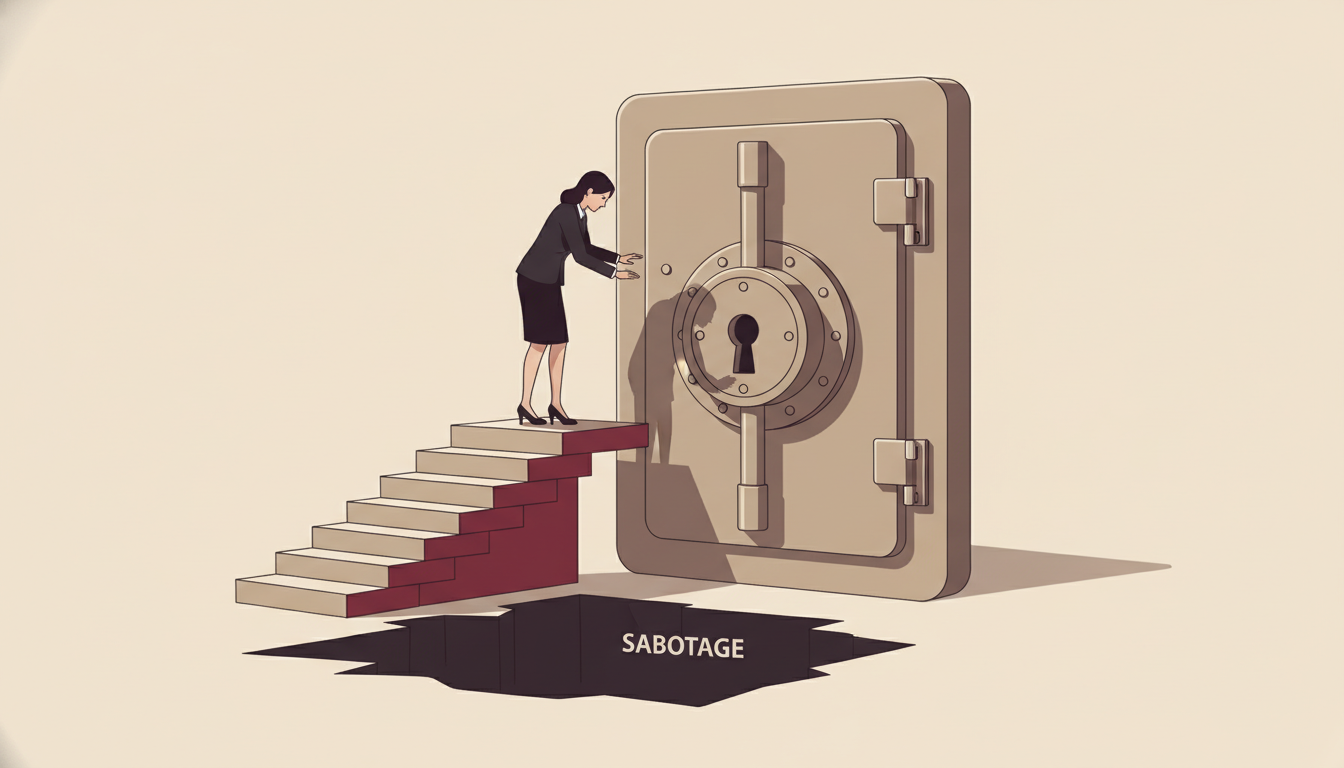
Imposter syndrome doesn't just make you feel bad — it changes how you behave in high-stakes conversations. When you feel underqualified, you're more likely to accept the first offer, over-explain your requests, or apologize before you even ask. A study published in the Journal of General Internal Medicine (2020) found that up to 82% of people experience imposter syndrome, with professionals in competitive environments being especially vulnerable.
The result? You walk into a negotiation already negotiating against yourself. You lower your ask before the other side has said a word. You hedge your language with qualifiers like "I'm not sure if this is reasonable, but…" or "I know I haven't been here that long, however…"
How Self-Doubt Creates a Credibility Leak
Here's what most people miss: feeling underqualified doesn't just affect your internal state. It leaks into your communication. Your voice pitch rises. You speak faster. You fill silence with justifications instead of letting your ask breathe. These are the subtle signals that undermine your position — and experienced negotiators notice them immediately.
If you've ever noticed yourself undermining your own credibility at work, the negotiation table is where those habits become most expensive. Every hedged statement, every unnecessary apology, every rushed concession costs you real money and real opportunity.
The Qualification Myth
There's a persistent myth in professional culture: that you need to check every box before you've earned the right to negotiate. But Harvard Business Review (2022) reports that men typically apply for jobs when they meet 60% of qualifications, while women wait until they meet 100%. This "qualification gap" extends directly into negotiation behavior. The people who negotiate most successfully aren't always the most qualified — they're the most prepared.
The V.A.L.U.E. Framework for Negotiating When You Feel Underqualified
This five-step framework transforms the internal experience of feeling underqualified into an external strategy that commands respect.
V — Validate Your Contributions With Evidence
Before any negotiation, build what I call a "Value Inventory." This is a document — not kept in your head — that lists every measurable result you've delivered. Revenue generated, costs saved, processes improved, problems solved, teams mentored, projects rescued.
Example: Instead of thinking, "I only have three years of experience in this role," you write: "In three years, I reduced client onboarding time by 40%, managed a $2M project portfolio, and trained four junior team members who were all promoted."The goal is to replace the abstract feeling of being underqualified with concrete evidence of your impact. According to PayScale's 2023 Salary Negotiation Guide, professionals who bring specific performance data to negotiations receive higher offers 73% of the time compared to those who rely on general statements.
A — Anchor to Market Data, Not Self-Perception
Your feelings about your qualifications are irrelevant to market value. What matters is what the role demands and what comparable professionals earn. Use tools like Glassdoor, Levels.fyi, Payscale, and LinkedIn Salary Insights to establish a fact-based range.
When you anchor your negotiation to external data, you shift the conversation from "Am I good enough?" to "What does the market say this is worth?" This is a critical mindset shift. You're not asking for a favor — you're aligning compensation with market reality.
Script example: "Based on my research across multiple compensation databases, the market range for this role in our region is $95,000–$115,000. Given the results I've delivered — specifically [two concrete examples] — I believe $108,000 reflects fair alignment."Notice: no apology, no hedging, no mention of what you lack. For more scripts like this, explore our guide on salary negotiation confidence scripts that command respect.
L — Leverage Your Unique Perspective
Here's the reframe that changes everything: what you perceive as a gap is often a differentiator. Coming from a different industry? You bring cross-functional insight. Newer to the role? You bring fresh eyes and recent training. Non-traditional background? You bring cognitive diversity that homogeneous teams desperately need.
Example: A marketing professional negotiating for a product management role might say: "My marketing background means I understand the customer journey in a way that most product managers have to learn on the job. That perspective has already helped me identify two user experience improvements in my first quarter."This isn't spin — it's strategic framing. You're not hiding your background; you're positioning it as a competitive advantage.
U — Use Structured Language to Eliminate Self-Sabotage
When you feel underqualified, your language is the first thing to break down. Replace weak language patterns with structured, authoritative phrasing.
| Instead of this | Say this |
|---|---|
| "I'm not sure I deserve this, but…" | "Based on my results, I'm requesting…" |
| "I know I haven't been here long…" | "In the time I've been here, I've delivered…" |
| "Sorry to ask, but…" | "I'd like to discuss…" |
| "I think maybe I could…" | "I'm prepared to…" |
| "I hope you'll consider…" | "Here's what I'm proposing…" |
These aren't just cosmetic changes. Research from Columbia Business School (2018) shows that assertive language in negotiations leads to 15–20% better outcomes, regardless of the negotiator's actual seniority or tenure. If you struggle with apologetic language patterns, our guide on how to ask for what you want at work without apology goes deeper.
E — Execute With Rehearsed Composure
Confidence in negotiation isn't spontaneous — it's rehearsed. The professionals who negotiate most effectively don't rely on in-the-moment inspiration. They practice specific scenarios, including the ones that trigger their self-doubt.
Rehearsal protocol:- Write your opening statement — your ask, your evidence, your anchor number.
- Identify three likely pushback statements — "We don't have budget for that," "You're still early in this role," "Other candidates have more experience."
- Script your responses to each pushback. Practice them out loud at least five times.
- Record yourself and listen for hedging language, vocal fry, upspeak, or rushing.
- Practice the pause. After you make your ask, stop talking. Count to five silently. Let the silence work for you.
This rehearsal process is the same approach used in building leadership presence — because presence and negotiation draw from the same skill set: composure under pressure.
Handling the "You're Not Qualified Enough" Objection
When They Say It Out Loud

Sometimes the other party will directly reference your perceived gap. This is actually easier to handle than when it's only in your head, because now you can address it directly.
Script: "I appreciate you raising that. Here's how I see it: while my tenure in this specific role is [X], the results I've produced are comparable to professionals with significantly more time in seat. Specifically, [result 1] and [result 2]. I'm confident that trajectory speaks to my readiness."The key: acknowledge without agreeing. You're not arguing that you have more experience than you do. You're redirecting the conversation to outcomes.
When You Say It to Yourself
The more dangerous version of this objection is the one that lives in your own head. You'll recognize it as the voice that says, "Who are you to ask for this?" or "They're going to see right through you."
Counter this with what psychologists call "evidence-based self-talk." Before the negotiation, review your Value Inventory. Read your results out loud. This isn't affirmation — it's data. You're not telling yourself you're great; you're reminding yourself what you've done.
For a deeper dive into managing this internal dialogue, see our guide on overcoming imposter syndrome at work.
When Silence Feels Like Rejection
Many professionals who feel underqualified interpret silence as disapproval. After making their ask, they rush to fill the gap — usually by lowering their number or adding unnecessary caveats.
Train yourself to reframe silence. In negotiation, silence after your ask usually means the other person is thinking — which means your ask landed. The moment you fill that silence with "But of course, I'm flexible" or "I'd understand if that's too much," you've negotiated against yourself.
Advanced Positioning: Building Credibility Before the Negotiation
The Pre-Negotiation Authority Campaign
The best negotiators don't start building their case at the negotiation table. They start weeks or months earlier by strategically increasing their visibility and perceived authority.
Tactical steps:- Share results proactively. Send your manager a brief monthly summary of key wins. Not bragging — informing.
- Contribute in visible forums. Speak up in cross-functional meetings, volunteer for high-visibility projects, or present findings to senior stakeholders.
- Document external validation. Client compliments, peer recognition, industry certifications — collect these as evidence.
This approach aligns with building credibility at work without bragging. When you've already established authority, the negotiation becomes a natural extension of your professional narrative rather than a sudden, uncomfortable ask.
Strategic Relationship Building
Negotiation doesn't happen in a vacuum. The relationship you have with the decision-maker shapes the outcome as much as your arguments do. A 2022 study from the Kellogg School of Management found that negotiators with established professional rapport achieved outcomes 18% more favorable than those negotiating with strangers.
Before your negotiation, invest in the relationship. Understand the decision-maker's priorities, pressures, and communication style. When you can frame your ask in terms of their goals, you move from requesting to proposing — and proposals from credible colleagues get approved at much higher rates.
Build the Authority That Makes Negotiation Natural. The Credibility Code equips you with the complete framework for commanding presence, strategic communication, and professional authority — so your next negotiation starts from a position of strength. Discover The Credibility Code
Negotiation Scripts for Specific "Underqualified" Scenarios
Scenario 1: Negotiating Salary With Less Experience Than Peers
"I want to address the experience gap directly. While I have [X years] compared to the typical [Y years] for this role, my results tell a different story. In [specific timeframe], I [specific achievement]. I'm requesting [specific number] because it reflects the value I'm delivering today, not just the time I've been delivering it."Scenario 2: Negotiating a Promotion Without Traditional Credentials
"I know this role has traditionally gone to someone with [specific credential]. What I bring instead is [specific alternative strength] combined with [measurable result]. I've already been performing at the level of this role for [timeframe] — this promotion would align my title with my actual contribution."For more on this specific scenario, our guide on negotiating a promotion with conversation scripts provides additional frameworks.
Scenario 3: Negotiating Resources When You're New to a Team
"I'm still building context here, and I want to be transparent about that. What I can tell you is that based on [specific analysis or observation], investing in [specific resource] would likely yield [projected outcome]. I'd like to propose a three-month pilot to prove the concept."Notice the pattern in all three scripts: acknowledge the gap briefly, redirect to evidence immediately, and close with a specific, confident ask.
Frequently Asked Questions
How do I negotiate salary when I feel underqualified for the job?
Focus on what you've delivered, not what you lack. Build a Value Inventory of measurable results, research market compensation data, and use structured language that leads with evidence. The V.A.L.U.E. framework above gives you a step-by-step process. Remember: 73% of professionals who bring specific data to negotiations receive better offers (PayScale, 2023).
What is the difference between feeling underqualified and actually being underqualified?
Feeling underqualified is an emotional response rooted in imposter syndrome — it's about self-perception, not capability. Actually being underqualified means you objectively cannot perform the core functions of the role. Research shows up to 82% of professionals experience imposter syndrome, meaning the vast majority of people who feel underqualified are actually performing competently. The distinction matters because your negotiation strategy should address perception, not fabricate credentials.
Can you negotiate if you don't have all the qualifications listed in the job description?
Absolutely. Job descriptions are wish lists, not checklists. Studies from Hewlett-Packard's internal research, widely cited by Harvard Business Review, show that many successful hires meet only 60–70% of listed qualifications. Focus your negotiation on transferable skills, demonstrated results, and the unique perspective you bring. Employers value problem-solving ability and cultural contribution alongside — and sometimes above — checkbox credentials.
How do I stop feeling like a fraud during negotiations?
Replace feelings with facts. Before the negotiation, review your documented achievements, re-read positive feedback, and rehearse your key talking points out loud at least five times. This isn't about suppressing doubt — it's about giving your brain concrete evidence to counter the imposter narrative. Our guide on overcoming imposter syndrome at work provides a comprehensive approach.
How do I negotiate when I have no leverage?
Even when you feel you have no leverage, you likely have more than you think. Your knowledge, relationships, current contributions, and the cost of replacing you all represent leverage. Frame your ask around mutual benefit — what the organization gains by investing in you. For a detailed breakdown, see our guide on how to negotiate when you have no leverage.
Should I mention my lack of experience during a negotiation?
Only if the other party raises it — and even then, acknowledge it briefly before pivoting to results. Never volunteer your perceived weaknesses. Saying "I know I don't have as much experience as others" hands the other party an objection they may never have considered. Instead, lead with your strongest evidence and let your results speak to your readiness.
Negotiate From a Position of Credibility
The Credibility Code shows you how to state your case without hedging, so your ask is heard as a professional position rather than a favor.
Discover The Credibility CodeRelated Articles

How to Negotiate When You Feel Nervous: A Calm Method
To negotiate when you feel nervous, use a structured pre-negotiation ritual combined with grounding techniques and scripted anchor phrases. Nervousness isn't a flaw—it's a signal that the outcome matters to you. The key is channeling that energy into preparation rather than trying to eliminate it. By building a calm method around three pillars—physiological regulation, strategic preparation, and rehearsed language—you can project confidence and credibility even when your heart is racing. This ar

Negotiation Confidence for Women: Scripts That Work
Women who negotiate earn an average of $1 million more over their careers than those who don't — yet research shows women initiate negotiations four times less often than men. The gap isn't about skill; it's about navigating a real double bind where assertiveness is penalized differently. This guide gives you research-backed scripts, strategic framing techniques, and word-for-word language that projects authority without triggering backlash — across salary, role scope, resources, and flexible wo

How to Negotiate a Raise After a Promotion Confidently
You've earned the new title — now it's time to earn the pay that matches it. To negotiate a raise after a promotion, start by researching market compensation for your new role, then request a dedicated meeting with your manager within 30-60 days of your title change. Anchor your ask to external market data and the expanded scope of your responsibilities, not to gratitude or past performance alone. Use specific language that frames the conversation as an alignment discussion — not a complaint — a