
How to Communicate With Difficult Coworkers Confidently

To communicate with difficult coworkers confidently, name the behavior (not the person), use structured response frameworks, and maintain emotional neutrality. Identify which archetype you're dealing with — the interrupter, underminer, passive-aggressive, credit-taker, or dismisser — then apply targeted scripts that set boundaries while preserving the professional relationship. The goal isn't to "win" the interaction; it's to redirect the dynamic so you're heard, respected, and taken seriously.
What Is Difficult Coworker Communication?
Difficult coworker communication is the practice of engaging professionally with colleagues who consistently exhibit behaviors that undermine, derail, or disrespect your contributions. It goes beyond general conflict resolution — it's a specific skill set that combines assertive communication, emotional regulation, and strategic framing to neutralize toxic patterns without escalating tension.
Unlike one-off disagreements, difficult coworker dynamics are recurring patterns. The interrupter doesn't cut you off once — they do it every meeting. The credit-taker doesn't accidentally claim your idea — they systematically absorb your contributions. Handling these patterns requires frameworks, not just willpower.
Why Most People Handle Difficult Coworkers Wrong
The Avoidance Trap
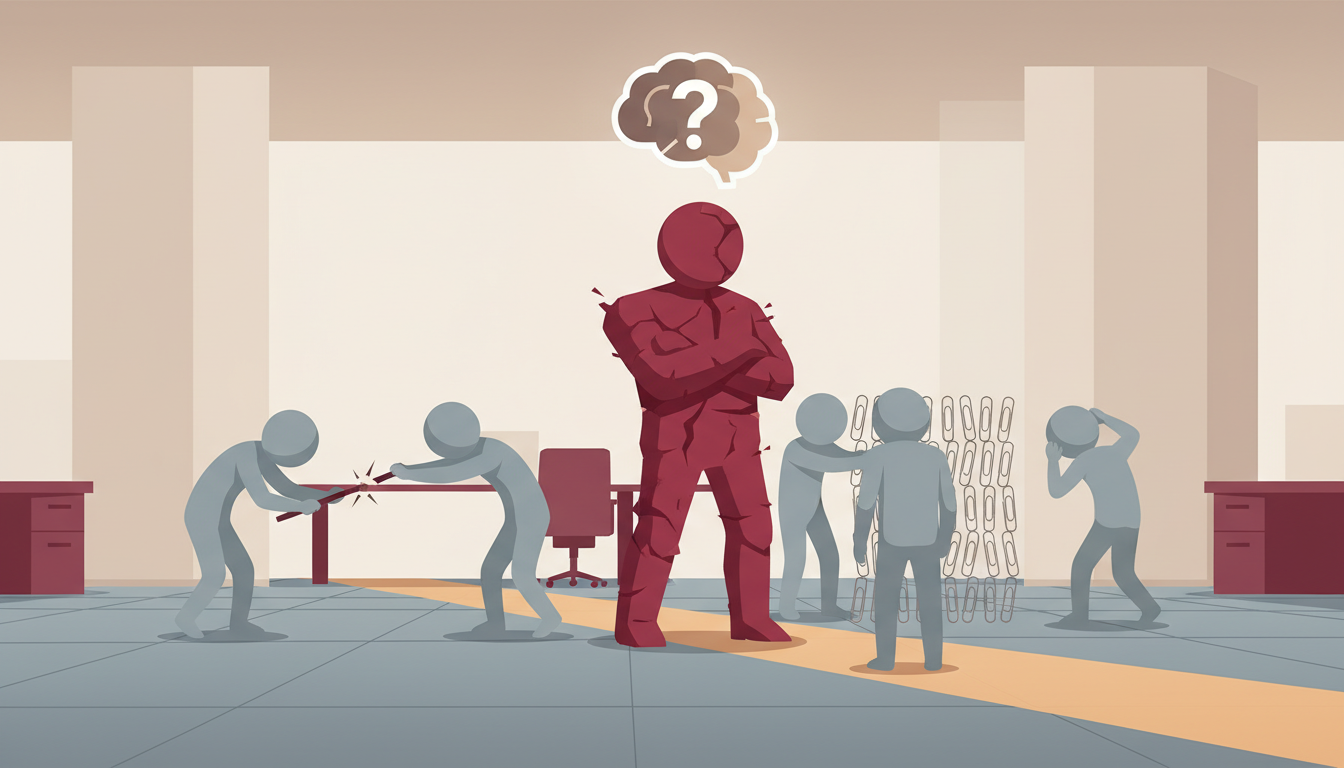
Most professionals default to avoidance. They stop speaking up in meetings, route communication through email, or simply absorb the behavior and vent to friends after work. According to a 2023 study by the Society for Human Resource Management (SHRM), 57% of employees who experience workplace conflict choose to avoid the other person entirely rather than address the issue directly.
The problem? Avoidance doesn't make the behavior stop. It rewards it. When you go silent after being interrupted, the interrupter learns that interrupting works. When you don't correct the credit-taker publicly, everyone — including leadership — assumes the attribution was accurate.
The Aggression Overcorrection
On the other end, some professionals snap. After weeks of absorbing passive-aggressive emails, they fire back with something equally sharp. This feels satisfying for about 30 seconds — then it creates a new problem. Now you're the difficult coworker in someone else's narrative.
The key is assertive communication that doesn't tip into aggression. Assertiveness addresses the behavior directly while keeping your tone, language, and body language professional.
The Emotional Labor Drain
Dealing with difficult coworkers is exhausting. A CPP Global study found that U.S. employees spend approximately 2.8 hours per week dealing with workplace conflict, costing organizations roughly $359 billion annually in paid hours. That's not just an organizational cost — it's a personal one. Every hour spent managing a difficult dynamic is an hour not spent on meaningful work, career development, or leadership visibility.
The Five Difficult Coworker Archetypes (And How to Handle Each)
Not all difficult coworkers are difficult in the same way. The strategy that works with an interrupter will backfire with a passive-aggressive colleague. Here are the five most common archetypes and the specific communication frameworks for each.
Archetype 1: The Interrupter
The pattern: They talk over you in meetings, finish your sentences, or redirect the conversation before you've completed your point. Why it works against you: Repeated interruptions signal to others — especially leadership — that your contributions aren't important enough to hear in full. Over time, this erodes your leadership presence in meetings. The framework: The Anchor-and-Continue MethodWhen interrupted, pause for one beat (not longer), then say:
- "I'd like to finish my point — [continue exactly where you left off]."
- "Hold that thought, Mark. I want to complete this, then I'd love to hear yours."
- "Let me land this, and then let's open it up."
The key is vocal steadiness. Don't speed up, don't raise your pitch, don't apologize. Deliver the redirect in the same tone you were using before the interruption. Research from Stanford University's VMware Women's Leadership Innovation Lab found that women are interrupted 33% more often than men in professional settings — making this skill especially critical for women in leadership.
Pro tip: If you're in a meeting with a known interrupter, open your contributions with a framing statement: "I have three points on this — I'll be brief." This creates a social contract that makes interrupting more awkward for them.Archetype 2: The Underminer
The pattern: They question your competence subtly — often in front of others. "Are you sure about that data?" or "I thought someone with more experience might handle this." Why it works against you: Undermining is designed to plant doubt in other people's minds about your credibility. It's rarely overt enough to call out as hostile, which makes it harder to address. The framework: The Evidence PivotDon't defend yourself emotionally. Instead, pivot to evidence:
- "Yes, I'm confident in that data. It's sourced from [specific source]. Happy to walk through the methodology."
- "I appreciate the concern. Here's what my experience on this project has shown so far — [specific results]."
The underminer thrives when you get flustered. When you respond with calm specificity, you neutralize the doubt they were trying to create. This is core to establishing credibility quickly in any room.
Know exactly what to say next time. The Pushback Playbook has 50 word-for-word scripts for moments like this one: what they say, what you say, why it works, and what to do if they push back. Get The Pushback Playbook — $27
Archetype 3: The Passive-Aggressive Colleague
The pattern: They use indirect hostility — backhanded compliments ("Wow, that turned out better than I expected"), selective silence, deliberate delays, or the classic "per my last email." Why it works against you: Passive-aggression is deniable by design. If you call it out directly, they say, "I didn't mean it that way," and suddenly you're the one overreacting. The framework: The Clarification FlushForce the subtext into the open by asking clarifying questions — calmly, with genuine curiosity:
- "When you say it turned out better than you expected, what were you expecting? I want to make sure we're aligned on standards."
- "I noticed the deliverable came in two days past the agreed deadline. Was there a blocker I should know about, or do we need to adjust the timeline?"
- "I want to make sure I'm reading this correctly — can you help me understand what you meant by [specific phrase]?"
This technique works because it forces the passive-aggressive person to either own their hostility (which they almost never do) or back down and clarify with a more professional statement. Either way, you've disrupted the pattern. For more on navigating these dynamics, see our guide on how to disagree professionally without burning bridges.
Archetype 4: The Credit-Taker
The pattern: They present your ideas as their own in meetings, forward your work to leadership without attribution, or use "we" when they mean "you did this and I'm claiming it." Why it works against you: Credit is currency in organizations. According to a 2022 Gallup workplace survey, only 1 in 3 employees strongly agree they received recognition for good work in the past seven days. When someone systematically takes credit for your contributions, they're not just being annoying — they're stealing your career capital. The framework: The Preemptive StampThe best defense against credit-taking is preemptive visibility:
- Before the meeting: Send a brief email to stakeholders summarizing your contribution. "Ahead of today's discussion, here's a quick summary of the analysis I completed on X."
- During the meeting: Use ownership language. "In the research I conducted last week..." or "Building on the framework I developed for this..."
- After the incident: If credit is taken in real-time, reclaim it calmly: "Thanks, Sarah — glad you found the analysis useful. To add context to what I put together there..."
This isn't about being petty. It's about building a professional reputation that opens doors and ensuring your work is accurately attributed.
Archetype 5: The Dismisser
The pattern: They wave off your ideas, change the subject when you speak, give minimal engagement ("Yeah, sure, anyway..."), or physically disengage — checking their phone, turning away. Why it works against you: Dismissal is a status signal. When someone dismisses you publicly and no one pushes back, it communicates to the room that your input doesn't carry weight. The framework: The Reframe and RedirectDon't chase the dismisser's attention. Instead, redirect to the room:
- "I want to make sure this point gets proper consideration. [Name of ally or decision-maker], what's your take on this approach?"
- "I understand we're moving quickly, but I think this has implications for [specific business outcome]. Can we give it 60 seconds?"
If the dismissal happens one-on-one, address it directly:
- "I've noticed that when I raise points in our discussions, they tend to get moved past quickly. I want to make sure we're making decisions with full input. Can we talk about how to structure our conversations differently?"
This approach works because it names the pattern without attacking the person. It's the same principle behind speaking up in meetings as an introvert — you don't need to be the loudest voice to be the most heard.
The Universal De-Escalation Framework: CALM
Regardless of which archetype you're dealing with, every difficult coworker interaction benefits from the CALM framework:
C — Center Yourself First
Before responding, take one slow breath. This isn't meditation advice — it's neuroscience. A reactive response activates your amygdala and bypasses your prefrontal cortex (where strategic thinking lives). One breath gives your brain time to engage the right system.
A — Acknowledge Without Agreeing
Validation doesn't mean agreement. Phrases like "I hear your concern" or "I understand that's your perspective" lower the other person's defensiveness without conceding your position.
L — Label the Behavior, Not the Person
Say "That comment felt dismissive" — not "You're being dismissive." The first is an observation about impact. The second is a character accusation that will trigger defensiveness every time.
M — Move to a Constructive Next Step
Always end with a forward-looking statement: "Here's what I'd suggest going forward" or "Can we agree on how to handle this next time?" This shifts the conversation from conflict to collaboration.
Building Long-Term Resilience With Difficult Coworkers
Document Patterns, Not Just Incidents

A single interruption is annoying. A documented pattern of interruptions across six meetings is evidence. Keep a brief log — date, context, what happened, who was present. If you ever need to escalate to HR or a manager, patterns are far more compelling than isolated complaints.
Build Strategic Alliances
You don't have to handle difficult coworkers alone. Identify allies in meetings who can amplify your points, redirect conversations back to you, or serve as witnesses to problematic behavior. Research from MIT's Human Dynamics Laboratory shows that the most successful teams have members who actively support each other's contributions — creating a culture where undermining and credit-taking become socially costly.
Know When to Escalate
Not every difficult coworker situation can be resolved peer-to-peer. If you've applied frameworks consistently for 4-6 weeks and the behavior hasn't changed, it's time to involve your manager or HR. Present your documentation, focus on business impact ("This pattern is affecting project timelines and team morale"), and propose specific solutions.
For guidance on navigating these conversations with senior leaders, see our framework on how to challenge your boss respectfully and be heard.
Protect Your Energy
Difficult coworker dynamics can consume your mental bandwidth if you let them. Set intentional boundaries: limit optional interactions, use written communication when verbal exchanges tend to go sideways, and invest your energy in relationships that advance your career rather than drain it. Building your confident communication style is the long-term antidote — when you communicate with consistent authority, difficult coworkers have less room to operate.
Frequently Asked Questions
How do you communicate with a difficult coworker without making things worse?
Focus on behavior, not personality. Use "I" statements ("I wasn't able to finish my point") rather than "you" accusations ("You always interrupt me"). Stay calm, be specific about what happened, and propose a constructive next step. Avoid having the conversation when emotions are high — wait until you can speak from a centered, strategic place.
What is the difference between assertive communication and aggressive communication at work?
Assertive communication expresses your needs, boundaries, and perspectives directly while respecting the other person's dignity. Aggressive communication attacks, blames, or dominates. The difference often comes down to tone and framing: "I need to finish this point" (assertive) vs. "Stop interrupting me" (aggressive). Both address the same behavior — but one preserves the relationship while the other damages it.
How do you deal with a passive-aggressive coworker in emails?
Use the Clarification Flush technique in writing. Reply with a direct, neutral question that forces the subtext into the open: "I want to make sure I understand your feedback correctly — could you clarify what you mean by [specific phrase]?" Keep your tone professional and avoid matching their indirectness. For more strategies, see our guide on how to sound confident in emails.
Should you confront a coworker who takes credit for your work?
Yes — but strategically, not emotionally. The best approach is preemptive: establish visible ownership of your work before meetings through emails, shared documents, or brief updates to stakeholders. If credit is taken in real-time, reclaim it calmly by adding context: "To build on what I put together there..." If the pattern continues, document it and raise it with your manager as a business concern.
How do you stay confident when a coworker constantly undermines you?
Separate your self-assessment from their behavior. Underminers target your credibility with others — but they can only affect your internal confidence if you let them. Respond with evidence and specificity every time, which neutralizes doubt publicly. Privately, invest in building your gravitas and professional credibility so that undermining attempts become increasingly ineffective.
When should you involve HR about a difficult coworker?
Involve HR when you've attempted to address the behavior directly, documented a clear pattern over several weeks, and the behavior is impacting your work performance, mental health, or career progression. Present facts and business impact — not emotions. HR responds best to documented patterns with specific dates, contexts, and witnesses.
Never Be Caught Without the Right Words Again
50 word-for-word scripts for being talked down to, interrupted, dismissed, and put on the spot at work, plus five worksheets. PDF, 50 pages.
Get The Pushback Playbook — $27Related Articles

How to Handle Being Undermined at Work Professionally
To handle being undermined at work, first identify the specific behavior — whether it's being contradicted publicly, excluded from decisions, or having your authority bypassed. Then respond strategically, not reactively. Use direct, calm language to address the behavior in real time (e.g., "I want to make sure we're aligned — let me walk through my reasoning"). Document patterns, have a private conversation with the person involved, and rebuild your credibility through visible, high-value contri

How to Speak Up in Meetings as a Woman: 9 Proven Tactics
To speak up in meetings as a woman, prepare one key point in advance, use the first five minutes to establish your voice, anchor contributions in data, and employ strategic language that resists interruption. Build alliances with colleagues who will amplify your ideas and practice vocal authority techniques that project calm confidence. The goal isn't to change who you are—it's to ensure the room hears what you already bring.

Assertive Communication at Work: 15 Before & After Examples
Assertive communication at work means expressing your ideas, needs, and boundaries clearly and respectfully — without being passive or aggressive. Here are 15 real-world before-and-after examples: Instead of saying "Sorry, I just think maybe we could…" say "I recommend we take a different approach. Here's why." Instead of staying silent when your idea is taken, say "I appreciate you building on the point I raised earlier — let me expand on it." These examples, and 13 more below, cover meetings,