
How to Speak With Gravitas: Vocal & Language Mastery
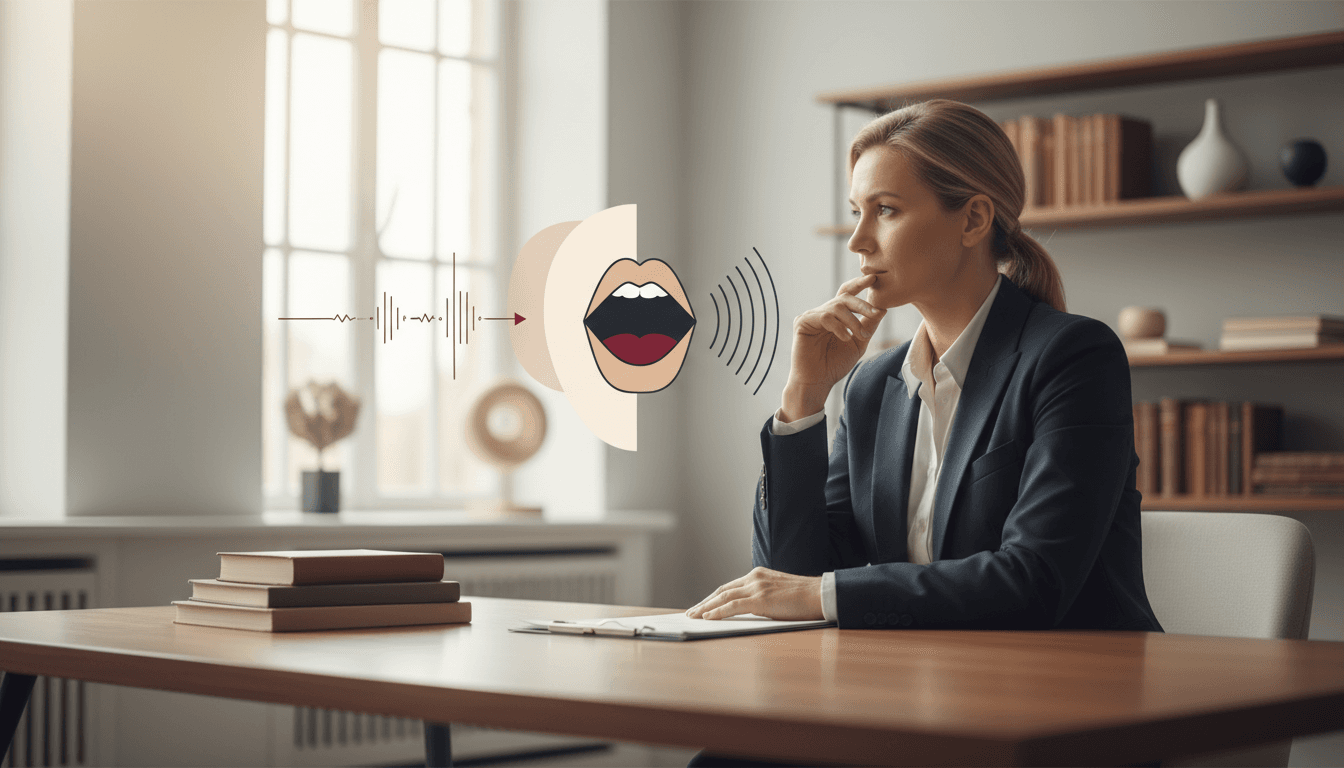
Speaking with gravitas means commanding attention and respect through deliberate vocal control, strategic word choice, and the confident use of silence. To develop gravitas in your speech, focus on five core areas: lower your vocal pitch by speaking from your diaphragm, slow your pace by 20–30%, eliminate filler words and hedging language, use purposeful pauses to signal authority, and choose precise, concrete words over vague qualifiers. These skills are trainable—and the professionals who master them consistently earn more trust, influence, and career advancement.
What Is Gravitas in Speech?
Gravitas in speech is the quality that makes people stop, listen, and take you seriously. It's the combination of vocal tone, pacing, word choice, and composure that signals confidence, expertise, and authority—without raising your voice or dominating the room.
Unlike charisma, which draws people in through warmth and energy, gravitas earns respect through weight and substance. A speaker with gravitas sounds like someone who has thought deeply, chosen their words carefully, and isn't afraid of silence. According to a study published in the Journal of Experimental Social Psychology, listeners rate speakers with lower-pitched, slower-paced voices as more competent and more trustworthy—two pillars of gravitas.
If you're working to build gravitas as a young leader, understanding these vocal and linguistic components is the essential first step.
The Four Pillars of Vocal Gravitas
Gravitas isn't one skill—it's four working together. Master each pillar independently, then combine them for a speaking presence that commands any room.
Pillar 1: Vocal Tone and Pitch
Your voice's baseline pitch shapes how authoritative you sound before a single word registers. Research from Duke University's Fuqua School of Business found that CEOs with lower-pitched voices manage larger companies and earn approximately $187,000 more per year than their higher-pitched peers.
You don't need a naturally deep voice. You need a grounded voice. Most professionals pitch up when nervous, which signals uncertainty. The fix is diaphragmatic breathing: before speaking, take a breath that expands your belly, not your chest. This naturally lowers your pitch by engaging the full resonance of your vocal cavity.
Daily exercise: Each morning, hum at the lowest comfortable note in your range for 30 seconds. Then speak your first sentence of the day from that resonance. Over weeks, this retrains your habitual pitch.Pillar 2: Pacing and Rhythm
Fast talkers signal anxiety. Slow, deliberate speakers signal control. A study by the University of Michigan's Institute for Social Research found that the most persuasive speakers talk at roughly 3.5 words per second—notably slower than the average conversational rate of 4.4 words per second.
Gravitas pacing isn't monotonously slow. It's varied. You slow down for key points and speed up slightly during supporting details. This rhythmic contrast tells your audience what matters most.
Try this in your next meeting: Before stating your main recommendation, pause for a full beat. Then deliver it at 70% of your normal speed. You'll feel the room lean in.For more on controlling your vocal delivery under pressure, explore our guide on how to develop a commanding voice at work.
Pillar 3: Volume and Projection
Gravitas doesn't mean being loud. It means being heard—clearly and effortlessly. Professionals who mumble or trail off at the end of sentences undermine their own authority, no matter how strong their ideas are.
Project your voice to the back of the room, even in a one-on-one conversation. This doesn't mean shouting. It means directing your sound outward rather than letting it fall into your chest or the table.
Scenario: You're presenting a quarterly update to senior leadership. Instead of starting at full volume and fading, maintain consistent projection through your final word. End sentences on a downward inflection—a period, not a question mark. This single shift eliminates the "upspeak" pattern that makes statements sound uncertain.Pillar 4: Breath Control Under Pressure
When anxiety hits, breathing becomes shallow. Shallow breathing raises your pitch, speeds your pace, and robs your voice of resonance—destroying gravitas in seconds. According to the American Institute of Stress, 73% of professionals report that stress regularly affects their ability to communicate clearly at work.
The antidote is structured breathing. Before any high-stakes speaking moment—a presentation, a negotiation, a difficult conversation—practice box breathing: inhale for 4 counts, hold for 4, exhale for 4, hold for 4. Two cycles are enough to reset your nervous system and restore vocal control.
If you struggle with nerves before presentations, our detailed guide on how to control your voice when nervous presenting offers additional techniques.
Language Mastery: The Words That Build (or Destroy) Gravitas
Your voice carries the sound of authority. Your words carry the substance. Choosing the right language is half the gravitas equation—and most professionals get it wrong without realizing it.

Eliminate Hedging and Qualifier Language
Hedging words are credibility killers. Phrases like "I just think," "I'm not sure, but," "kind of," and "maybe we could" signal that you don't fully believe what you're saying. Why should your audience?
Before: "I just wanted to suggest that maybe we could possibly look at a different approach to the timeline." After: "I recommend we restructure the timeline. Here's why."The second version uses 60% fewer words and carries ten times the authority. A Harvard Business Review analysis found that leaders who use direct, declarative language are rated 35% more credible by their teams than those who hedge.
Start tracking your hedging habits. Record yourself in a meeting (with permission) and count every "just," "kind of," "sort of," and "I think." Most professionals are shocked by the frequency. For a deeper dive into this, read our piece on how to stop undermining yourself at work.
Use Concrete, Specific Language
Vague language sounds uncertain. Specific language sounds informed. Compare these two statements:
- Vague: "We've seen some pretty good results from the new campaign."
- Specific: "The campaign generated a 23% increase in qualified leads over the last six weeks."
Gravitas lives in specificity. When you cite numbers, name timeframes, and reference concrete outcomes, you sound like someone who has done the work—not someone guessing.
Framework: The Precision Principle. Before any important statement, ask yourself: Can I make this more specific? Replace "a lot" with a number. Replace "soon" with a date. Replace "some people" with "three of our five regional managers."Master the Power of Declarative Statements
Gravitas speakers don't ask for permission to share their perspective. They state it. This doesn't mean being aggressive—it means being clear and direct.
Weak: "Does anyone think it might be worth considering whether we should revisit the vendor contract?" Strong: "We need to revisit the vendor contract. The current terms are costing us $40,000 annually in avoidable fees."Declarative statements follow a simple structure: Claim + Evidence. State what you believe, then immediately support it. This pattern signals both confidence and competence.
For more language shifts that signal seniority, see our guide on how to sound more senior at work.
The Strategic Use of Silence
Silence is the most underused tool in professional communication—and the most powerful weapon in a gravitas speaker's arsenal.
Why Silence Signals Confidence
Most people rush to fill silence because it feels uncomfortable. But research from the University of Groningen found that conversational pauses of just four seconds create a sense of social tension that makes the speaker's next words land with significantly greater impact.
When you pause before answering a question, you signal that you're thinking—not scrambling. When you pause after making a key point, you give your audience time to absorb it. Both behaviors read as confident, composed, and authoritative.
Three Types of Strategic Pauses
1. The Pre-Statement Pause: Pause for 2–3 seconds before delivering your most important point. This creates anticipation and focuses attention. Scenario: In a board meeting, instead of immediately responding to a challenge, take a breath, pause, and then respond. The pause alone shifts the dynamic from reactive to composed. 2. The Post-Statement Pause: After making a key claim, stop talking. Let the silence do the work. Resist the urge to add qualifiers or explain further. Your point was made. Trust it. 3. The Transition Pause: Between sections of a presentation or between topics in a conversation, a 3–4 second pause signals a shift. It gives your audience a mental reset and positions your next point as equally important.For a complete breakdown of pause techniques, visit our guide on how to pause effectively in public speaking.
How to Practice Comfortable Silence
Silence only works if you look comfortable in it. If you pause but fidget, break eye contact, or look panicked, the effect reverses.
Exercise: Practice the "5-Second Hold." In your next low-stakes conversation, finish a sentence and hold eye contact for a full five seconds before continuing. It will feel eternal at first. Within a week, it will feel natural. Within a month, it will become your default—and people will notice.Daily Exercises to Build Speaking Gravitas
Gravitas isn't something you switch on in the boardroom. It's a muscle you build through daily, deliberate practice.
Morning Vocal Warm-Up (5 Minutes)
- Hum for 60 seconds at your lowest comfortable pitch to activate diaphragmatic resonance.
- Read one paragraph aloud from any article at 70% of your normal speed, focusing on downward inflections at the end of each sentence.
- Record and replay. Listen for upspeak, filler words, and rushed pacing. Correct one habit per week.
The Meeting Preparation Ritual
Before any meeting where you need to contribute:
- Write down your one key message in a single declarative sentence.
- Practice saying it aloud three times—slowly, with a pause before and after.
- Identify two specific data points or examples that support your statement.
This 90-second ritual transforms your contribution from off-the-cuff to commanding. If you want more strategies for high-impact meeting contributions, read how to speak up in large group meetings with impact.
The Weekly Filler Word Audit
Each Friday, review one recorded meeting or presentation (many video platforms save recordings automatically). Count every instance of "um," "uh," "like," "you know," "so," and "basically." Track your total week over week. According to communication research from the University of Texas, reducing filler words by just 50% measurably increases perceived speaker competence.
Set a realistic goal: reduce your filler count by 20% per month. Replace fillers with silence. The pause that replaces an "um" sounds infinitely more authoritative.
Turn These Techniques Into a Complete Communication System. The Credibility Code walks you through every element of authoritative communication—from vocal presence to executive-level language—with scripts, exercises, and frameworks you can use immediately. Discover The Credibility Code
Putting It All Together: Gravitas in Real Professional Scenarios
Theory is useful. Application is everything. Here's how vocal and language mastery combine in three common professional situations.

Scenario 1: Presenting a Recommendation to Senior Leadership
Without gravitas: "So, um, I've been looking at the data and I think maybe we should consider, you know, potentially shifting our Q3 budget toward digital. I mean, the numbers kind of support it." With gravitas: [Pause. Eye contact. Breath.] "I recommend we shift 30% of our Q3 budget to digital channels. Our pilot program delivered a 2.4x return over the last quarter. Here's the breakdown." [Pause.]The second version uses a lower, grounded tone, eliminates every filler and hedge, leads with a declarative recommendation, supports it with a specific metric, and uses pauses to frame the key message.
Scenario 2: Responding to a Challenging Question in a Meeting
Without gravitas: "Oh, that's a good question. Um, I'm not totally sure, but I think the reason is probably because..." With gravitas: [3-second pause.] "That's an important question. The primary driver is our 18% increase in customer acquisition cost since January. I can walk through the contributing factors."The pause replaces the panic. The specific data replaces the vagueness. The offer to elaborate replaces the rambling.
Scenario 3: Negotiating Resources for Your Team
Without gravitas: "I was kind of hoping we could maybe get a couple more people? The team's been pretty stretched." With gravitas: "I'm requesting two additional headcount for Q4. Our current team is operating at 140% capacity, and we've missed two delivery milestones as a result. Here's my proposal for how the additional resources pay for themselves within 90 days."For more on communicating with authority in negotiations, see our guide on how to negotiate project resources with confidence.
Frequently Asked Questions
What is the difference between gravitas and arrogance?
Gravitas is grounded confidence—it invites respect through composure, clarity, and substance. Arrogance demands respect through dominance and dismissiveness. A speaker with gravitas listens as deliberately as they speak. They don't need to prove superiority; their preparation and delivery speak for themselves. The key distinction: gravitas elevates the message, while arrogance elevates the ego.
How long does it take to develop gravitas in speech?
Most professionals notice meaningful improvement within 4–6 weeks of daily practice. Vocal habits like pitch, pacing, and filler word reduction respond quickly to deliberate rehearsal. Language shifts—replacing hedging with declarative statements—can change within days once you become aware of your patterns. Full integration into high-pressure situations typically takes 3–6 months of consistent effort.
Can introverts speak with gravitas?
Absolutely. Gravitas actually favors introverts in many ways. Introverts tend to think before speaking, use fewer unnecessary words, and are comfortable with silence—all hallmarks of gravitas. The key areas for introverts to develop are vocal projection and the willingness to speak up in group settings. Our guide on how to build leadership presence as an introvert covers this in detail.
Gravitas vs. executive presence: what's the difference?
Executive presence is a broader concept encompassing appearance, communication, and behavioral composure. Gravitas is a core component of executive presence—specifically the part related to how you speak and carry yourself intellectually. You can have gravitas without a formal leadership title, but you cannot have executive presence without gravitas. Think of gravitas as the foundation upon which full executive presence is built.
How do I speak with gravitas on video calls?
Video calls amplify vocal weaknesses because visual cues are limited. To project gravitas remotely: position your camera at eye level, look directly into the lens (not the screen) when making key points, use a slightly slower pace than in-person conversations, and eliminate background distractions. Your voice carries more weight on video, so focus especially on downward inflections and strategic pauses. Avoid the temptation to fill every silence.
What are the biggest mistakes that destroy gravitas?
The top gravitas killers are: upspeak (ending statements like questions), excessive filler words ("um," "like," "you know"), hedging language ("I just think," "maybe"), speaking too fast, and apologizing before sharing an opinion. Each of these signals uncertainty to your audience. The good news is that every one of them is a correctable habit, not a fixed trait.
Speak So the Room Takes You Seriously
The Credibility Code covers the verbal patterns that make presenters sound authoritative, and the ones that make audiences tune out.
Discover The Credibility CodeRelated Articles

How to Speak With Authority in Presentations: 9 Shifts
To speak with authority in presentations, make nine deliberate shifts: use downward inflection instead of upspeak, deploy strategic pauses instead of filler words, structure points using claim-evidence-impact, open with a position rather than an agenda slide, ground your body language, command Q&A with bridging frameworks, eliminate hedge language, control your pacing, and close with a decisive call to action. These shifts move you from "presenter" to credible authority.

How to Speak With Authority in Presentations: 8 Keys
Speaking with authority in presentations comes down to eight core elements: vocal pacing, strategic pausing, power positioning, opening with conviction, commanding body language, handling silence with confidence, structuring your message for impact, and closing with a decisive call to action. Master these keys and you shift from a presenter who shares information to an authority who commands attention and drives decisions.

Develop a Confident Speaking Voice for Work: Daily Drills
To develop a confident speaking voice for work, focus on five vocal mechanics daily: diaphragmatic breathing for resonance, deliberate pacing with strategic pauses, lower pitch anchoring, eliminating uptalk and filler words, and projecting volume without strain. Spend 10 minutes each morning on targeted vocal drills—humming, breath control exercises, and pitch calibration—and run a 3-minute warm-up before every meeting. Within 4–6 weeks of consistent practice, these techniques rewire your vocal