
How to Build Professional Credibility at Work: A Framework
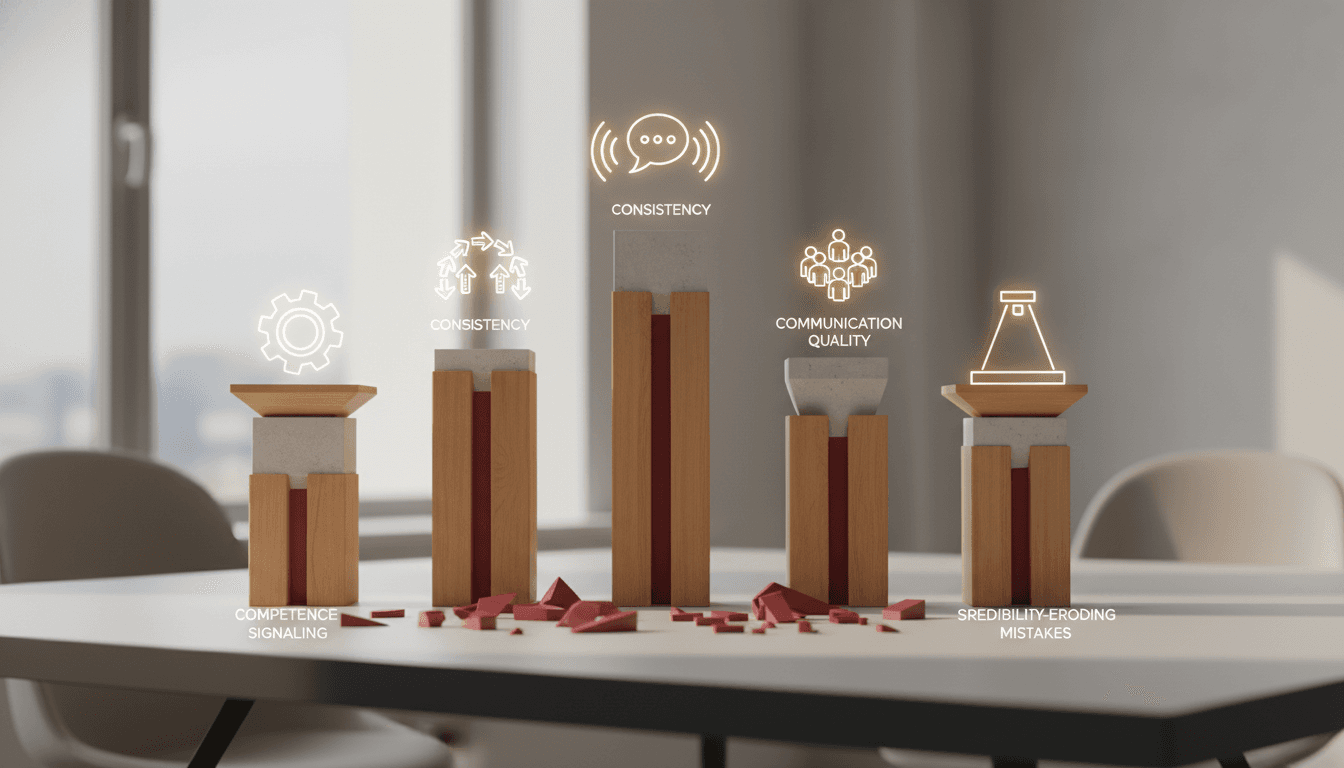
Building professional credibility at work requires consistent action across five key pillars: competence signaling, behavioral consistency, communication quality, social proof, and strategic visibility. Credibility isn't built through a single achievement or presentation — it's earned through a deliberate system of daily habits that shape how colleagues, leaders, and stakeholders perceive your reliability, expertise, and judgment. This framework gives you specific actions for each pillar so you can systematically strengthen your professional reputation.
What Is Professional Credibility?
Professional credibility is the degree to which others trust your competence, judgment, and reliability in a workplace context. It's the invisible currency that determines whether people listen to your ideas, follow your recommendations, or advocate for your advancement.
Unlike reputation — which is what people say about you when you're not in the room — credibility is what people believe about you based on direct evidence. It's built at the intersection of what you know, what you deliver, and how you communicate. When credibility is strong, your ideas get traction faster, your influence expands beyond your title, and your career accelerates without you having to constantly prove yourself.
According to a 2023 study published in the Journal of Applied Psychology, employees perceived as highly credible were 2.4 times more likely to be selected for high-visibility projects and cross-functional leadership roles — regardless of tenure.
Pillar 1: Competence Signaling — Prove What You Know Without Bragging
Competence is the foundation of credibility. But here's what most professionals get wrong: they assume that doing great work is enough. It isn't. You need to make your competence visible without coming across as self-promotional.

Share Expertise Through Contribution, Not Declaration
There's a critical difference between saying "I'm an expert in data analytics" and demonstrating it by offering a sharp insight during a strategy meeting. The first is a claim. The second is evidence.
Look for moments where you can contribute specialized knowledge naturally. When a team is debating a decision, offer a relevant data point or framework. When a colleague is stuck, share a resource or method that solved a similar problem. These micro-demonstrations of expertise accumulate into a strong competence signal over time. For more on this approach, read our guide on how to be seen as a subject matter expert at work.
Scenario: During a quarterly planning meeting, instead of saying "I know a lot about customer retention," you say: "When we ran a similar initiative last year, we found that onboarding touchpoints in the first 14 days drove 38% of our retention improvement. I can share the analysis if it's helpful." You've demonstrated competence and offered value — without a single boastful word.Document and Share Your Wins Strategically
Research from Catalyst (2020) found that women and minorities who engaged in "strategic self-promotion" — sharing accomplishments in context — were 30% more likely to receive performance ratings that matched their actual contributions. The takeaway applies to everyone: if you don't make your results visible, others will fill in the blanks with their own assumptions.
Build a habit of documenting your wins weekly. Not for vanity — for strategic communication. Use these in:
- Status updates: "The process redesign I led reduced turnaround time by 22%."
- One-on-ones with your manager: "Here's a quick summary of what shipped this sprint and the impact."
- Cross-functional check-ins: "Our team's approach to X produced Y result — happy to walk through it."
If self-promotion feels uncomfortable, our article on building credibility at work without bragging offers eight subtle approaches that feel natural.
Invest in Visible Skill Development
Credible professionals don't rest on existing knowledge. They visibly invest in staying current. This doesn't mean collecting certifications for the sake of it. It means:
- Referencing recent research or industry trends in conversations
- Volunteering for projects that stretch your skill set
- Sharing insights from courses, conferences, or books with your team
When people see you actively learning, they trust that your knowledge is current — and that builds credibility faster than any credential alone.
Pillar 2: Consistency — The Compound Interest of Trust
Consistency is what transforms a good first impression into lasting credibility. A single brilliant presentation doesn't build credibility. But showing up prepared, reliable, and even-keeled every single week does.
Follow Through on Every Commitment — Especially Small Ones
A 2022 study by the Harvard Business Review found that 91% of employees ranked "follows through on commitments" as the top behavior that builds trust with colleagues — above expertise, charisma, or seniority.
The commitments that matter most are often the smallest: sending the document you promised by end of day, arriving to meetings on time, responding to emails within a reasonable window. When you're inconsistent on small things, people unconsciously question your reliability on big things.
Action step: Start tracking every commitment you make in a single running list — whether it's a Slack message promise, a verbal agreement in a hallway conversation, or a formal deliverable. Review it daily. Close every loop.Maintain Emotional Consistency
Credible professionals are emotionally predictable. This doesn't mean being robotic — it means people know what to expect from you. If you're enthusiastic and collaborative on Monday but dismissive and short-tempered on Thursday, people start walking on eggshells. That uncertainty erodes trust.
Emotional consistency means managing your reactions, especially under pressure. When a project goes sideways, your team watches how you respond. Calm, solution-oriented composure signals leadership credibility. Reactive frustration signals instability. For a deeper dive into this, explore our guide on how to communicate without being emotional at work.
Align Your Words With Your Actions
Nothing destroys credibility faster than hypocrisy. If you advocate for transparency but hoard information, people notice. If you praise collaboration but take solo credit, people notice. If you champion work-life balance but send midnight emails expecting immediate responses, people notice.
Audit yourself regularly: Do my actions match my stated values? Ask a trusted colleague for honest feedback. The gap between what you say and what you do is where credibility quietly dies.
Pillar 3: Communication Quality — How You Say It Shapes What They Believe
You could be the most competent, consistent professional in your organization — but if your communication is vague, tentative, or scattered, your credibility takes a hit. How you communicate is the delivery mechanism for credibility.

Eliminate Credibility-Eroding Language
Certain words and phrases actively undermine how seriously people take you. Hedging language like "I just wanted to..." or "This might be a dumb question, but..." or "I'm not sure, but maybe..." signals uncertainty — even when you are sure.
According to research from the University of Texas (2019), speakers who used hedging language were rated as 35% less competent by listeners, even when the content of their message was identical to a more direct version.
Replace credibility-eroding language with direct alternatives:
| Instead of | Say |
|---|---|
| "I just wanted to check in..." | "I'm following up on..." |
| "I think maybe we should..." | "I recommend we..." |
| "Sorry to bother you, but..." | "I have a question about..." |
| "Does that make sense?" | "What questions do you have?" |
For a comprehensive list, read 12 words that undermine your credibility at work.
Structure Your Ideas Before You Speak
Credible communicators don't ramble. They deliver structured, concise points that are easy to follow and hard to dismiss. One of the most effective methods is the Point-Evidence-Impact framework:
- Point: State your recommendation or insight clearly.
- Evidence: Back it with data, experience, or a specific example.
- Impact: Connect it to a business outcome or team goal.
The second version signals competence, preparation, and strategic thinking — all credibility builders. For more frameworks like this, see our guide on how to present complex ideas simply.
Write Like a Senior Leader
Your written communication — emails, Slack messages, reports — is a credibility signal that most professionals underestimate. Executives and senior leaders notice how you write.
Credible written communication is:
- Concise: Get to the point in the first two sentences
- Structured: Use bullet points, headers, and clear formatting
- Action-oriented: End with a clear ask or next step
- Free of qualifiers: Remove unnecessary hedges and apologies
Our deep dive on how to write like an executive breaks down the exact patterns that signal authority in written communication.
Pillar 4: Social Proof — Let Others Validate Your Credibility
Self-declared credibility has a ceiling. When other people vouch for your expertise, reliability, and judgment, your credibility multiplies. Social proof is the external validation that confirms what you've been demonstrating through the first three pillars.
Build a Network of Advocates, Not Just Contacts
A 2021 LinkedIn Workplace Learning Report found that professionals with strong internal advocates were 46% more likely to be considered for leadership opportunities. Advocates are different from contacts — they're people who will actively speak up for you in rooms you're not in.
To build advocates:
- Deliver exceptional work for people across functions. When you help someone in marketing hit a deadline or solve a problem for the finance team, you create advocates outside your immediate circle.
- Be genuinely helpful without keeping score. People advocate for those who've helped them — not those who've helped them and then reminded them about it.
- Make your manager's job easier. Your direct manager is your most important potential advocate. When they can point to your work as a success, they become invested in your advancement.
Seek and Leverage Endorsements Strategically
Endorsements don't just happen on LinkedIn. They happen in meetings, in email threads, and in hallway conversations. You can encourage them:
- After a successful project, ask a stakeholder: "Would you mind sharing feedback with [leader's name]? It would mean a lot."
- When presenting cross-functional work, acknowledge collaborators by name — they'll reciprocate.
- Request specific testimonials for your portfolio, internal profile, or performance reviews.
Position Yourself as a Connector
Credible professionals are often connectors — they introduce people, share resources, and facilitate collaboration. When you connect a colleague with someone who can help them, you signal that you have a broad, trusted network. That positioning reinforces your credibility because it demonstrates both social capital and generosity.
Pillar 5: Strategic Visibility — Be Known for the Right Things
Visibility without substance is self-promotion. Substance without visibility is a career ceiling. Strategic visibility is the bridge between doing great work and being recognized for it.
Choose Your Credibility Territory
You can't be credible at everything. The most credible professionals are known for specific things. Choose 2-3 areas where you want to be the go-to person, and then systematically build visibility around those areas.
Ask yourself:- What do I want people to think of when they hear my name?
- What topics do I want to be invited to weigh in on?
- What problems do I want people to bring to me?
Once you've defined your territory, align your contributions, content, and conversations around it. For a deeper framework on this, read our guide on building a personal brand that gets you promoted.
Volunteer for High-Visibility Opportunities
Not all work is created equal in terms of credibility impact. Seek out opportunities that put your expertise in front of decision-makers:
- Present at all-hands meetings or town halls. Even a five-minute update positions you as someone with authority on a topic.
- Lead cross-functional initiatives. These expose you to leaders outside your direct reporting line.
- Write internal thought pieces or contribute to company newsletters. Written visibility scales — one well-crafted article reaches more people than a dozen one-on-one conversations.
- Mentor junior colleagues. Being seen as someone others learn from is a powerful credibility signal.
According to a McKinsey (2022) report on career advancement, professionals who took on visible cross-functional projects advanced 1.6 times faster than peers who focused solely on within-team deliverables.
Control Your Digital Presence
Your internal and external digital presence shapes credibility before you ever walk into a room. Ensure your LinkedIn profile, internal directory bio, and any public-facing content reflects your credibility territory. Use a clear personal brand statement that communicates your value and expertise.
Turn Visibility Into Lasting Authority. Strategic visibility is the pillar most professionals neglect — and it's the one that accelerates everything else. Discover The Credibility Code to get a complete system for building visibility that earns respect, not eye-rolls. Discover The Credibility Code
Common Credibility-Eroding Mistakes to Avoid
Even strong professionals sabotage their credibility through habits they don't recognize. Here are the most damaging patterns:
Over-Apologizing and Excessive Hedging
Saying "sorry" when you haven't done anything wrong — "Sorry, can I add something?" — trains people to see you as someone who needs permission to contribute. It's one of the most common credibility killers, especially for women and early-career professionals. Replace unnecessary apologies with confident transitions: "I'd like to add a perspective here."
For a full breakdown of this pattern, see our article on how to stop over-apologizing at work.
Inconsistent Follow-Through
Promising deliverables and missing deadlines — even occasionally — creates a reputation tax that's incredibly hard to reverse. Every missed commitment requires multiple successful follow-throughs to offset. If you're unsure you can deliver, under-promise and over-deliver.
Avoiding Difficult Conversations
Credible leaders don't dodge conflict. When you avoid giving honest feedback, addressing performance issues, or pushing back on unrealistic timelines, people notice. They may not say it directly, but they categorize you as someone who avoids hard truths — which is the opposite of credible.
Speaking Without Preparation
Winging it in meetings, presentations, or stakeholder conversations is a high-risk gamble. Even if you pull it off 80% of the time, the 20% where you stumble disproportionately damages your credibility. Preparation is the cheapest credibility insurance available.
Letting Others Take Credit for Your Work
When someone takes credit for your idea and you stay silent, you don't just lose credit for that idea — you signal that your contributions are available for others to claim. Address it directly and professionally. Our guide on how to respond when someone takes credit for your idea gives you exact scripts for handling this situation.
Frequently Asked Questions
How long does it take to build professional credibility at work?
Building foundational credibility typically takes 3-6 months of consistent behavior in a new role or organization. However, credibility is never "finished" — it compounds over time with consistent action across all five pillars. A single major credibility breach (like a public failure to follow through) can set you back weeks or months. The key is treating credibility as an ongoing practice, not a one-time achievement.
What is the difference between credibility and reputation?
Credibility is the direct trust others place in your competence and reliability based on firsthand evidence. Reputation is the broader perception people hold about you, often shaped by secondhand information and organizational narratives. You can have a strong reputation but weak credibility with people who work closely with you — or strong credibility with your team but limited reputation outside it. The most effective professionals build both simultaneously.
How do you rebuild credibility after a mistake at work?
Start by owning the mistake fully — no deflecting, no minimizing. Then communicate a specific plan for how you'll prevent it from happening again. Follow through visibly on that plan. Increase your reliability signals in the weeks following: meet every deadline, over-communicate on progress, and deliver above expectations. Credibility recovery requires a period of heightened consistency. For a detailed recovery framework, read our guide on how to recover from losing credibility at work.
How can introverts build professional credibility?
Introverts often excel at several credibility pillars — particularly competence depth, consistency, and written communication quality. Focus on leveraging these strengths rather than forcing extroverted visibility tactics. Contribute through well-prepared insights in meetings, high-quality written communication, and one-on-one relationship building. Strategic visibility for introverts might mean writing internal thought leadership pieces or leading small-group workshops rather than speaking at large events.
Can you build credibility without a leadership title?
Absolutely. Credibility is earned through behavior, not bestowed through title. Many of the most credible people in organizations are individual contributors who are trusted for their expertise, reliability, and judgment. Focus on competence signaling, consistent follow-through, and strategic visibility within your sphere of influence. Our guide on building authority at work without a title provides a complete system for this.
What is the fastest way to build credibility with a new team?
The fastest credibility accelerator with a new team is a combination of listening deeply in your first two weeks (demonstrating respect) and then delivering one visible, high-quality win within your first 30 days (demonstrating competence). Avoid the common mistake of trying to prove yourself by talking too much too early. Let your first contributions be well-researched, well-timed, and directly tied to a problem the team cares about.
Be the Person Leadership Thinks Of First
The Credibility Code is a practical guide to the communication habits that get professionals noticed, trusted, and promoted.
Discover The Credibility CodeRelated Articles
How to Build Professional Credibility at Work: A Complete System
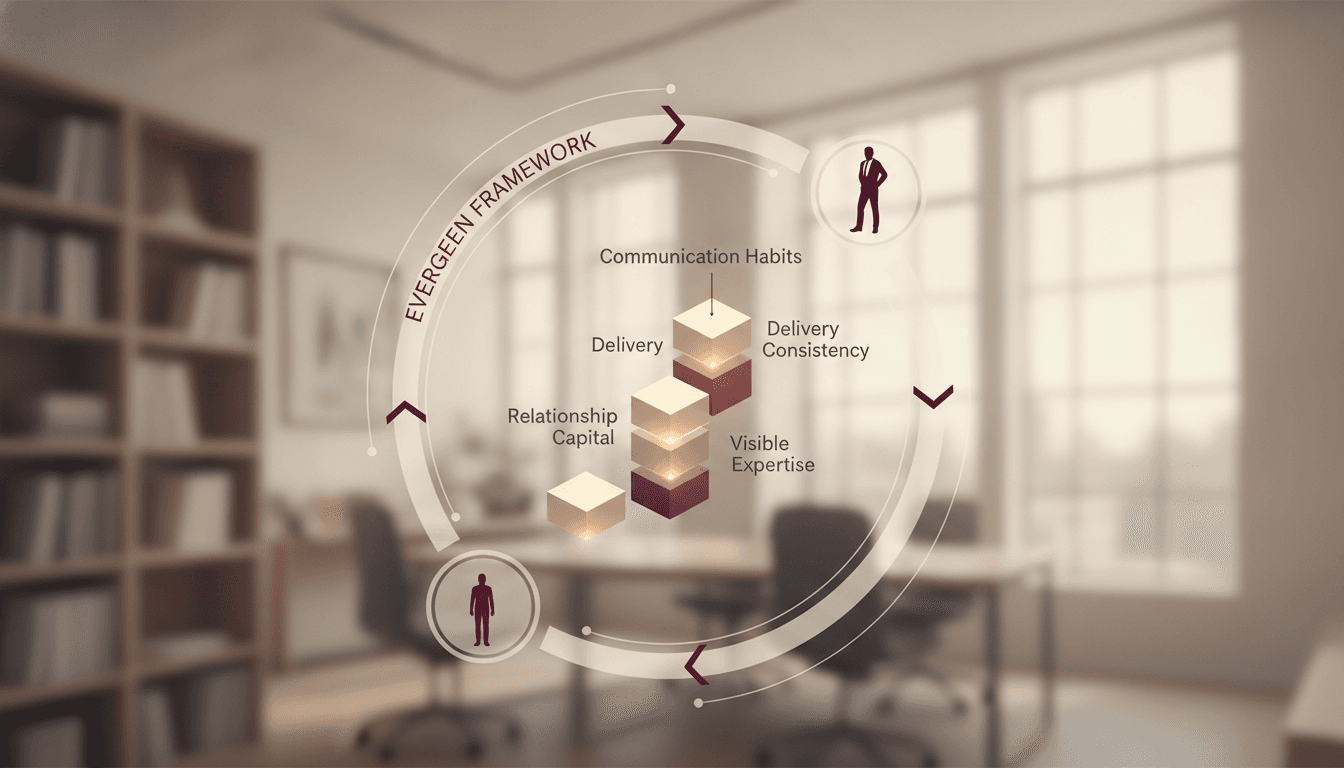
Building professional credibility at work requires a deliberate system across five dimensions: consistent delivery on commitments, strategic communication that signals competence, visible expertise through knowledge sharing, relationship capital built on trust, and a professional presence that commands respect. Credibility isn't a single achievement — it's a compound asset you build through daily habits, starting from your first week and evolving through every career stage.

How to Build Authority at Work Quietly: 10 Subtle Moves
You don't need to be the loudest voice in the room to become the most respected one. Building authority at work quietly means earning credibility through consistent expertise, strategic visibility, and reliable follow-through — not self-promotion or political maneuvering. The professionals who hold the most lasting influence are often those who let their work, their preparation, and their selective contributions speak for themselves. Below are 10 subtle, proven moves that build quiet authority o

How to Be Seen as a Subject Matter Expert at Work
To be seen as a subject matter expert at work, you need to combine deep domain knowledge with strategic visibility. This means consistently sharing insights in meetings, creating content that showcases your expertise, volunteering for high-profile projects, and communicating with authority. Being an SME isn't just about what you know — it's about ensuring the right people recognize what you know. The professionals who earn expert status are intentional about where they contribute, how they speak