
How to Build Credibility at Work Quickly: 11 Proven Moves

To build credibility at work quickly, focus on three accelerators: deliver on small promises consistently to establish reliability, communicate with specificity and data rather than vague opinions, and make your expertise visible through strategic contributions—not self-promotion. Credibility isn't built through a single impressive moment. It's built through a pattern of trustworthy, competent behavior that others can observe and count on, typically within 30 to 90 days of intentional effort.
What Is Workplace Credibility?
Workplace credibility is the perception that you are competent, reliable, and trustworthy in your professional role. It's the invisible currency that determines whether people listen to your ideas, follow your recommendations, or advocate for your advancement.
Credibility differs from popularity or likability. You can be well-liked but not credible. You can be quiet but deeply credible. It's built on two pillars: demonstrated competence (you know what you're doing) and consistent character (you do what you say you'll do). When both are present, people trust your judgment—even when they can't verify your conclusions themselves.
Why Credibility Accelerates Everything in Your Career
The Trust-Speed Connection

Research from the Harvard Business Review found that high-trust organizations report 74% less stress, 106% more energy at work, and 50% higher productivity compared to low-trust organizations. Credibility is the individual version of this dynamic. When people trust your competence, decisions happen faster because they don't second-guess your input.
Consider this scenario: Two project managers present identical proposals. One has spent three months consistently delivering accurate forecasts and meeting deadlines. The other is newer and hasn't established a track record. The first manager's proposal gets approved in one meeting. The second requires three rounds of review. Same proposal—different credibility levels.
Credibility vs. Authority: Understanding the Difference
Authority comes from your title. Credibility comes from your behavior. You can have authority without credibility (a newly promoted manager no one trusts yet), and you can have credibility without authority (the individual contributor everyone consults before making decisions).
The most powerful professionals have both. If you're looking to build authority at work without experience, credibility is the foundation you build it on.
The Cost of Low Credibility
A study by the Ken Blanchard Companies found that 59% of employees who left their jobs cited trust issues as a key factor. Low credibility doesn't just stall your career—it actively pushes opportunities away. When you lack credibility, your ideas get scrutinized more harshly, your mistakes are remembered longer, and your contributions are attributed to others more often.
11 Proven Moves to Build Credibility Quickly
Move 1: Deliver "Quick Wins" in Your First 30 Days
Credibility starts with proof. Identify one or two small, visible problems you can solve within your first few weeks. These aren't flashy projects—they're practical fixes that show you pay attention and take action.
Example: A new marketing director noticed the team's weekly report was consistently late because data had to be pulled from three separate tools. She created a simple dashboard that automated the pull. It took her four hours. The team noticed within a week. That single act established her as someone who solves problems, not someone who just talks about them.The key is choosing quick wins that are visible to decision-makers and aligned with team pain points. Don't optimize something nobody cares about.
Move 2: Be Specific When You Speak
Vague communicators lose credibility sentence by sentence. Specific communicators build it. Compare these two statements:
- Low credibility: "I think we should probably look into improving our customer retention. It seems like it could be better."
- High credibility: "Our Q3 retention rate dropped 8% compared to Q2. I've identified three contributing factors and have a proposal to address the largest one by end of month."
According to a study published in the Journal of Personality and Social Psychology, people perceive speakers who use concrete, specific language as more competent and more trustworthy than those who speak in abstractions. Specificity signals that you've done the work.
If you tend to hedge or soften your language, read our guide on how to stop sounding uncertain at work for immediate fixes.
Move 3: Follow Through Relentlessly on Small Commitments
This is the single most underrated credibility builder. Most professionals focus on big deliverables while dropping small promises—returning a call, sending a follow-up email, sharing a resource they mentioned in passing.
Every dropped commitment, no matter how small, creates a micro-erosion of trust. Every kept commitment creates a micro-deposit.
The rule: If you say you'll do something, do it. If you can't, say so immediately. A study by Dr. Paul Zak at Claremont Graduate University found that consistent follow-through on commitments is the strongest predictor of perceived trustworthiness in professional relationships—stronger than competence, likability, or tenure.Move 4: Prepare More Than Everyone Else
Credible professionals rarely "wing it." Before meetings, they review the agenda, anticipate questions, and prepare data to support their points. This preparation is invisible to others—but its effects are highly visible.
Practical framework — The 10-Minute Prep:- 2 minutes: Review the meeting agenda and identify where you can contribute.
- 3 minutes: Gather one relevant data point or example to support your position.
- 3 minutes: Anticipate the two most likely objections and prepare responses.
- 2 minutes: Decide on one clear takeaway you want the room to remember.
This small investment makes you the most prepared person in most rooms—which is exactly how executives structure their thinking before speaking.
Move 5: Own Your Mistakes Immediately
Nothing builds credibility faster than honest accountability. When you make an error, address it before someone else discovers it. State what happened, what you've learned, and what you're doing to prevent it from recurring.
Example script: "I want to flag something before we go further. The timeline I shared on Tuesday was based on outdated vendor pricing. I've since verified the correct numbers, and the project will cost 12% more than I initially projected. Here's the revised budget with two options to offset the difference."This approach feels counterintuitive—admitting mistakes should hurt credibility, right? Research says otherwise. A study from the Wharton School found that leaders who openly acknowledged errors were rated as more trustworthy and more competent than those who minimized or hid mistakes.
Move 6: Cite Sources and Give Credit Generously
When you reference data, name the source. When you build on someone else's idea, acknowledge them publicly. Both habits signal intellectual honesty—a core component of credibility.
Instead of: "Studies show that remote workers are more productive." Say: "A 2023 Stanford study by Nicholas Bloom found that hybrid workers were 35% less likely to quit, though fully remote productivity gains varied by role."Giving credit to colleagues works the same way. Saying "Building on what Sarah proposed last week..." doesn't diminish your contribution. It shows you're secure enough to acknowledge others—a trait people associate with competence and leadership.
Move 7: Ask Better Questions Than Everyone Else
Credible professionals don't just have good answers—they ask questions that reframe problems and reveal hidden assumptions. A well-timed question can demonstrate more expertise than a ten-minute presentation.
Three high-credibility question patterns:- The assumption-check: "What are we assuming about the customer's timeline that we haven't verified?"
- The priority clarifier: "If we can only achieve two of these three objectives, which two matter most?"
- The risk surfacer: "What's the most likely reason this could fail, and do we have a contingency?"
These questions show strategic thinking without requiring you to dominate the conversation—a particularly useful approach if you're working on building authority without needing the spotlight.
Move 8: Communicate Bad News Early and Directly
Professionals who only deliver good news eventually lose credibility. The willingness to surface problems early—with proposed solutions—is one of the strongest trust signals in any organization.
The framework for delivering difficult information:- Lead with the headline. Don't bury it. "We're going to miss the March deadline."
- Explain the cause briefly. One or two sentences. No excuses.
- Present your recommended path forward. Show you've already thought about solutions.
- State what you need. Be specific about resources, decisions, or support required.
For a deeper dive into this skill, see our complete guide on how to communicate bad news with authority and poise.
Move 9: Build a Reputation for Consistency, Not Brilliance
Credibility isn't about being the smartest person in the room. It's about being the most consistent. Show up prepared every time, not just when it's a high-stakes meeting. Deliver quality work on routine assignments, not just the visible projects.
The consistency principle: People form credibility judgments based on patterns, not peaks. One brilliant presentation followed by three weeks of missed deadlines destroys more credibility than steady, reliable performance ever builds.This means managing your commitments carefully. It's better to promise less and deliver consistently than to overcommit and deliver inconsistently. Professionals who understand this distinction are the ones others describe as "someone you can always count on"—which is the highest credibility compliment in any workplace.
Move 10: Make Your Expertise Visible Through Contribution, Not Promotion
There's a critical difference between self-promotion and strategic visibility. Self-promotion says "Look at what I did." Strategic visibility says "Here's something useful for the team."
Practical visibility tactics:- Share a relevant industry article with your team and add a one-paragraph analysis of what it means for your current project.
- Volunteer to present findings or updates in cross-functional meetings.
- Write a brief summary after attending a conference or training and distribute it to stakeholders.
- Offer to mentor a junior colleague—this positions you as an expert without you ever having to say so.
Each of these actions makes your competence observable without feeling like bragging. For more on this approach, explore our guide on building credibility at work without self-promotion.
Move 11: Align Your Body Language with Your Words
Research from UCLA professor Albert Mehrabian's communication studies—often cited but frequently misapplied—does establish that nonverbal cues significantly influence how messages are received in emotionally ambiguous situations. When your body language contradicts your words, people believe your body.
Four body language credibility signals:- Steady eye contact (not staring—aim for 60-70% of the conversation).
- Stillness when making a key point. Fidgeting undermines authority.
- An open posture. Uncrossed arms, squared shoulders facing the person you're addressing.
- Deliberate pacing. Speak slightly slower than feels natural, especially when delivering important information.
These physical signals reinforce the competence and confidence your words are communicating. For a comprehensive breakdown, see our guide on body language that conveys authority.
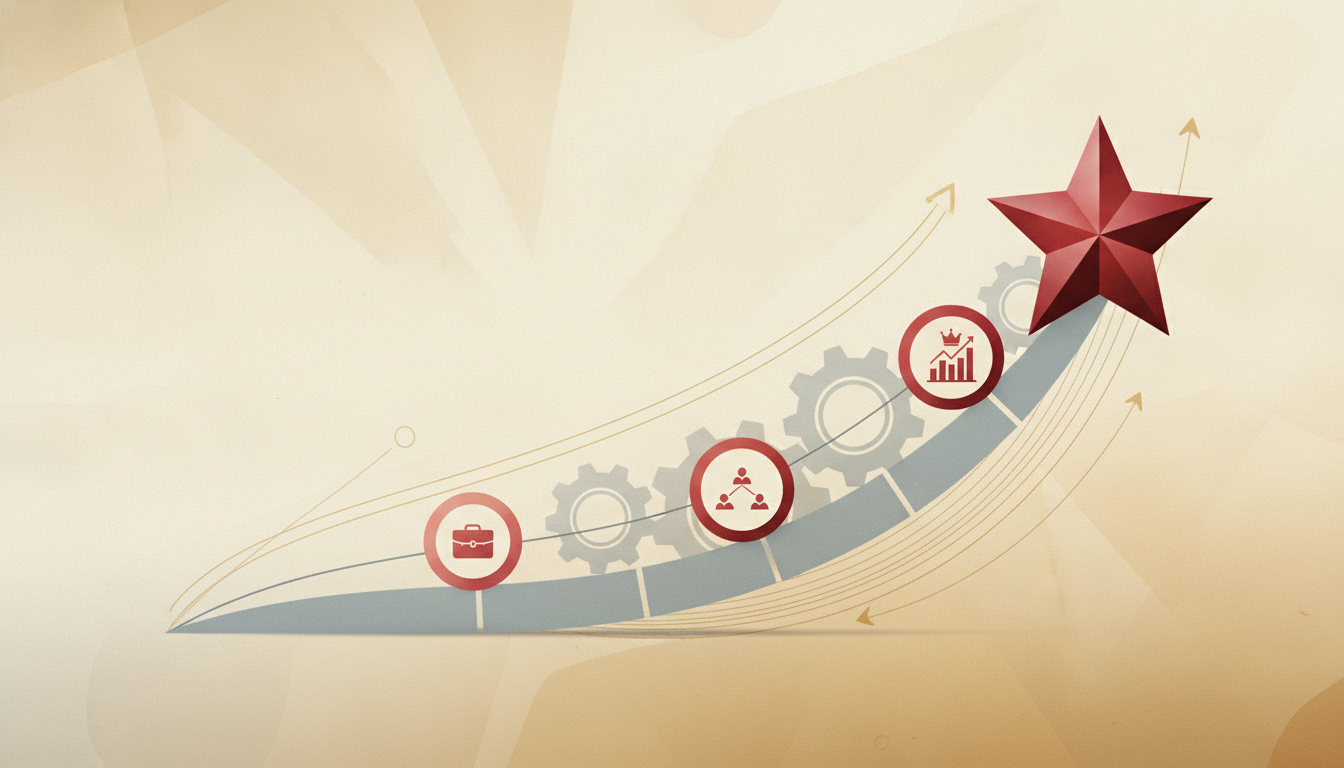
A 90-Day Credibility Acceleration Plan
Days 1–30: Establish Reliability
Your sole focus in the first month should be demonstrating that you follow through. Say yes only to commitments you can keep. Deliver every assignment on time or early. Send the follow-up email you promised. Return the call within the timeframe you stated.
During this phase, spend more time listening than speaking. Take notes in meetings. Ask clarifying questions. Learn the unwritten rules of how decisions get made and who influences whom.
Milestone: By Day 30, at least two colleagues should be able to say, "When she says she'll do something, she does it."Days 31–60: Demonstrate Competence
Now that you've established reliability, begin contributing more actively. Share informed opinions in meetings. Propose a small process improvement. Present data that helps the team make a better decision.
This is also the phase to start building relationships with key stakeholders. Schedule brief one-on-one conversations with people whose work intersects with yours. Ask about their priorities and challenges. Look for ways your expertise can help solve their problems.
Milestone: By Day 60, you should have at least one visible contribution that others associate with your name.Days 61–90: Expand Influence
With reliability and competence established, begin taking on slightly larger responsibilities. Volunteer to lead a workstream. Offer to present the team's findings to senior leadership. Share a perspective in a cross-functional meeting that adds value beyond your immediate role.
This is where credibility compounds. Each successful contribution builds on the trust you've already earned, making the next opportunity easier to access. If you're navigating a new leadership role specifically, our guide on how to build authority in a new role in the first 90 days provides a detailed playbook.
Milestone: By Day 90, people outside your immediate team should recognize your expertise and seek your input.Common Credibility Killers to Avoid
Language Habits That Erode Trust
Certain phrases systematically undermine your credibility, often without you realizing it. Watch for these patterns:
- "I'm not sure if this is right, but..." — This pre-apology tells people to discount what follows.
- "Does that make sense?" — This shifts the burden of clarity to your audience. Instead, say "Let me know what questions you have."
- "I just wanted to follow up..." — The word "just" minimizes your request. Drop it.
- "To be honest..." — Implies you aren't honest the rest of the time.
A comprehensive list of these patterns—and what to say instead—is covered in our article on 12 credibility killers in workplace communication.
Overpromising and Underdelivering
This is the fastest way to destroy credibility. It's tempting to say yes to everything, especially when you're new and eager to impress. But every missed deadline or half-finished deliverable costs more credibility than the original "yes" earned.
The credibility-safe response: "I can commit to delivering the first two sections by Friday. The full report will be ready by Wednesday of the following week. Does that timeline work for your needs?"Inconsistency Between Public and Private Behavior
People notice when you say one thing in a meeting and another in the hallway. When you support a decision publicly but undermine it privately. When you're polished with executives but dismissive with junior staff. Credibility requires consistency across all audiences.
Build the Communication Patterns That Command Respect If you're serious about accelerating your credibility, *The Credibility Code* gives you the exact frameworks, scripts, and daily practices that high-credibility professionals use to earn trust and influence in any room. Discover The Credibility Code
Frequently Asked Questions
How long does it take to build credibility at work?
Most professionals can establish meaningful credibility within 60 to 90 days of intentional effort. The timeline depends on three factors: how visible your role is, how frequently you interact with key stakeholders, and how consistently you follow through on commitments. Quick wins in the first 30 days can accelerate the process significantly, but deep credibility—the kind that survives mistakes—typically requires six months to a year of consistent behavior.
How do you rebuild credibility after losing it?
Rebuilding credibility requires acknowledging what happened without over-explaining, then demonstrating changed behavior consistently over time. Start by owning the specific failure, not offering generic apologies. Then focus on small, visible commitments you can deliver on reliably. People will watch your actions more closely than your words during this period. Expect the rebuild to take roughly twice as long as the original credibility took to establish.
Credibility vs. reputation: What's the difference?
Credibility is the perception that you are competent and trustworthy based on direct interactions. Reputation is the broader narrative about you that circulates among people who may never have worked with you directly. Credibility feeds reputation—but reputation can exist independently. You can have a strong reputation from past roles while still needing to build credibility with a new team. Focus on credibility first; reputation follows.
Can introverts build credibility as quickly as extroverts?
Yes—and in some cases, faster. Research from the Wharton School by Adam Grant found that introverted leaders often outperform extroverted ones in environments where team members are proactive. Introverts tend to excel at listening, preparation, and follow-through—three of the strongest credibility builders. The key for introverts is ensuring their contributions are visible, even if they prefer not to be the loudest voice in the room.
What's the fastest single action to build credibility with a new team?
Deliver on your first promise ahead of schedule. Whatever your first commitment is—a report, a meeting follow-up, a project milestone—complete it early and at high quality. This single action sets the expectation that you are reliable and competent. It creates a "first impression anchor" that influences how people interpret everything you do afterward.
How do you build credibility without a senior title?
Focus on expertise-based credibility rather than position-based authority. Become the person who consistently brings the most useful data, the clearest analysis, or the most practical solutions. Volunteer for cross-functional projects where your skills are visible to leaders outside your direct team. Credibility built on demonstrated competence is actually more durable than credibility built on title alone.
Be the Person Leadership Thinks Of First
The Credibility Code is a practical guide to the communication habits that get professionals noticed, trusted, and promoted.
Discover The Credibility CodeRelated Articles

Build Credibility at Work Without Self-Promotion: 9 Moves
You can build credibility at work without self-promotion by focusing on nine key behaviors: delivering consistent results, sharing credit generously, asking strategic questions, becoming a reliable knowledge resource, following through relentlessly, offering help before being asked, communicating with precision, building genuine relationships across departments, and letting your work create its own visibility through documentation and strategic positioning. These approaches build lasting authori

How to Build a Professional Reputation That Opens Doors
Building a professional reputation requires intentional, consistent action across five key areas: delivering reliable results, increasing your visibility, communicating with authority, cultivating strategic relationships, and managing your personal brand. Your reputation isn't what you say about yourself — it's the story others tell when you're not in the room. This guide gives you a strategic framework to shape that story deliberately, so the right opportunities find you instead of the other wa

How to Position Yourself as an Expert at Work: 8 Moves
To position yourself as an expert at work, consistently share specialized knowledge, contribute insights before being asked, document your results, build a visible body of work, speak with authority in high-stakes moments, cultivate a strategic network, teach others what you know, and align your personal brand with a specific domain. These eight moves shift perception from "competent contributor" to "recognized authority."