
12 Credibility Killers in Workplace Communication to Fix Now

Credibility killers in workplace communication are the subtle habits that quietly erode your professional authority—things like upspeak, excessive qualifiers ("I just think maybe…"), slow email responses, apologizing before sharing ideas, and rambling in meetings. Most professionals unknowingly commit at least three of these daily. The good news: each one has a concrete fix. Below, we break down the 12 most damaging credibility killers and show you exactly how to eliminate them starting today.
What Are Credibility Killers in Workplace Communication?
Credibility killers are recurring communication habits—verbal, written, and behavioral—that signal uncertainty, low status, or lack of expertise to colleagues, managers, and stakeholders. They operate below conscious awareness, meaning the person committing them rarely notices, but the audience always does.
Unlike a single communication mistake, credibility killers are patterns. They compound over time, gradually shifting how others perceive your competence, authority, and leadership potential. According to a 2023 study published in the Journal of Business Communication, professionals who frequently used hedging language were rated 34% less competent by peers—even when the substance of their contributions was identical to those who spoke directly.
Why Credibility Killers Are So Dangerous
They're invisible to you but obvious to everyone else
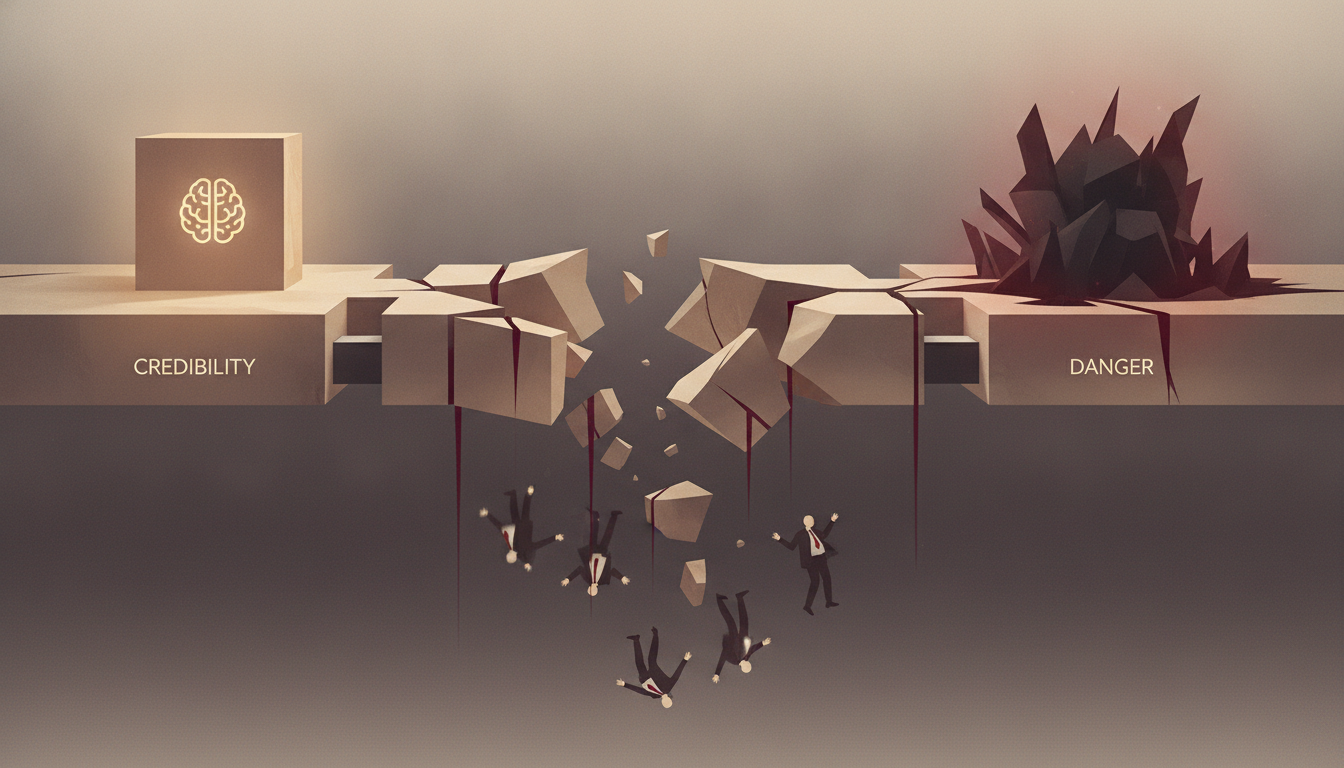
Here's the problem with credibility killers: you've been doing them so long they feel normal. Saying "Sorry, but I think we should consider…" before a strong recommendation feels polite to you. To the VP across the table, it sounds like you don't trust your own analysis.
A study by the University of Texas at Austin found that speakers who used unnecessary apologies before making statements were perceived as 22% less authoritative than those who stated the same point directly. The content was identical. The framing changed everything.
They create a ceiling you can't see
Credibility killers don't get you fired. They get you overlooked. You're passed over for the project lead role. You're not invited to the strategy meeting. Your ideas get attributed to the person who restated them with more conviction.
If you've ever felt like your contributions don't land the way they should, the issue likely isn't your ideas—it's how you're packaging them. For a deeper look at this pattern, read our guide on how to stop being overlooked at work.
They compound across channels
A credibility killer in a meeting bleeds into your emails, your Slack messages, your presentations. If you hedge when speaking, you likely hedge when writing. If you ramble in person, your emails are probably too long. The pattern is systemic, which is why surface-level fixes don't work.
Credibility Killers #1–4: What You Say
#1. Qualifier words and hedge language
The habit: Starting sentences with "I just," "I think," "I feel like," "kind of," "sort of," or "maybe we could." Why it kills credibility: Qualifiers tell your audience you're not sure about what you're saying—even when you are. They're verbal safety nets. You add them to soften your position, but they end up softening your authority. The fix: State your point, then add context. Instead of "I just think maybe we should consider shifting the timeline," say "We should shift the timeline. Here's why." The recommendation is the same. The impact is not.For a comprehensive list of language swaps, see 12 words that undermine your credibility at work.
#2. Upspeak (turning statements into questions)
The habit: Raising your pitch at the end of declarative sentences, making statements sound like you're asking permission or seeking approval. Why it kills credibility: Upspeak signals uncertainty. When you say "We should launch in Q3?" with a rising tone, you're unconsciously asking the room to validate your recommendation. Research from Quantified Communications found that speakers with consistent downward intonation at the end of statements were rated 38% more credible by audiences. The fix: Record yourself in your next meeting (most video platforms allow this). Listen for rising intonation on statements. Practice ending sentences with a downward tone—drop your pitch on the final word. It feels unnatural for about a week, then becomes your new default.#3. Over-apologizing before contributing
The habit: Saying "Sorry, but…" or "Apologies if this has been covered…" or "Sorry to interrupt, but…" before making a valid point. Why it kills credibility: You're framing your contribution as an imposition rather than a value-add. Every unnecessary apology subtly positions you as lower-status in the conversation. The fix: Replace apologies with direct transitions. Instead of "Sorry, I just want to add…" use "To build on that…" or "One thing to consider here…" Save apologies for situations where you've actually made an error. For a full breakdown of this habit and how to break it, check out how to stop over-apologizing at work and what to say instead.#4. Rambling and burying the lead
The habit: Giving too much backstory, thinking out loud, or circling around your point before finally making it—if you make it at all. Why it kills credibility: Senior leaders and decision-makers listen for the point within the first 10-15 seconds. If they don't hear it, they mentally check out. According to a Harvard Business Review analysis, executives report that the number one communication frustration with mid-level professionals is "taking too long to get to the point." The fix: Use the "Bottom Line Up Front" (BLUF) method. State your recommendation or conclusion first, then provide supporting context. Practice this framework: Point → Proof → Implication. Our detailed guide on how to present ideas without rambling walks you through the full Clarity Method.Say it once, and be taken seriously. The Authority Toolkit gives you 8 frameworks, the 7 shifts that make speech sound sure, and 100+ phrases for meetings and email, so the point lands the first time you make it. Get The Authority Toolkit — $27
Credibility Killers #5–8: How You Show Up
#5. Weak meeting body language
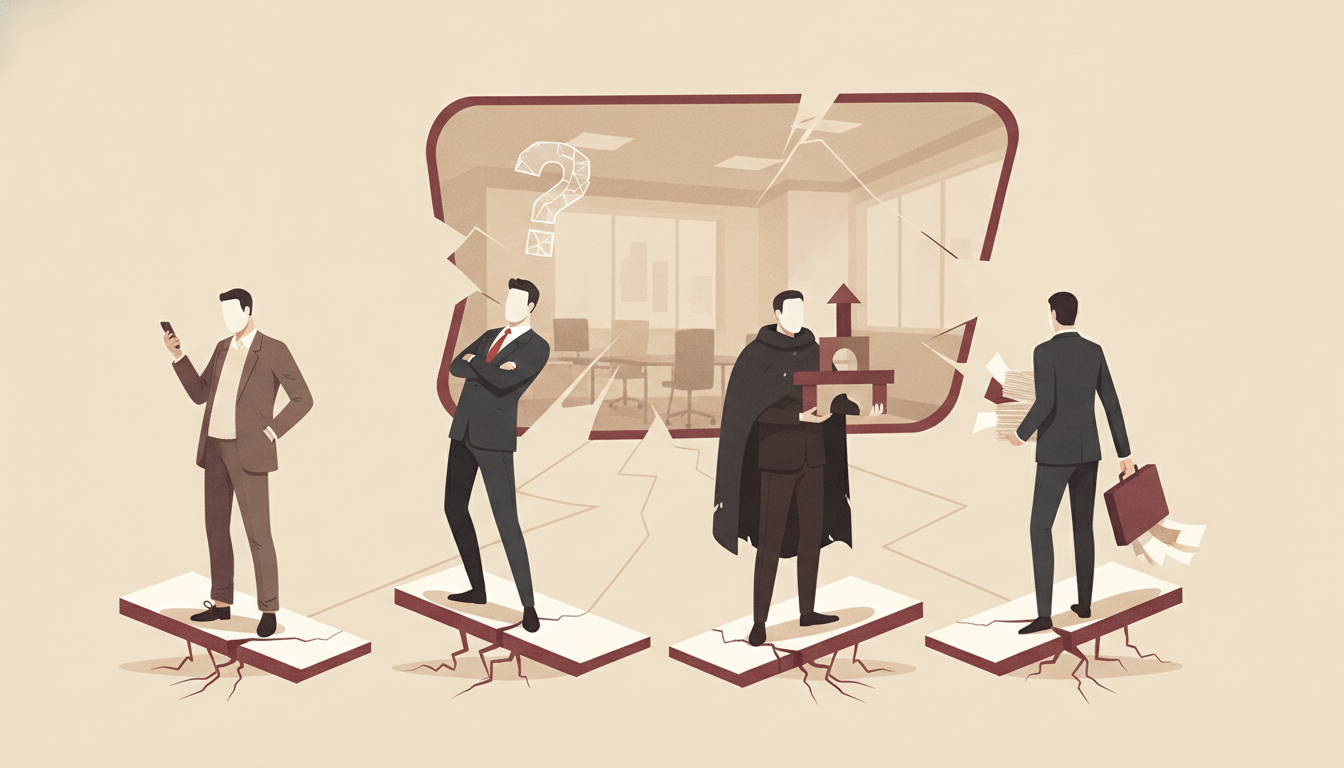
#6. Being the last to speak (every time)
The habit: Consistently waiting until everyone else has weighed in before sharing your perspective—or not speaking at all. Why it kills credibility: While thoughtful listening is valuable, always being last signals that you need group consensus before forming a position. It reads as either lack of confidence or lack of preparation. The fix: Aim to contribute within the first third of any discussion. You don't need to dominate. You need to establish presence early. One technique: prepare one substantive comment or question before the meeting starts, and deliver it within the first five minutes. This anchors your presence for the rest of the conversation.#7. Failing to hold the floor when interrupted
The habit: Stopping mid-sentence when someone talks over you, then never returning to your point. Why it kills credibility: Abandoning your point signals that you don't believe it was important enough to finish. Over time, this trains the room to interrupt you freely—because there's no consequence. The fix: Use the "Acknowledge and Return" technique. When interrupted, pause briefly, then say: "I want to hear your thought—let me finish this point first." Or simply continue speaking at the same volume and pace without acknowledging the interruption. Both work. The key is completing your thought. For more on this, read how to handle being talked over in meetings.#8. Inconsistent energy and engagement
The habit: Being visibly engaged when the topic interests you, but checking out—looking at your laptop, leaning back, giving minimal responses—when it doesn't. Why it kills credibility: Selective engagement tells the room you only care about your own domain. Leaders are expected to be engaged across the full scope of the business. When a senior leader notices you've mentally left the meeting during someone else's update, they question your strategic maturity. The fix: Maintain baseline engagement at all times: eye contact with the speaker, occasional notes, and at least one question or comment per agenda item that isn't yours. This signals breadth, not just depth.Credibility Killers #9–10: How You Write
#9. Weak email structure and tone
The habit: Writing long, unfocused emails with vague subject lines, excessive exclamation points, unnecessary pleasantries that bury the action item, or language like "Just wanted to check in!" and "Hope this isn't too much trouble!" Why it kills credibility: Your emails are read by people with 200+ messages in their inbox. If your email requires three readings to find the ask, you've lost credibility. A Boomerang study of over 300,000 emails found that emails between 50-125 words had the highest response rates—shorter emails signal respect for the reader's time and confidence in your message. The fix: Use the "Action-Context-Detail" email structure:- Subject line: Specific and action-oriented ("Decision Needed: Q3 Budget Reallocation by Friday")
- First sentence: The ask or key information
- Body: Brief context (2-3 sentences maximum)
- Close: Clear next step with a deadline
For a full email authority system, see how to sound authoritative in emails.
#10. Slow or inconsistent response patterns
The habit: Taking 48+ hours to respond to routine emails, responding immediately to some people but not others, or leaving messages unanswered entirely. Why it kills credibility: Response time is a proxy for reliability. When you consistently respond slowly, colleagues learn they can't count on you for time-sensitive decisions. When you respond quickly to senior leaders but slowly to peers, you signal that you manage up but don't respect lateral relationships. The fix: Set a personal SLA (service-level agreement) for email: acknowledge within 4 hours during business days, even if the full response takes longer. A simple "Received—I'll have a full response by Thursday" preserves credibility while buying you time. Consistency matters more than speed.Credibility Killers #11–12: How You Handle Pressure
#11. Deflecting credit or downplaying your role
The habit: Saying "Oh, it was a team effort" when specifically asked about your contribution, or responding to compliments with "It was nothing, really." Why it kills credibility: There's a difference between being gracious and being invisible. When you consistently deflect recognition, you train people to forget your contributions. You also undermine the person giving you credit—they chose to recognize you, and your deflection dismisses their judgment. The fix: Use the "Accept and Extend" method. Accept the recognition, then broaden it authentically. Instead of "It was nothing," say: "Thank you—I'm glad the analysis landed well. Maria's data work made it possible to move that fast." You've accepted credit, demonstrated leadership, and elevated a colleague. That's what credible professionals do.For more strategies on this, explore how to advocate for yourself at work without bragging.
#12. Losing composure under challenge
The habit: Getting visibly flustered when your ideas are questioned, becoming defensive when receiving feedback, or shutting down when a senior leader pushes back on your recommendation. Why it kills credibility: How you handle pushback reveals more about your leadership potential than how you handle agreement. A 2022 survey by the Center for Creative Leadership found that "composure under pressure" was the second-most cited trait (after strategic thinking) that senior leaders look for when evaluating someone for promotion. The fix: Use the "Pause-Acknowledge-Redirect" framework:- Pause: Take a breath. Two seconds of silence reads as thoughtfulness, not weakness.
- Acknowledge: "That's a fair challenge" or "I see where that concern comes from."
- Redirect: "Here's what the data shows…" or "Let me address that specific point."
This framework keeps you in control of the conversation. For a deeper dive into handling high-pressure moments, read our guide on leadership presence in difficult conversations.
How to Audit Your Own Credibility Killers
The 5-day self-assessment method
You can't fix what you can't see. Here's a practical audit process:
Days 1-2: Record and review. Record yourself in two meetings (with permission or using your own playback on virtual calls). Listen specifically for qualifier words, upspeak, and apologies before contributions. Tally each instance. Day 3: Email audit. Review your last 20 sent emails. Highlight every instance of hedge language, vague subject lines, or buried action items. Count exclamation points. If you average more than one per email, that's a pattern. Day 4: Ask for candid feedback. Choose one trusted colleague and ask: "When I communicate in meetings, what's one thing that might undermine how my ideas land?" Most people have noticed your credibility killers—they've just never been asked. Day 5: Prioritize. Pick your top two credibility killers—the ones that appear most frequently—and focus exclusively on those for the next 30 days. Trying to fix all 12 at once leads to fixing none.Track progress with the "Before/After" journal
Keep a simple log: before each important meeting or email, note which credibility killer you're targeting. After, note whether you caught yourself. This builds metacognition—the awareness that transforms unconscious habits into conscious choices.
Frequently Asked Questions
What are the most common credibility killers in workplace communication?
The most common credibility killers are qualifier words ("just," "kind of," "maybe"), upspeak (turning statements into questions), over-apologizing before contributing, rambling without getting to the point, and weak email structure. Research shows that hedge language alone can reduce perceived competence by over 30%. Most professionals commit at least two or three of these daily without realizing it.
How do credibility killers differ from communication mistakes?
Communication mistakes are one-time errors—mispronouncing a name, sending an email to the wrong person, or forgetting a data point in a presentation. Credibility killers are patterns—recurring habits that systematically erode how others perceive your authority over weeks and months. A single "sorry" before a comment won't hurt you. Doing it in every meeting will reshape how the room sees you.
Can credibility killers affect career advancement?
Absolutely. The Center for Creative Leadership's research consistently shows that communication presence is a top factor in promotion decisions, especially at the director level and above. Credibility killers don't disqualify you on paper—they disqualify you in the room. Decision-makers often can't articulate why they don't see you as leadership material; they just sense a lack of authority. These habits are usually the cause.
How long does it take to fix a credibility killer?
Most professionals can significantly reduce a single credibility killer in 21-30 days of focused practice. The key is targeting one or two habits at a time, not all twelve. Behavioral research suggests it takes an average of 66 days to form a new automatic behavior (Phillippa Lally, European Journal of Social Psychology, 2009). Start with the habit that appears most frequently, and build from there.
Credibility killers vs. communication style differences—how do you tell them apart?
Communication style differences are neutral variations—some people are more direct, others more collaborative. Credibility killers are habits that undermine authority regardless of style. An introvert who pauses before speaking has a style. An introvert who starts every comment with "Sorry, this might be a dumb question, but…" has a credibility killer. The test: does the habit reduce how competent you appear, independent of your actual competence? If yes, it's a credibility killer.
Do credibility killers affect men and women differently?
Research suggests that women face a double bind: credibility killers like hedge language and over-apologizing are more socially reinforced in women, yet women are also judged more harshly for them. A study by Catalyst found that women in leadership who used assertive, direct communication were perceived as more competent—but also faced more social backlash than men using the same style. The solution isn't to ignore this reality but to build a communication style that projects authority while feeling authentic. Our guide on executive presence for women in leadership addresses this directly.
Stop Sounding Uncertain in Everyday Conversations
8 communication frameworks, the 7 speech shifts with 30 before-and-after rewrites, 6 email templates, and 100+ phrases for speaking and writing with calm authority at work. PDF.
Get The Authority Toolkit — $27Related Articles
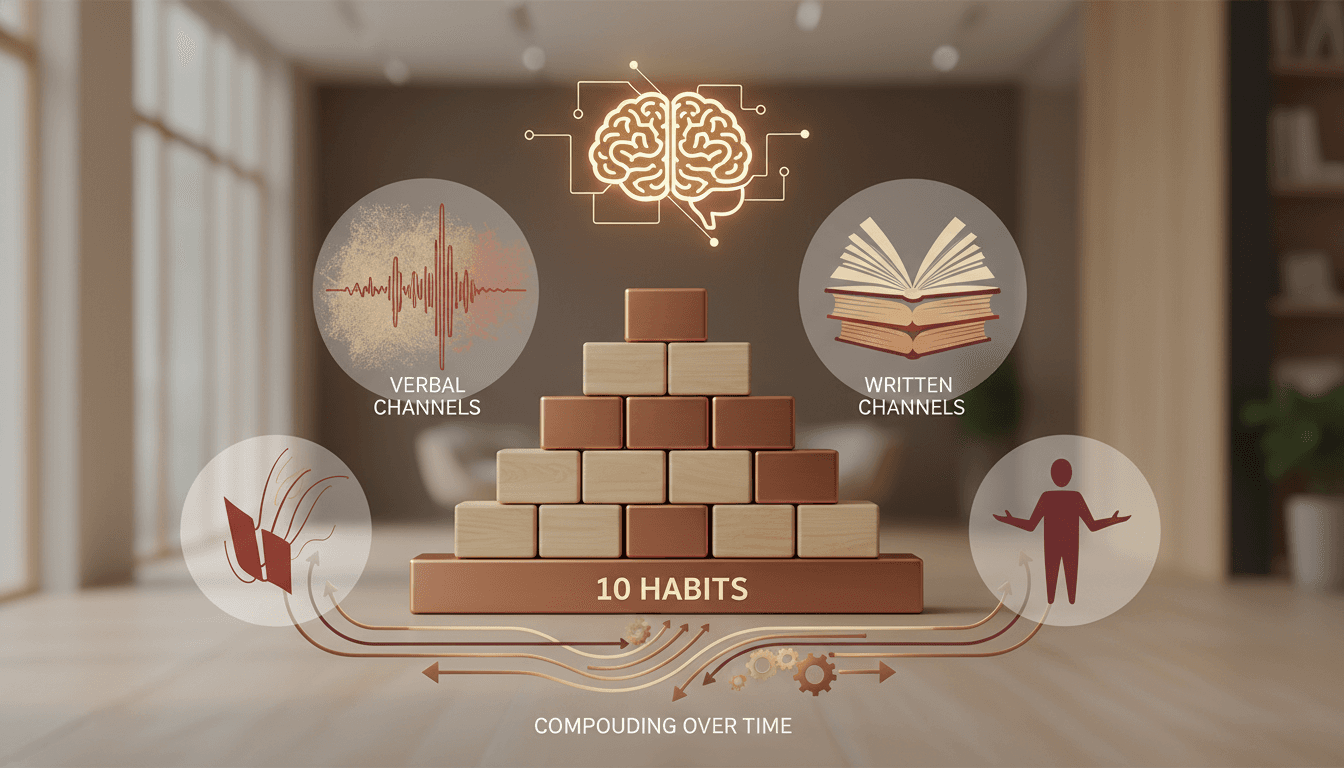
How to Communicate With Authority at Work: 10 Habits
To communicate with authority at work, build ten daily habits across verbal, written, and nonverbal channels: lead with your conclusion, eliminate hedging language, use strategic pauses, anchor your body language, control your vocal tone, write concisely, prepare a point of view before every meeting, ask high-value questions, set verbal boundaries, and follow through visibly. These small, repeatable actions compound over time to build a lasting reputation for credibility and leadership presence.

How to Speak With Gravitas: 9 Shifts That Command Respect
Speaking with gravitas means communicating with a weight and authority that makes people stop, listen, and take you seriously. It's not about being loud or dominating—it's about making every word count. To speak with gravitas, you need to make nine deliberate shifts: slow your pace, lower your pitch, eliminate filler words, use declarative language, pause with purpose, anchor your body language, lead with insight, speak concisely, and own the room's silence. These shifts transform how others per

Communication Mistakes That Quietly Hurt Your Credibility
The most damaging professional communication mistakes that hurt credibility aren't dramatic blunders—they're subtle habits you repeat daily without realizing it. Hedging language ("I just wanted to…"), chronic over-apologizing, weak email structure, uptalk, filler words, and closed-off body language silently signal uncertainty to colleagues and leaders. Over time, these micro-habits train people to see you as less authoritative, even when your ideas are strong. The good news: each one has a spec