
Talked Over in Meetings? 8 Professional Responses That Work

When you're talked over in a meeting, respond immediately with a calm, assertive reclaim. Use phrases like "I'd like to finish my point," paired with steady eye contact and a hand gesture that signals you're not done. The key is acting within two to three seconds — before the interrupter gains momentum. Don't raise your voice or show frustration. Instead, use a measured tone that signals authority. The eight responses below give you exact scripts and body language cues for every common interruption scenario.
What Does "Being Talked Over" Actually Mean?
Being talked over in meetings is when another person begins speaking while you are mid-sentence, effectively silencing your contribution and redirecting the group's attention. It differs from a natural conversational overlap because the interrupter continues speaking even after it's clear you haven't finished your thought.
This behavior can be intentional — a power play to dominate the discussion — or unintentional, driven by enthusiasm or poor social awareness. Regardless of intent, the impact is the same: your ideas get lost, your credibility takes a hit, and over time, your influence in the room shrinks.
According to a study published in the Journal of Language and Social Psychology, men interrupted women 33% more often than they interrupted other men in professional settings (Hancock & Rubin, 2015). A separate study by researchers at George Washington University found that both men and women interrupted women more frequently than men, suggesting this is a systemic dynamic rather than a personal one.
Understanding the difference between being talked over and being naturally interrupted matters. If you want to stop sounding unsure when speaking at work, you first need to recognize when your voice is being taken from you — and when you're inadvertently giving it away.
Why Being Talked Over Damages Your Career More Than You Think
The Credibility Erosion Effect
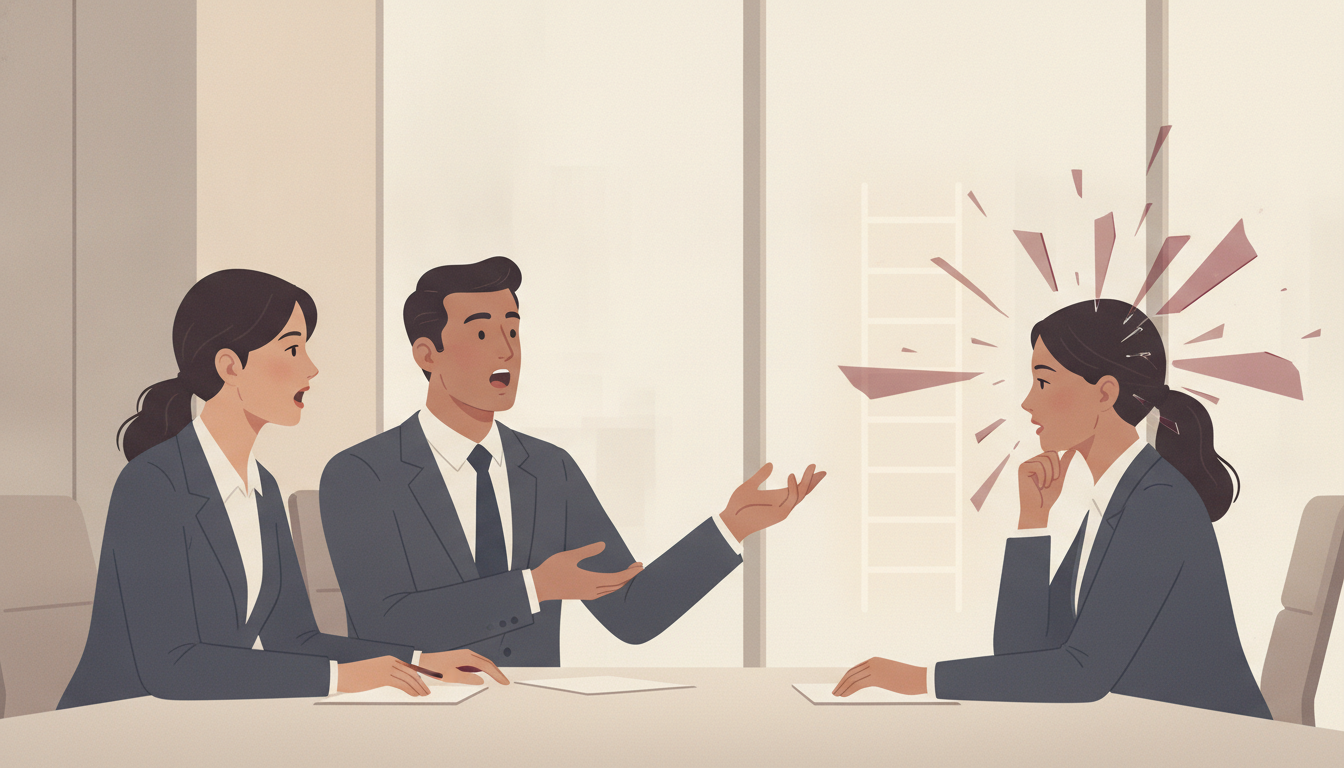
Every time you're talked over and don't respond, you send an unspoken signal to the room: my contribution wasn't important enough to fight for. This isn't about ego. It's about how groups assign status in real time.
Research from Harvard Business Review found that professionals who were consistently interrupted in meetings were rated as less competent and less influential by their peers — even when their ideas were objectively stronger (Brescoll, 2011). The perception of authority is shaped not just by what you say, but by whether you're allowed to finish saying it.
The Compounding Problem
Being talked over once is an annoyance. Being talked over repeatedly creates a pattern that others in the room begin to expect. Colleagues unconsciously start treating you as someone whose contributions are optional.
A 2021 workplace communication survey by Catalyst found that 45% of women business leaders reported difficulty speaking up in virtual meetings, with interruptions cited as a primary barrier. This pattern compounds: the less you speak, the less you're expected to speak, and the easier it becomes for others to talk over you.
If you've noticed this pattern eroding your presence, it may be worth examining the broader habits outlined in how to speak with authority in any meeting.
The 8 Professional Responses That Reclaim the Floor
Response 1: The Direct Reclaim
When to use it: Someone cuts you off mid-sentence in a clear, unambiguous interruption. Script: "I appreciate your input, and I'd like to finish my point first." Body language: Maintain eye contact with the interrupter. Hold one hand up slightly, palm facing outward, at chest height. Don't lean back — stay upright or lean slightly forward. Why it works: It acknowledges the other person (reducing defensiveness) while firmly establishing your right to the floor. The word "first" is critical — it implies they'll get their turn, which removes the feeling of confrontation.Response 2: The Name-and-Return
When to use it: Someone interrupts and the group's attention shifts to them before you can respond. Script: "[Name], I want to hear your thoughts on this. Let me finish the point I was making, and then I'd like your perspective." Body language: Turn your body toward the interrupter as you say their name, then turn back toward the group as you continue your point. This physically redirects the room's attention. Why it works: Using someone's name immediately recaptures attention. Framing your response as a sequence ("let me finish, then you go") positions you as the person organizing the conversation — a subtle leadership move.Response 3: The Broken Record
When to use it: You've been interrupted and the interrupter keeps going, ignoring your first attempt to reclaim the floor. Script: "As I was saying…" (then continue exactly where you left off, as if the interruption never happened). Body language: Don't look at the interrupter. Maintain eye contact with the broader group. Speak at the same volume and pace you were using before the interruption. Why it works: This technique, borrowed from assertiveness training, refuses to validate the interruption. By continuing seamlessly, you signal that the interruption was a non-event. According to communication researchers, this is one of the most effective low-conflict strategies for handling being interrupted in meetings.Response 4: The Ally Activation
When to use it: You have a trusted colleague in the room and you're in a meeting culture where direct reclaims feel risky. Pre-meeting script (to your ally): "If I get cut off today, would you mind saying something like 'I'd like to hear what [your name] was saying'?" In-meeting ally script: "Hold on — [your name] wasn't finished. I want to hear the rest of that point." Why it works: Third-party validation is more powerful than self-advocacy in group settings. Research from the Academy of Management Journal shows that when allies amplify someone's contribution, the speaker is more likely to be credited and remembered for the idea. This strategy was notably used by women in the Obama White House, who adopted an "amplification" strategy to ensure their points were heard and attributed.Know exactly what to say next time. The Pushback Playbook has 50 word-for-word scripts for moments like this one: what they say, what you say, why it works, and what to do if they push back. Get The Pushback Playbook — $27
Response 5: The Post-Interruption Reframe
When to use it: The interrupter has fully taken over and the moment to reclaim the floor in real time has passed. Script: "I want to circle back to something I started to say before. [Restate your point with even more clarity and conviction than the first time.]" Body language: Wait for a natural pause in the conversation. When you speak, use a slightly slower pace than normal. This signals deliberateness and authority. Why it works: You don't always have to fight for the floor in the moment. Sometimes, the more powerful move is to let the interruption pass and then re-enter the conversation on your terms. The reframe gives you time to sharpen your point, and the phrase "circle back" is universally understood in meeting culture. For more on how to structure your thinking before speaking, see how executives structure their thinking before speaking.Response 6: The Volume Hold
When to use it: Someone starts talking over you and you're mid-sentence with a strong point. Script: Don't change your words. Simply continue speaking at the same volume and pace without stopping. Body language: Keep your eyes on the person you were originally addressing. Do not look at the interrupter. Keep your posture open and your gestures steady. Why it works: Most interrupters expect you to stop. When you don't, they face a social choice: either talk over you loudly (which makes them look aggressive) or stop and let you finish. In most professional settings, they'll stop. This technique requires practice and confidence, but it's one of the most effective nonverbal power moves available. It pairs well with the vocal techniques in how to sound confident in a meeting.Response 7: The Facilitator Move
When to use it: You're being talked over in a meeting you're leading or co-leading. Script: "I want to make sure we're hearing from everyone. Let me finish this thought, and then let's go around the table." Body language: Stand up if you're sitting, or shift your posture to a more upright position. Use a sweeping hand gesture that includes the whole room. Why it works: This reframes your reclaim as a service to the group, not a personal defense. It positions you as the person managing the conversation, which is a natural authority signal. If you're working on your overall meeting leadership skills, how to lead a meeting you didn't prepare for covers the broader framework.Response 8: The Private Conversation
When to use it: A specific person talks over you repeatedly, and in-meeting responses haven't changed the behavior. Script: "I've noticed in our last few meetings that I'm getting cut off when I'm sharing my perspective. I don't think it's intentional, but it's making it hard for me to contribute fully. Can we find a way to make sure everyone gets space to finish their points?" Timing: Have this conversation one-on-one, outside the meeting, ideally within 24 hours of the most recent incident. Why it works: Some interruption patterns are habitual and unconscious. A private conversation gives the other person a chance to correct the behavior without public embarrassment. The phrase "I don't think it's intentional" gives them an exit ramp — it's easier to change behavior when you don't feel attacked. For more on navigating difficult professional conversations, explore how to be assertive at work without being aggressive.How to Prevent Being Talked Over Before It Happens
Claim Space in the First 90 Seconds
People who speak within the first 90 seconds of a meeting are interrupted less frequently throughout the rest of the meeting. This finding, from a study published in Organization Science (2017), suggests that early participation establishes your presence as a speaker in the group's mental model of the conversation.
You don't need to make a brilliant point. A simple framing statement works: "Before we dive in, I want to flag one thing I think we should address today." This plants your flag early and signals that you're an active participant, not a passive observer.
Use Vocal Authority Signals
Interruptions are more likely when speakers use uptalk (ending statements with a rising pitch), excessive hedging language ("I just think maybe we should…"), or a quiet, uncertain tone. A study by Quantified Communications found that speakers who used a lower pitch and deliberate pacing were interrupted 32% less often than those who spoke quickly and at a higher pitch.
Before your next meeting, practice these three vocal adjustments:
- Drop your pitch slightly at the end of sentences (statements, not questions).
- Pause for one full second before key points — this signals that something important is coming.
- Eliminate filler words like "um," "just," and "sort of" from your opening sentences.
These shifts are covered in depth in how to stop sounding unsure when speaking at work.
Strategic Seating and Body Language
Where you sit affects how often you're interrupted. Research on group dynamics consistently shows that people seated at the head of the table or directly across from the meeting leader receive more speaking time and fewer interruptions. If you can't sit at the head, choose a seat where you have clear sightlines to the most frequent interrupters.
Pair your seating choice with open body language: uncrossed arms, hands visible on the table, and a slight forward lean. These nonverbal cues signal engagement and authority, making others less likely to talk over you.
When Being Talked Over Is a Bigger Problem
Recognizing Patterns vs. Isolated Incidents
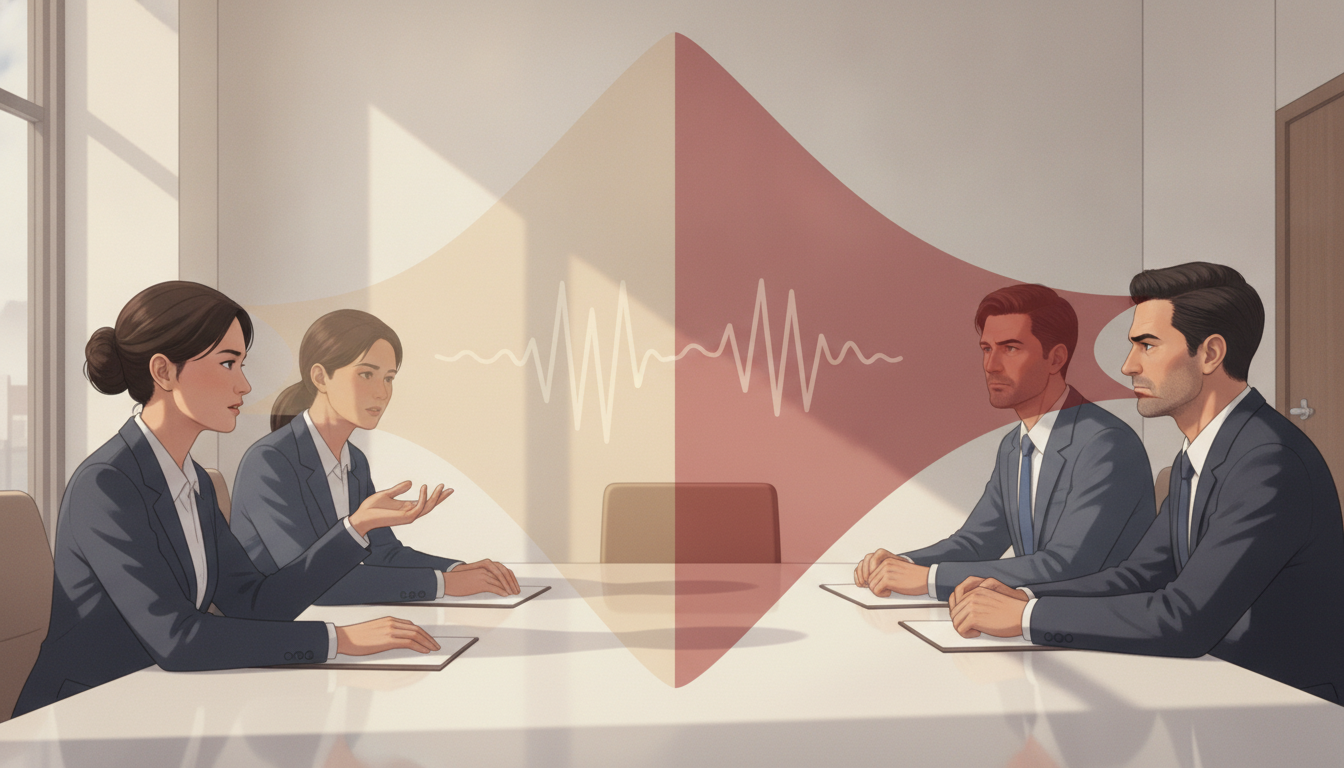
Everyone gets interrupted occasionally. The issue becomes a career problem when it's a pattern — when the same people interrupt you consistently, when your ideas are dismissed but later adopted when someone else says them, or when you've stopped contributing because you expect to be cut off.
If you're experiencing a pattern, document specific instances with dates, contexts, and witnesses. This isn't about building a legal case — it's about moving from a vague feeling of frustration to concrete data you can act on. If someone is consistently taking credit for your ideas after talking over you, this guide on responding when someone takes credit for your idea offers specific recovery scripts.
When to Escalate
If direct responses and private conversations haven't changed the behavior, it may be time to involve your manager or HR. Frame the conversation around impact: "This pattern is affecting my ability to contribute to the team's goals." Focus on behaviors and outcomes, not personality judgments.
Frequently Asked Questions
How do I stop being talked over in meetings without being rude?
Use calm, assertive language that acknowledges the interrupter while reclaiming your space. Phrases like "I'd like to finish my thought" or "Let me complete this point" are direct without being confrontational. Pair them with steady eye contact and an even tone. The goal isn't to embarrass anyone — it's to establish that your contributions deserve the same airtime as everyone else's.
Is being talked over in meetings a form of workplace bullying?
Isolated interruptions are not bullying. However, a persistent pattern of one person or group deliberately silencing your contributions — especially when it targets your gender, race, or seniority level — can constitute a hostile work environment. If the behavior continues after you've addressed it directly and privately, document the pattern and consider escalating to your manager or HR.
Being talked over vs. being interrupted — what's the difference?
Being interrupted is when someone begins speaking before you've finished — it can be accidental, enthusiastic, or a sign of a fast-paced meeting culture. Being talked over is more sustained: the interrupter continues speaking even after it's clear you haven't finished, effectively silencing you. The key difference is intent and duration. Both require a response, but being talked over consistently signals a power dynamic that needs to be addressed.
How do I handle being talked over in virtual meetings?
Virtual meetings add complexity because visual cues are harder to read. Use the unmute-and-speak technique: unmute yourself and say "I'd like to finish my point" in a clear, audible tone. In chat-enabled platforms, type "I wasn't finished — returning to my point" while unmuting. You can also use the "raise hand" feature proactively before you begin speaking to establish your turn. For broader strategies on virtual meeting presence, see leadership presence in virtual meetings.
Why do some people get talked over more than others?
Research points to several factors: gender (women are interrupted more frequently), seniority (junior employees are interrupted more by senior ones), communication style (soft-spoken or hedging speakers are interrupted more), and cultural norms (some meeting cultures reward aggressive participation). The common thread is perceived status — people talk over those they perceive as lower status. Building your leadership presence directly reduces this dynamic.
Should I address being talked over during the meeting or after?
Both. In the moment, use one of the eight responses above to reclaim the floor. After the meeting, if it's a recurring pattern with a specific person, have a private one-on-one conversation. Addressing it only after the meeting lets the behavior continue unchecked in front of your peers. Addressing it only during the meeting doesn't solve the root cause. The most effective approach combines immediate reclaims with follow-up conversations.
Never Be Caught Without the Right Words Again
50 word-for-word scripts for being talked down to, interrupted, dismissed, and put on the spot at work, plus five worksheets. PDF, 50 pages.
Get The Pushback Playbook — $27Related Articles

How to Handle Being Talked Down to at Work Professionally
To handle being talked down to at work, stay calm and address the behavior directly using neutral, assertive language. Name the specific behavior without attacking the person by saying something like, "I'd appreciate it if we could discuss this as equals—I have relevant expertise here." Set clear boundaries, document patterns of condescension, and escalate to HR if the behavior continues. The goal is to protect your credibility and professional standing without matching their tone or becoming re

How to Handle Being Interrupted in Meetings Professionally
When you're interrupted in a meeting, pause briefly, maintain open body language, and use a calm redirect phrase such as "I'd like to finish my point" or "Let me complete this thought." The key is responding without escalating—combining assertive language with composed delivery signals confidence and commands respect. Chronic interrupters can be managed through proactive strategies like pre-framing your contributions, building alliances, and addressing the pattern directly in private.
How to Rebuild Confidence After Being Micromanaged
Rebuilding confidence after being micromanaged starts with recognizing that the damage is real — and reversible. Prolonged micromanagement erodes your trust in your own judgment, makes you second-guess routine decisions, and shrinks your professional voice. Recovery requires a deliberate process: separating your manager's controlling behavior from your actual competence, reclaiming small decisions daily, rebuilding your internal authority, and learning to communicate boundaries so it never happe