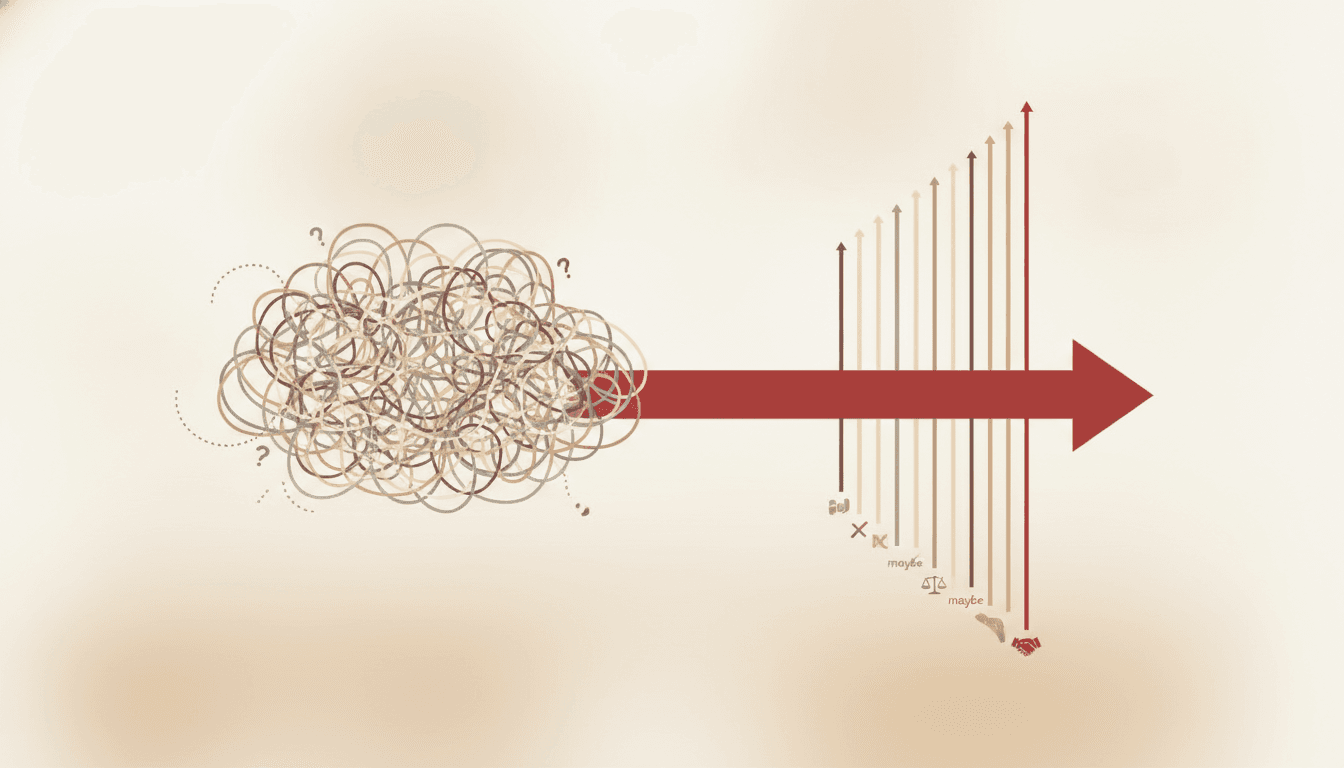
Professional Communication

Frameworks and word-for-word examples for the everyday communication that shapes how colleagues judge you: emails that get answered, updates that land, and conversations that stay on track.

94 articles

Start here

5 Professional Communication Frameworks Leaders Use Daily

5 Professional Communication Frameworks Leaders Use Daily

The difference between professionals who get heard and those who get overlooked often comes down to one thing: structure. The most effective leaders don't wing their messages—they use professional communication frameworks to organize their thinking before they speak or write. The five most widely used professional communication frameworks are PREP (Point, Reason, Example, Point), SBI (Situation, Behavior, Impact), the Minto Pyramid, STAR for Influence (Situation, Task, Action, Result), and the W

How to Communicate With Authority at Work: 10 Habits

How to Communicate With Authority at Work: 10 Habits

To communicate with authority at work, build ten daily habits across verbal, written, and nonverbal channels: lead with your conclusion, eliminate hedging language, use strategic pauses, anchor your body language, control your vocal tone, write concisely, prepare a point of view before every meeting, ask high-value questions, set verbal boundaries, and follow through visibly. These small, repeatable actions compound over time to build a lasting reputation for credibility and leadership presence.


How to Present Ideas Clearly at Work: The Clarity Method

How to Present Ideas Clearly at Work: The Clarity Method

To present ideas clearly at work, lead with your conclusion first, then support it with no more than three key points, and close with a specific ask or next step. This "bottom-line-up-front" structure — used across executive boardrooms and military briefings alike — ensures your audience grasps your message in seconds, not minutes. The Clarity Method below gives you a repeatable framework for meetings, emails, and impromptu hallway conversations so your ideas land every time.

How to Be More Assertive in Professional Emails (With Examples)

How to Be More Assertive in Professional Emails (With Examples)

To be more assertive in professional emails, replace hedging language with direct statements, lead with your main point, use confident sentence structures, and state clear expectations with deadlines. Assertive emails aren't aggressive — they're clear, respectful, and impossible to misinterpret. The key shift is moving from "I was just wondering if maybe we could…" to "I'd like to move forward with X by Friday." Below, you'll find 15+ before-and-after rewrites covering the most common profession

How to Sound Authoritative: 9 Shifts That Work Instantly

How to Sound Authoritative: 9 Shifts That Work Instantly

To sound authoritative, focus on nine specific shifts across your voice, language, and behavior: lower your vocal pitch at the end of sentences, eliminate hedging words like "just" and "I think," slow your speaking pace by 10-15%, use declarative sentence structures, pause before key points instead of filling silence, ground your body language, lead with conclusions rather than context, choose precise vocabulary, and maintain steady eye contact. These changes work immediately because they signal

How to Sound Confident on Phone Calls: 9 Pro Tips

How to Sound Confident on Phone Calls: 9 Pro Tips

To sound confident on phone calls, focus on three core areas: vocal delivery, strategic preparation, and active conversation control. Lower your pitch slightly, slow your speaking pace by 10–15%, and eliminate filler words like "um" and "so." Prepare key talking points before every call, stand while speaking to project more energy, and use deliberate pauses instead of rushing to fill silence. These techniques work for client calls, virtual meetings, and internal conversations alike.

More on Professional Communication

How to Communicate With Gravitas: A Complete Guide

How to Communicate With Gravitas: A Complete Guide

Communicating with gravitas means combining vocal weight, intellectual depth, emotional composure, and decisive language to project authority in every professional interaction. To develop it, slow your speaking pace by 20%, eliminate hedging language ("I think," "sort of," "maybe"), ground your points in evidence before sharing opinions, and practice maintaining composure under pressure. Gravitas isn't about being loud or dominant — it's about being so clear and composed that people naturally pa

How to Communicate Bad News With Authority and Poise

How to Communicate Bad News With Authority and Poise

To communicate bad news with authority, lead with the conclusion first—never bury it. State the situation directly, take ownership where appropriate, and immediately present a forward-looking plan. Use steady vocal tone, deliberate pacing, and confident body language. Avoid hedging phrases like "I think" or "unfortunately." The professionals who gain the most credibility aren't the ones who avoid bad news—they're the ones who deliver it with clarity, composure, and a path forward.

How to Sound Decisive at Work: 9 Shifts Leaders Use

How to Sound Decisive at Work: 9 Shifts Leaders Use

To sound decisive at work, eliminate hedging language ("I think maybe we should…"), replace it with direct statements ("Here's what I recommend…"), and commit to a clear position before you speak. Decisive communicators use shorter sentences, drop filler qualifiers, land on a firm vocal tone at the end of statements, and frame options rather than open-ended questions. These nine shifts will transform how colleagues perceive your authority and competence in every meeting, email, and conversation.

How to Disagree in Meetings Professionally (And Be Heard)

How to Disagree in Meetings Professionally (And Be Heard)

To disagree in meetings professionally, lead with alignment before introducing your counterpoint. Use phrases like "I see the value in that approach—here's a factor worth considering" to signal respect while asserting your perspective. Ground your disagreement in data or business impact rather than personal opinion. Keep your tone steady, your body language open, and your delivery concise. The professionals who disagree well don't avoid conflict—they frame it as contribution, which strengthens t

How to Speak With Gravitas: 9 Habits That Command Respect

How to Speak With Gravitas: 9 Habits That Command Respect

Speaking with gravitas means communicating with a combination of weight, authority, and composure that makes people stop and listen. It's not about being loud or dominating conversations. It's about developing specific habits—deliberate pacing, precise word choice, strategic pausing, vocal steadiness, and emotional regulation—that signal credibility and confidence. These nine habits can be practiced daily in any professional setting, from team meetings to boardroom presentations, and they compou

How to Handle Being Challenged in a Meeting With Poise

How to Handle Being Challenged in a Meeting With Poise

When you're challenged in a meeting, respond with poise by pausing for two seconds before speaking, acknowledging the challenger's point without agreeing or deflecting, and then restating your position with evidence. The key is to treat every challenge as a conversation rather than a confrontation. Professionals who master this skill are seen as more credible, more composed, and more promotable — because how you handle pressure reveals your leadership capacity.

12 Credibility Killers in Workplace Communication to Fix Now

12 Credibility Killers in Workplace Communication to Fix Now

Credibility killers in workplace communication are the subtle habits that quietly erode your professional authority—things like upspeak, excessive qualifiers ("I just think maybe…"), slow email responses, apologizing before sharing ideas, and rambling in meetings. Most professionals unknowingly commit at least three of these daily. The good news: each one has a concrete fix. Below, we break down the 12 most damaging credibility killers and show you exactly how to eliminate them starting today.

How to Communicate With Authority at Work: A Framework

How to Communicate With Authority at Work: A Framework

To communicate with authority at work, you need to master four pillars: language precision (eliminating weak words and using decisive phrasing), vocal delivery (controlling pace, pitch, and pauses), structural clarity (organizing ideas so they land instantly), and conviction signaling (aligning body language, tone, and message). This framework gives you specific, repeatable techniques for each pillar—with before-and-after examples for presenting ideas, giving feedback, and handling pushback.

How to Stop Sounding Uncertain at Work: 12 Quick Fixes

How to Stop Sounding Uncertain at Work: 12 Quick Fixes

To stop sounding uncertain at work, eliminate hedging phrases ("I think," "sort of," "maybe"), replace uptalk with downward inflection, cut excessive qualifiers, stop beginning sentences with apologies, and use direct declarative statements. These 12 quick fixes target the exact speech and writing patterns that undermine your credibility — and most can be implemented in your very next meeting or email.

Communicate With Stakeholders Confidently: 7 Moves

Communicate With Stakeholders Confidently: 7 Moves

To communicate with stakeholders confidently, shift from reporting information to framing it strategically. The seven key moves are: lead with the headline, frame around their priorities, use decisive language, anticipate objections before they surface, present options instead of problems, hold your ground under pushback, and close with clear next steps. These moves position you as a trusted strategic partner — not just someone delivering updates — and they work whether you're presenting to the

How to Communicate With Gravitas at Work: A Framework

How to Communicate With Gravitas at Work: A Framework

Communicating with gravitas at work requires mastering five interconnected dimensions: language precision, emotional regulation, strategic silence, structured thinking, and physical presence. Gravitas isn't about being loud or dominant—it's about speaking with such clarity, composure, and conviction that people naturally give your words more weight. This framework breaks each dimension into daily practices you can start using immediately, so every interaction—from a hallway conversation to a boa

How to Communicate With Impact at Work: 10 Daily Habits

How to Communicate With Impact at Work: 10 Daily Habits

Learning how to communicate with impact at work comes down to ten daily habits: leading with your conclusion first, replacing filler language with strategic pauses, structuring updates using a problem-solution-outcome framework, writing emails with clear action lines, using confident body language, asking high-value questions, giving specific feedback, closing conversations with next steps, preparing a "signature point" before meetings, and reviewing your communication wins each day. These small

How to Sound Confident in Any Debate at Work

How to Sound Confident in Any Debate at Work

To sound confident in a debate at work, anchor your delivery on three pillars: structured arguments, controlled vocal delivery, and strategic composure under pressure. Lead with evidence rather than emotion, use a steady pace with deliberate pauses, and reframe challenges instead of defending against them. These techniques signal authority and keep your credibility intact—even when the conversation gets heated.

Communication Mistakes That Quietly Hurt Your Credibility

Communication Mistakes That Quietly Hurt Your Credibility

The most damaging professional communication mistakes that hurt credibility aren't dramatic blunders—they're subtle habits you repeat daily without realizing it. Hedging language ("I just wanted to…"), chronic over-apologizing, weak email structure, uptalk, filler words, and closed-off body language silently signal uncertainty to colleagues and leaders. Over time, these micro-habits train people to see you as less authoritative, even when your ideas are strong. The good news: each one has a spec

Communication Skills for New Managers: 9 Essential Shifts

Communication Skills for New Managers: 9 Essential Shifts

The transition from individual contributor to manager is one of the most disorienting shifts in any career — not because the work gets harder, but because the communication rules completely change. What made you successful as a peer (deep expertise, heads-down execution, collaborative brainstorming) can actually undermine you as a leader. New managers need to master nine critical communication shifts: moving from sharing opinions to giving direction, from receiving feedback to delivering it, fro

How to Speak With Authority at Work: 8 Daily Practices

How to Speak With Authority at Work: 8 Daily Practices

To speak with authority at work, focus on eight daily practices: anchoring your voice in a lower register, eliminating hedging language, using declarative sentence structures, pausing strategically before key points, leading with conclusions, structuring thoughts in threes, practicing assertive body language, and rehearsing high-stakes statements aloud. These habits, practiced consistently over 30 days, transform how colleagues perceive your credibility and competence in every professional inter

How to Speak With Authority as a Woman at Work

How to Speak With Authority as a Woman at Work

To speak with authority as a woman at work, focus on five core areas: use declarative sentence structures instead of hedging language, lower your vocal pitch slightly at the end of statements, claim physical and verbal space in meetings, prepare strategic talking points in advance, and address double-bind dynamics with confident warmth. These research-backed strategies help women project credibility and command respect without sacrificing authenticity.

How to Sound Credible at Work: 9 Daily Shifts

How to Sound Credible at Work: 9 Daily Shifts

To sound credible at work, focus on nine daily shifts across three dimensions: what you say (verbal precision), how you say it (vocal authority), and what you do while saying it (behavioral signals). Replace hedging language with direct statements, slow your speaking pace by 10–15%, lead with conclusions before details, and use grounded body language. These small, repeatable shifts compound over time, transforming how colleagues, managers, and executives perceive your competence and authority.

How to Sound Confident on the Phone: 9 Vocal Shifts

How to Sound Confident on the Phone: 9 Vocal Shifts

To sound confident on the phone, focus on nine vocal shifts: lower your pitch slightly, slow your speaking pace by 20%, use strategic pauses instead of filler words, end statements with a downward inflection, speak from your diaphragm, front-load your key message, eliminate hedging language, match your energy to the call's purpose, and use the other person's name deliberately. These adjustments work because phone calls strip away visual cues—your voice becomes your entire professional presence.

Speak with Confidence in High-Stakes Meetings: 8 Keys

Speak with Confidence in High-Stakes Meetings: 8 Keys

To speak with confidence in high-stakes meetings, prepare a clear message structure before you enter the room, control your breathing to manage adrenaline, lead with your conclusion, use deliberate pauses instead of filler words, and anchor your body language in stillness. The professionals who consistently command attention in board presentations, budget defenses, and cross-functional reviews aren't fearless—they've built repeatable systems that convert nervous energy into calm authority.

How to Influence Without Formal Authority at Work

How to Influence Without Formal Authority at Work

To influence without formal authority at work, focus on five core strategies: build deep credibility through expertise and reliability, map strategic relationships across the organization, communicate with precision and confidence, create coalitions around shared goals, and consistently deliver visible value. Influence without a title isn't about manipulation—it's about earning trust, demonstrating competence, and positioning yourself as someone whose perspective genuinely moves outcomes forward

How to Stop Sounding Unsure When Speaking at Work

How to Stop Sounding Unsure When Speaking at Work

To stop sounding unsure when speaking at work, eliminate five specific habits: uptalk (rising intonation on statements), hedging phrases ("I think," "sort of," "maybe"), excessive qualifiers ("just," "actually," "kind of"), over-apologizing before sharing ideas, and trailing off at the end of sentences. Replace each with direct, declarative language and practice deliberate pauses instead of filler. These shifts can be trained in as little as two weeks with daily practice.

How to Speak With Authority in Any Meeting: A Framework

How to Speak With Authority in Any Meeting: A Framework

Speaking with authority in a meeting comes down to five core elements: strategic preparation, deliberate vocal control, precise word choice, confident body language, and purposeful pausing. The professionals who command attention aren't louder or more aggressive — they're more intentional. They slow their pace, eliminate filler words, lead with conclusions, and use silence as a tool. This framework breaks down each element into specific, repeatable techniques you can apply in your very next meet

How to Communicate With Gravitas at Work: 8 Shifts

How to Communicate With Gravitas at Work: 8 Shifts

To communicate with gravitas at work, make eight deliberate shifts: replace hedging language with direct statements, slow your speaking pace, lead with conclusions instead of backstory, use strategic pauses, ground your body language, speak in shorter sentences, anchor claims in evidence, and hold your composure under pressure. Gravitas isn't about being the loudest voice—it's about carrying weight in every word you choose.

Other topics