Professional Communication

Frameworks and word-for-word examples for the everyday communication that shapes how colleagues judge you: emails that get answered, updates that land, and conversations that stay on track.

94 articles

Professional Communication, page 2

How to Sound Credible in Meetings: 9 Subtle Shifts

How to Sound Credible in Meetings: 9 Subtle Shifts

To sound credible in meetings, focus on three dimensions: what you say (structure and word choice), how you say it (vocal delivery and pacing), and what you don't say (eliminating credibility-killing filler). The most impactful shifts include leading with your conclusion first, replacing hedge words like "I think" with definitive language, pausing instead of using filler words, grounding opinions in evidence, and using a downward vocal inflection at the end of statements. These changes are subtl

How to Speak Concisely in Meetings: 6 Clarity Frameworks

How to Speak Concisely in Meetings: 6 Clarity Frameworks

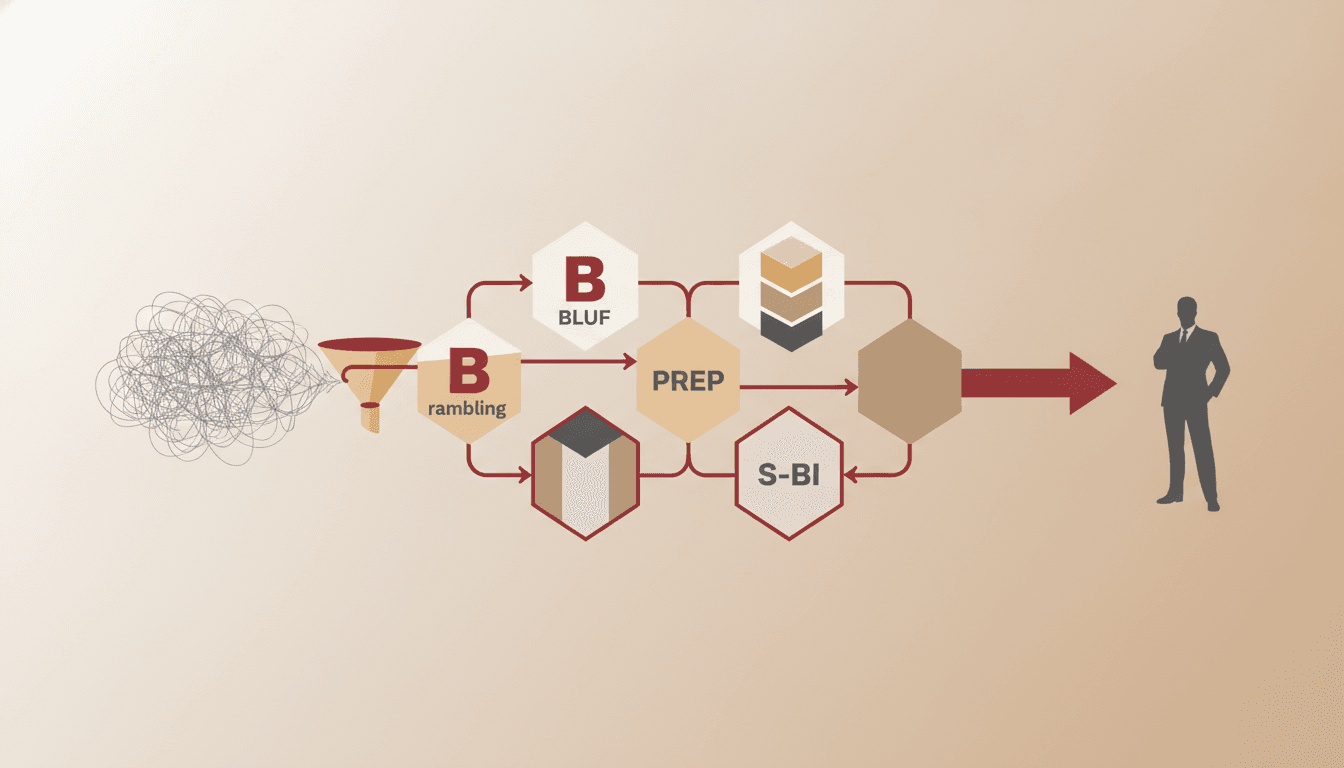
To speak concisely in meetings, use a structured communication framework that forces you to lead with your point and cut filler. The most effective approach is BLUF (Bottom Line Up Front): state your conclusion first, then provide only the supporting evidence your audience needs. Pair this with the PREP, SBI, What-So What-Now What, Rule of Three, and CEO frameworks outlined below to match any meeting scenario—from status updates to executive briefings.

How to Communicate With Confidence at Work: A Complete System

How to Communicate With Confidence at Work: A Complete System

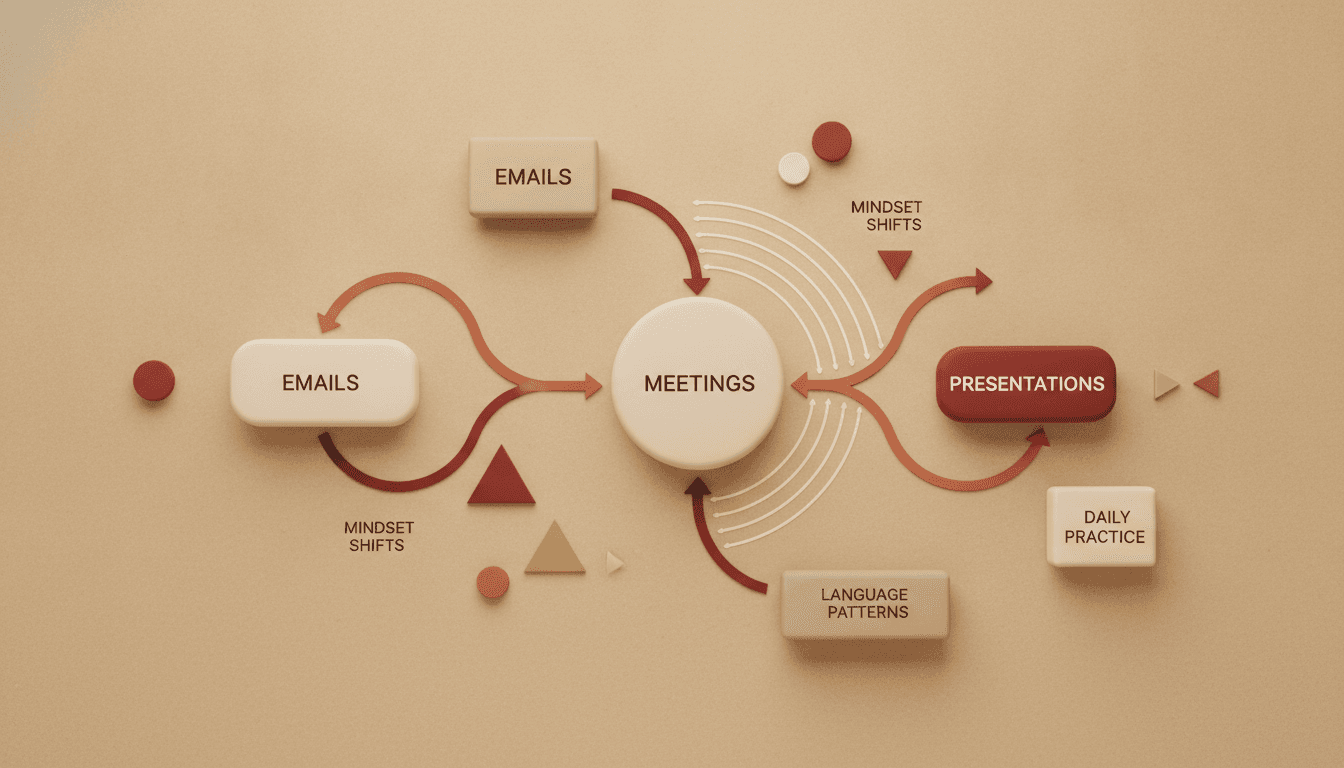
Communicating with confidence at work requires a systematic approach across four dimensions: mindset, language, delivery, and daily practice. Start by eliminating hedging words ("I just think," "sorry, but") from your vocabulary. Then adopt structured speaking frameworks like the Point-Reason-Example-Point method for meetings and presentations. Build a daily practice routine that includes vocal warm-ups, pre-meeting preparation, and post-interaction reflection. Confidence isn't a personality tra

Assertive Communication in Emails: 15 Before & After Examples

Assertive Communication in Emails: 15 Before & After Examples

Assertive communication in emails means replacing passive, hedging, or overly apologetic language with direct, respectful, and confident phrasing. Below, you'll find 15 real-world before-and-after email rewrites covering requests, pushback, deadline setting, escalation, and more—each showing exactly how to transform uncertain messages into credible, authoritative professional communication that gets results.

How to Be More Persuasive at Work: 7 Credibility-Based Tactics

How to Be More Persuasive at Work: 7 Credibility-Based Tactics

To be more persuasive at work, shift from pushing your ideas to building credibility that pulls people toward them. The most persuasive professionals use seven core tactics: the problem-cost-solution framework, evidence framing, strategic concession, authority signaling, stakeholder pre-alignment, reciprocity anchoring, and the credibility close. These approaches earn lasting buy-in from peers, leadership, and cross-functional teams—without manipulation or pressure.

How to Speak With Authority in a New Role (From Day 1)

How to Speak With Authority in a New Role (From Day 1)

To speak with authority in a new role, focus on five core areas from your very first day: use decisive language patterns that eliminate hedging, ask strategic questions that demonstrate your thinking, contribute early and concisely in meetings, anchor your statements in transferable expertise, and match your vocal delivery to your message. You don't need months of results to sound credible — you need the right communication framework from the start.

How to Communicate Bad News to Senior Leadership Well

How to Communicate Bad News to Senior Leadership Well

To communicate bad news to senior leadership effectively, lead with the headline—state the problem clearly in one sentence. Then follow a problem-impact-solution structure: explain what happened, quantify the business impact, and present your recommended path forward with alternatives. Control your delivery by staying calm, owning accountability without over-apologizing, and choosing language that signals competence. The goal is never to soften the truth—it's to deliver it in a way that preserve

How to Sound Authoritative in Conversations at Work

How to Sound Authoritative in Conversations at Work

To sound authoritative in conversations at work, focus on five core elements: lower your vocal pitch slightly at the end of sentences (avoid upspeak), eliminate hedging words like "just" and "I think," use declarative sentence structures, pause before responding instead of rushing to fill silence, and lead with your conclusion before supporting details. These shifts signal confidence and competence, making colleagues and leadership take your input more seriously in every interaction—from hallway

How to Communicate With Gravitas at Work: 8 Key Shifts

How to Communicate With Gravitas at Work: 8 Key Shifts

Communicating with gravitas at work means speaking with a deliberate blend of authority, composure, and substance that makes people stop and listen. It requires eight specific shifts: leading with your conclusion, eliminating hedging language, slowing your delivery, grounding your body language, using strategic silence, choosing precise words, anchoring claims in evidence, and holding your ground under pressure. These shifts transform you from someone who shares ideas into someone whose ideas sh

How to Communicate Without Being Emotional at Work

How to Communicate Without Being Emotional at Work

To communicate without being emotional at work, pause before responding (even 3–5 seconds counts), separate the facts of the situation from your feelings about it, and use structured frameworks like "Observation → Impact → Request" to keep your message clear. Emotional composure isn't about suppressing feelings—it's about choosing when and how they show up in your professional communication so your message lands with credibility, not reactivity.

How to Sound Competent at Work: 9 Proven Shifts

How to Sound Competent at Work: 9 Proven Shifts

To sound competent at work, replace hedging language with direct statements, lead with conclusions before context, and use precise data instead of vague qualifiers. Competence isn't just about what you know — it's about how you communicate what you know. Professionals who sound competent use shorter sentences, eliminate filler words, own their expertise without apologizing, and structure their ideas so others can follow immediately. These nine shifts will transform how colleagues, managers, and

How to Communicate With Confidence at Work: A Full Guide

How to Communicate With Confidence at Work: A Full Guide

Communicating with confidence at work requires deliberate shifts in your language, vocal delivery, body language, and mindset. Start by eliminating hedging phrases ("I just think," "I'm not sure, but..."), replacing them with direct statements. Ground your voice by breathing from your diaphragm, slowing your pace, and pausing before key points. Prepare talking points before meetings so you speak with structure, not stream-of-consciousness. Practice daily in low-stakes conversations, and build up

Someone Took Credit for Your Idea? How to Respond

Someone Took Credit for Your Idea? How to Respond

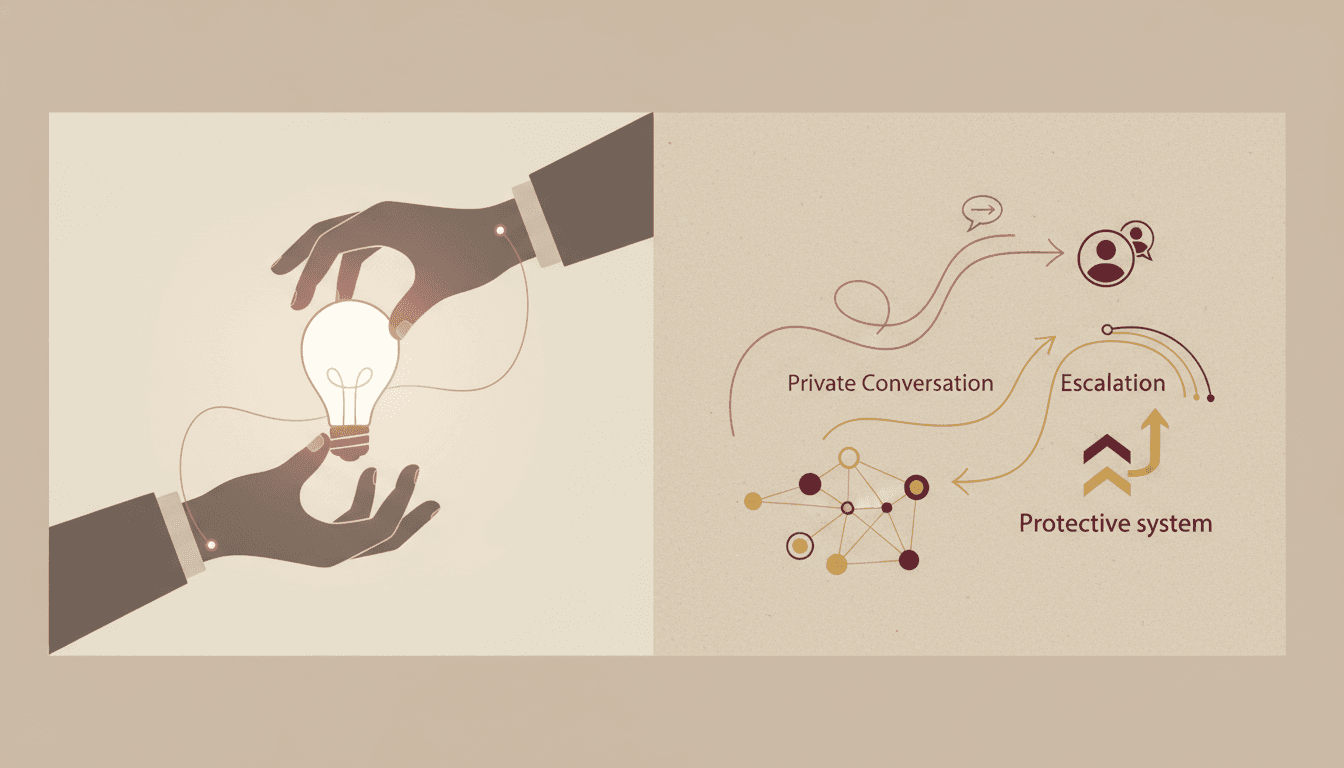
You're in a meeting when a colleague presents your idea as their own. Your stomach drops, your face heats up, and your mind races between outrage and self-doubt. This is one of the most common—and most damaging—workplace credibility threats professionals face. Here's exactly how to respond, whether it happens in real time or you discover it after the fact, without looking petty or insecure.

How to Communicate with Gravitas: A Practical Guide

How to Communicate with Gravitas: A Practical Guide

Communicating with gravitas means speaking with a combination of authority, composure, and intentional weight that makes people stop and listen. To develop it, focus on five core areas: choose precise, confident language; control your vocal delivery (pace, tone, pauses); regulate your emotions under pressure; use strategic silence instead of filling space; and anchor every statement in substance over style. Gravitas isn't about being loud—it's about being unmistakably credible every time you spe

How to Sound Authoritative: 9 Vocal & Language Shifts

How to Sound Authoritative: 9 Vocal & Language Shifts

To sound authoritative, focus on nine specific shifts: lower your pitch at the end of sentences, eliminate filler words, use the strategic pause, speak at a measured pace, project from your diaphragm, replace hedging language with declarative statements, use precise numbers instead of vague qualifiers, structure thoughts before speaking, and match your body language to your words. These vocal and language changes signal confidence, competence, and credibility — without sounding aggressive.

Stop Hedging Language at Work: Speak With Certainty

Stop Hedging Language at Work: Speak With Certainty

To stop hedging language at work, identify your most-used qualifier phrases — like "I just think maybe," "I could be wrong, but," and "sort of" — and replace them with direct, declarative alternatives. Start by auditing your speech and emails for one week, tracking every hedge word you use. Then practice specific replacement phrases daily until direct language becomes your default. Most professionals can dramatically reduce hedging within 30 days using a structured awareness-and-replacement meth

How to Present Ideas Without Getting Dismissed at Work

How to Present Ideas Without Getting Dismissed at Work

To present ideas without getting dismissed at work, lead with the problem your idea solves (not the idea itself), anchor your proposal in data or evidence, align your framing with stakeholder priorities, and use confident vocal delivery—slower pace, downward inflections, and strategic pauses. Follow up in writing to create a paper trail that ensures your contribution is remembered and credited. Timing and format matter as much as the idea itself.

How to Sound Confident in a Debate: 9 Pro Tactics

How to Sound Confident in a Debate: 9 Pro Tactics

To sound confident in a debate, focus on three pillars: vocal control, argument structure, and emotional composure. Slow your speaking pace by 10–15%, use downward vocal inflections to signal certainty, and lead every point with your strongest evidence. Pause before responding to challenges instead of rushing to defend. Confident debaters don't speak louder—they speak with more precision, structure, and calm. These nine tactics will help you project authority even when you feel the pressure risi

How to Speak With Authority in Meetings: 9 Key Shifts

How to Speak With Authority in Meetings: 9 Key Shifts

To speak with authority in meetings, make nine specific shifts: replace permission-seeking language with declarative statements, use strategic pauses instead of filler words, structure your points using the "claim-evidence-recommendation" framework, lower your vocal register, eliminate hedging phrases, lead with your conclusion, control your body language, speak in shorter sentences, and prepare your first sentence in advance. These shifts move you from sounding uncertain to commanding instant c

Words That Make You Sound Less Confident at Work

Words That Make You Sound Less Confident at Work

The words you choose in meetings, emails, and presentations either build your credibility or quietly dismantle it. Certain filler phrases — like "just," "I think," "sorry, but," "does that make sense?" and "I'm no expert, but" — signal uncertainty and invite others to question your authority. These linguistic hedges soften your message, shrink your presence, and train colleagues to overlook your contributions. Below, you'll find the most common confidence-killing words, why they undermine you, a

Communicate With Confidence at Work: Daily Habits That Stick

Communicate With Confidence at Work: Daily Habits That Stick

Learning how to communicate with confidence at work starts with building small, repeatable daily habits rather than waiting for a personality overhaul. The most impactful habits include replacing hedging language with direct statements, preparing a "lead with the point" structure before every meeting, using deliberate pauses instead of filler words, and practicing the 24-hour assertion cycle—where you commit to one clear, confident communication act each day. These habits compound over weeks, re

How to Communicate With Gravitas: 8 Daily Practices

How to Communicate With Gravitas: 8 Daily Practices

To communicate with gravitas, practice these eight daily habits: slow your delivery, choose precise language, eliminate hedging words, manage emotional reactivity, use purposeful silence, lead with conclusions, anchor your body language, and prepare your key messages in advance. Gravitas isn't a personality trait — it's a communication discipline. Professionals who develop it are perceived as more credible, more competent, and more worthy of leadership roles.

How to Sound Authoritative in Meetings: 9 Subtle Shifts

How to Sound Authoritative in Meetings: 9 Subtle Shifts

To sound authoritative in meetings, focus on nine subtle shifts: eliminate hedging language ("I think maybe" → "My recommendation is"), lower your vocal pitch at the end of sentences, use strategic pauses instead of filler words, lead with your conclusion before your reasoning, hold steady eye contact, speak 10–15% slower than feels natural, claim physical space with open posture, use decisive sentence structures, and deploy silence after your key points. These shifts signal confidence and comma

Professional Communication Tips for Managers Who Lead

Professional Communication Tips for Managers Who Lead

The professional communication tips that separate respected managers from average ones come down to six core habits: leading with clarity over detail, framing feedback around behavior rather than character, adapting your communication style when speaking upward versus downward, mastering the strategic pause, writing with executive brevity, and building psychological safety through how you listen—not just what you say. Below, you'll find the specific frameworks and techniques for each.

Other topics