Professional Communication

Frameworks and word-for-word examples for the everyday communication that shapes how colleagues judge you: emails that get answered, updates that land, and conversations that stay on track.

94 articles

Professional Communication, page 4

How to Sound More Strategic at Work: 9 Language Shifts

How to Sound More Strategic at Work: 9 Language Shifts

To sound more strategic at work, replace tactical, task-focused language with big-picture framing. Instead of saying "I finished the report," say "I completed the competitive analysis to inform our Q3 positioning." Strategic communicators consistently connect their work to business outcomes, use forward-looking language, reference data, and frame decisions in terms of trade-offs and priorities rather than to-do lists. These nine language shifts will reposition you as a strategic thinker in meeti

How to Speak Up in Meetings When Nervous: A Framework

How to Speak Up in Meetings When Nervous: A Framework

You already know what you want to say. The insight is there, the answer is ready — but the moment the conversation opens up, something locks. Your throat tightens, your heart rate spikes, and the window closes before you speak. To speak up in meetings when nervous, use a three-phase framework: prepare anchor statements before the meeting, enter the conversation through low-risk contributions first (like asking a clarifying question), and progressively escalate to higher-stakes contributions as y


How to Sound Credible in Meetings: 9 Proven Shifts

How to Sound Credible in Meetings: 9 Proven Shifts

To sound credible in meetings, replace hedging language with direct statements, structure your points using a clear framework (like lead-with-the-conclusion), ground opinions in data, and use deliberate pacing instead of rushing. Credibility isn't about being the loudest voice — it's about verbal precision, confident framing, and consistent delivery patterns that signal authority every time you speak.

How to Develop a Commanding Voice at Work: Vocal Techniques

How to Develop a Commanding Voice at Work: Vocal Techniques

To develop a commanding voice at work, focus on five core vocal mechanics: diaphragmatic breath support, lower pitch placement, deliberate pacing, strategic pausing, and chest resonance. These aren't personality traits — they're trainable skills. With 10-15 minutes of daily practice, most professionals notice a measurable difference in how colleagues respond to their voice within two to three weeks.

12 Weak Communication Habits That Undermine Your Credibility

12 Weak Communication Habits That Undermine Your Credibility

Weak communication habits at work — like hedging language, upspeak, over-apologizing, and passive phrasing — silently erode your professional credibility even when your ideas are strong. Research from the Harvard Business Review shows that how you communicate accounts for a significant portion of how competent others perceive you to be. The good news: these habits are fixable. Below, you'll find the 12 most damaging weak communication habits at work, why each one undermines your authority, and t

How to Speak With Authority in a Group: 7 Key Shifts

How to Speak With Authority in a Group: 7 Key Shifts

To speak with authority in a group, make seven deliberate shifts: replace hedging language with decisive statements, lower your vocal pitch at the end of sentences, pause before key points instead of rushing, claim physical space with open body language, time your contributions strategically, structure your ideas before speaking, and use specifics instead of generalities. These shifts change how others perceive your competence, confidence, and credibility — often within a single meeting.

Confident Communication Style: A Framework for Leaders

Confident Communication Style: A Framework for Leaders

A confident communication style is the combination of language choices, vocal delivery, body language, and conversational structure that signals authority and credibility in professional settings. It's not about being the loudest person in the room — it's about speaking with clarity, conviction, and composure. This framework breaks down the specific elements of confident communication and gives you a diagnostic tool plus actionable shifts you can implement in your next meeting, email, or present

How to Sound Confident in Emails: 9 Proven Techniques

How to Sound Confident in Emails: 9 Proven Techniques

To sound confident in emails, eliminate hedging language ("I just wanted to…," "I think maybe…"), use direct sentence structures, lead with your main point, and choose decisive verbs. Confident emails are shorter, clearer, and structured around action — not apology. The techniques below will show you exactly how to rewrite tentative emails into messages that project authority, credibility, and leadership presence every time you hit send.

Power Language at Work: Phrases That Build Credibility

Power Language at Work: Phrases That Build Credibility

Power language at work refers to the deliberate choice of words and phrases that project confidence, authority, and competence in professional settings. Instead of saying "I just wanted to check in," you say "I'm following up on our timeline." Instead of "I think maybe we could," you say "I recommend we." These small language swaps eliminate hedging, reduce filler, and signal leadership presence—in emails, meetings, presentations, and negotiations. This guide gives you the exact phrases to use a

How to Sound More Authoritative: 9 Proven Vocal Shifts

How to Sound More Authoritative: 9 Proven Vocal Shifts

To sound more authoritative, focus on nine specific vocal shifts: lower your pitch at the end of sentences, slow your speaking pace by 10–15%, use strategic pauses before key points, eliminate filler words, increase your volume slightly, speak in shorter declarative sentences, ground your breath in your diaphragm, avoid upspeak, and practice vocal resonance. These changes are learnable and create an immediate difference in how others perceive your credibility and competence.

How to Sound Authoritative: 9 Habits That Earn Respect

How to Sound Authoritative: 9 Habits That Earn Respect

To sound authoritative in professional settings, focus on nine core habits: lower your vocal pitch at the end of sentences, eliminate filler words, use declarative statements, pause before responding, speak at a measured pace, choose precise language, lead with conclusions, maintain steady eye contact, and frame opinions as informed positions. These vocal, linguistic, and behavioral habits signal competence and command respect — even before people evaluate the substance of what you're saying.

How to Speak Concisely at Work: The Clarity Framework

How to Speak Concisely at Work: The Clarity Framework

To speak concisely at work, lead with your main point first (bottom-line-up-front), structure supporting details using the rule of three, and cut filler words ruthlessly. The most respected communicators in any workplace share one trait: they say more by saying less. This article gives you a proven Clarity Framework — including specific techniques, before/after examples, and daily practice methods — so every word you speak earns attention and respect.

How to Stop Using Filler Words in Professional Speaking

How to Stop Using Filler Words in Professional Speaking

To stop using filler words in professional speaking, you need to first identify your specific filler patterns (um, uh, like, so, basically), then systematically replace them with intentional pauses. The most effective approach combines self-awareness through recording, deliberate pause practice, and structured speaking exercises over a 30-day period. Confident pauses signal authority, while filler words signal uncertainty — and research shows listeners perceive speakers who pause intentionally a

How to Be More Assertive in Meetings (Without Being Aggressive)

How to Be More Assertive in Meetings (Without Being Aggressive)

To be more assertive in meetings, prepare two to three key points before every meeting, use direct language ("I recommend" instead of "I think maybe"), hold the floor calmly when interrupted, and anchor your ideas in evidence. Assertiveness is not about volume or dominance — it's about expressing your perspective clearly, confidently, and respectfully. The techniques below will help you speak up, get heard, and influence outcomes without crossing into aggression.

Assertive Communication at Work: Scripts & Frameworks

Assertive Communication at Work: Scripts & Frameworks

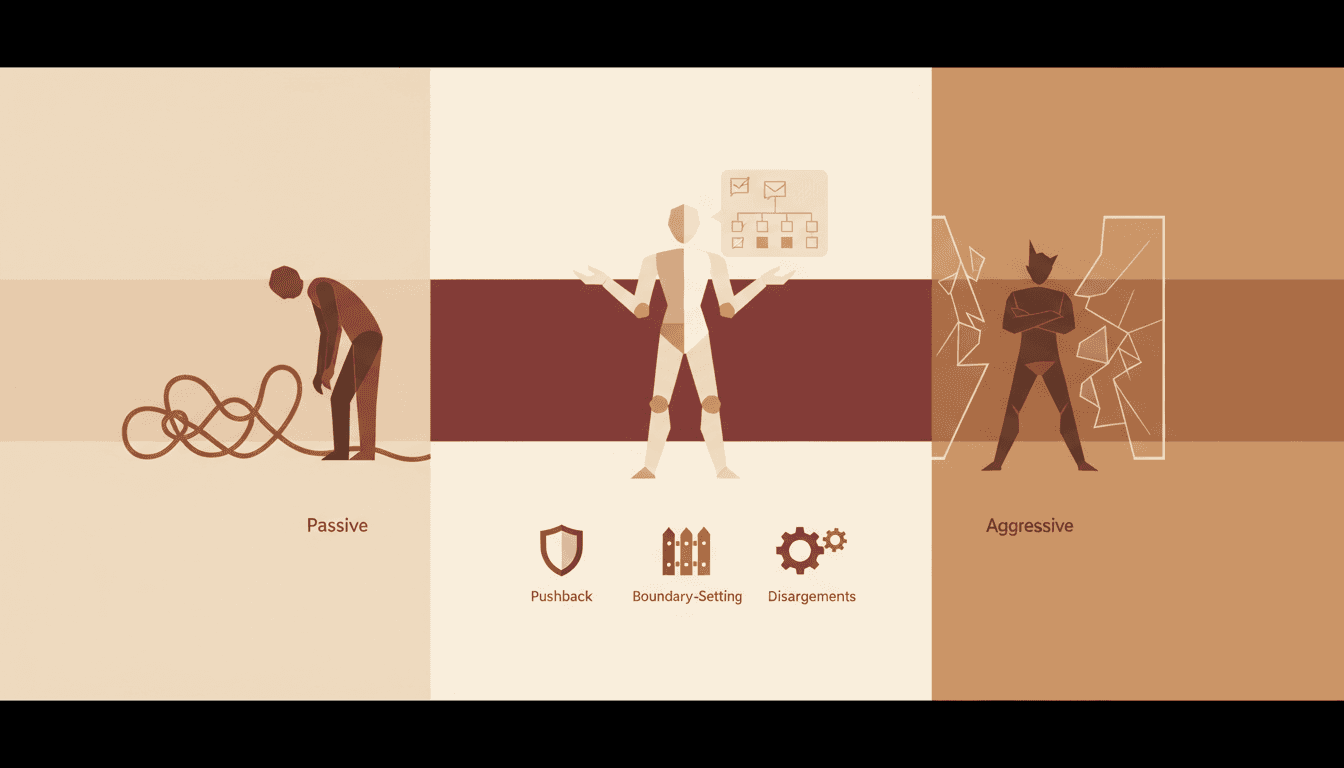
Assertive communication in the workplace is the ability to express your ideas, needs, and boundaries clearly and respectfully — without being passive or aggressive. It sits at the midpoint of the communication spectrum: you advocate for yourself while honoring others. This article gives you a precise framework (the DEAR method), ready-to-use scripts for common scenarios like pushback, boundary-setting, and disagreeing with superiors, and the research-backed reasons assertiveness is the single mo

Credibility in Communication: The 5 Pillars of Authority

Credibility in Communication: The 5 Pillars of Authority

Credibility in communication is built on five core pillars: competence signaling, consistency, confidence cues, connection, and character. When professionals master these pillars, they stop being overlooked and start being heard. Each pillar works together to create a commanding presence that earns trust in emails, meetings, presentations, and negotiations. Below, you'll find a complete framework with specific techniques you can implement today to build lasting authority in every professional in

Other topics