
Personal Brand Statement for Work: Templates & Examples

A personal brand statement for work is a concise, 1-2 sentence declaration that communicates your unique professional value—who you help, how you help them, and what makes your approach distinct. Unlike a LinkedIn headline, it's designed for everyday workplace use: team introductions, performance reviews, stakeholder meetings, and hallway conversations. Below, you'll find fill-in templates, before-and-after examples across industries, and a step-by-step method for crafting one that feels natural—not scripted.
What Is a Personal Brand Statement for Work?
A personal brand statement for work is a clear, memorable articulation of your professional identity that you use inside your organization—not just on social media profiles. It answers three questions in one or two sentences: What do you do? Who benefits? What's the distinct result you deliver?
Think of it as your internal reputation, distilled into words. While a LinkedIn personal brand statement is designed for external audiences, your workplace version is built for the people who already see you every day but may not fully understand the value you bring.
Why You Need a Personal Brand Statement at Work (Not Just on LinkedIn)
The Visibility Problem Most Professionals Face

Here's a hard truth: doing great work isn't enough. A 2023 study by Gartner found that only 33% of employees feel their contributions are visible to leadership. That means two-thirds of professionals are doing valuable work that decision-makers don't fully see or understand.
A personal brand statement solves this by giving you a consistent way to frame your contributions. When your manager asks "What does your team actually do?" or a VP asks you to introduce yourself in a cross-functional meeting, you need a clear, confident answer—not a rambling job description.
How It Differs from Your Job Title
Your job title tells people your rank. Your personal brand statement tells people your impact. Consider the difference:
- Job title: "Senior Data Analyst"
- Brand statement: "I turn messy operational data into dashboards that help leadership make faster decisions—our team cut reporting time by 40% last quarter."
The first is forgettable. The second is memorable, specific, and positions you as someone who drives results. This kind of clarity is foundational to building professional credibility at work.
The Career Impact of a Clear Professional Identity
According to a 2022 LinkedIn Workforce Confidence survey, professionals who actively manage their personal brand are 70% more likely to feel confident about their career trajectory. Internally, a clear brand statement helps you:
- Get considered for stretch assignments and promotions
- Be remembered after cross-departmental meetings
- Align your manager's perception of you with your actual contributions
- Communicate your value during performance reviews without sounding like you're bragging
If self-promotion feels uncomfortable, you're not alone. Our guide on personal branding if you hate self-promotion covers how to share your value authentically.
The 4-Part Framework for Crafting Your Statement
Use this framework—Role + Audience + Method + Result (RAMR)—to build a personal brand statement that's specific, credible, and natural-sounding.
Part 1: Role — Define What You Actually Do (Not Your Title)
Start by describing your function in plain language. Avoid jargon and corporate titles. Ask yourself: "If I had to explain my work to a smart 12-year-old, what would I say?"
Prompts to uncover your role:- What problems land on my desk?
- What would break or slow down if I disappeared for a month?
- What do colleagues come to me for most often?
Part 2: Audience + Method — Who You Serve and How
Next, specify who benefits from your work and what your distinct approach looks like. This is where your statement becomes differentiated.
Template: "I help [specific audience] by [specific method/approach]." Examples:- "I help product teams make faster launch decisions by translating customer research into clear, visual summaries."
- "I help new managers build confidence by coaching them through their first difficult conversations."
Part 3: Result — Anchor It in Outcomes
The result is what makes your statement credible. Use numbers when possible, but qualitative outcomes work too.
Weak: "I help improve team performance." Strong: "I help regional sales teams hit quota consistently—my last two teams exceeded targets by 15% and 22%."According to research published in the Harvard Business Review (2021), professionals who frame their contributions in terms of measurable outcomes are perceived as 35% more competent by peers and leadership than those who describe activities alone.
Part 4: Assemble and Edit for Natural Delivery
Now combine the parts. Your goal is a statement that's 15-35 words—short enough to say in a single breath, long enough to be meaningful.
Assembly template:"I [what you do] for/with [who you serve] by [your approach], which [result/outcome]."
Then read it aloud. If it sounds like a press release, cut the formal language. If it sounds like a humble-brag, add specificity. The best statements feel like something you'd say naturally in a one-on-one conversation.
Fill-In Templates for Every Career Stage
Template for Individual Contributors
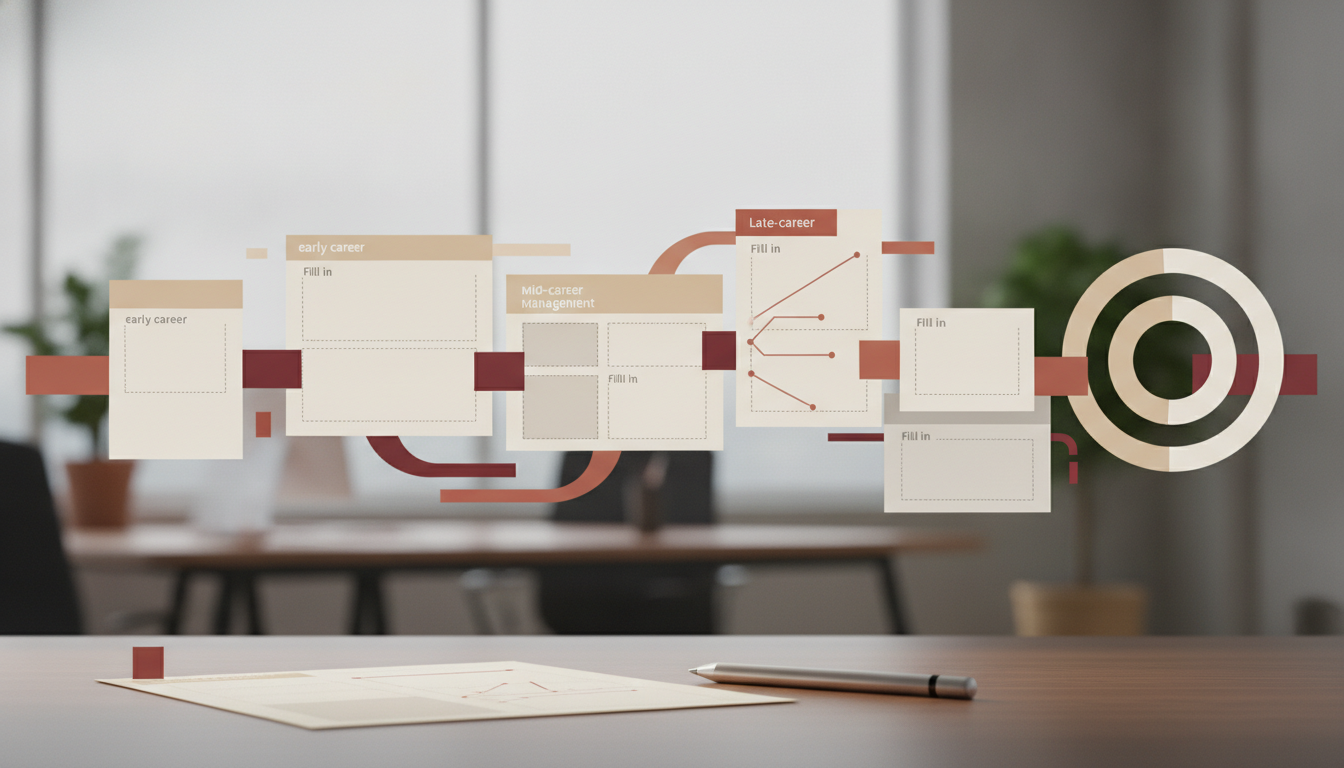
Template for Mid-Level Managers
Template: "I lead [team/function] and my focus is [core priority]. I do this by [approach], and the result is [measurable outcome]." Example (Engineering Manager): "I lead the platform reliability team, and my focus is making sure our systems stay up during peak traffic. I do this by building a culture of proactive monitoring—we've reduced critical incidents by 60% in 18 months."Template for Senior Leaders and Executives
Template: "I [strategic function] across [scope]. My approach is [philosophy/method], which drives [business outcome]." Example (VP of People Operations): "I build the talent systems that help us scale without losing culture. My approach is treating every people process as a product—designed, tested, and iterated. That's helped us cut regrettable attrition by 25% over two years."For more on positioning yourself at the executive level, see our guide on how to position yourself for a VP role.
Template for Career Changers or New Roles
Template: "I bring [transferable skill/experience] from [previous context] to [new role/industry]. I'm focused on [current priority], and I've already [early win]." Example (Former Teacher → Corporate L&D Specialist): "I bring 10 years of designing learning experiences for tough audiences—teenagers—into corporate training. I'm focused on making our onboarding program more interactive, and I've already cut new-hire ramp time by two weeks."For a deeper dive on building credibility during transitions, check out our personal brand for a new industry guide.
Before-and-After Examples Across Industries
Let's look at real transformations. Each "before" reflects how most professionals default to describing themselves. Each "after" applies the RAMR framework.
Finance
Before: "I'm a Financial Analyst at a mid-size firm. I do forecasting and budgeting." After: "I build the financial models that help our leadership team decide where to invest next. Last year, my forecasts helped us reallocate $2M toward our fastest-growing product line—three months before competitors caught on."Healthcare Administration
Before: "I manage operations for a hospital network." After: "I streamline how our 12-hospital network runs day-to-day so clinicians can spend more time with patients. My team reduced administrative processing time by 35%, which freed up over 200 hours of clinical time per month."Technology / Product
Before: "I'm a Product Manager working on our enterprise platform." After: "I translate what our biggest enterprise customers need into product features that actually get adopted. My last three feature launches had 80%+ adoption within 60 days—double our historical average."Human Resources
Before: "I work in HR. I handle employee relations and compliance." After: "I'm the person leaders call when a team conflict is about to derail a project. I specialize in resolving sensitive workplace issues quickly and fairly—last year I resolved 90% of escalated cases without formal grievance proceedings."Notice the pattern: every strong statement includes a specific result and positions the person as someone who solves a real problem. A 2024 survey by CareerBuilder found that 82% of hiring managers and internal decision-makers say they're more likely to advocate for someone who can clearly articulate their professional value.
How to Use Your Brand Statement Without Sounding Rehearsed
Weave It Into Existing Conversations
The biggest mistake people make is treating their brand statement like a speech. Instead, use it as a source for natural conversation moments:
- In a team meeting intro: "For those who don't know me, I work on the ops side—my focus is making sure our supply chain runs smoothly even when demand spikes."
- During a performance review: "The throughline of my work this year has been reducing friction for the sales team. Here's what that looked like..."
- At a company event: "I'm on the data team. Basically, I'm the person who turns our customer feedback into something the product team can actually act on."
You don't recite the statement word-for-word. You draw from it based on context. For more on communicating with this kind of natural authority, see our framework on how to communicate with authority at work.
Adapt It for Different Audiences
Your brand statement should flex depending on who you're talking to:
- To a peer: Emphasize your method and what you're working on now.
- To a senior leader: Lead with the business result and keep it concise.
- To a new team member: Focus on how your role connects to theirs.
This adaptability is what separates a living brand from a stale elevator pitch.
Reinforce It Through Actions, Not Just Words
A brand statement only works if your behavior matches it. If you claim to be "the person who simplifies complex problems," but your emails are 800-word walls of text, there's a disconnect.
Reinforce your brand through:
- How you run meetings (see leadership presence in meetings)
- How you write emails (short, clear, action-oriented)
- How you respond under pressure (calm, structured, solution-focused)
- What you volunteer for (projects that align with your stated expertise)
According to a 2023 Edelman Trust Barometer report, 63% of professionals say consistency between what someone says and what they do is the single biggest factor in whether they find that person credible. Your brand statement sets the expectation. Your daily behavior delivers on it.
Build the Full Credibility System Your brand statement is the tip of the iceberg. Discover The Credibility Code for the complete framework—voice, presence, communication habits—that makes your professional identity impossible to overlook. Discover The Credibility Code
Frequently Asked Questions
How long should a personal brand statement for work be?
Aim for 15-35 words, or 1-2 sentences. It should be short enough to say in a single breath during a meeting introduction. If you can't say it naturally in conversation, it's too long. Write a longer version first, then cut ruthlessly until only the most specific, impactful words remain.
What's the difference between a personal brand statement and an elevator pitch?
An elevator pitch is designed for external audiences—networking events, job interviews, or cold introductions. It often includes your name, company, and a call to action. A personal brand statement for work is designed for internal use: team meetings, performance reviews, and stakeholder conversations where people already know your name but may not understand your value. For crafting the external version, see our personal brand elevator pitch examples.
Can I have more than one personal brand statement?
Yes, but they should share a common core. Think of it as one foundational message with 2-3 variations tailored to different audiences. Your statement for your direct team might emphasize day-to-day contributions, while the version for senior leadership should emphasize strategic outcomes. The underlying value proposition stays the same.
How often should I update my personal brand statement?
Revisit it every 6-12 months, or whenever you change roles, take on a major project, or shift your career focus. Your brand should evolve as your skills and impact grow. A statement from two years ago probably doesn't capture what you're doing today.
How do I write a personal brand statement if I'm new to a role?
Focus on what you bring from your previous experience and your early priorities in the new role. Use the career changer template above. For a complete strategy, our personal brand for a new senior hire: 30-day plan walks you through establishing your identity from day one.
Is a personal brand statement the same as a value proposition?
They're closely related. A value proposition is typically used in marketing to describe a product or service's unique benefit. A personal brand statement applies the same concept to you—it communicates your unique professional benefit. The key difference is audience: your workplace brand statement is designed for colleagues and leadership, not customers.
Make Your Expertise Obvious in the First Minute
The Credibility Code helps you describe your work with clarity and authority, whether you are introducing yourself, interviewing, or presenting.
Discover The Credibility CodeRelated Articles

Personal Brand for Career Growth: A Strategic Framework
A personal brand for career growth is the intentional alignment of your expertise, communication style, and professional visibility so that decision-makers consistently associate you with the right capabilities. It's not about self-promotion—it's about strategic positioning. The most effective personal brands are built on narrative consistency, credibility signals, and deliberate visibility in the moments that shape career trajectories. This framework shows you exactly how to design and communic

Personal Brand Statement for LinkedIn: Formula + Examples
A personal brand statement for LinkedIn is a concise, compelling declaration—typically one to three sentences—that communicates who you are, who you help, and the unique value you bring. The best formula follows this structure: "I help [target audience] achieve [specific outcome] through [your unique approach/expertise]." For example: "I help SaaS companies reduce churn by 30%+ through data-driven customer success strategies." Below, you'll find a step-by-step formula, 12 industry-specific examp

Build Your Personal Brand at Work Internally: 7 Steps
Building your personal brand at work internally means strategically shaping how colleagues, managers, and senior leaders perceive your expertise, reliability, and value—without relying on social media or external platforms. It requires intentional visibility, consistent contribution in meetings and cross-functional projects, stakeholder relationship mapping, and aligning your reputation with organizational priorities. The seven steps below give you a concrete system for becoming the recognized g