
How to Answer Questions You Don't Know (Without Faking)

When you're asked a question you can't fully answer—in a meeting, presentation, or interview—use the Acknowledge-Bridge-Commit method: briefly acknowledge what you don't know, bridge to what you do know or what's relevant, then commit to a specific follow-up action with a timeline. This approach preserves your credibility because it shows intellectual honesty, strategic thinking, and accountability. The worst thing you can do is bluff—audiences detect it faster than you think.
What Does It Mean to Answer a Question You Don't Know?
Answering a question you don't know is the skill of responding to unexpected, unfamiliar, or ambiguous questions in professional settings without fabricating information, losing composure, or undermining your authority. It's a core competency of executive communication.
This isn't about having a clever dodge or a rehearsed deflection. It's about demonstrating the kind of intellectual honesty and composure that actually increases trust. According to a 2023 study published in the Journal of Experimental Psychology, people who admitted uncertainty were rated as more credible and more competent than those who provided confident but vague answers.
Why Most Professionals Get This Wrong
The Bluffing Trap

The instinct to bluff is powerful. You're standing in front of your leadership team, someone asks a pointed question about market data you haven't reviewed, and your brain screams: Say something. Anything. Don't look incompetent.
So you improvise. You offer a half-answer wrapped in confident-sounding language. And here's the problem—it almost always backfires.
Research from Harvard Business School found that listeners detect low-confidence bluffing approximately 60% of the time, even when the speaker appears outwardly composed. The tells are subtle: hedging language, eye-contact avoidance, vague qualifiers. Your audience may not call you out in the moment, but your credibility takes a silent hit.
If you find yourself frequently sounding uncertain at work, the solution isn't to fake certainty—it's to master the art of honest, authoritative responses.
The Over-Apologizing Trap
The opposite extreme is equally damaging. Some professionals default to excessive apology: "I'm so sorry, I really should know this, I don't have that information, I apologize..."
This signals submission, not honesty. There's a critical difference between transparency and self-deprecation. Transparency builds trust. Self-deprecation erodes authority.
A 2022 survey by the Center for Talent Innovation found that 67% of senior leaders said "composure under uncertainty" was one of the top three qualities they looked for when evaluating someone's readiness for promotion. Over-apologizing signals the opposite of composure.
The Rambling Trap
The third common mistake is filling silence with words. When you don't know the answer, the temptation is to talk around the question—offering tangentially related information, restating the question, or launching into a story that doesn't actually address what was asked.
This is what separates professionals who command a room when presenting from those who lose the room. Rambling doesn't buy you time. It costs you attention.
The Acknowledge-Bridge-Commit (ABC) Framework
This is the single most effective method for handling questions you can't fully answer. It works in meetings, presentations, interviews, and one-on-one conversations with senior leaders.
Step 1: Acknowledge (2-3 Seconds)
State clearly and briefly that you don't have the specific information. No apology. No filler. Just a direct, calm acknowledgment.
Scripts you can use:- "I don't have that specific data in front of me."
- "That's outside my area of direct expertise."
- "I haven't reviewed the latest numbers on that."
- "I want to give you an accurate answer, and I don't have it right now."
Notice what these scripts share: they're specific about what you don't know. They don't say "I don't know"—which sounds like a dead end. They say "I don't have that specific thing"—which sounds like a professional who knows the boundaries of their current information.
Step 2: Bridge (10-20 Seconds)
Redirect to something you do know that's relevant, or reframe the question toward a productive direction. This is where your expertise shows.
Bridge phrases:- "What I can tell you is..."
- "Based on what I've seen so far..."
- "The related data I do have suggests..."
- "Here's what I know that's relevant to your question..."
Instead of guessing: "I don't have the enterprise segment broken out separately right now. What I can tell you is that our overall churn dropped 12% this quarter, and the enterprise team has flagged retention as a strength. Let me get you the segmented data by end of day tomorrow."
That response demonstrates awareness, provides useful context, and moves forward with authority.
Step 3: Commit (5-10 Seconds)
Make a specific, time-bound commitment to follow up. This is the step most people skip—and it's the step that transforms "I don't know" from a credibility gap into a credibility builder.
Strong commitments sound like:- "I'll have that to you by 3 PM today."
- "I'll send a follow-up email with the exact figures by tomorrow morning."
- "Let me connect with [specific person] and circle back to you by Friday."
- "I'll look into it." (When? How?)
- "I'll try to find out." ("Try" signals uncertainty.)
- "I'll get back to you on that." (No timeline, no accountability.)
The specificity of your commitment directly correlates with how much credibility you retain. And then—this is critical—you must actually follow through. A broken commitment after an "I don't know" moment is worse than the original gap.
Advanced Techniques for Specific Situations
Handling Tough Questions in Presentations
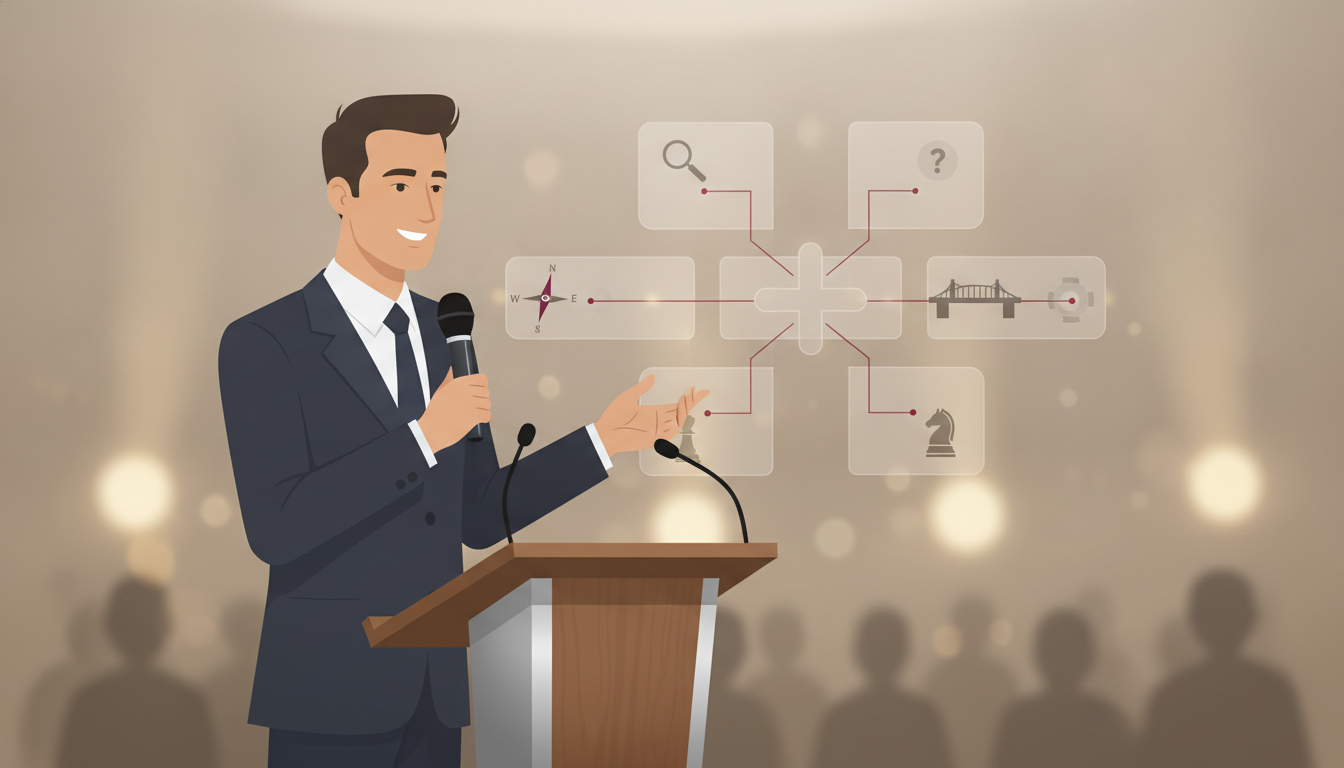
Presentations create unique pressure because you have an audience watching you navigate uncertainty in real time. According to a Prezi survey, 70% of employed Americans say presentation skills are critical for career success—and Q&A is where most presenters lose their footing.
Here's a technique used by executive speakers: the "Park and Return" method.
When a question is too complex or too far outside your prepared material, say: "That's an important question and I want to give it the attention it deserves. Let me park that for now and come back to it after the presentation so I can give you a thorough answer."
This works because it reframes your delay as respect for the question's importance, not avoidance. For more on mastering the Q&A portion of any presentation, see our guide on how to handle Q&A after a presentation like a pro.
Handling Ambush Questions in Meetings
Sometimes the question isn't just something you don't know—it's something designed to test you or put you on the defensive. A colleague asks about a metric you're not responsible for. A senior leader probes an area you weren't prepared to discuss.
In these moments, the Reframe Technique is powerful:
- Pause for two seconds. (Silence signals confidence, not weakness.)
- Reframe the question to your area of strength. "The angle I can speak to directly is..."
- Offer to connect them with the right source. "For the specifics on that, [Name] would be the best person—I can set that up."
This is a hallmark of how executives think versus managers. Executives don't try to know everything. They know who knows what, and they direct traffic efficiently.
If you frequently find yourself caught off guard in meetings, our article on how to respond when put on the spot at work provides six additional scripts you can adapt.
Handling Knowledge Gaps in Job Interviews
Interviews are high-stakes because the entire conversation is an evaluation. But here's what most candidates don't realize: interviewers expect you won't know everything. What they're evaluating is how you handle not knowing.
A 2021 LinkedIn Talent Solutions report found that 92% of hiring managers value soft skills—including communication under pressure—as much as or more than technical skills.
Interview-specific script: "I haven't worked with [specific technology/methodology] directly, but here's how I'd approach getting up to speed: [specific learning plan]. In my last role, I had a similar gap with [related area] and was fully operational within [timeframe]."This script works because it:
- Acknowledges the gap honestly
- Demonstrates a learning framework (which signals adaptability)
- Provides evidence of past success in closing gaps
For more on projecting confidence in interview settings, see our guide on how to project confidence in a job interview.
The Body Language of "I Don't Know"
What Your Body Says When Your Words Are Honest
Your verbal response can be perfect, but if your body language screams discomfort, you'll still lose credibility. Here's what to do physically when you're delivering an "I don't know" response:
Do:- Maintain steady eye contact with the questioner
- Keep your hands visible and still (on the table or at your sides)
- Sit or stand with an open posture—shoulders back, chest open
- Nod slightly when acknowledging the question
- Pause before responding (1-2 seconds of intentional silence)
- Touch your face or neck (self-soothing signals anxiety)
- Break eye contact and look down (signals shame or submission)
- Cross your arms (signals defensiveness)
- Speed up your speech (signals panic)
- Shift your weight repeatedly (signals desire to escape)
Research from UCLA professor Albert Mehrabian's widely cited communication studies suggests that nonverbal cues carry significant weight in how messages are perceived—particularly in moments of ambiguity. When your words say "I'm confident in what I know and honest about what I don't," your body needs to say the same thing.
For a deeper dive into the physical dimension of authority, explore our guide on leadership presence body language cues that signal power.
The Power of the Strategic Pause
The most counterintuitive technique in this entire article: when you don't know the answer, slow down instead of speeding up.
Most people rush to fill the silence. Executives do the opposite. A two-second pause before responding communicates:
- "I'm thinking carefully about this."
- "I respect this question enough to consider my response."
- "I'm in control of this conversation."
Practice this: the next time someone asks you something you're unsure about, take a breath, count to two internally, and then begin your Acknowledge-Bridge-Commit response. The pause alone will change how your answer is received.
Build Unshakeable Communication Confidence If handling tough questions is just one area where you want more authority, The Credibility Code gives you a complete framework for every high-stakes professional scenario. Discover The Credibility Code
Building a Long-Term System for Fewer "I Don't Know" Moments
Anticipation Is the Best Preparation
The best communicators don't just handle unknown questions well—they reduce how often they face them. Before any meeting, presentation, or interview, run through what I call the "Hostile Question Audit":
- List the three hardest questions someone could ask you. Not the ones you hope for—the ones you dread.
- Prepare a bridging response for each. You don't need a full answer. You need a composed, credible response.
- Identify your knowledge boundaries. Know exactly where your expertise ends and who owns the information beyond that boundary.
This practice alone will eliminate 60-70% of "I don't know" moments because most tough questions are predictable. The remaining 30-40% is where the ABC framework becomes your safety net.
Building a Knowledge Network
Executives rarely say "I don't know" and leave it there. They say, "That's in Sarah's domain—let me connect you" or "Our analytics team tracks that—I'll pull their latest findings."
This isn't deflection. It's organizational intelligence. Build your knowledge network by:
- Knowing who owns what data in your organization
- Maintaining relationships with subject matter experts across departments
- Keeping a mental (or literal) map of "who knows what"
This is one of the key differentiators covered in our article on how to build authority in your career. Authority isn't knowing everything—it's knowing how to access everything.
The Follow-Through System
Remember: the Commit step of ABC only works if you actually follow through. Create a simple system:
- Immediately after the meeting, write down what you committed to, for whom, and by when.
- Set a calendar reminder 2 hours before your deadline.
- Deliver the follow-up in writing (email), referencing the original question: "Following up on your question about enterprise churn rates in today's review—here are the segmented numbers..."
This follow-through loop actually creates a net positive credibility effect. The person who didn't know the answer but delivered a thorough follow-up within 24 hours is often perceived as more reliable than the person who gave a quick, surface-level answer in the moment.
Frequently Asked Questions
How do you answer a question you don't know in an interview?
Use the Acknowledge-Bridge-Commit method adapted for interviews: honestly state you haven't worked with that specific area, bridge to a related skill or experience you do have, and describe how you'd close the gap. Interviewers are evaluating your self-awareness and learning agility more than your existing knowledge. Never bluff—experienced interviewers detect it immediately and it's far more damaging than an honest, composed response.
What should you say when you don't know the answer in a meeting?
Say something specific like, "I don't have that data in front of me, but here's what I can share that's relevant..." then commit to a follow-up with a clear timeline. Avoid vague phrases like "I'll look into it" or over-apologizing. The key is maintaining composure and offering a concrete next step. This approach signals professionalism and accountability rather than incompetence.
Admitting you don't know vs. faking an answer: which is better for credibility?
Admitting you don't know—when done with composure and a follow-up commitment—is significantly better for long-term credibility. Research from Harvard Business School shows listeners detect bluffing roughly 60% of the time. A single caught bluff can damage trust permanently, while a well-handled "I don't know" moment actually builds trust. The key difference is how you admit it: with authority, not apology.
How do executives handle questions they can't answer?
Senior executives typically use three strategies: they redirect to what they do know, they name the specific person or team who owns that information, or they reframe the question toward a strategic-level answer. They rarely apologize for not knowing, and they always commit to a specific follow-up action. This pattern reflects organizational intelligence—knowing how to access information is valued more than memorizing it.
How can I prepare for questions I might not know the answer to?
Before any high-stakes meeting or presentation, conduct a "Hostile Question Audit": list the three hardest questions you could be asked, prepare bridging responses for each, and identify where your knowledge boundaries are. Build a knowledge network so you always know who to reference. This preparation eliminates most surprise questions and gives you a composed fallback for the rest.
How do you handle follow-up questions after saying "I don't know"?
If someone presses further after your initial ABC response, stay calm and repeat the pattern at a deeper level: "I understand this is important—let me be precise about what I can confirm right now..." Then reinforce your commitment to follow up. Don't let pressure push you into guessing. Holding your ground with composure in this moment is one of the strongest credibility signals you can send.
Speak So the Room Takes You Seriously
The Credibility Code covers the verbal patterns that make presenters sound authoritative, and the ones that make audiences tune out.
Discover The Credibility CodeRelated Articles

How to Command a Room When Presenting: 8 Proven Methods
To command a room when presenting, master these eight techniques: own the space physically before you speak, open with a power move that disrupts expectations, use strategic silence instead of filler words, control vocal dynamics through pace and pitch variation, deploy purposeful eye contact patterns, structure your content with executive-level clarity, use spatial anchoring to reinforce key points, and close with a statement that lingers. Each method is trainable—and the difference between a f

How to Handle Q&A After a Presentation Like a Pro
To handle Q&A after a presentation like a pro, prepare for likely questions in advance, use a structured response framework (like the PREP method: Point, Reason, Example, Point), and maintain confident body language throughout. When you don't know an answer, say so honestly and offer to follow up. Set clear ground rules at the start of Q&A, repeat each question for the audience, and always end on your terms by closing with a prepared final statement that reinforces your core message.

How to Open a Presentation With Confidence: 8 Openers
The quickest way to open a presentation with confidence is to start with a pre-planned, rehearsed opener that immediately establishes your authority and captures attention. The eight most effective openers include a bold statement, a relevant statistic, a story, a provocative question, a quotation, a "what if" scenario, a contrarian claim, and a silence-then-speak technique. Choosing the right one depends on your audience, context, and the outcome you want to drive.