
How to Build Professional Credibility at Work: A Complete System
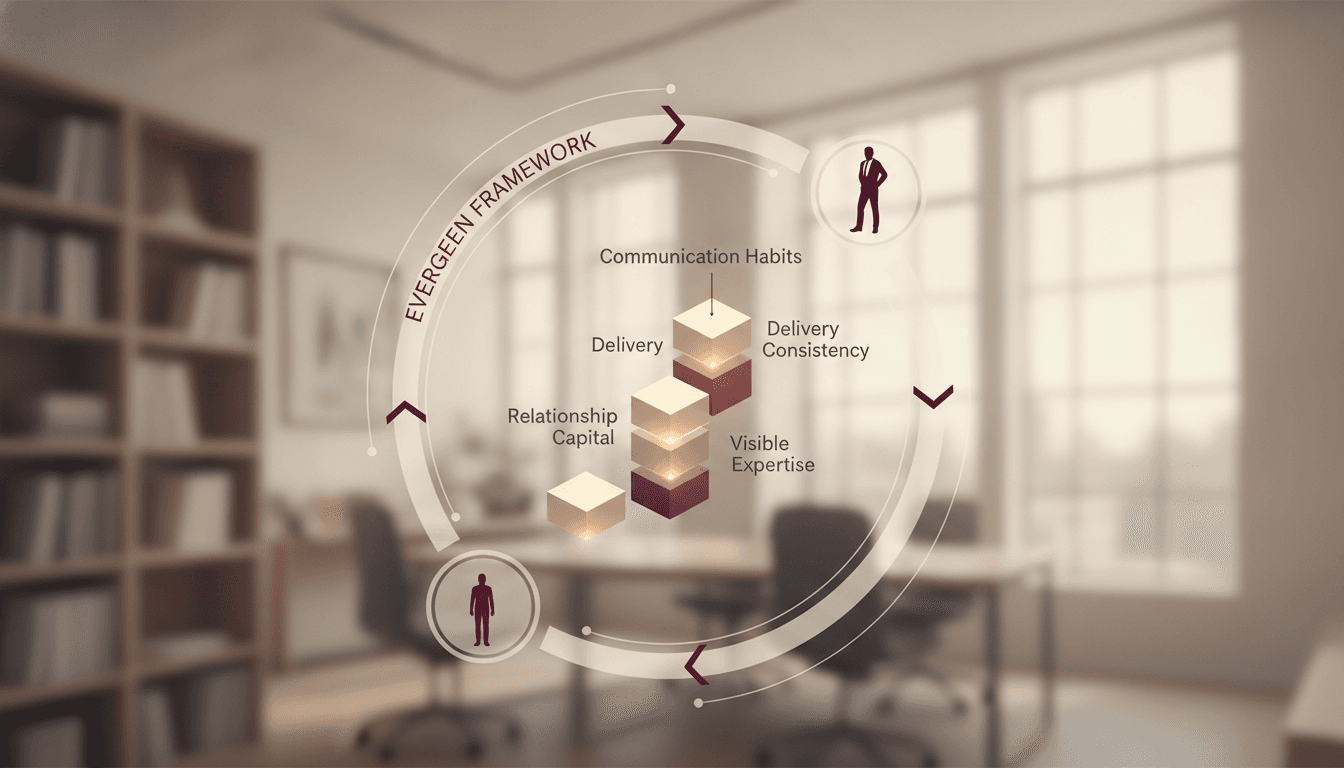
Building professional credibility at work requires a deliberate system across five dimensions: consistent delivery on commitments, strategic communication that signals competence, visible expertise through knowledge sharing, relationship capital built on trust, and a professional presence that commands respect. Credibility isn't a single achievement — it's a compound asset you build through daily habits, starting from your first week and evolving through every career stage.
What Is Professional Credibility?
Professional credibility is the degree to which colleagues, leaders, and stakeholders trust your competence, judgment, and reliability. It's the invisible currency that determines whether your ideas get adopted, your recommendations get funded, and your name surfaces in conversations about promotions.
Unlike reputation — which can be shaped by perception alone — credibility is rooted in evidence. It's built through a track record of delivering results, communicating with clarity, and consistently showing up as someone others can depend on. According to a 2023 study by Edelman, 81% of employees say that trust in leadership directly affects their engagement and willingness to follow direction — and that trust begins with individual credibility.
Why Professional Credibility Is the Foundation of Career Growth
Credibility Compounds Over Time

Think of credibility like a professional savings account. Every promise you keep, every meeting where you add insight, and every project you deliver on time makes a deposit. Every missed deadline, vague answer, or broken commitment is a withdrawal.
The professionals who advance fastest aren't always the smartest in the room. They're the ones whose track record makes others confident in backing them. A Harvard Business Review analysis found that managers rated as "highly credible" by their teams were 2.7 times more likely to be rated as high performers by their own leaders.
This compounding effect means that early investments in credibility pay exponential dividends. A director who spent three years building a reputation for precise, reliable analysis doesn't need to "prove herself" when she proposes a new initiative. Her credibility does the persuading.
What Happens When Credibility Is Missing
Without credibility, even brilliant ideas get dismissed. Consider this scenario: two managers propose the same cost-saving strategy in a leadership meeting. Manager A has a history of overpromising and delivering inconsistent results. Manager B consistently delivers on commitments and communicates proactively when challenges arise. Manager B's proposal gets the green light. Same idea, different credibility — different outcome.
If you've ever felt overlooked or underestimated at work, the root cause is often a credibility gap rather than a skills gap.
The 5-Pillar Credibility System
Building credibility isn't random. It operates across five distinct pillars, each reinforcing the others. Weakness in one pillar can undermine strength in the rest.
Pillar 1: Delivery Consistency
This is the bedrock. Nothing builds credibility faster than doing what you said you'd do, when you said you'd do it.
The 100% Follow-Through Rule: Track every commitment you make — in meetings, over email, in hallway conversations. Use a simple system: log the commitment, the person you made it to, and the deadline. Then deliver. Research from the Project Management Institute shows that organizations with high delivery consistency waste 28 times less money than those with poor follow-through. The same principle applies to individuals.Practical application: If you tell your VP you'll have the Q3 analysis ready by Thursday, it's ready by Thursday. If circumstances change, you communicate the revised timeline before the deadline passes — not after.
Pillar 2: Communication Authority
How you communicate signals your credibility before your results even speak. Hedging language, excessive qualifiers, and rambling answers all erode perceived competence.
The Clarity-First Framework:- Lead with the conclusion. State your recommendation or finding first, then provide supporting context.
- Use precise language. Replace "I think maybe we should consider" with "I recommend we proceed with Option B because..."
- Eliminate credibility-eroding words. Phrases like "just," "sort of," "I'm not sure but..." signal uncertainty. A study published in the Journal of Language and Social Psychology found that speakers who used fewer hedging words were rated as 32% more competent by listeners.
For a deeper dive into daily communication shifts that build authority, explore our guide on how to speak with authority at work.
Pillar 3: Visible Expertise
Credibility requires that people know what you're good at. Quiet competence is admirable, but invisible competence doesn't build career capital.
The Expertise Visibility Matrix:- Internal visibility: Volunteer to present findings at team meetings. Offer to lead the onboarding session for your domain. Write the internal wiki page that becomes the reference document.
- Cross-functional visibility: Join project teams outside your immediate group. When you solve a problem, share the methodology — not just the outcome.
- External visibility: Publish insights on LinkedIn. Speak at industry events. Contribute to professional communities.
This isn't about self-promotion. It's about making your knowledge accessible. If you struggle with the line between visibility and bragging, our guide on building authority without being arrogant offers a practical framework.
Pillar 4: Relationship Capital
Credibility doesn't exist in a vacuum — it exists in the minds of other people. The strength of your professional relationships determines how far your credibility travels.
The Trust Triangle: Every professional relationship rests on three elements:- Competence trust: "I believe you can do the work."
- Character trust: "I believe you'll do the right thing."
- Communication trust: "I believe you'll keep me informed."
Build all three deliberately. When a colleague asks for help, deliver. When you make a mistake, own it immediately. When a project hits a snag, communicate early rather than hiding the problem.
According to research from the Center for Creative Leadership, 75% of careers that derail do so because of interpersonal issues — not technical incompetence. Relationship capital is career insurance.
Pillar 5: Professional Presence
Presence is how you carry yourself in meetings, conversations, and high-stakes moments. It's the nonverbal layer that either reinforces or contradicts everything else you've built.
Key presence signals:- Calm under pressure. When challenged in a meeting, pause before responding. Reacting emotionally erodes credibility instantly.
- Physical composure. Steady eye contact, open posture, and deliberate gestures signal confidence. Fidgeting, crossing arms, or avoiding eye contact signals uncertainty.
- Vocal authority. Speak at a measured pace. End statements with a downward inflection, not an upward one that turns declarations into questions.
For a comprehensive breakdown of presence development, see our guide on how to develop professional presence across 7 pillars.
Building Credibility at Every Career Stage
Early Career (Years 0-3): Establish the Foundation

At this stage, you have no track record. Every interaction is a first impression.
Priority actions:- Over-deliver on small tasks. If asked to prepare a summary, prepare a summary with a clear recommendation. This signals initiative and competence beyond your role.
- Ask precise questions. Instead of "Can you explain that again?" try "I want to confirm — are we targeting a 15% reduction in Q2, or is that the full-year target?" Precise questions signal that you're engaged and thinking critically.
- Document your contributions. Keep a running log of projects completed, problems solved, and positive feedback received. This becomes invaluable during performance reviews and promotion conversations.
A junior analyst at a consulting firm built her credibility in six months by doing one thing consistently: she sent a brief follow-up email after every client meeting summarizing key decisions and next steps. Within a quarter, senior partners began forwarding her summaries to clients directly — and her name became synonymous with reliability.
If you're navigating a new role, our guide on building credibility when new to a role provides a step-by-step first-90-days plan.
Mid-Career (Years 4-10): Expand Your Influence
You've proven you can execute. Now you need to prove you can think strategically and lead others.
Priority actions:- Shift from reporting to recommending. Don't just present data — present a point of view. "The data shows three options. I recommend Option B because it balances cost and speed, and here's my reasoning."
- Build cross-functional credibility. Your direct team knows you. Now make sure finance, product, and operations know you too. Volunteer for cross-functional initiatives where you can demonstrate your expertise to a broader audience.
- Mentor someone junior. Teaching deepens your own expertise and signals leadership readiness to those above you.
This is also the stage where communicating like a senior leader becomes critical. The gap between mid-level and senior communication is often the gap between describing problems and proposing solutions.
Senior Leadership (Years 10+): Protect and Scale Your Credibility
At this level, credibility becomes about consistency at scale. You're being evaluated not just on your own performance, but on the performance of your teams and the quality of your judgment.
Priority actions:- Be publicly accountable. When your team misses a target, own it in front of leadership before deflecting to circumstances. This is counterintuitive, but research from the University of Michigan's Ross School of Business shows that leaders who acknowledge failures are rated as more trustworthy than those who explain them away.
- Make your decision-making transparent. Share your reasoning, not just your decisions. "I chose to delay the launch because our quality metrics haven't hit threshold. Here's the data." Transparency builds trust even when people disagree with the decision.
- Guard against credibility erosion. At senior levels, a single inconsistency — saying one thing in a town hall and doing another — can undo years of credibility. Align your words and actions rigorously.
The Daily Credibility Audit: A Practical Tool
Credibility isn't built in annual reviews. It's built in daily moments. Use this five-minute end-of-day audit to track your credibility investments.
The Five Daily Questions
Every evening, answer these five questions honestly:
- Did I deliver on every commitment I made today? If not, did I proactively communicate the delay?
- Did I communicate with clarity and authority? Or did I hedge, ramble, or undermine my own points?
- Did I make my expertise visible? Did I share an insight, contribute a solution, or teach someone something?
- Did I strengthen a professional relationship? Did I follow up, express appreciation, or offer help?
- Did I show up with presence? Was I composed, attentive, and deliberate in my interactions?
Score yourself 0-2 on each question. A perfect day is a 10. Track your weekly average. Most professionals start around 4-5 and reach a consistent 7-8 within 60 days of deliberate practice.
Turning Audit Insights Into Action
If you consistently score low on communication authority, focus your development there. Our guide on how to sound credible at work through 9 daily shifts provides specific techniques you can implement immediately.
If relationship capital is your weak spot, schedule two 15-minute "connection conversations" per week with colleagues outside your immediate team. No agenda — just genuine curiosity about their work and challenges.
If presence is the gap, practice the "power pause" technique: before responding to any question in a meeting, take a full two-second pause. This signals thoughtfulness and eliminates filler words.
Common Credibility Killers (and How to Avoid Them)
The Over-Promise Trap
Ambitious professionals often say yes to everything, then struggle to deliver. One missed deadline can erase ten on-time deliveries from people's memory.
The fix: Before committing, pause and say: "Let me check my current commitments and get back to you by end of day with a realistic timeline." This response itself builds credibility — it signals that you take commitments seriously.The Expertise Hoarding Problem
Some professionals believe that keeping knowledge to themselves makes them indispensable. In reality, it makes them bottlenecks. Leaders promote people who elevate others, not those who create dependencies.
The fix: Share your frameworks, document your processes, and teach your methods. The person who makes the whole team smarter gets promoted. The person who hoards knowledge gets resented.The Inconsistency Tax
Saying one thing to your team and another to leadership. Being warm in one-on-ones but dismissive in group settings. Advocating for work-life balance while sending midnight emails. These inconsistencies create a "credibility tax" — people discount everything you say because they're never sure which version of you to trust.
The fix: Identify your three core professional values and audit your behavior against them weekly. If integrity is a value, does your calendar reflect it? If collaboration is a value, does your communication style support it?For a deeper exploration of habits that silently undermine your professional standing, see our guide on how to stop undermining yourself at work.
Build Credibility That Opens Doors If you're ready to move from hoping people notice your work to systematically building the authority that makes your career, The Credibility Code provides the complete framework. Discover The Credibility Code
Frequently Asked Questions
How long does it take to build professional credibility at work?
Meaningful credibility typically takes 90 days to establish and 12-18 months to solidify. The first 90 days set your initial reputation through delivery consistency and communication quality. After that, credibility compounds as your track record grows. However, a single significant breach of trust — like missing a critical deadline or misrepresenting results — can reset the clock. The key is consistent daily investment rather than occasional grand gestures.
What's the difference between professional credibility and executive presence?
Professional credibility is about trust in your competence and reliability — it's earned through results and consistency. Executive presence is about how you carry yourself — your composure, communication style, and ability to command a room. Credibility is the substance; presence is the signal. You need both, but credibility without presence means people trust you but don't think of you for leadership. Presence without credibility means people are initially impressed but eventually see through the surface. For a detailed comparison, explore our guide on executive presence vs. confidence.
How do you rebuild credibility after making a major mistake at work?
Rebuilding credibility after a mistake follows a four-step process: acknowledge the error quickly and specifically, take full ownership without deflecting, present a concrete plan to prevent recurrence, and then execute that plan flawlessly. Research shows that leaders who acknowledge mistakes transparently actually gain credibility compared to those who minimize or hide errors. The recovery timeline depends on the severity of the mistake, but consistent follow-through on your correction plan typically restores trust within 60-90 days.
Can you build credibility at work without being extroverted?
Absolutely. Credibility is built on competence and consistency, not personality type. Introverts often build deeper credibility because they tend to speak with more precision, listen more carefully, and deliver more consistently. The key is making your expertise visible through channels that suit your style — written communication, one-on-one conversations, thorough documentation, and strategic contributions in meetings. You don't need to be the loudest voice. You need to be the most reliable one. Our guide on building presence as a quiet leader offers specific strategies.
How do you build credibility with a new team as a leader?
Start by listening before prescribing. Spend your first two weeks in one-on-one conversations understanding each team member's strengths, challenges, and perspectives. Then deliver one visible quick win within 30 days — solve a problem the team has been struggling with. Communicate your expectations clearly and follow through on every commitment you make. According to the Center for Creative Leadership, new leaders who prioritize relationship-building in their first 90 days are 40% more likely to be rated as effective after one year.
What are the fastest ways to build credibility in a new job?
Focus on three immediate actions: master the context by learning the organization's priorities, language, and key stakeholders within your first two weeks; deliver one meaningful result within your first 30 days that demonstrates your core competency; and build three strong relationships — one with your manager, one with a peer, and one with someone on a different team. Avoid the temptation to propose sweeping changes before you've earned the right to be heard. Credibility in a new role is earned through demonstrated understanding, not imported authority.
Be the Person Leadership Thinks Of First
The Credibility Code is a practical guide to the communication habits that get professionals noticed, trusted, and promoted.
Discover The Credibility CodeRelated Articles
How to Build Professional Credibility at Work: A Framework
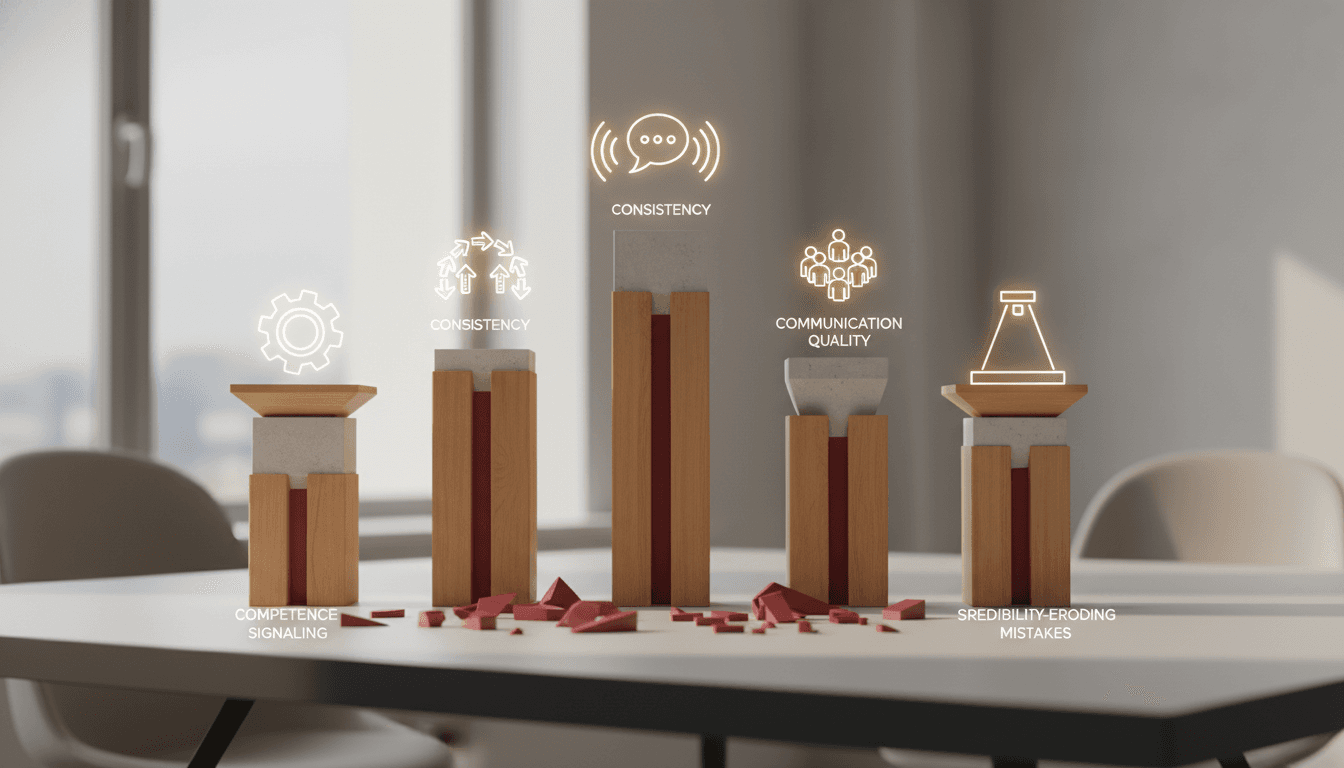
Building professional credibility at work requires consistent action across five key pillars: competence signaling, behavioral consistency, communication quality, social proof, and strategic visibility. Credibility isn't built through a single achievement or presentation — it's earned through a deliberate system of daily habits that shape how colleagues, leaders, and stakeholders perceive your reliability, expertise, and judgment. This framework gives you specific actions for each pillar so you

How to Be Seen as a Leader at Work (Before the Title)
You don't need a formal title to be seen as a leader at work. The professionals who get tapped for leadership roles consistently demonstrate seven behavioral signals: they communicate with clarity under pressure, frame problems strategically, advocate for others, take ownership of outcomes, stay composed in crises, make decisions with conviction, and build trust across levels. Start practicing these behaviors now, and decision-makers will view you as a leader long before the promotion arrives.

How to Build Authority at Work Quietly: 10 Subtle Moves
You don't need to be the loudest voice in the room to become the most respected one. Building authority at work quietly means earning credibility through consistent expertise, strategic visibility, and reliable follow-through — not self-promotion or political maneuvering. The professionals who hold the most lasting influence are often those who let their work, their preparation, and their selective contributions speak for themselves. Below are 10 subtle, proven moves that build quiet authority o