
Stop Your Voice Trembling During Presentations: 6 Fixes
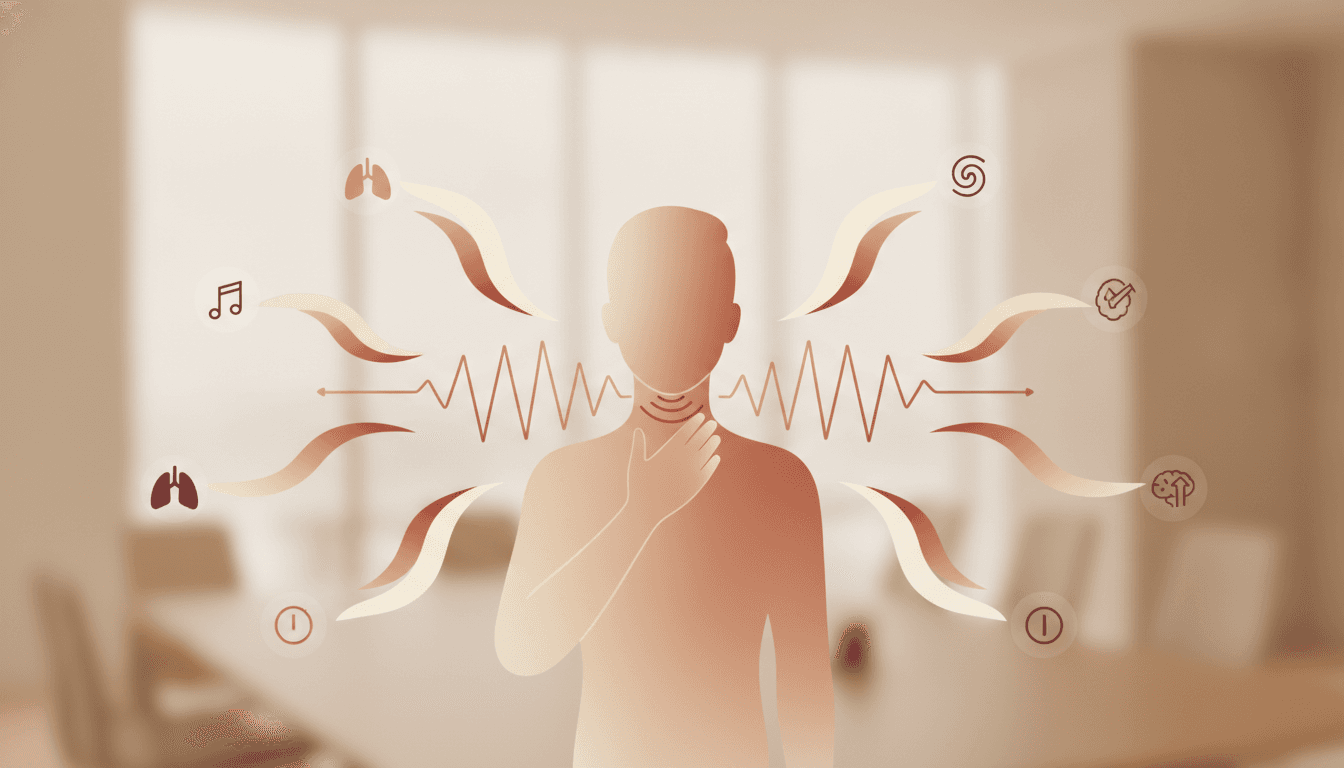
Your voice trembles during presentations because your nervous system triggers a fight-or-flight response, causing your diaphragm and vocal cords to tense involuntarily. To stop voice trembling during a presentation, use these six fixes: diaphragmatic breathing to stabilize airflow, targeted vocal warm-ups to release tension, strategic pausing to reset your nervous system, grounding techniques to anchor your body, cognitive reframing to redirect anxiety, and deliberate vocal anchoring to maintain control. Each technique works within minutes and can be used individually or combined.
What Is Voice Trembling During Presentations?
Voice trembling during presentations is an involuntary shaking or wavering in your voice caused by tension in the muscles that control breathing and vocal cord vibration. It happens when your sympathetic nervous system activates under perceived threat — even when that "threat" is simply a room full of colleagues watching you speak.
Unlike general nervousness, voice trembling is a specific physiological response. Your laryngeal muscles contract, your diaphragm tightens, and your breathing becomes shallow. The result is a voice that sounds unsteady, thin, or quivering — which can undermine even the most well-prepared presentation.
According to the National Institute of Mental Health, approximately 73% of the population experiences some degree of glossophobia (fear of public speaking), and voice trembling is one of the most commonly reported symptoms. Understanding that this is a muscular problem — not a confidence problem — is the first step toward solving it.
Fix 1: Diaphragmatic Breathing to Stabilize Airflow
The most immediate cause of voice trembling is shallow, chest-level breathing. When you breathe from your chest, your vocal cords don't get the steady stream of air they need to produce a stable sound. Diaphragmatic breathing solves this at the source.
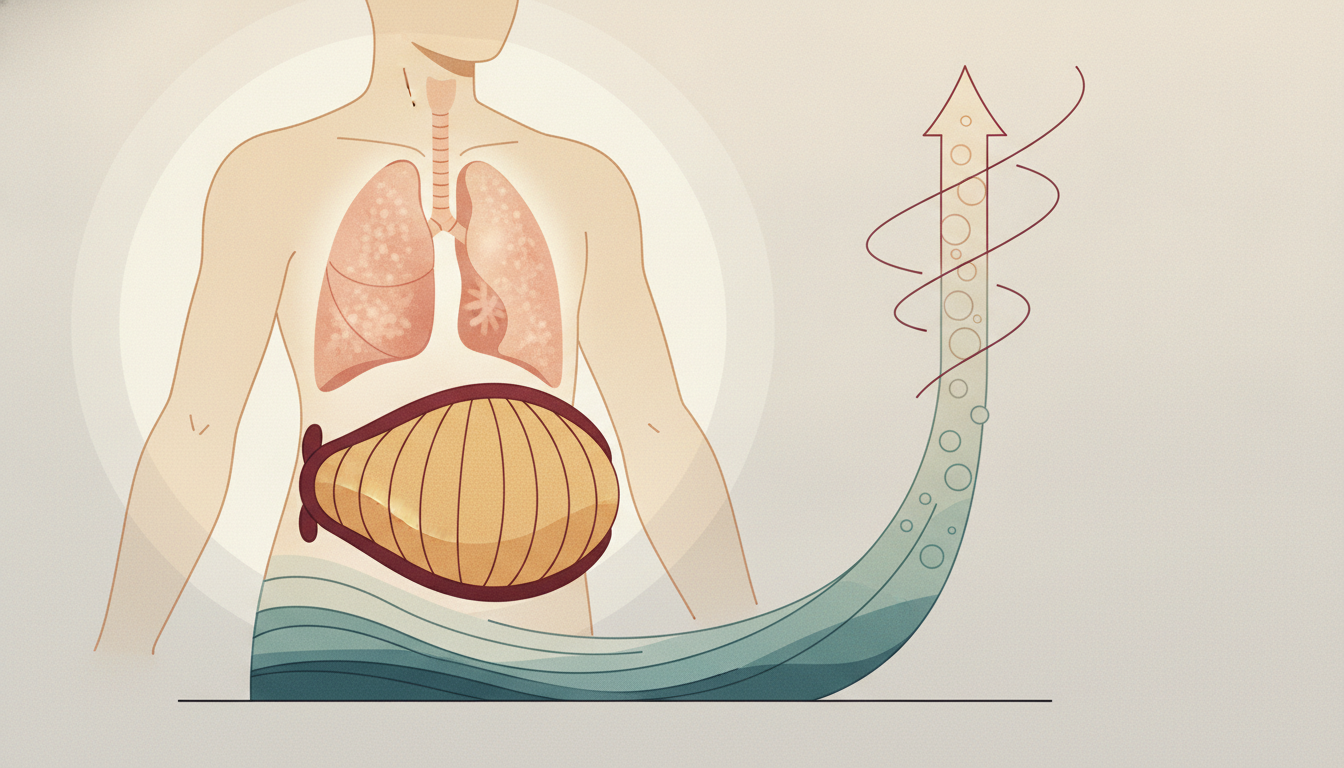
The 4-7-8 Pre-Presentation Breathing Protocol
Two to three minutes before you speak, use this protocol developed from research on autonomic nervous system regulation:
- Inhale through your nose for 4 seconds, directing air into your belly (place a hand on your abdomen to feel it expand).
- Hold for 7 seconds — this signals your vagus nerve to activate the parasympathetic (calming) response.
- Exhale slowly through your mouth for 8 seconds, as if blowing through a straw.
Repeat this cycle three to four times. A 2023 study published in Cell Reports Medicine by Stanford researchers found that cyclic physiological sighing (structured exhale-focused breathing) reduced self-reported anxiety and improved mood more effectively than mindfulness meditation.
Maintaining Breath Support While Speaking
Breathing exercises before a presentation are helpful, but the real challenge is maintaining breath support during your talk. Here's how:
Speak on the exhale. Your voice is most stable when air is flowing outward steadily. Before each key sentence, take a quick, low belly breath. Think of it as "reloading" your air supply. Avoid speaking past your air. Many presenters push through sentences even after their breath runs out, which is exactly when trembling starts. Shorter sentences with natural breath breaks eliminate this problem entirely.If you're preparing for a high-stakes moment, our guide on how to prepare for a high-stakes presentation covers the full pre-presentation routine, including breath management drills you can practice in advance.
The "Exhale First" Trick
Most people inhale deeply before speaking. This actually increases chest tension. Instead, exhale fully before your first word. This forces your next inhale to be deeper and more diaphragmatic — setting up a stable foundation from the very first sentence.
Fix 2: Targeted Vocal Warm-Ups That Release Tension
You wouldn't run a race without warming up your legs. Yet most professionals walk into presentations with cold, tense vocal cords. Vocal warm-ups reduce trembling by loosening the muscles around your larynx and improving blood flow to your vocal mechanism.
The 3-Minute Pre-Presentation Warm-Up
Do these exercises privately — in a restroom, your car, or an empty hallway — five to ten minutes before speaking:
- Lip trills (1 minute): Close your lips loosely and blow air through them, making a "brrr" motorboat sound. Glide up and down your pitch range. This releases tension in your lips, jaw, and throat simultaneously.
- Humming scales (1 minute): Hum gently, starting at a comfortable mid-range pitch and sliding up and down. Focus on feeling vibration in your chest and face, not in your throat.
- Jaw release (30 seconds): Open your mouth wide, then gently massage the hinge points of your jaw with your fingertips. Say "mah-mah-mah" with an exaggerated open mouth.
- Tongue stretches (30 seconds): Stick your tongue out as far as possible, then pull it back. Repeat five times. This releases tension at the base of the tongue, which connects directly to your larynx.
Why Vocal Warm-Ups Work Neurologically
According to research published in the Journal of Voice, vocal warm-up exercises increase laryngeal blood flow by up to 30%, which directly reduces the stiffness that causes trembling. The exercises also activate proprioceptive feedback — your brain's awareness of where your vocal muscles are and what they're doing — giving you more conscious control over your voice.
Think of it this way: a tense muscle shakes. A warm, flexible muscle moves smoothly. Your vocal cords follow the same principle.
For a deeper dive into building daily vocal confidence habits, see our post on how to develop a commanding voice at work.
Fix 3: Strategic Pausing to Reset Your Nervous System
Pausing is the most underused tool against voice trembling — and the most powerful one available to you in real time. When you pause, you give your diaphragm a chance to reset, your vocal cords a moment to relax, and your brain time to catch up with your mouth.
The "Power Pause" Framework
Most speakers rush through presentations because silence feels uncomfortable. But research from the University of Michigan's Communication Studies department shows that audiences perceive speakers who pause deliberately as more confident and credible — not less.
Here's how to use pauses strategically:
- After your opening statement: Pause for 2-3 seconds. This grounds you and signals authority.
- Before a key point: A 1-2 second pause creates anticipation and gives you a breath reset.
- After a complex idea: Pause to let the audience absorb — and to let your nervous system recalibrate.
Turning Pauses Into Authority Signals
Here's what most professionals don't realize: the pause itself communicates confidence. When a senior executive delivers a presentation, they pause frequently. When a nervous mid-level manager presents, they rush.
The next time you feel trembling start, don't fight through it. Stop. Take a breath. Then continue. The audience won't notice the trembling — they'll notice the composure.
Our guide on how to pause effectively in public speaking breaks down specific pause techniques with before-and-after examples you can model.
Fix 4: Physical Grounding Techniques to Anchor Your Body
Voice trembling rarely happens in isolation. It's usually accompanied by shaky hands, weak knees, or a racing heart. Physical grounding techniques interrupt this full-body stress response by redirecting your nervous system's attention to stable, controllable sensations.
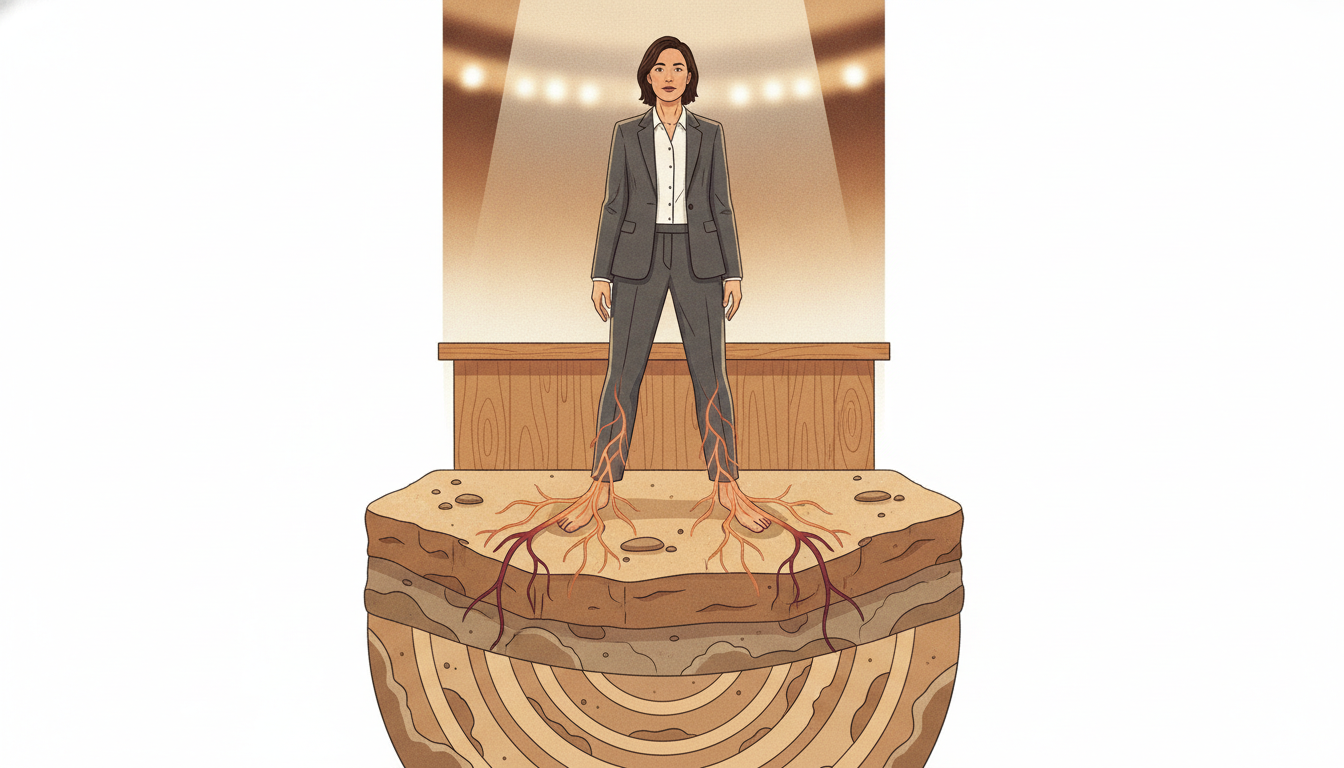
The "Feet-Hands-Breath" Grounding Sequence
Use this three-step sequence in the 60 seconds before you begin speaking — or even mid-presentation if trembling starts:
- Feet: Press both feet firmly into the floor. Feel the ground beneath you. Slightly bend your knees (locked knees increase trembling). Focus on the physical sensation of stability for 5 seconds.
- Hands: If standing at a podium, press your fingertips lightly against the surface. If standing freely, hold a pen or press your thumb against your index finger. This gives your hands a task and reduces the "floating" sensation that amplifies anxiety.
- Breath: Take one slow belly breath. Exhale through your mouth.
This entire sequence takes 15 seconds and can be done invisibly.
Why Grounding Works: The Neuroscience
Dr. Stephen Porges' Polyvagal Theory explains that your nervous system constantly scans for safety cues. When you ground your body — pressing into the floor, engaging your hands — you send your vagus nerve signals of physical stability. Your nervous system interprets this as "I am safe," which reduces the fight-or-flight response that causes trembling.
A 2019 study in Frontiers in Psychology found that body-awareness techniques reduced public speaking anxiety by 24% compared to control groups who used no intervention. Grounding is not a metaphor — it's a measurable physiological intervention.
For a comprehensive approach to managing nerves in professional settings, explore our guide on how to project confidence when nervous at work.
The "Invisible Anchor" for Seated Presentations
If you're presenting while seated — common in boardrooms and virtual meetings — try the invisible anchor technique. Press your feet flat on the floor and push your sit bones into the chair. Place both hands flat on the table in front of you. This creates three points of physical contact that stabilize your body and, by extension, your voice.
Fix 5: Cognitive Reframing to Redirect Anxiety
Your voice trembles partly because your brain has labeled the presentation as a threat. Cognitive reframing changes that label — not by pretending you're not nervous, but by reinterpreting what the nervousness means.
From "I'm Terrified" to "I'm Ready"
Harvard Business School professor Alison Wood Brooks published a landmark 2014 study in the Journal of Experimental Psychology showing that reappraising anxiety as excitement improved performance in public speaking, math tests, and karaoke singing. Participants who said "I am excited" before speaking were rated as more persuasive, competent, and confident than those who tried to calm down.
The key insight: trying to suppress anxiety makes it worse. Your body is already activated. Instead of fighting the activation, redirect it.
Before your next presentation, say to yourself (or out loud): "This energy means I care about delivering value. I'm activated and ready."
The "Worst Case / Most Likely" Exercise
Catastrophic thinking — "Everyone will notice my voice shaking and think I'm incompetent" — fuels trembling. Counter it with this rapid exercise:
- Worst case: "My voice shakes noticeably for 30 seconds." (Even this rarely happens.)
- Most likely: "I feel nervous for the first minute, then settle in. Most people are focused on my content, not my voice."
- Best case: "I deliver my message clearly and the trembling is invisible to the audience."
Research from the Beck Institute for Cognitive Behavioral Therapy confirms that most people significantly overestimate how visible their anxiety symptoms are to others — a phenomenon called the illusion of transparency. Your trembling is almost always less noticeable than you think.
If imposter-like feelings are driving your presentation anxiety, our post on how to stop feeling like a fraud at work offers specific cognitive reframes for professionals.
Fix 6: Vocal Anchoring to Maintain Steady Control
Vocal anchoring is a technique used by professional speakers, broadcasters, and voice coaches to establish and maintain a stable vocal tone throughout a presentation. It works by giving your voice a "home base" — a pitch, pace, and volume level you can return to whenever you feel control slipping.
How to Find Your Anchor Voice
Your anchor voice is your natural speaking pitch when you're relaxed and confident. Here's how to find it:
- Sit comfortably and say "mmm-hmm" as if casually agreeing with someone. Notice the pitch.
- Now say a simple sentence at that same pitch: "Good morning, I'm going to walk you through today's agenda."
- That pitch is your anchor. It's where your voice resonates most naturally with the least effort.
Most people's voices rise in pitch when they're nervous — higher pitch requires more muscle tension, which increases trembling. By consciously returning to your anchor pitch, you break the tension-trembling cycle.
The "First Three Sentences" Strategy
Voice trembling is almost always worst in the first 30-60 seconds of a presentation. After that, your nervous system begins to acclimate. Use this to your advantage:
Memorize and practice your first three sentences until they're automatic. Deliver them at your anchor pitch, at a deliberately slower pace than feels natural. This creates a stable vocal foundation that carries through the rest of your talk.Here's a scenario: You're presenting quarterly results to the leadership team. Instead of launching into data immediately, you start with a grounded, rehearsed opening: "Good afternoon. I'm going to share three key insights from this quarter's performance. The first one may surprise you."
Those three sentences — delivered slowly, at your anchor pitch, with a pause after "surprise you" — give your voice time to stabilize before you reach the more complex material.
For more on structuring your entire presentation delivery, see our guide on how to sound confident in a presentation even when nervous.
Practice with Progressive Exposure
The most effective long-term fix for voice trembling is progressive exposure — gradually increasing the stakes of your speaking situations. Start by practicing your presentation alone. Then deliver it to one trusted colleague. Then a small group. Then the full audience.
Each exposure teaches your nervous system that speaking isn't dangerous, which reduces the fight-or-flight response over time. According to the American Psychological Association, exposure-based techniques remain the gold standard for reducing performance anxiety, with success rates above 80% across multiple studies.
Putting It All Together: Your Pre-Presentation Protocol
Here's a practical timeline combining all six fixes:
24 hours before: Practice your first three sentences at your anchor pitch. Run through the "worst case / most likely" reframe. 30 minutes before: Do the 3-minute vocal warm-up (lip trills, humming, jaw release, tongue stretches). 5 minutes before: Complete three rounds of 4-7-8 breathing. 60 seconds before: Use the feet-hands-breath grounding sequence. Say to yourself: "I'm activated and ready." First 30 seconds of speaking: Deliver your memorized opening at anchor pitch. Pause after your first statement. Breathe. During the presentation: Use strategic pauses to reset. If trembling returns, press your feet into the floor and take one belly breath before continuing.This protocol takes less than 10 minutes total and addresses voice trembling at every level — physiological, psychological, and vocal.
For a complete system for building confidence before a presentation fast, including mental preparation and content structuring, explore our detailed guide.
Frequently Asked Questions
Why does my voice shake when I present but not in normal conversation?
Your voice shakes during presentations because your brain perceives a social evaluation threat, triggering the fight-or-flight response. In normal conversation, there's no "performance" pressure, so your nervous system stays calm. The adrenaline released during presentations causes your diaphragm and laryngeal muscles to tense, creating the trembling effect. This is a normal physiological response, not a sign of weakness or incompetence.
How long does it take to stop voice trembling permanently?
Most professionals see significant improvement within 2-4 weeks of consistent practice using breathing, vocal warm-ups, and progressive exposure. Complete elimination of trembling may take 2-3 months of regular presenting. However, the pre-presentation protocol in this article can reduce trembling by 50-70% the very first time you use it, based on the underlying research on breathing and grounding interventions.
Voice trembling vs. vocal fatigue: what's the difference?
Voice trembling is a stress-induced shaking caused by muscle tension in the larynx and diaphragm — it happens at the start of speaking and improves as you settle in. Vocal fatigue is a tiredness or hoarseness that develops during or after prolonged speaking, caused by overuse or poor vocal technique. Trembling is an anxiety response; fatigue is a stamina issue. They require different solutions.
Can beta blockers help with voice trembling during presentations?
Beta blockers (like propranolol) are sometimes prescribed off-label for performance anxiety and can reduce physical symptoms like trembling, rapid heartbeat, and sweating. However, they don't address the underlying skill gaps and can cause side effects including fatigue and dizziness. Many professionals find that behavioral techniques — breathing, warm-ups, cognitive reframing — are equally effective without medication. Consult a physician before considering any pharmaceutical approach.
Does drinking water help stop voice trembling?
Water helps with dry mouth and throat tightness, which often accompany nervousness, but it doesn't directly stop trembling. Trembling is caused by muscle tension, not dehydration. That said, sipping room-temperature water before and during a presentation keeps your vocal cords lubricated, which makes your voice sound smoother and gives you a natural reason to pause and breathe. Avoid ice-cold water, which can constrict throat muscles.
What should I do if my voice starts trembling mid-presentation?
Pause immediately — don't try to push through it. Take a slow belly breath while pressing your feet into the floor. Pick up a glass of water if one is available (this gives you a natural 3-5 second reset). When you resume, drop your pitch slightly and slow your pace. The trembling will typically subside within 10-15 seconds once you interrupt the tension cycle. Audiences rarely notice brief pauses; they notice sustained trembling.
Build Presentation Confidence That Lasts — Voice trembling is just one symptom of a deeper challenge: communicating with authority under pressure. Discover The Credibility Code — the complete playbook for professionals who want to speak with confidence, command credibility, and never feel overlooked again. Discover The Credibility Code
Speak So the Room Takes You Seriously
The Credibility Code covers the verbal patterns that make presenters sound authoritative, and the ones that make audiences tune out.
Discover The Credibility CodeRelated Articles

Control Nervous Energy Before Public Speaking: 9 Methods
To control nervous energy before public speaking, use evidence-based techniques that work with your body's stress response rather than against it. The most effective methods include physiological sighing (a double-inhale followed by a long exhale), cognitive reappraisal (relabeling anxiety as excitement), somatic grounding exercises, and structured pre-speech rituals. These approaches don't eliminate nervous energy—they channel it into focused, commanding stage presence that makes you a more dyn

How to Build Confidence Before a Presentation Fast
To build confidence before a presentation fast, follow a structured 30-minute pre-presentation protocol: spend the first 10 minutes on mental rehearsal and mindset reframing, the next 10 minutes on physiological calming techniques like box breathing and power posing, and the final 10 minutes on vocal warm-ups and opening line practice. This timed routine shifts your nervous system from threat mode to performance mode, so you walk in feeling prepared, grounded, and authoritative.

How to Command a Room When Presenting: 8 Proven Methods
To command a room when presenting, master these eight techniques: own the space physically before you speak, open with a power move that disrupts expectations, use strategic silence instead of filler words, control vocal dynamics through pace and pitch variation, deploy purposeful eye contact patterns, structure your content with executive-level clarity, use spatial anchoring to reinforce key points, and close with a statement that lingers. Each method is trainable—and the difference between a f