Career Authority

How professionals build a reputation for authority over time: visibility, how you talk about your work, and the habits that get you considered for bigger responsibilities.

62 articles

Career Authority, page 2

How to Build Credibility as a New Leader: 10 Fast Moves

How to Build Credibility as a New Leader: 10 Fast Moves

To build credibility as a new leader, focus on listening before directing, delivering early wins, communicating with clarity, and building genuine relationships with your direct reports, peers, and senior stakeholders. Credibility isn't granted with your title — it's earned through consistent, visible actions in your first 90 days. The leaders who establish trust fastest are those who demonstrate competence, follow through on commitments, and show genuine respect for the people and systems alrea

How to Build Authority as a New Director: First 90 Days

How to Build Authority as a New Director: First 90 Days

Building authority as a new director requires a deliberate, phased approach across your first 90 days. Start by listening and learning in weeks one through four, then shift to making visible, strategic decisions in months two and three. Focus on three pillars simultaneously: building trust with your direct team through one-on-one relationship building, establishing peer credibility through cross-functional collaboration, and demonstrating strategic value to senior leadership through early wins a


Build Authority at Work Without a Title: A Practical System

Build Authority at Work Without a Title: A Practical System

You build authority at work without a title by consistently solving visible problems, sharing informed opinions, and positioning yourself as the go-to expert in a specific domain. This requires a deliberate system—not luck or waiting for permission. The professionals who hold the most influence in any organization aren't always the ones with "Director" or "VP" in their signature. They're the ones who've built credibility through strategic contribution, communication, and visibility. This guide g

Build Credibility at Work as a New Hire: 10 Proven Moves

Build Credibility at Work as a New Hire: 10 Proven Moves

Building credibility at work as a new hire starts with a deliberate strategy in your first 30–60 days. Focus on listening before speaking, delivering quick wins that solve real problems, asking high-quality questions, and building trust through consistent follow-through. The professionals who earn credibility fastest don't wait to be asked to prove themselves — they demonstrate competence, reliability, and strategic thinking from day one through specific, repeatable actions.

Build Authority at Work Without Being Arrogant: 9 Moves

Build Authority at Work Without Being Arrogant: 9 Moves

Building authority at work without being arrogant comes down to nine specific behaviors: lead with competence (not credentials), ask high-quality questions, share credit strategically, offer solutions before opinions, develop a signature expertise, practice measured visibility, give before you ask, hold your ground calmly, and let your track record speak. These moves signal authority through value creation rather than self-promotion, earning you respect that sticks.

How to Establish Authority in a New Role: First 60 Days

How to Establish Authority in a New Role: First 60 Days

To establish authority in a new role, focus on three pillars during your first 60 days: listen before you lead (days 1–20), deliver visible early wins (days 21–40), and cement your communication cadence (days 41–60). Authority isn't claimed — it's built through strategic relationship mapping, consistent follow-through, and communication signals that telegraph competence. The professionals who earn credibility fastest are those who resist the urge to prove themselves immediately and instead inves

How to Present Yourself as a Leader Before Promotion

How to Present Yourself as a Leader Before Promotion

To present yourself as a leader before promotion, you need to shift from performing tasks to shaping outcomes. This means communicating with strategic clarity, making your contributions visible to decision-makers, taking ownership beyond your current role, and building credibility signals — like executive-level communication, composed body language, and a reputation for solving high-stakes problems — that make you the obvious choice when the opportunity arrives.

How to Establish Credibility With a New Team Fast

How to Establish Credibility With a New Team Fast

To establish credibility with a new team, focus on five core actions in your first 30 days: listen before you prescribe, deliver one visible early win, communicate with transparency, honor existing team knowledge, and follow through on every commitment—no matter how small. Credibility isn't claimed through your title or résumé. It's earned through consistent behavior that signals competence, respect, and reliability from day one.

Establish Authority at Work Without Being Arrogant: A Guide

Establish Authority at Work Without Being Arrogant: A Guide

To establish authority at work without being arrogant, focus on competence-driven credibility rather than ego-driven dominance. This means leading with expertise, asking powerful questions, giving credit generously, speaking with precision, and demonstrating consistent reliability. Authority built on value — not volume — earns lasting respect. The professionals who command the most influence are rarely the loudest; they're the ones others consistently turn to for clarity, direction, and sound ju

Build Authority at Work Without a Title: A Proven System

Build Authority at Work Without a Title: A Proven System

You don't need a corner office or a leadership title to be the person everyone turns to for answers. Building authority at work without a title comes down to a repeatable system: position yourself as a knowledge leader, communicate with credibility, increase your strategic visibility, and consistently deliver value that others rely on. This article gives you the exact framework to make it happen — step by step.

How to Position Yourself as a Leader at Work (7 Moves)

How to Position Yourself as a Leader at Work (7 Moves)

Leadership isn't granted by a title—it's earned through deliberate, strategic behavior that signals authority, competence, and vision. To position yourself as a leader at work, focus on seven core moves: own high-visibility initiatives, communicate with strategic clarity, build cross-functional influence, develop a signature point of view, manage your reputation intentionally, show composure under pressure, and mentor others before you're asked. These moves shift how peers, managers, and executi

How to Build Credibility at Work: A Proven Framework

How to Build Credibility at Work: A Proven Framework

Building credibility at work requires a deliberate combination of consistent follow-through, strategic communication, and visible expertise. You don't need a corner office or 20 years of experience. Instead, focus on five core pillars: reliability (doing what you say), competence signaling (showing your expertise without bragging), strategic visibility (being seen in the right moments), communication authority (speaking and writing with clarity), and relationship capital (earning trust from key

How to Position Yourself for Promotion: Authority-First Strategy

How to Position Yourself for Promotion: Authority-First Strategy

Positioning yourself for promotion requires more than hitting your KPIs. The professionals who get promoted fastest build credibility signals that make decision-makers see them as already operating at the next level. This means shifting how you communicate, where you show up, and which relationships you prioritize. Below, you'll find a complete authority-first strategy — including a 90-day plan — that goes beyond generic advice to focus on the communication and presence shifts that actually move

Build Credibility at Work Without Bragging: 8 Subtle Moves

Build Credibility at Work Without Bragging: 8 Subtle Moves

You build credibility at work without bragging by letting your results, strategic visibility, and contribution framing speak for you. Instead of announcing accomplishments, focus on sharing insights that help others, positioning your work within team wins, and consistently showing up with expertise in key moments. The most credible professionals don't tell people they're good — they create conditions where others reach that conclusion on their own.

How to Present Yourself as an Expert at Work: 7 Signals

How to Present Yourself as an Expert at Work: 7 Signals

To present yourself as an expert at work, you need to consistently send seven credibility signals: framing contributions with authority, sharing knowledge strategically, leading with informed opinions, demonstrating pattern recognition, curating your professional visibility, communicating with precision, and building a track record of follow-through. These signals shape how colleagues and leaders perceive your expertise—often more than your actual knowledge does.

Build Career Authority Without Being Self-Promotional

Build Career Authority Without Being Self-Promotional

You can build career authority without being self-promotional by shifting your focus from talking about yourself to consistently delivering visible value. The most credible professionals don't announce their expertise — they demonstrate it through strategic question-asking, contribution framing, knowledge sharing, and solving problems others avoid. Authority built this way feels earned rather than claimed, which makes it far more durable and respected than any self-promotion ever could.

How to Build Authority in Your Career: A 5-Step Plan

How to Build Authority in Your Career: A 5-Step Plan

Building authority in your career requires a deliberate, sequential approach: (1) identify your credibility niche, (2) create visible proof points, (3) master authoritative communication, (4) leverage internal and external platforms, and (5) sustain your authority through consistent thought leadership. Authority isn't granted by a title alone—it's earned through demonstrated expertise, strategic visibility, and the confidence to communicate your value clearly. This five-step plan gives you the e

How to Build Credibility at Work Fast: A 5-Step Framework

How to Build Credibility at Work Fast: A 5-Step Framework

To build credibility at work fast, follow this five-step framework: (1) Audit your current credibility gaps, (2) Engineer a strong first impression or re-impression, (3) Signal your expertise through visible contributions, (4) Build strategic alliances with key influencers, and (5) Maintain ruthless consistency in your follow-through. Most professionals can establish measurable credibility within 30 to 90 days by executing these steps deliberately rather than waiting passively for recognition.

How to Establish Authority at Work Without a Title

How to Establish Authority at Work Without a Title

You don't need a corner office or a senior title to establish authority at work. Authority comes from how you communicate, how you show up, and how consistently you deliver value that others rely on. The professionals who hold the most influence in any organization are often those who built credibility through strategic visibility, confident communication, and a reputation for solving problems — long before the title caught up. This guide gives you the exact behaviors, frameworks, and communicat

How to Position Yourself for Promotion: Authority Plan

How to Position Yourself for Promotion: Authority Plan

Positioning yourself for promotion requires a deliberate 90-day strategy built on three pillars: increasing your visibility with decision-makers, demonstrating leadership before you hold the title, and building a credibility narrative that makes your advancement feel inevitable. This isn't about working harder — it's about communicating your value strategically, aligning your contributions with organizational priorities, and ensuring the people who control promotions already see you as the obvio

How to Be Seen as a Leader at Work (Before the Title)

How to Be Seen as a Leader at Work (Before the Title)

You don't need a formal title to be seen as a leader at work. The professionals who get tapped for leadership roles consistently demonstrate seven behavioral signals: they communicate with clarity under pressure, frame problems strategically, advocate for others, take ownership of outcomes, stay composed in crises, make decisions with conviction, and build trust across levels. Start practicing these behaviors now, and decision-makers will view you as a leader long before the promotion arrives.

Build Authority in Your Career: The Credibility Roadmap

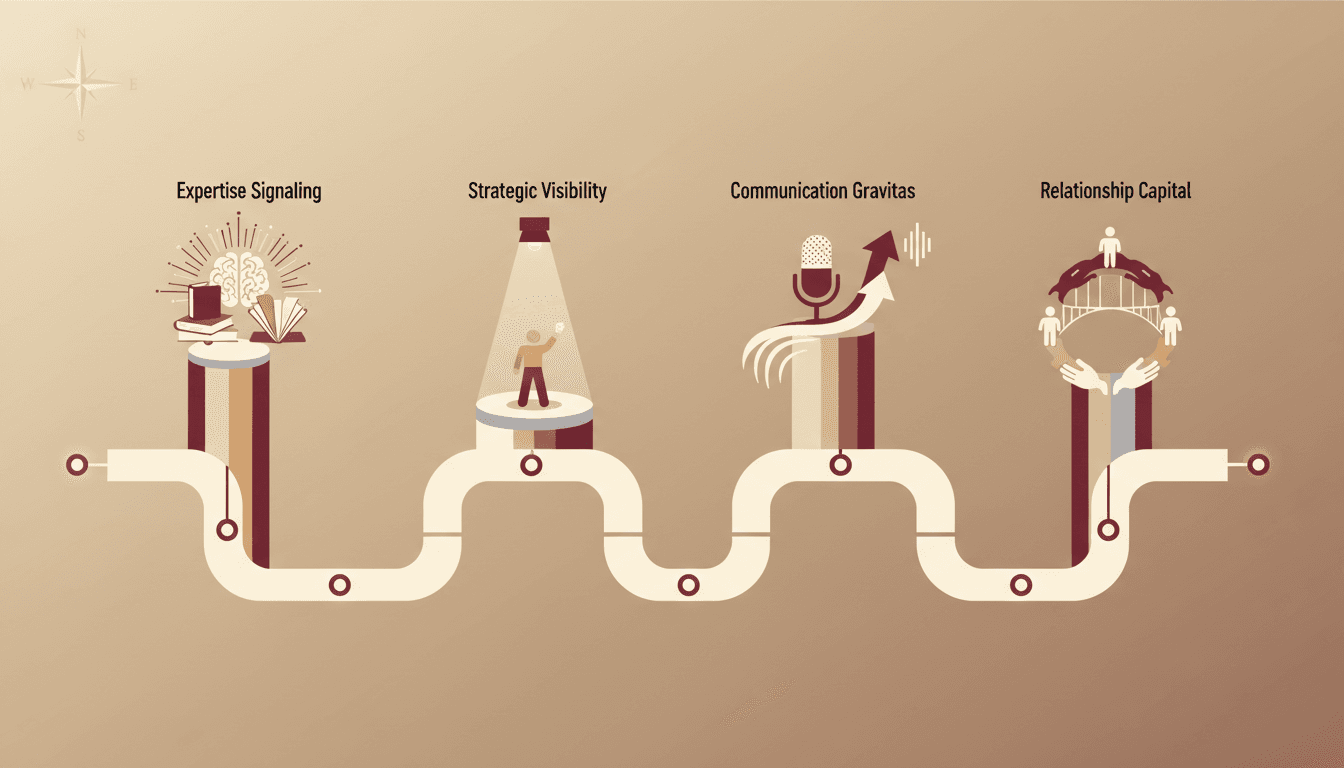
Build Authority in Your Career: The Credibility Roadmap

To build authority in your career, you need to master four interconnected pillars: expertise signaling, strategic visibility, communication gravitas, and relationship capital. Authority isn't granted by a title—it's earned through consistent, deliberate actions that position you as the go-to person in your domain. This roadmap breaks each pillar into concrete milestones so you can move from competent contributor to recognized authority within 12 to 18 months.

How to Command Respect at Work: 10 Non-Negotiable Practices

How to Command Respect at Work: 10 Non-Negotiable Practices

Commanding respect at work requires consistent action across three areas: delivering on your commitments without exception, communicating with clarity and conviction, and setting boundaries that protect your time and expertise. Respect isn't granted by title — it's earned through behavioral patterns others observe daily. The 10 practices below cover how you speak, how you listen, how you respond under pressure, and how you hold yourself accountable, giving you a concrete system for building last

How to Build Professional Credibility Fast: A Proven Framework

How to Build Professional Credibility Fast: A Proven Framework

Building professional credibility fast requires a deliberate combination of three elements: competence signals (demonstrating you know your stuff), consistency patterns (proving you're reliable over time), and communication authority (speaking and writing in ways that command respect). Whether you're stepping into a new role, switching industries, or joining a new team, you can accelerate credibility by stacking quick wins in these three areas within your first 30–90 days. Below is the complete

Other topics