Blog, page 11

Practical scripts, frameworks, and examples for the conversations that decide how seriously people take you.

Articles

How to Handle Being Undermined at Work Professionally
Workplace Confidence

How to Handle Being Undermined at Work Professionally

To handle being undermined at work, first identify the specific behavior — whether it's being contradicted publicly, excluded from decisions, or having your authority bypassed. Then respond strategically, not reactively. Use direct, calm language to address the behavior in real time (e.g., "I want to make sure we're aligned — let me walk through my reasoning"). Document patterns, have a private conversation with the person involved, and rebuild your credibility through visible, high-value contri


How to Communicate With Gravitas at Work: 8 Key Shifts
Professional Communication

How to Communicate With Gravitas at Work: 8 Key Shifts

Communicating with gravitas at work means speaking with a deliberate blend of authority, composure, and substance that makes people stop and listen. It requires eight specific shifts: leading with your conclusion, eliminating hedging language, slowing your delivery, grounding your body language, using strategic silence, choosing precise words, anchoring claims in evidence, and holding your ground under pressure. These shifts transform you from someone who shares ideas into someone whose ideas sh

Personal Branding for Executives: Build Lasting Authority
Personal Branding

Personal Branding for Executives: Build Lasting Authority

Personal branding for executives is the strategic process of defining, communicating, and reinforcing your professional identity to build lasting authority at the director level and above. Unlike self-promotion, executive personal branding focuses on reputation architecture — aligning your expertise, leadership philosophy, and visibility so that opportunities, influence, and trust compound over time. This guide covers the exact frameworks, channels, and metrics senior leaders use to build a bran

Confident Negotiation Techniques for Professionals
Negotiation

Confident Negotiation Techniques for Professionals

Confident negotiation techniques for professionals combine internal state management, strategic vocal delivery, and deliberate body language to help you secure better outcomes in salary discussions, project scope conversations, vendor agreements, and workplace negotiations. The key difference between average and exceptional negotiators isn't just knowing *what* to say—it's projecting genuine authority through your presence, managing anxiety in real time, and using tools like strategic silence, a

How to Build Professional Credibility at Work: A Framework
Career Authority

How to Build Professional Credibility at Work: A Framework

Building professional credibility at work requires consistent action across five key pillars: competence signaling, behavioral consistency, communication quality, social proof, and strategic visibility. Credibility isn't built through a single achievement or presentation — it's earned through a deliberate system of daily habits that shape how colleagues, leaders, and stakeholders perceive your reliability, expertise, and judgment. This framework gives you specific actions for each pillar so you

How to Speak Up in Meetings as a Woman: 9 Proven Tactics
Workplace Confidence

How to Speak Up in Meetings as a Woman: 9 Proven Tactics

To speak up in meetings as a woman, prepare one key point in advance, use the first five minutes to establish your voice, anchor contributions in data, and employ strategic language that resists interruption. Build alliances with colleagues who will amplify your ideas and practice vocal authority techniques that project calm confidence. The goal isn't to change who you are—it's to ensure the room hears what you already bring.

How to Present Complex Ideas Simply: 5 Frameworks
Public Speaking

How to Present Complex Ideas Simply: 5 Frameworks

To present complex ideas simply, use structured frameworks that strip away jargon and organize information around what your audience already understands. The five most effective approaches are: the Pyramid Principle (lead with your conclusion), the Analogy Bridge (connect unfamiliar concepts to familiar ones), the Rule of Three (group details into three digestible pillars), the So-What Ladder (tie every detail to a business outcome), and the Progressive Disclosure method (layer complexity gradua

Stop Being a People Pleaser at Work: 8 Key Shifts
Workplace Confidence

Stop Being a People Pleaser at Work: 8 Key Shifts

People-pleasing at work looks like saying yes to every request, softening your opinions to avoid conflict, and prioritizing others' comfort over your own career growth. To stop being a people pleaser at work, you need to make eight behavioral shifts: redefine your value beyond helpfulness, set response boundaries, learn to say no with authority, stop over-explaining, own your opinions without hedging, stop volunteering for low-visibility tasks, negotiate your workload, and build a reputation bas

How to Communicate Without Being Emotional at Work
Professional Communication

How to Communicate Without Being Emotional at Work

To communicate without being emotional at work, pause before responding (even 3–5 seconds counts), separate the facts of the situation from your feelings about it, and use structured frameworks like "Observation → Impact → Request" to keep your message clear. Emotional composure isn't about suppressing feelings—it's about choosing when and how they show up in your professional communication so your message lands with credibility, not reactivity.

Personal Brand Elevator Pitch: 10 Powerful Examples
Personal Branding

Personal Brand Elevator Pitch: 10 Powerful Examples

A personal brand elevator pitch is a 30-to-60-second statement that communicates who you are, what you do, and the unique value you bring — all in a way that makes people remember you. The best pitches don't just describe your job title; they position you as an authority. Below you'll find 10 customizable elevator pitch examples for networking events, interviews, leadership meetings, and more, plus a proven framework for building your own from scratch.

How to Be Seen as a Subject Matter Expert at Work
Career Authority

How to Be Seen as a Subject Matter Expert at Work

To be seen as a subject matter expert at work, you need to combine deep domain knowledge with strategic visibility. This means consistently sharing insights in meetings, creating content that showcases your expertise, volunteering for high-profile projects, and communicating with authority. Being an SME isn't just about what you know — it's about ensuring the right people recognize what you know. The professionals who earn expert status are intentional about where they contribute, how they speak

Executive Speaking Cadence: Techniques That Command
Executive Communication

Executive Speaking Cadence: Techniques That Command

Executive speaking cadence is the deliberate control of pace, rhythm, pauses, and tempo variation that separates commanding communicators from forgettable ones. The most effective executives don't just choose better words — they master *how* those words land. The core techniques include strategic deceleration (slowing to 120-130 words per minute for key points), the power pause (2-4 seconds of intentional silence before and after critical statements), tempo contrast (alternating between faster c

How to Negotiate Respect at Work: 7 Strategies
Negotiation

How to Negotiate Respect at Work: 7 Strategies

Negotiating respect at work means proactively using assertive communication, boundary-setting, and strategic positioning to ensure you receive equitable treatment, recognition, and professional consideration. Unlike salary negotiation, this is an ongoing process—not a single conversation. The seven most effective strategies include establishing non-negotiable boundaries, documenting your contributions, using assertive language patterns, addressing disrespect in real time, building visible author

How to Speak Without Notes: A Professional's Guide
Public Speaking

How to Speak Without Notes: A Professional's Guide

To speak without notes professionally, build a mental structure before you speak—not a script. Use a framework like the "Three-Point Anchor" (one opening statement, three key points, one closing action) to internalize your message. Practice retrieval, not memorization: rehearse by recalling your structure from memory rather than reading it repeatedly. Pair this with deliberate pausing and confident delivery techniques, and you'll speak with authority in any professional setting—boardroom, stage,

How to Gain Confidence at Work After a Mistake
Workplace Confidence

How to Gain Confidence at Work After a Mistake

Everyone makes mistakes at work — even top performers and seasoned executives. The difference between professionals who stall and those who accelerate their careers lies in how they recover. To gain confidence at work after a mistake, you need a structured approach: acknowledge the error without over-apologizing, reframe the mistake as evidence of growth, communicate a clear corrective plan, and then rebuild trust through consistent, visible action. This article gives you the exact framework to

How to Build Presence as a Leader: A Daily System
Leadership Presence

How to Build Presence as a Leader: A Daily System

Leadership presence isn't a trait you're born with—it's a skill you build through deliberate daily practice. To build presence as a leader, implement a micro-habit system targeting four pillars: voice (pace, tone, projection), posture (expansive, grounded stance), language (precise, decisive word choice), and interpersonal dynamics (active listening, strategic pausing, eye contact). Commit to one small shift per day, and within 30 days, you'll command noticeably more authority in every room you

How to Sound Competent at Work: 9 Proven Shifts
Professional Communication

How to Sound Competent at Work: 9 Proven Shifts

To sound competent at work, replace hedging language with direct statements, lead with conclusions before context, and use precise data instead of vague qualifiers. Competence isn't just about what you know — it's about how you communicate what you know. Professionals who sound competent use shorter sentences, eliminate filler words, own their expertise without apologizing, and structure their ideas so others can follow immediately. These nine shifts will transform how colleagues, managers, and

How to Influence Without Authority at Work: 6 Strategies
Leadership Presence

How to Influence Without Authority at Work: 6 Strategies

You can influence without authority at work by building credibility through expertise, using strategic relationship mapping to identify key stakeholders, framing ideas around shared outcomes rather than personal agendas, and communicating with the language of leadership—even without a title. The six strategies below give you a repeatable framework for driving decisions, aligning teams, and earning respect when you have no formal power to lean on.

How to Project Confidence in a Job Interview: 11 Signals
Workplace Confidence

How to Project Confidence in a Job Interview: 11 Signals

To project confidence in a job interview, focus on 11 key signals hiring managers watch for: a firm handshake, steady eye contact, upright posture, a controlled vocal pace, concise answers using structured frameworks, strategic pausing, power language (no hedging), prepared questions that show research, calm hand gestures, a composed entrance, and a strong closing statement. Master these signals, and you shift from "hopeful applicant" to "obvious choice."

Personal Brand for Career Advancement: Build Yours in 5 Steps
Personal Branding

Personal Brand for Career Advancement: Build Yours in 5 Steps

Building a personal brand for career advancement means deliberately shaping how colleagues, leaders, and decision-makers perceive your professional value. The process involves five steps: auditing your current reputation, defining your unique value proposition, crafting a personal brand statement, amplifying your visibility through strategic communication, and consistently reinforcing your brand in every interaction. When done right, a strong personal brand positions you for promotions, leadersh

How to Speak Up in Meetings With Confidence: 7 Methods
Workplace Confidence

How to Speak Up in Meetings With Confidence: 7 Methods

Speaking up in meetings with confidence requires preparation, strategic timing, and deliberate vocal delivery. The most effective methods include preparing two to three talking points before every meeting, using strategic entry phrases like "I want to build on that" to join the conversation naturally, anchoring your voice with a slow and steady opening sentence, and claiming physical space with open posture. These seven methods help professionals contribute meaningfully without overthinking or b

How to Build Credibility as a New Leader: 10 Fast Moves
Career Authority

How to Build Credibility as a New Leader: 10 Fast Moves

To build credibility as a new leader, focus on listening before directing, delivering early wins, communicating with clarity, and building genuine relationships with your direct reports, peers, and senior stakeholders. Credibility isn't granted with your title — it's earned through consistent, visible actions in your first 90 days. The leaders who establish trust fastest are those who demonstrate competence, follow through on commitments, and show genuine respect for the people and systems alrea

Negotiation Tips for Women Professionals: 8 Proven Moves
Negotiation

Negotiation Tips for Women Professionals: 8 Proven Moves

Women professionals who want to negotiate effectively should lead with collaborative framing ("I'd like to find a solution that works for both of us"), anchor high with market data, use strategic silence after stating their number, and replace hedging language with declarative statements. Research shows women who frame requests as benefiting the team—not just themselves—face significantly less backlash and achieve outcomes comparable to men. These eight moves address the documented double-bind w

How to Develop Leadership Presence: A 5-Step Framework
Leadership Presence

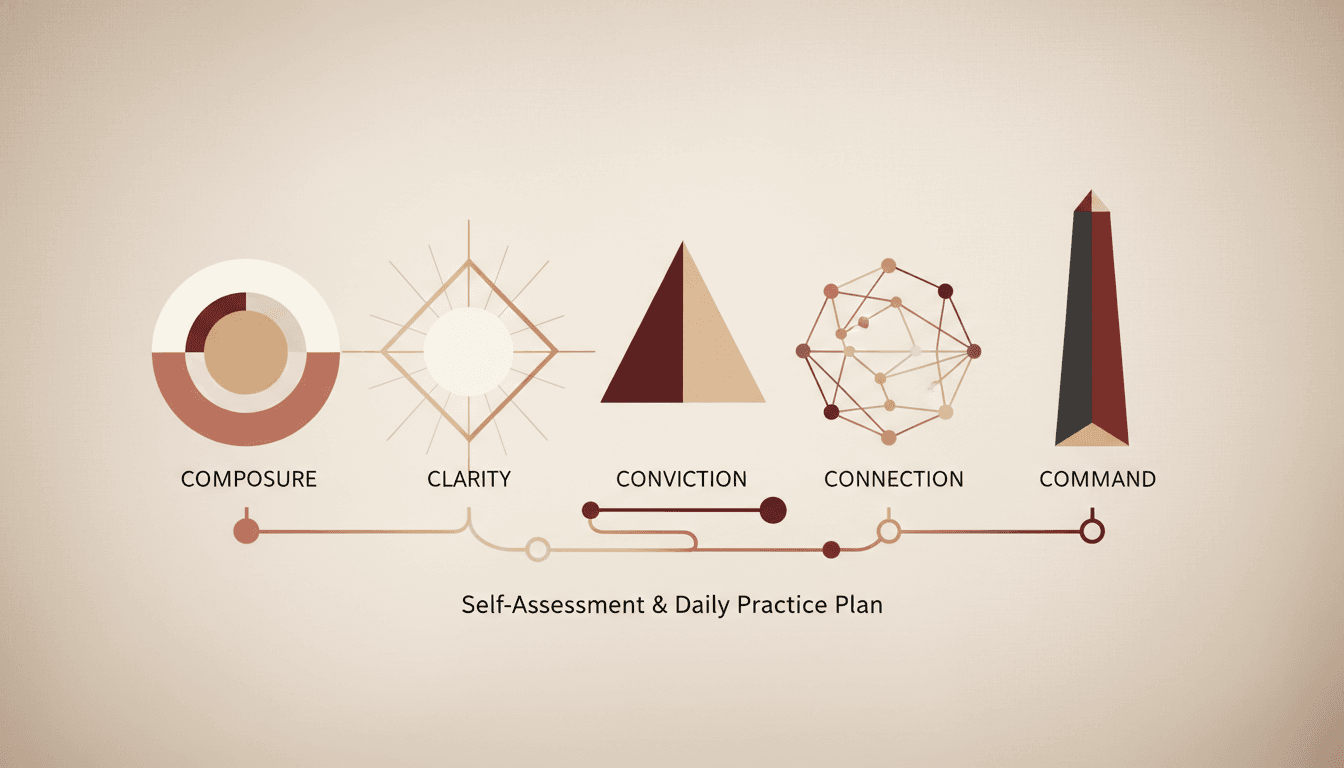
How to Develop Leadership Presence: A 5-Step Framework

To develop leadership presence, build five core dimensions: composure (staying calm under pressure), clarity (communicating with precision), conviction (speaking with certainty), connection (building trust through empathy), and command (directing attention and action). Leadership presence isn't an inborn trait—it's a set of learnable skills. By assessing yourself across these five dimensions and practicing targeted daily habits, you can transform how others perceive your authority, credibility,