Blog, page 9

Practical scripts, frameworks, and examples for the conversations that decide how seriously people take you.

Articles

How to Open a Presentation With Confidence: 8 Openers
Public Speaking

How to Open a Presentation With Confidence: 8 Openers

The quickest way to open a presentation with confidence is to start with a pre-planned, rehearsed opener that immediately establishes your authority and captures attention. The eight most effective openers include a bold statement, a relevant statistic, a story, a provocative question, a quotation, a "what if" scenario, a contrarian claim, and a silence-then-speak technique. Choosing the right one depends on your audience, context, and the outcome you want to drive.


Confidence at Work After Being Criticized: A Recovery Plan
Workplace Confidence

Confidence at Work After Being Criticized: A Recovery Plan

Rebuilding confidence at work after being criticized starts with separating the feedback from your identity, extracting any useful signal, and then taking deliberate action to re-establish your credibility. Criticism—especially when it's harsh or public—triggers a threat response that can erode your professional presence for weeks or months. But with the right cognitive reframes, communication strategies, and a structured recovery plan, you can move from shaken to stronger in as little as 14 day

How to Sound Credible in Meetings: 9 Subtle Shifts
Professional Communication

How to Sound Credible in Meetings: 9 Subtle Shifts

To sound credible in meetings, focus on three dimensions: what you say (structure and word choice), how you say it (vocal delivery and pacing), and what you don't say (eliminating credibility-killing filler). The most impactful shifts include leading with your conclusion first, replacing hedge words like "I think" with definitive language, pausing instead of using filler words, grounding opinions in evidence, and using a downward vocal inflection at the end of statements. These changes are subtl

How to Communicate Like a Leader: 12 Daily Habits
Leadership Presence

How to Communicate Like a Leader: 12 Daily Habits

Learning how to communicate like a leader comes down to daily habits, not grand gestures. Leaders distinguish themselves through how they frame ideas, respond to conflict, give direction, and create followership—every single day. The 12 habits below cover the specific language patterns, vocal techniques, and presence signals that separate leaders from individual contributors. Practice even three of these consistently, and you'll notice a measurable shift in how colleagues perceive your authority

How to Position Yourself as an Expert at Work: 8 Moves
Career Authority

How to Position Yourself as an Expert at Work: 8 Moves

To position yourself as an expert at work, consistently share specialized knowledge, contribute insights before being asked, document your results, build a visible body of work, speak with authority in high-stakes moments, cultivate a strategic network, teach others what you know, and align your personal brand with a specific domain. These eight moves shift perception from "competent contributor" to "recognized authority."

How to Negotiate Without Being Pushy: Firm Yet Respectful
Negotiation

How to Negotiate Without Being Pushy: Firm Yet Respectful

Negotiating without being pushy means replacing demands and pressure tactics with collaborative framing, calibrated questions, and confident language patterns that protect relationships while advancing your position. The key is to anchor your requests in shared interests and objective criteria rather than personal insistence. You don't need to be aggressive to be effective — research shows that negotiators who use integrative (win-win) strategies consistently achieve better outcomes than those w

How to Build Authority in a New Role: First 90 Days
Career Authority

How to Build Authority in a New Role: First 90 Days

Building authority in a new role requires a deliberate, phased approach across your first 90 days. Start by listening strategically and mapping stakeholders (Days 1–30), then secure visible quick wins and establish a communication cadence (Days 31–60), and finally position yourself as a go-to decision-maker by contributing strategic insights (Days 61–90). Authority isn't claimed — it's earned through consistent credibility signals, relationship capital, and demonstrated competence.

How to Speak Concisely in Meetings: 6 Clarity Frameworks
Professional Communication

How to Speak Concisely in Meetings: 6 Clarity Frameworks

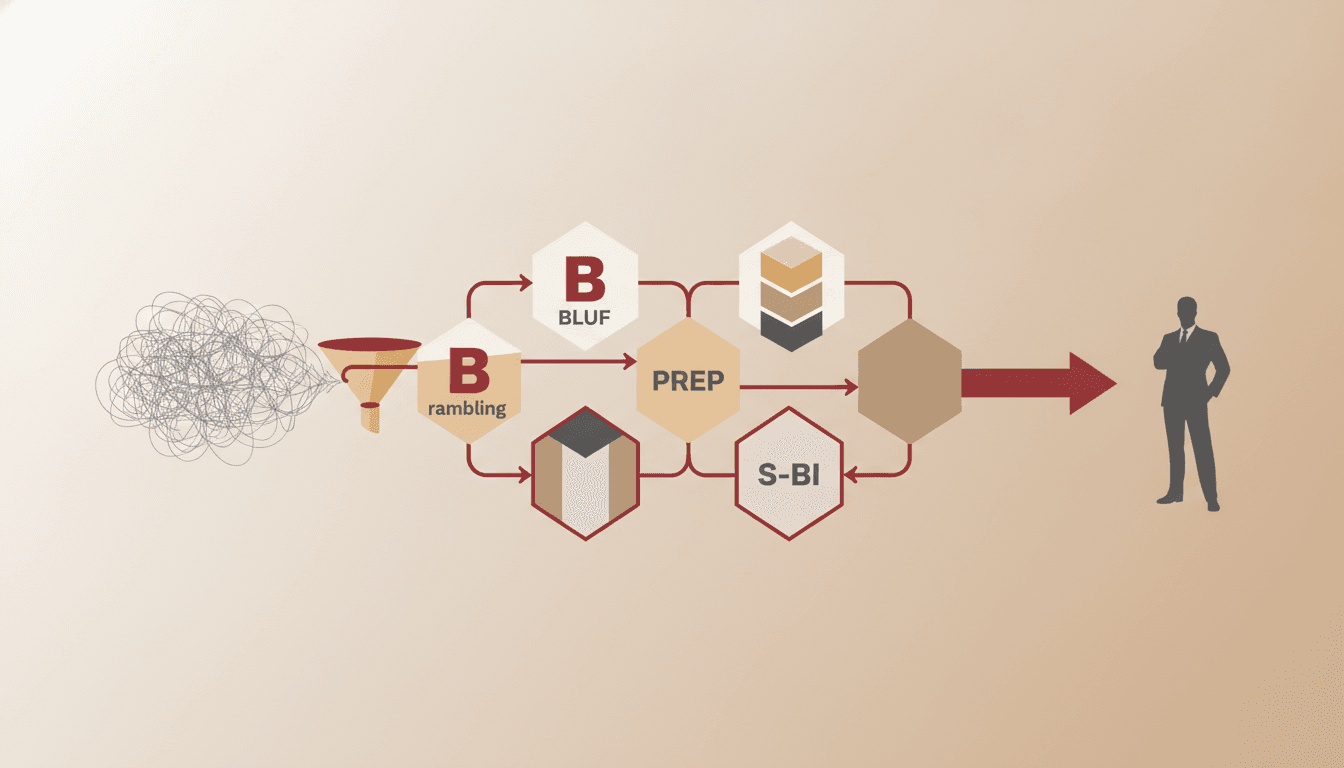
To speak concisely in meetings, use a structured communication framework that forces you to lead with your point and cut filler. The most effective approach is BLUF (Bottom Line Up Front): state your conclusion first, then provide only the supporting evidence your audience needs. Pair this with the PREP, SBI, What-So What-Now What, Rule of Three, and CEO frameworks outlined below to match any meeting scenario—from status updates to executive briefings.

How to Handle Being Interrupted in Meetings Professionally
Workplace Confidence

How to Handle Being Interrupted in Meetings Professionally

When you're interrupted in a meeting, pause briefly, maintain open body language, and use a calm redirect phrase such as "I'd like to finish my point" or "Let me complete this thought." The key is responding without escalating—combining assertive language with composed delivery signals confidence and commands respect. Chronic interrupters can be managed through proactive strategies like pre-framing your contributions, building alliances, and addressing the pattern directly in private.

How to Negotiate Salary as a Woman: Scripts That Work
Negotiation

How to Negotiate Salary as a Woman: Scripts That Work

Women earn 84 cents for every dollar men earn, according to the Pew Research Center (2024). But the gap isn't just about systemic bias — it's also about negotiation. To negotiate salary as a woman, you need to combine market research with strategic language that projects authority while neutralizing the social penalties women uniquely face. This article gives you research-backed frameworks, exact word-for-word scripts, and reframing techniques so you walk into your next negotiation prepared, con

Leadership Presence: What It Is and How to Build It
Leadership Presence

Leadership Presence: What It Is and How to Build It

Leadership presence is the ability to project confidence, competence, and composure in a way that inspires trust and commands attention — even before you speak. It combines gravitas, communication skills, professional appearance, and emotional composure into a unified impression that signals authority. Unlike charisma, leadership presence is a learnable set of behaviors, not an innate personality trait. This article defines each component and gives you a practical framework to develop your own.

How to Communicate With Confidence at Work: A Complete System
Professional Communication

How to Communicate With Confidence at Work: A Complete System

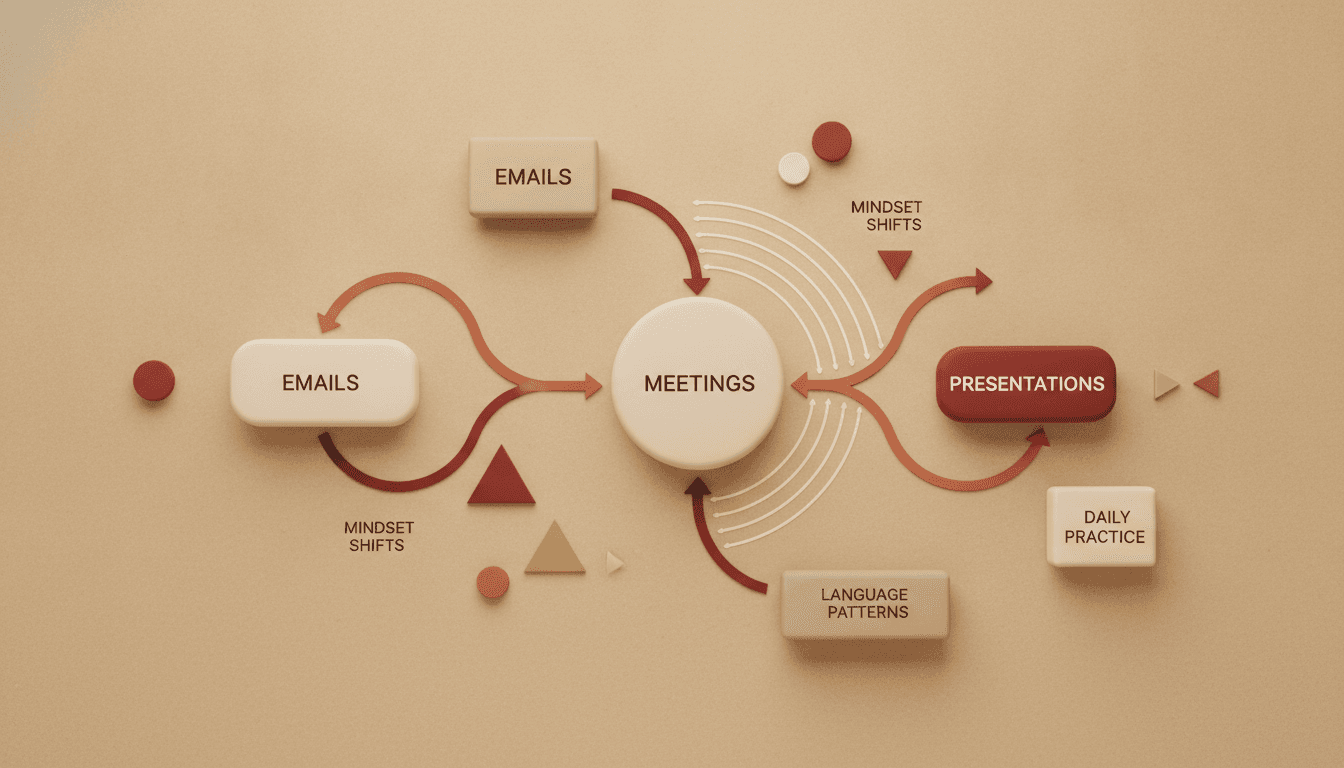
Communicating with confidence at work requires a systematic approach across four dimensions: mindset, language, delivery, and daily practice. Start by eliminating hedging words ("I just think," "sorry, but") from your vocabulary. Then adopt structured speaking frameworks like the Point-Reason-Example-Point method for meetings and presentations. Build a daily practice routine that includes vocal warm-ups, pre-meeting preparation, and post-interaction reflection. Confidence isn't a personality tra

How to Establish Credibility in a Speech: 9 Proven Methods
Public Speaking

How to Establish Credibility in a Speech: 9 Proven Methods

To establish credibility in a speech, you need to demonstrate expertise, build trust, and signal authority from the moment you begin. The most effective speakers do this by combining strategic self-introduction, evidence-based arguments, audience-centered framing, confident delivery, and structural clarity. Credibility isn't just about what you know — it's about how quickly your audience decides to believe you. These nine methods will help you earn that trust before, during, and after you speak.

Assertive Communication in Emails: 15 Before & After Examples
Professional Communication

Assertive Communication in Emails: 15 Before & After Examples

Assertive communication in emails means replacing passive, hedging, or overly apologetic language with direct, respectful, and confident phrasing. Below, you'll find 15 real-world before-and-after email rewrites covering requests, pushback, deadline setting, escalation, and more—each showing exactly how to transform uncertain messages into credible, authoritative professional communication that gets results.

How to Speak Up in Meetings as an Introvert: 8 Methods
Workplace Confidence

How to Speak Up in Meetings as an Introvert: 8 Methods

Being an introvert in a meeting-heavy workplace doesn't mean your ideas should go unheard. To speak up in meetings as an introvert, focus on strategies that work *with* your natural strengths: prepare key points in advance, use the first five minutes to make an early contribution, leverage written follow-ups, ask strategic questions instead of making declarations, and build on others' comments to ease into the conversation. You don't need to become an extrovert — you need a system that lets your

Personal Brand Statement for LinkedIn: Formula + Examples
Personal Branding

Personal Brand Statement for LinkedIn: Formula + Examples

A personal brand statement for LinkedIn is a concise, compelling declaration—typically one to three sentences—that communicates who you are, who you help, and the unique value you bring. The best formula follows this structure: "I help [target audience] achieve [specific outcome] through [your unique approach/expertise]." For example: "I help SaaS companies reduce churn by 30%+ through data-driven customer success strategies." Below, you'll find a step-by-step formula, 12 industry-specific examp

Leadership Presence in Meetings Without Talking Too Much
Leadership Presence

Leadership Presence in Meetings Without Talking Too Much

Leadership presence in meetings without talking too much comes down to strategic contribution over constant contribution. The most influential people in any room rarely speak the most — they speak at the right moments, with the right framing, and let their body language and listening do the rest. You build authority by choosing when to weigh in, asking high-impact questions, and using non-verbal cues that signal confidence. This article gives you the exact frameworks to do all three.

How to Negotiate a Raise After a Promotion Confidently
Negotiation

How to Negotiate a Raise After a Promotion Confidently

You've earned the new title — now it's time to earn the pay that matches it. To negotiate a raise after a promotion, start by researching market compensation for your new role, then request a dedicated meeting with your manager within 30-60 days of your title change. Anchor your ask to external market data and the expanded scope of your responsibilities, not to gratitude or past performance alone. Use specific language that frames the conversation as an alignment discussion — not a complaint — a

Confident Communication in Performance Reviews: Scripts
Workplace Confidence

Confident Communication in Performance Reviews: Scripts

Performance reviews don't have to feel like an ambush. Confident communication in performance reviews means presenting your accomplishments with clarity, responding to criticism with composure, and steering the conversation toward advancement—all without sounding arrogant or defensive. This article gives you word-for-word scripts, proven frameworks, and specific techniques so you walk into your next review prepared to advocate for yourself and walk out with clear next steps for your career.

How to Be More Persuasive at Work: 7 Credibility-Based Tactics
Professional Communication

How to Be More Persuasive at Work: 7 Credibility-Based Tactics

To be more persuasive at work, shift from pushing your ideas to building credibility that pulls people toward them. The most persuasive professionals use seven core tactics: the problem-cost-solution framework, evidence framing, strategic concession, authority signaling, stakeholder pre-alignment, reciprocity anchoring, and the credibility close. These approaches earn lasting buy-in from peers, leadership, and cross-functional teams—without manipulation or pressure.

Personal Brand for a New Industry: Credibility From Day 1
Personal Branding

Personal Brand for a New Industry: Credibility From Day 1

Building a personal brand for a new industry requires reframing your existing expertise rather than starting from zero. The key is to position your transferable skills, cross-industry insights, and unique perspective as strategic advantages — not liabilities. Instead of apologizing for being "new," you communicate the distinct value that only an outsider with your specific background can deliver. This article gives you the messaging frameworks, LinkedIn strategies, and introduction scripts to es

How to Position Yourself for a VP Role: Authority Moves
Career Authority

How to Position Yourself for a VP Role: Authority Moves

To position yourself for a VP role, you need to shift from executing well to being seen as someone who shapes direction. This means communicating like a strategic leader, building cross-functional visibility, cultivating executive sponsors, and consistently signaling that you already operate at the VP level. The promotion follows the perception — not the other way around. Below is a strategic playbook for making that leap.

How Executives Build Instant Rapport: 6 Hidden Moves
Executive Communication

How Executives Build Instant Rapport: 6 Hidden Moves

Executives build instant rapport by deploying six specific techniques in the first 60 seconds of any interaction: strategic mirroring of body language and vocal tone, deliberate name usage, status-matching language, calibrated vulnerability, genuine curiosity signals, and environment-aware positioning. These aren't charisma tricks—they're learnable communication patterns that create immediate trust and open the door to influence, negotiation, and lasting professional relationships.

Negotiation Language Patterns That Project Confidence
Negotiation

Negotiation Language Patterns That Project Confidence

Confident negotiators don't wing it—they use specific linguistic patterns that signal authority and credibility before the other party even processes the content of what's being said. The most effective negotiation language patterns include anchoring statements, declarative framing, strategic pauses, and conditional concession structures. These patterns shift you from sounding like you're asking for permission to sounding like you're presenting a well-reasoned position. Below, you'll find the ex