Blog, page 25

Practical scripts, frameworks, and examples for the conversations that decide how seriously people take you.

Articles

How to Be More Assertive in Meetings (Without Being Aggressive)
Professional Communication

How to Be More Assertive in Meetings (Without Being Aggressive)

To be more assertive in meetings, prepare two to three key points before every meeting, use direct language ("I recommend" instead of "I think maybe"), hold the floor calmly when interrupted, and anchor your ideas in evidence. Assertiveness is not about volume or dominance — it's about expressing your perspective clearly, confidently, and respectfully. The techniques below will help you speak up, get heard, and influence outcomes without crossing into aggression.


Body Language for Leadership Presence: A Complete Guide
Leadership Presence

Body Language for Leadership Presence: A Complete Guide

Body language for leadership presence is the intentional use of nonverbal cues—posture, eye contact, gestures, facial expressions, and spatial positioning—to project authority, confidence, and credibility in professional settings. Research from UCLA professor Albert Mehrabian found that up to 55% of communication impact comes from nonverbal signals. This guide gives you a complete framework for mastering the physical cues that make people listen, trust, and follow your lead in meetings, presenta

How to Sound Confident at Work: 9 Proven Strategies
Workplace Confidence

How to Sound Confident at Work: 9 Proven Strategies

To sound confident at work, focus on eliminating vocal fillers ("um," "just," "I think"), speaking with a slower and more deliberate pace, using declarative sentences instead of hedging language, and lowering your pitch slightly at the end of statements. Confident-sounding professionals also pause strategically before responding, choose precise words over vague ones, and match their body language to their verbal message. These habits can be learned and practiced by anyone, regardless of personal

How to Be Taken Seriously at Work: 11 Proven Strategies
Workplace Confidence

How to Be Taken Seriously at Work: 11 Proven Strategies

To be taken seriously at work, you need to align what you say, how you say it, and what you do. The most credible professionals master eleven core strategies: speaking with precision, setting firm boundaries, controlling body language, preparing obsessively, building strategic visibility, eliminating credibility-killers like upspeak and over-apologizing, delivering results consistently, dressing with intention, managing emotional reactions, owning your expertise, and advocating for yourself in h

Public Speaking for Leaders: Build Trust From the Stage
Public Speaking

Public Speaking for Leaders: Build Trust From the Stage

Public speaking for leaders is fundamentally different from general presentation skills. While anyone can learn to deliver a polished talk, leaders must use the stage to build organizational trust, reinforce credibility, and inspire action. This means going beyond technique to master storytelling frameworks, calibrate vulnerability, and structure messages that move people. The best leadership communicators don't just inform — they create belief.

How to Negotiate Salary Confidently: Scripts & Strategies
Negotiation

How to Negotiate Salary Confidently: Scripts & Strategies

To negotiate salary confidently, prepare thoroughly by researching market rates, anchoring high with a specific number, and using assertive communication scripts that project authority. The key is combining data-driven preparation with credible delivery—steady eye contact, measured pacing, and collaborative framing. Even if you feel uncertain inside, the right words and body language can project the confidence that earns you what you're worth.

How to Build Confidence in Meetings (Even as an Introvert)
Workplace Confidence

How to Build Confidence in Meetings (Even as an Introvert)

Building confidence in meetings starts with shifting from reactive participation to strategic contribution. Instead of pressuring yourself to speak constantly, prepare two or three high-value points before every meeting, arrive early to claim your physical and psychological space, and use the "first five minutes" rule—contributing one comment early to break the silence barrier. Confidence in meetings isn't about being the loudest voice; it's about being the most prepared and intentional one.

Leadership Presence: 9 Tips to Command Any Room
Leadership Presence

Leadership Presence: 9 Tips to Command Any Room

Leadership presence is the ability to project confidence, credibility, and calm authority so that people naturally pay attention when you speak. To build it, focus on nine core areas: grounding your body language, controlling your vocal delivery, mastering strategic silence, regulating your emotions under pressure, listening with intention, preparing your narrative, owning your space physically, building consistency across interactions, and developing a personal leadership brand. Presence isn't

Executive Communication Skills: 7 Techniques That Build Authority
Executive Communication

Executive Communication Skills: 7 Techniques That Build Authority

Executive communication skills are the strategic speaking and writing techniques that leaders use to command attention, drive decisions, and build authority. The seven core techniques include strategic brevity, decisive language patterns, message framing, controlled pacing, high-stakes storytelling, stakeholder-adaptive messaging, and authoritative body language. Mastering these skills separates executives who lead rooms from managers who merely fill them.

Assertive Communication at Work: Scripts & Frameworks
Professional Communication

Assertive Communication at Work: Scripts & Frameworks

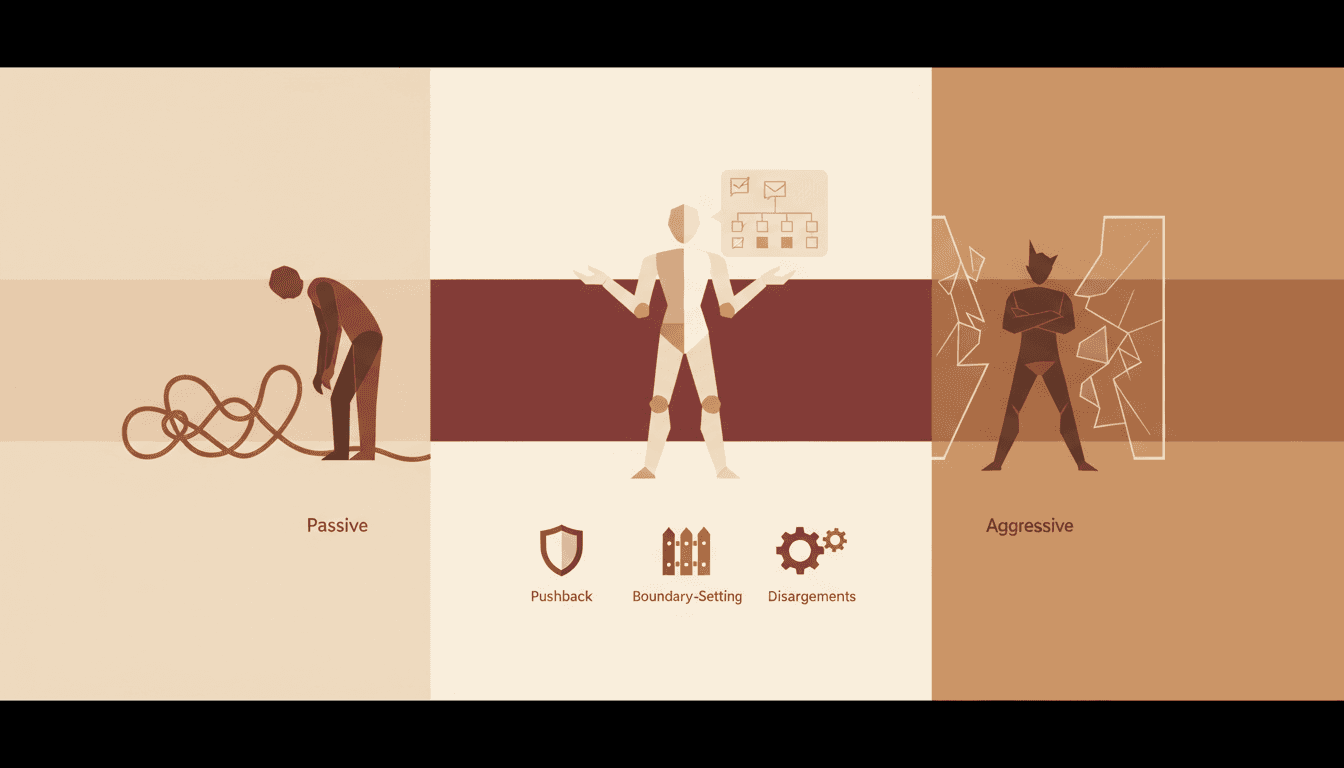
Assertive communication in the workplace is the ability to express your ideas, needs, and boundaries clearly and respectfully — without being passive or aggressive. It sits at the midpoint of the communication spectrum: you advocate for yourself while honoring others. This article gives you a precise framework (the DEAR method), ready-to-use scripts for common scenarios like pushback, boundary-setting, and disagreeing with superiors, and the research-backed reasons assertiveness is the single mo

Executive Communication

How to Communicate Like an Executive: 6 Key Shifts

To communicate like an executive, you need to make six critical shifts: lead with the bottom line, frame everything strategically, use decisive language, regulate your emotions under pressure, tailor messages to stakeholders, and master the power of brevity. These aren't personality traits—they're learnable skills that separate leaders who command rooms from professionals who get overlooked. Below, you'll find each shift broken down with before-and-after examples you can apply immediately.

Workplace Confidence

Overcoming Imposter Syndrome at Work: A Leader's Guide

Overcoming imposter syndrome at work starts with recognizing that self-doubt is not evidence of incompetence—it's a signal that you're growing. The most effective approach combines cognitive reframing techniques, strategic communication adjustments, and daily credibility-building habits. Rather than trying to eliminate self-doubt entirely, leaders can learn to act with authority *despite* it, turning internal uncertainty into outward confidence that earns trust and respect.

Career Authority: How to Become the Go-To Expert at Work
Career Authority

Career Authority: How to Become the Go-To Expert at Work

Career authority building is the deliberate process of positioning yourself as the recognized expert in your field—the person colleagues, leaders, and clients turn to first. It requires a combination of deep expertise, strategic visibility, consistent knowledge sharing, and credible communication. This guide gives mid-career professionals a concrete, step-by-step plan to move from competent contributor to go-to authority, covering expertise positioning, visibility strategies, mentoring as a cred

Credibility in Communication: The 5 Pillars of Authority
Professional Communication

Credibility in Communication: The 5 Pillars of Authority

Credibility in communication is built on five core pillars: competence signaling, consistency, confidence cues, connection, and character. When professionals master these pillars, they stop being overlooked and start being heard. Each pillar works together to create a commanding presence that earns trust in emails, meetings, presentations, and negotiations. Below, you'll find a complete framework with specific techniques you can implement today to build lasting authority in every professional in