Blog, page 22

Practical scripts, frameworks, and examples for the conversations that decide how seriously people take you.

Articles

Confidence at Work After Failure: How to Rebuild Fast
Workplace Confidence

Confidence at Work After Failure: How to Rebuild Fast

Rebuilding confidence at work after failure starts with three deliberate steps: own the outcome without over-apologizing, reframe the failure as a data point rather than an identity, and take visible action that demonstrates growth. Professional setbacks—a botched project, a public mistake, a missed promotion—can shatter your self-assurance. But research shows that how you respond in the weeks after a failure matters far more than the failure itself. This guide gives you a step-by-step recovery


How to Sound Credible in Meetings: 9 Proven Shifts
Professional Communication

How to Sound Credible in Meetings: 9 Proven Shifts

To sound credible in meetings, replace hedging language with direct statements, structure your points using a clear framework (like lead-with-the-conclusion), ground opinions in data, and use deliberate pacing instead of rushing. Credibility isn't about being the loudest voice — it's about verbal precision, confident framing, and consistent delivery patterns that signal authority every time you speak.

How to Develop a Commanding Voice at Work: Vocal Techniques
Professional Communication

How to Develop a Commanding Voice at Work: Vocal Techniques

To develop a commanding voice at work, focus on five core vocal mechanics: diaphragmatic breath support, lower pitch placement, deliberate pacing, strategic pausing, and chest resonance. These aren't personality traits — they're trainable skills. With 10-15 minutes of daily practice, most professionals notice a measurable difference in how colleagues respond to their voice within two to three weeks.

How to Negotiate Project Scope Professionally (With Scripts)
Negotiation

How to Negotiate Project Scope Professionally (With Scripts)

To negotiate project scope professionally, start by documenting the original agreement, then use a structured conversation framework: acknowledge the request, quantify the impact on timeline and resources, and present options rather than a flat "no." This approach protects your credibility while keeping the relationship collaborative. The key is framing scope changes as business decisions — not personal pushback — so stakeholders see you as a strategic partner, not a roadblock.

How to Command Respect at Work: 10 Non-Negotiable Practices
Career Authority

How to Command Respect at Work: 10 Non-Negotiable Practices

Commanding respect at work requires consistent action across three areas: delivering on your commitments without exception, communicating with clarity and conviction, and setting boundaries that protect your time and expertise. Respect isn't granted by title — it's earned through behavioral patterns others observe daily. The 10 practices below cover how you speak, how you listen, how you respond under pressure, and how you hold yourself accountable, giving you a concrete system for building last

How to Present Ideas Clearly at Work: The Clarity Method
Professional Communication

How to Present Ideas Clearly at Work: The Clarity Method

To present ideas clearly at work, lead with your conclusion first, then support it with no more than three key points, and close with a specific ask or next step. This "bottom-line-up-front" structure — used across executive boardrooms and military briefings alike — ensures your audience grasps your message in seconds, not minutes. The Clarity Method below gives you a repeatable framework for meetings, emails, and impromptu hallway conversations so your ideas land every time.

How to Negotiate Without Fear: A Confidence-First Approach
Negotiation

How to Negotiate Without Fear: A Confidence-First Approach

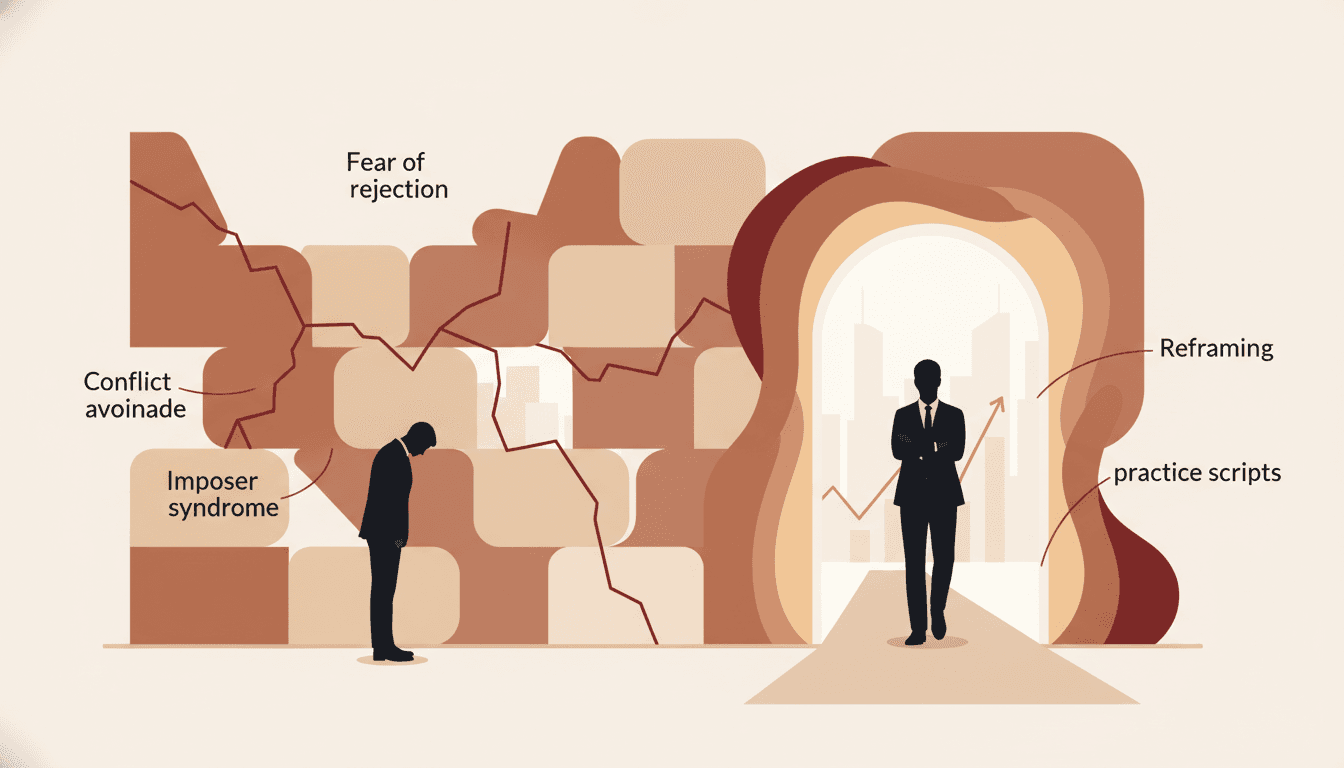
To negotiate without fear, you must shift your mindset from confrontation to collaboration and reframe negotiation as a professional skill — not a personality trait. The key is addressing three psychological barriers: fear of rejection, conflict avoidance, and imposter syndrome. By using structured preparation frameworks, practicing with low-stakes scenarios, and adopting specific language patterns that project authority without aggression, any professional can learn to negotiate confidently. Fe

12 Weak Communication Habits That Undermine Your Credibility
Professional Communication

12 Weak Communication Habits That Undermine Your Credibility

Weak communication habits at work — like hedging language, upspeak, over-apologizing, and passive phrasing — silently erode your professional credibility even when your ideas are strong. Research from the Harvard Business Review shows that how you communicate accounts for a significant portion of how competent others perceive you to be. The good news: these habits are fixable. Below, you'll find the 12 most damaging weak communication habits at work, why each one undermines your authority, and t

How to Sound Confident in a Meeting (Even When You're Not)
Workplace Confidence

How to Sound Confident in a Meeting (Even When You're Not)

You sound confident in a meeting by lowering your vocal pitch, eliminating filler words, speaking in shorter sentences, and pausing deliberately instead of rushing. Preparation matters, but real-time vocal and language adjustments make the biggest difference. Confidence in meetings isn't about feeling fearless — it's about controlling the signals you send so others perceive you as credible, composed, and authoritative, even when self-doubt is running in the background.

How to Speak With Authority in a Group: 7 Key Shifts
Professional Communication

How to Speak With Authority in a Group: 7 Key Shifts

To speak with authority in a group, make seven deliberate shifts: replace hedging language with decisive statements, lower your vocal pitch at the end of sentences, pause before key points instead of rushing, claim physical space with open body language, time your contributions strategically, structure your ideas before speaking, and use specifics instead of generalities. These shifts change how others perceive your competence, confidence, and credibility — often within a single meeting.

How to Communicate With Difficult Coworkers Confidently
Workplace Confidence

How to Communicate With Difficult Coworkers Confidently

To communicate with difficult coworkers confidently, name the behavior (not the person), use structured response frameworks, and maintain emotional neutrality. Identify which archetype you're dealing with — the interrupter, underminer, passive-aggressive, credit-taker, or dismisser — then apply targeted scripts that set boundaries while preserving the professional relationship. The goal isn't to "win" the interaction; it's to redirect the dynamic so you're heard, respected, and taken seriously.

Leadership Presence in Meetings: 8 Habits That Command Respect
Leadership Presence

Leadership Presence in Meetings: 8 Habits That Command Respect

Leadership presence in meetings comes down to eight observable habits: how you enter the room, how you claim physical space, how you use silence strategically, how you speak with vocal authority, how you listen actively, how you respond to challenges, how you redirect conversations, and how you close with clarity. These aren't personality traits — they're learnable behaviors. Master them, and you shift from participant to the person everyone watches and follows.

Confident Communication Style: A Framework for Leaders
Professional Communication

Confident Communication Style: A Framework for Leaders

A confident communication style is the combination of language choices, vocal delivery, body language, and conversational structure that signals authority and credibility in professional settings. It's not about being the loudest person in the room — it's about speaking with clarity, conviction, and composure. This framework breaks down the specific elements of confident communication and gives you a diagnostic tool plus actionable shifts you can implement in your next meeting, email, or present

How to Sound Confident in a Presentation: 9 Proven Tactics
Public Speaking

How to Sound Confident in a Presentation: 9 Proven Tactics

To sound confident in a presentation, focus on three pillars: vocal delivery, verbal precision, and structural clarity. Slow your speaking pace to 130–150 words per minute, use strategic pauses instead of filler words, replace hedging language ("I think maybe…") with power phrases ("The data shows…"), and open with your strongest point. Confidence isn't about feeling fearless — it's about controlling the signals your audience receives.

How to Communicate With Senior Executives: 8 Rules
Executive Communication

How to Communicate With Senior Executives: 8 Rules

To communicate with senior executives effectively, lead with the conclusion first, keep your message under two minutes, frame everything around business outcomes, and come prepared with a recommendation — not just a problem. Senior leaders value brevity, strategic thinking, and confidence. The professionals who master upward communication don't just share information; they demonstrate judgment. These eight rules will show you exactly how to earn executive attention and respect every time you spe

How to Handle Q&A After a Presentation Like a Pro
Public Speaking

How to Handle Q&A After a Presentation Like a Pro

To handle Q&A after a presentation like a pro, prepare for likely questions in advance, use a structured response framework (like the PREP method: Point, Reason, Example, Point), and maintain confident body language throughout. When you don't know an answer, say so honestly and offer to follow up. Set clear ground rules at the start of Q&A, repeat each question for the audience, and always end on your terms by closing with a prepared final statement that reinforces your core message.

How to Develop Gravitas at Work: A Practical Guide
Leadership Presence

How to Develop Gravitas at Work: A Practical Guide

Developing gravitas at work requires building three core dimensions: composure (staying calm under pressure), conviction (speaking with clarity and certainty), and connection (earning trust through authentic engagement). Gravitas isn't a personality trait you're born with—it's a set of learnable skills. By practicing deliberate pauses, grounding your opinions in evidence, and showing genuine interest in others' perspectives, you can cultivate the kind of commanding presence that makes people lis

How to Sound Confident in Emails: 9 Proven Techniques
Professional Communication

How to Sound Confident in Emails: 9 Proven Techniques

To sound confident in emails, eliminate hedging language ("I just wanted to…," "I think maybe…"), use direct sentence structures, lead with your main point, and choose decisive verbs. Confident emails are shorter, clearer, and structured around action — not apology. The techniques below will show you exactly how to rewrite tentative emails into messages that project authority, credibility, and leadership presence every time you hit send.

How to Build Credibility With Senior Leadership Fast
Career Authority

How to Build Credibility With Senior Leadership Fast

Building credibility with senior leadership requires a deliberate combination of strategic visibility, executive-level communication, and consistent delivery on high-impact work. The fastest path involves three core moves: speak in outcomes rather than activities, proactively solve problems senior leaders care about, and make your contributions visible without self-promotion. Professionals who master these patterns earn trust faster, get tapped for high-profile projects, and accelerate their car

How to Communicate Your Vision as a Leader (5-Step Framework)
Executive Communication

How to Communicate Your Vision as a Leader (5-Step Framework)

Communicating your vision as a leader requires five deliberate steps: anchor your vision in a core narrative, connect it to your audience's reality, use vivid and concrete language, build emotional resonance, and reinforce through strategic repetition. The best leaders don't just announce a direction — they make people *feel* the future and see themselves in it. This framework gives you the structure to articulate a compelling vision that moves teams from passive listeners to active champions.

How to Negotiate as an Introvert: A Quiet Strength Playbook
Negotiation

How to Negotiate as an Introvert: A Quiet Strength Playbook

Negotiating as an introvert doesn't require you to become louder, more aggressive, or someone you're not. Instead, it means leveraging the strengths you already have—deep preparation, active listening, strategic silence, and thoughtful communication—to secure outcomes that match your worth. This playbook gives you specific scripts, frameworks, and techniques designed for professionals who prefer substance over spectacle, proving that quiet confidence is one of the most powerful negotiation tools

How to Close a Presentation With Impact: 8 Techniques
Public Speaking

How to Close a Presentation With Impact: 8 Techniques

The final 60 seconds of your presentation determine whether your audience remembers you or forgets you. To close a presentation with impact, use one of these eight proven techniques: a callback to your opening, a powerful call to action, a thought-provoking question, a memorable story, a bold statistic, a quotable one-liner, a visual anchor, or the "rule of three" close. Each technique reinforces your credibility and moves your audience from passive listening to decisive action.

Leadership Presence in Emails: How Your Writing Signals Authority
Leadership Presence

Leadership Presence in Emails: How Your Writing Signals Authority

Every email you send is a micro-audition for leadership. Leadership presence in emails comes down to three signals: decisive tone, clean structure, and strategic word choice. Professionals who master these signals get faster responses, more buy-in, and greater respect — even from people who have never met them in person. The good news? Unlike charisma in a room, email authority is a learnable, repeatable skill you can improve starting with your very next message.

How to Respond When Put on the Spot at Work (Framework)
Workplace Confidence

How to Respond When Put on the Spot at Work (Framework)

When you're put on the spot at work, use the ACE framework: Acknowledge the question, Collect your thoughts with a brief stalling phrase, and Execute a structured response. The key is buying yourself 5–10 seconds of thinking time without appearing flustered. Techniques like paraphrasing the question, using a bridging phrase ("That's an important consideration—here's how I see it"), and structuring your answer in two or three clear points will help you sound composed, credible, and authoritative—